
Business
Cargills Kist transforms wartime battlefield into thriving Kilinochchi agri-belt

When the doors of the Cargills Kist primary food processing plant first opened in Kilinochchi’s Ariviyal Nakaram area in 2013, there were no advertisements, public announcements, or grand promotional campaigns. Yet, stretching down the dusty road, a long, quiet queue of local residents had formed. They were war-battered northerners looking desperately for a fresh start, and among them, an overwhelming majority were young women and war widows.
On that single day, 70 women were interviewed and hired, stepping into a facility that promised the exact same salaries, perks, and allowances as the Kist plant in Colombo. Today, thirteen years after the factory first opened its doors, many of those senior employees still walk just a kilometer or two from their homes to the factory floor every morning. They stand as living monuments to a corporate intervention that chose to build futures where everything else had been flattened. Enhancing the vibrancy on the factory floor, a new generation of young employees now works closely alongside these original mentors.
Sowing Hope in Scorched Earth
When the Cargills team first arrived in Kilinochchi after the war concluded, it was a town in name only; not a single roof remained standing, shops were non-existent, and the population survived in displacement camps. A baseline survey of 2,000 locals conducted by the company revealed a profound disconnect: an entire generation had been completely separated from agriculture and lacked the know-how, seeds, or market access to restart their lives. However, they possessed one hidden, resilient asset – hardy Jaffna mango trees that had miraculously survived the crossfire.
Partnering with international agencies like USAID and IFAD, Cargills spent three grueling years navigating the absence of a proper civil administration to construct the Kilinochchi primary processing facility. They taught locals how to harvest and pack mangoes without bruising, introduced commercial passion fruit cultivation to the region, and established a reliable buyback system for the outgrowers. Today, the plant absorbs 30 to 35 tons of local fruits and vegetables daily from them -including woodapple, melon, passion fruit, and now, aloe vera – pumping direct liquidity into a community once starved of cash.
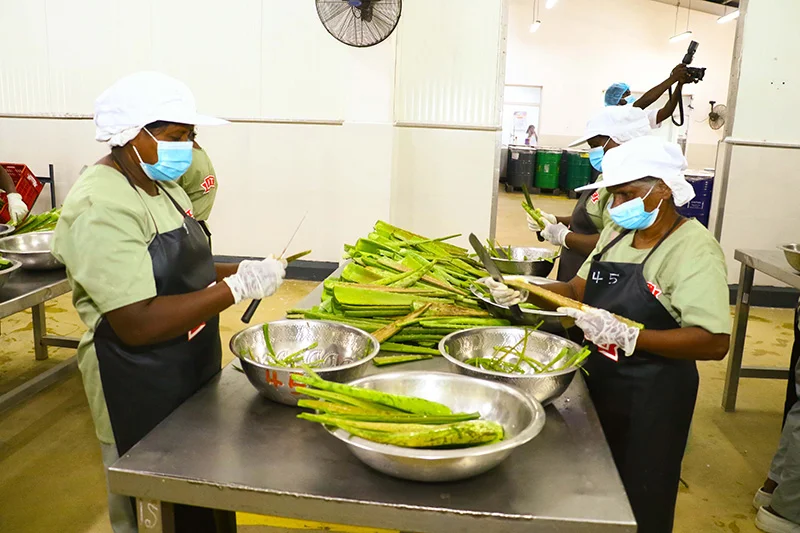
Aloe vera extraction process on Cargills Kist Factory Floor in
Kilinochchi. (Pix by Nishan S. Priyantha)
The Financial Architecture of Inclusion
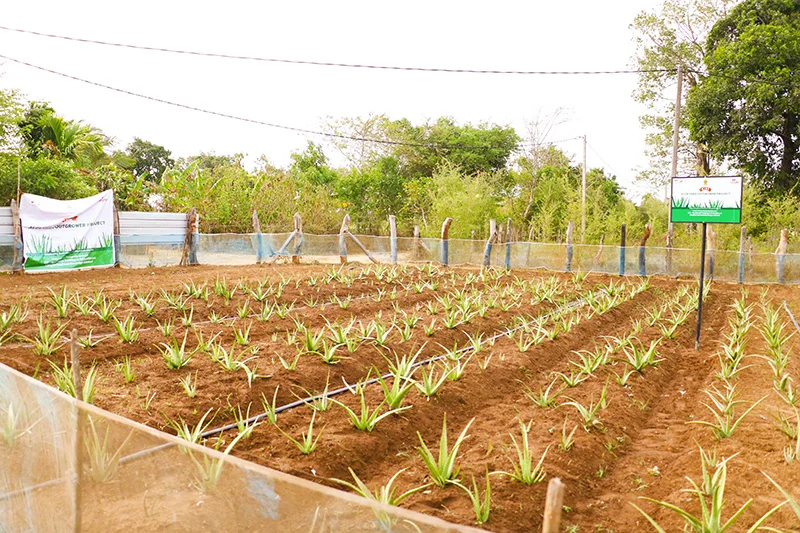
With its 70-year legacy of providing nutritious, farm-fresh products to consumers, Kist’s latest project in Kilinochchi highlights how structural corporate responsibility can systematically erase regional disparities. A year ago, the company identified a rising global and local demand for aloe vera, an ingredient heavily used in beverages and personal care items that Sri Lanka was frequently forced to import. To root the supply chain locally, Cargills selected 100 stay-at-home women in Kilinochchi to pioneer commercial aloe vera cultivation. But the barriers to entry were steep: setting up a single quarter-acre required an initial capital of roughly Rs. 200,000 – an impossible sum for a low-income family. Worse, nearly 60% of smallholder farmers in Sri Lanka are blacklisted by the Credit Information Bureau (CRIB) due to past unpaid debts or a lack of physical collateral, locking them out of traditional banking ecosystems.
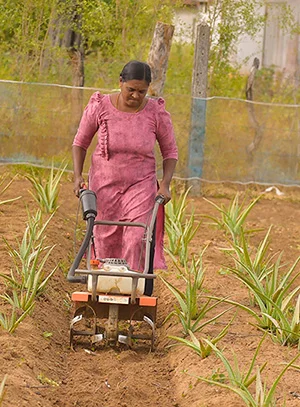
Female farmer cum owner
Vigneswaran Kamalanayaki at
work
To bypass this systemic gridlock, Cargills Food & Beverage Limited Managing Director Arjuna Kumarasinghe stepped forward with a corporate guarantee from the parent company, enabling Cargills Bank to issue micro-loans without demanding collateral.
Alongside technical assistance and irrigation equipment funded by the German development agency (GIZ) – a collaboration facilitated by Haridas Fernando, Group Manager of Agribusiness at Cargills Ceylon PLC – Cargills Bank rolled out mobile banking units to bring true financial inclusion directly to the doorsteps of the North.
To further insulate farmers from volatile market forces, the company integrated a dual-channel model. When market prices spike, farmers are entirely free to sell to any buyer of their choice. However, if the market crashes or surpluses build up, Cargills honours a guaranteed floor price of Rs. 90 per kilo at its processing plant, absorbing the risk and ensuring the farmer never loses.
The Rise of the Agripreneur

Arjuna
Kumarasinghe,
Managing Director,
Cargills Food &
Beverage Limited
The real-world metrics of this intervention are vividly visible in the backyards of Mankulam. Vigneswaran Kamalanayakie, a 37-year-old mother, manages a quarter-acre aloe vera plot adjacent to her home while caring for her young child. Utilising a modern “rain hose” irrigation system that waters the entire plot in just a few minutes, she has fundamentally altered her family’s financial trajectory. Even before her first formal leaf harvest, Kamalanayakie earned Rs. 50,000 simply by selling the aloe vera shoots generated by her crop. With her initial leaf harvest projected to bring in Rs. 100,000, she is entering a monthly earning cycle that scales up to an estimated Rs. 1,200,000 annually. She is already making active plans to double her plot to secure a multi-million rupee income.
Through Agronomy Extension Officers and dedicated field animators, these women are coached in crop management, pest control, and year-round continuous harvesting methods. They are no longer subsistence farmers vulnerable to the whims of middleman collectors; they have transitioned into bankable agripreneurs.
A Solid Pulp of Purpose
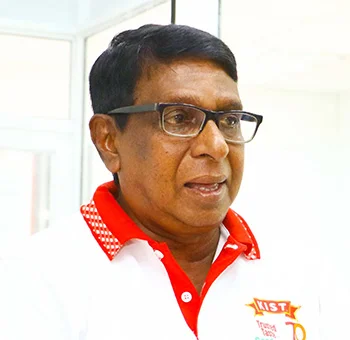
Haridas Fernando,
Group Manager,
Agribusiness,
Cargills Ceylon PLC
By leveraging its 14 collection centers across Sri Lanka, its main manufacturing facility in Katana, and over 500 retail outlets operating across all 25 districts, Cargills has built an incredibly resilient, closed-loop domestic supply chain.The Kilinochchi factory stands as the ultimate thesis statement for this corporate strategy.
Without beating the drums of self-adulation, Kist has blended humanity, national duty, corporate responsibility, and business ingenuity into a solid pulp.
In doing so, it has proven that the most delicious and wholesome aspect of a brand’s legacy isn’t just the product it puts on store shelves, but the dignity it restores to the people who grow it.
By Sanath Nanayakkare

Business
NSB Group delivers Rs.22.5bn operating profit in 1H 2026 as lending and core income strengthen
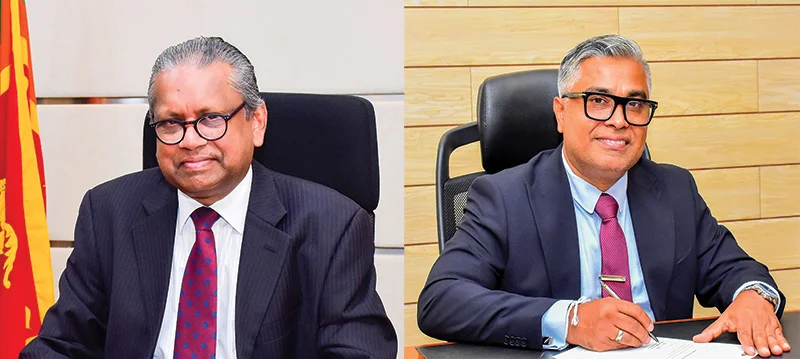
National Savings Bank Group (NSB) recorded resilient core banking performance during the first six months of 2026, supported by stronger net interest income, a notable expansion in fee-based earnings and continued growth in loans and advances. The results demonstrate the Bank’s capacity to maintain business momentum while navigating cost pressures and volatility in market-related income.
The Bank reported total operating income of Rs. 45.8 billion for the period, an increase of 3.1% compared with Rs. 44.5 billion in the corresponding period of 2025. Net operating income increased by 2.3% to Rs. 49.1 billion from Rs. 48 billion reported a year ago, providing a stable foundation for the Bank’s operations and customer-focused growth agenda.
Net interest income rose by 5.5% year-on-year to Rs. 44.2 billion, compared with Rs. 41.9 billion in the first half of 2025. This improvement was supported by a 4.7% reduction in interest expenses to Rs. 54.5 billion, despite a marginal moderation in interest income to Rs. 98.6 billion. The result reflects disciplined balance-sheet management and the Bank’s continued focus on maintaining a sustainable funding and asset mix.
The Bank also achieved substantial growth in fee-based earnings. Net fee and commission income increased by 37.0% to Rs. 1.40 billion, from Rs. 1.02 billion a year earlier. The increase underlines the growing contribution from transaction-led services and the Bank’s ongoing efforts to broaden non-interest revenue through customer-centric and digitally enabled banking solutions.
Profit before Tax (PBT) amounted to Rs. 22.6 billion, compared with Rs. 24.1 billion in the first half of 2025, while profit after tax stood at Rs. 13.4 billion, compared with Rs. 14.7 billion. The moderation in profitability principally reflected higher operating costs and the lower contribution from trading and derecognition gains. Personnel expenses increased to Rs. 13.8 billion from Rs. 11.5 billion, while other operating expenses rose to Rs. 4.3 billion from Rs. 4.1 billion.
Despite these pressures, the Bank preserved a substantial earnings base and continued to invest in the people, systems and service capabilities required to improve operational resilience and the customer experience. Income tax for the period amounted to Rs. 9.14 billion, while VAT and the Social Security Contribution Levy on financial services together exceeded Rs. 7.29 billion. In addition, the Bank declared a dividend of Rs. 7.4 billion to the Government as its sole shareholder. Accordingly, NSB’s total contribution to the Government through dividends, taxes and levies amounted to Rs. 23.8 billion, underscoring the Bank’s significant contribution to public finances and national development.
Commenting on the results, National Savings Bank Chairman Dr. Harsha Cabral PC said: “The first-half results reflect the resilience of NSB’s core business model and the enduring confidence placed in the Bank by generations of Sri Lankans. Our priority remains the prudent stewardship of public savings while supporting productive economic activity, financial inclusion and sustainable national development.”
NSB’s total assets increased by 2.1% during the first six months of the year to Rs. 1.87 trillion, from Rs. 1.83 trillion at end-December 2025. Loans and advances recorded a strong 9.1% expansion to Rs. 601.01 billion from Rs. 550.83 billion, demonstrating the Bank’s continued support for the financing needs of individuals, households and eligible institutional customers within its mandate.
Deposits, the principal source of funding for NSB, increased by 1.5% to Rs. 1.63 trillion from Rs. 1.61 trillion. The sustained growth in the deposit base reflects continued public confidence in the Bank and provides a stable platform for its savings-led business model. The Bank’s financial position remained sound, with total shareholders’ equity increasing by 4.1% to Rs. 123.91 billion from Rs. 119.05 billion. Retained earnings rose by 12.4% to Rs. 52.34 billion, further strengthening the Bank’s capacity to support future growth and absorb potential shocks.
Acting General Manager/CEO of National Savings Bank, Mr. Rohana Bandara Weerakoon, said: “Our focus is on translating the Bank’s trusted savings franchise into sustainable customer value. The growth achieved in lending, fee income and shareholder’s equity is encouraging. We will continue to strengthen digital access, service quality, cost discipline and risk management while delivering on NSB’s national mandate.”
The Bank’s profitability indicators continued to reflect the strength of its core banking activities, although higher operating expenses moderated overall returns. The net interest margin improved to 4.81% from 4.74% at the end of 2025, demonstrating an improvement in the Bank’s core interest spread. Return on assets before tax remained broadly stable at 2.46%, compared with 2.48%, while return on equity stood at 22.30%, compared with 25.08% at the end of 2025.
Asset quality improved during the first half of 2026. The net Stage 3 loans ratio declined to 2.05% from 2.52% at the end of 2025, indicating a reduction in net impaired credit exposures relative to the loan portfolio. At the same time, the Stage 3 impairment coverage ratio strengthened to 59.77% from 58.54%, reflecting improved impairment coverage against Stage 3 loans.
NSB maintained capital buffers comfortably above the applicable regulatory minimum requirements. The Tier 1 capital ratio stood at 19.72%, compared with the regulatory minimum of 8.5%, while the total capital ratio stood at 21.1%, well above the minimum requirement of 12.5%. These ratios demonstrate the Bank’s capacity to absorb potential risks while supporting continued business growth.
The Bank also maintained a strong liquidity and stable funding position. The all-currency liquidity coverage ratio stood at 311.88%, substantially above the statutory minimum of 100%, reflecting the availability of sufficient high-quality liquid assets to meet short-term liquidity requirements. The net stable funding ratio stood at 196.17%, also comfortably above the regulatory minimum of 100%, demonstrating the stability of the Bank’s longer-term funding profile.

By Hiran H. Senewiratne
CSE data indicated yesterday that the benchmark All Share Price Index moved up 0.11 percent mainly due to the petrol price reduction among some categories of fuel, market analysts opined.
Despite the lingering tensions in West Asia the market performed well.
The ASPI was up 22.93 points at 21,338.84, while the more liquid S&P SL20 was up 0.22 percent, or 13.03 points, at 6,018.37.
Market turnover was Rs 1.014 billion. Capital goods led turnover with Rs 300.64 million. During the day two crossings took place. Those crossings were reported in Access Engineering 1 million shares crossed to the tune of Rs 75 million and its shares traded at Rs 75 and Sierra Cables 850,000 shares crossed for Rs 31 million; its shares traded at Rs 36.70.
In the retail market, companies that mainly contributed to the turnover were; Sierra Cables Rs 77 million (2 million shares traded), Brown’s Investments Rs 68 million (13.3 million shares traded), CCS Rs 60 million (494,000 shares traded), Citizens Development Bank Rs 30 million (866,000 shares traded), Overseas Realty Rs 27 million (513,000 shares traded), Sampath Bank Rs 26 million (185,000 shares traded) and Commercial Credit and Finance Rs 24 million (217,000 shares traded). During the day 51 million share volumes changed hands in 15669 transactions.
Positive contributors to the ASPI were; Browns Investments (up 8.16 percent at Rs 5.30 ), Carson Cumberbatch (up 4.13 percent at Rs 749.50 ), Windforce (up 4.63 percent at Rs 40.70 ), JKH (up 0.51 percent at Rs 19.90 ) and DFCC Bank (up 0.99 percent at Rs 128.00 ).
Vallibel One (down 2.64 percent at Rs 88.50 ), Melstacorp (down 0.52 percent at Rs 190.00 ), and Hatton National Bank (down 0.33 percent at Rs 380.25 ) were top negative contributors.
Ceylon Land & Equity announced a proposed first and final scrip dividend of Rs 0.043 per ordinary share for the financial year ended March 31, 2026, subject to shareholder approval at its Annual General Meeting on September 23, 2026.
The dividend involves capitalizing Rs 39.61 million to issue 4,553,230 new ordinary shares at a consideration of Rs 8.70 per share, in the proportion of 1 new share for every 202.33 existing shares.
Shares of Ceylon Land & Equity closed down 1.16 percent at Rs 8.50.
Maharaja Foods announced a final scrip dividend of Rs 0.10 per ordinary share for the financial year ended March 31.
Following a 15 percent withholding tax deduction, the net dividend entitlement of Rs 0.085 per share will be satisfied by issuing 730,468 new ordinary shares at a consideration of Rs 16.00 per share, in the proportion of 1 new share for every 188.2354873861 existing shares held.
Shares of Maharaja Foods were trading up 0.61 percent at Rs16.50.
Yesterday the rupee was quoted at Rs 327.68/75 to the US dollar in the spot market, stronger from Rs 327.98/328.04 Friday, while bond yields were broadly steady, dealers said.
The telegraphic transfer rate for the dollar was 323.50 buying, 332.50 selling; the euro was 372.5779 buying, 386.3587 selling; and the pound was 437.1858 buying, 451.2942 selling.
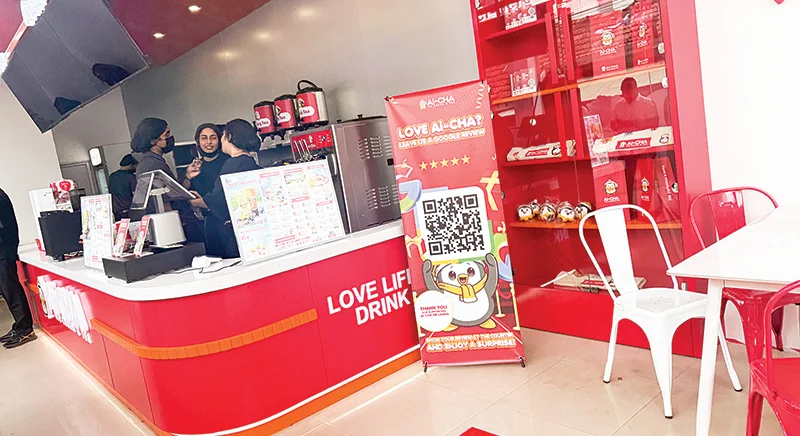
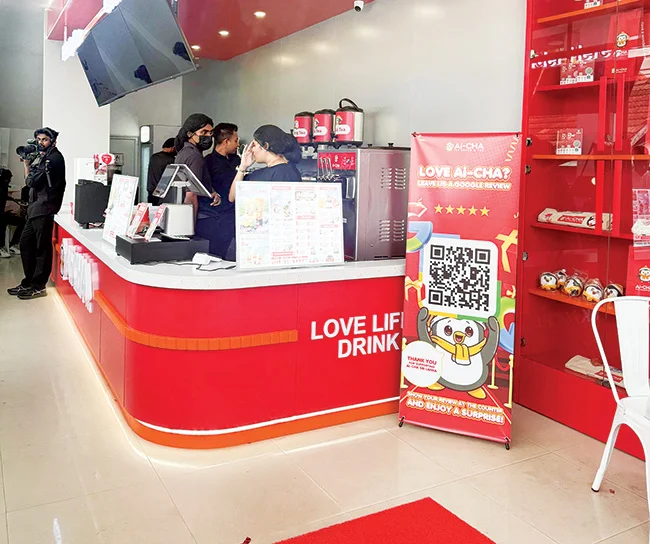
Ai-CHA, the Indonesian origin, ice cream and bubble tea brand is establishing itself as an irresistible, super-cooling refreshment among consumers in the bustling coastal town of Negombo, besides proving a big hit among other Sri Lankan urban populations as well. The numbers visiting the initial Ai-CHA ice cream parlour in Negombo is solid evidence that the ice cream brand is proving a crowd-puller of the first magnitude.
Ai-CHA Ice cream and bubble tea is already present in over 2000 locations world wide and has made striking inroads into global consumer palettes. Referred to as ‘a popular international soft-serve ice cream and bubble tea brand’, these ideal thirst quenches are made of high quality ingredients such as, milk, milk powder, cream, sugar and water. The prices are purse-easy and affordable.

Nahida, Marufa help Bangladesh brush aside Indonesia

Showers will occur in the Western, Sabaragamuwa, Southern and Uva provinces and in Kandy and Nuwara-Eliya districts

Sun directly overhead Kalpitiya, Talawa, Sinharagama, Galkadawala, Nachchaduwa, Padikaramaduwa, Gomarankalla and Verugal about 12.10 noon today (01)

SJB asks what Speaker intended to do about allegations against CJ

Navy Chief attends strategic-level discussions in Delhi

ICRS: Sustained and collective efforts critical to address issue of missing persons

‘Dates have the highest sugar content to fight Coronavirus’

Sunday Island 27 December – Headlines

#SundayIsland 17th December – Headlines

Sunday Island – 28th March

Sunday Island Headlines – 21 March

Sunday Island – 21st February – Headlines
-

 News4 days ago
Eight politicians in drug kingpin probe
-

 Features2 days ago
“Wrap Me Up in My Blazer”— A Gentlemanly Bradby Reminiscence
-

 Business4 days ago
Sri Lanka opens up: A new season of direct connectivity
-

 Features4 days ago
Redefining ageing in Sri Lanka
-
 Features6 days ago
Insights from Chieftains of Uva: Genealogy of two Kandyan Families – Part II
-
 Latest News5 days ago
Nepal-Tibet floods: What happened, what caused them and who is missing?
-

 Editorial6 days ago
Warning of power cuts: El Niño and corruption
-

 Features6 days ago
Export diversification: Missing the wood for the trees – Part I