
Latest News
Samarawickrama leads Sri Lanka to their first win of World Cup 2023

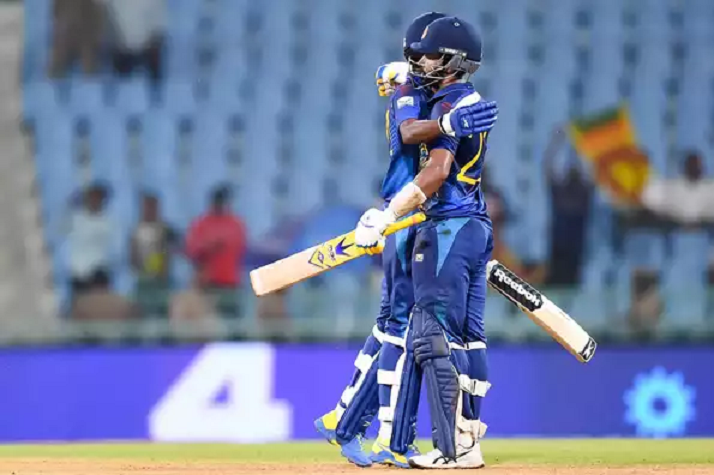
Sadeera Samarawickrama’s 91* led a measured run-chase from Sri Lanka in their comfortable five-wicket win over Netherlands in Lucknow. It was the first victory for Sri Lanka in the 2023 World Cup.
At the halfway mark, the Kusal Mendis-led side looked up against it after Netherlands posted 262, mainly thanks to a middle-order rescue act from Sybrand Engelbrecht (70) and Logan van Beek (59) but a run-a-ball fifty from Nissanka at the top of the order meant that defending a par score was always going to be difficult.
For Nissanka, it was his third consecutive World Cup fifty which set the tone for his side at the top of the order. His 52-run stand with Samarawickrama helped Sri Lanka calm nerves after twin strikes of Kusal Perera and Kusal Mendis by Aryan Dutt, both batters falling to attacking shots against the spinning ball. Once Nissanka fell caught behind off Paul van Meekeren’s bowling, Samarawickrama and Charith Asalanka added 77 crucial runs while fighting through some quality overs from Dutt, the offspinner extracting plenty from the red-soil pitch on offer.
Samarawickrama, who scored 7 boundaries in his 107-ball knock, played with patience on a pitch that demanded it. A 76-run stand for the fifth wicket with Dhananjaya de Silva all but sealed the win for Sri Lanka.
Earlier, it wasn’t the best of starts for Netherlands who opted to bat but soon found themselves reeling at 91 for 6. That’s when Engelbrecht and van Beek added 130, which is now the highest partnership for seventh wicket or below in World Cups.
It all started with Kasun Rajitha trapping Vikramjit Singh LBW with an inswinger in the fourth over of the match. The pacer, in his long seven-over opening spell, also added the wickets of Max O’Dowd and Colin Ackermann. Dilshan Madushanka, brought back into the attack after the drinks break, struck in back-to-back overs, making things even worse for Netherlands. While Bas de Leede ramped Madushanka straight to third man, the left-arm pacer needed a review to trap Teja Nidamanuru LBW.
A scoreline of 71/5 became 91/6 when Maheesh Theekshana went through the defences of Scott Edwards and it looked like the side would be bundled out sooner rather than later. That’s when Engelbrecht and van Beek set themselves up for the long haul, picking singles and couples.
There was, in fact, a period in Netherlands’ innings where they didn’t score a boundary for almost 21 overs. Engelbrecht broke off from that dry spell with a sweep against Dushan Hemantha in the 31st over. Both batters went on to score their maiden ODI half-centuries, with Engelbrecht being the more aggressive batter during the partnership.
The breakthrough for Sri Lanka came only in the 46th over, when Engelbrecht missed a scoop against Madushanka’s yorker. From there on, Netherlands’ 221/6 soon turned into 262 all-out with two balls left in the innings. Rajitha added the wicket of van Beek to return match figures of 4 for 50 while Madushanka’s scalp of van der Merwe helped him register figures of 4 for 49.
Brief scores:
Netherlands 262 in 49.4 overs(Sybrand Engelbrecht 70, Logan van Beek 59, Colin Ackermann 29; Dilshan Madushanka 4-49, Kasun Rajitha 4-50) lost to Sri Lanka 263/5 in 48.2 overs (Sadeera Samarawickrama 91*, Pathum Nissanka 54, Charith Asalanka 44, Dhananjya de Silva 30; Aryan Dutt 3-44) by 5 wickets








At the end of a wretched week in Nisshin, Bangladesh and Sri Lanka have something real to play for: an Asian Games bronze.
Both teams have a point to prove. Bangladesh recovered well from a poor start in their semi-final against Pakistan, thanks to Towhid Hridoy’s efforts with the bat, but their bowlers couldn’t defend 111 in a 13-overs-a-side game, and Mustafizur Rahman was taken to the cleaners in one of his rare poor outings in T20Is.
But at least they ran Pakistan close. In the other semi-final, India ran riot over Sri Lanka, bowling them out for 45. Sri Lanka had a second-string side on the field, but they wouldn’t have bargained for the basic mistakes they made, like the three run-outs in their innings.
Bangladesh, who can call on most of their first-choice players, start the third-place match as clear favourites, but the testing conditions at Nisshin can even up contests that look one-sided on paper. And both teams will have the motivation of bringing joy to contingents that have endured mostly barren Asian Games campaigns.
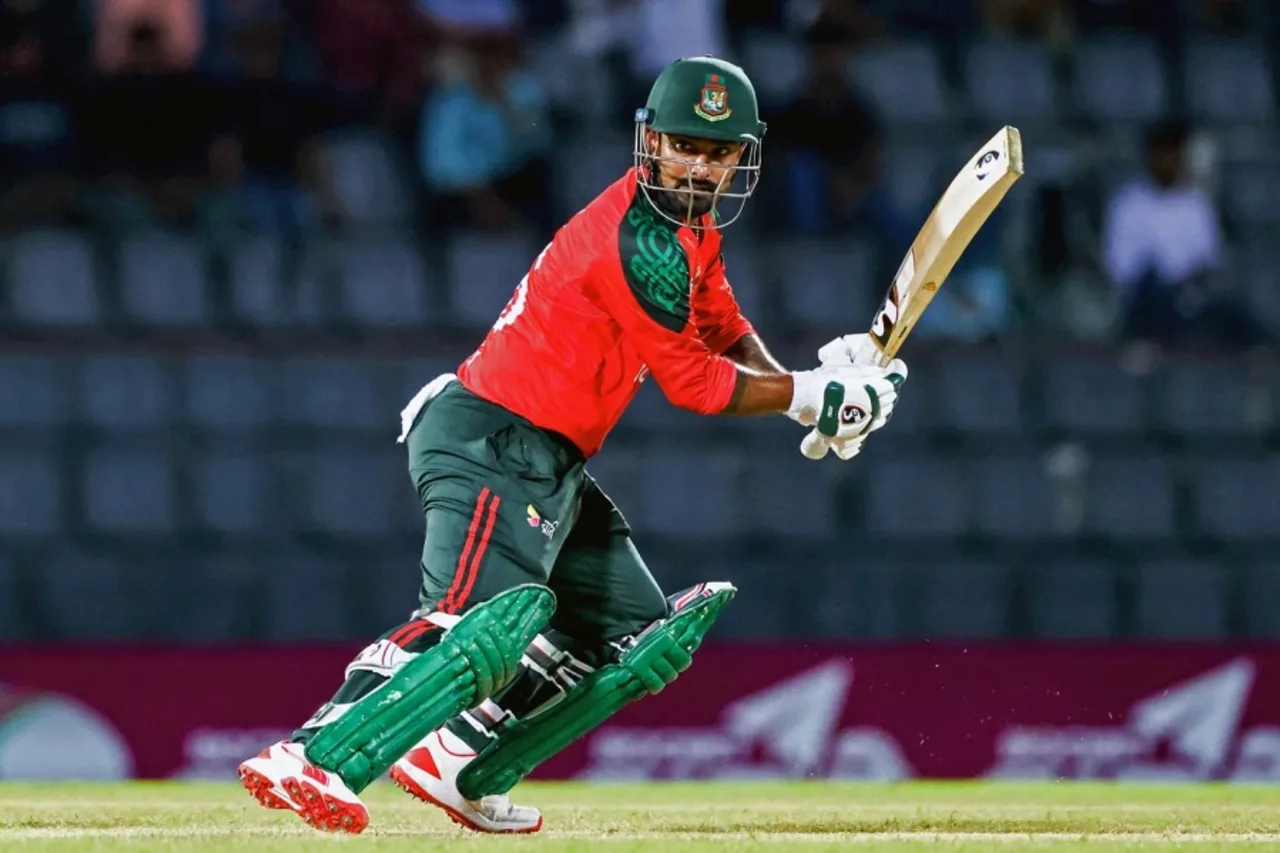
After a run-less Australia tour where Litton Das made three ducks in a row in the Test series, he was out for 2 against Pakistan. Litton faced just three balls, off which he attempted two reverse-sweeps, the second of them costing him his wicket. It was a perplexing innings on a pitch that offered a lot of turn and awkward bounce. Sometimes it’s hard to say if a batter is really out of form when he’s made a string of low scores, but Litton, who has led Bangladesh impressively in this format over the last couple of years, will want to break out of this run quickly.
Sahan Arachchige couldn’t quite muster up a captain’s performance against India, especially after his top three batters fell for ducks. He scored 9 before falling to a sweep shot against Axar Patel. He had earlier taken two wickets with his offbreaks. The 30-year-old allrounder now has the chance to put together a better show and inspire his team to the bronze.
Both teams could test their bench strength in the bronze-medal match.
Sri Lanka (probable): Sineth Jayawardena, Lasith Croospulle, Sohan de Livera (wk), Nuwanidu Fernando, Sahan Arachchige (capt), Ashen Bandara, Chamika Karunaratne, Wanuja Sahan, Tharindu Ratnayake, Vijayakanth Viyaskanth, Binura Fernando.
Bangladesh (probable): Tanzid Hasan, Saif Hassan, Litton Das (capt), Parvez Hossain Emon (wk), Towhid Hridoy (c), Mosaddek Hossain, Mahedi Hasan, Rishad Hossain, Aliss Al Islam/Nasum Ahmed, Shoriful Islam, Mustafizur Rahman/Hasan Mahmud.
[Ceicinfo]

The Wanderers Stadium in Johannesburg will host the 2027 ODI World Cup final, as it did in 2003, as well as the marquee match between India and Pakistan on October 10 at next year’s tournament. Wanderers, South Africa’s biggest ground with a capacity of over 30,000, has been preferred over Newlands in Cape Town, an iconic ground because of its mountain backdrop.
Newlands will instead host the opening match between India and defending champions Australia on October 7. So, a re-match of the 2023 final kicks off the group stage of the 14th edition of the tournament. Prior to that, the Namibia Cricket Ground in Windhoek will stage the Super Series, a three-team preliminary round which will decide which side makes it to the 12-team main event. Newlands gets a semi-final as well on November 17, with the other knockout game scheduled to take place in SuperSport Park in Tshwane (Centurion) on November 18. Zimbabwe, the co-hosts, are getting five games in the World Cup group stage and they play all of them at home.
The 12 teams – two of whom have yet to be decided – will be divided into two groups of six. Afghanistan, Australia, India, Pakistan, Zimbabwe and one of the qualifiers make up Group A. Bangladesh, England, South Africa, Sri Lanka, New Zealand and the other qualifier make up Group B. The two qualifiers will come from a 10 team tournament early next year, with the winner advancing to the group stage and the losing finalist and two losing semi-finalists to play the Super Series. A venue for the qualifiers has yet to be established but it is likely to be played either in South Africa or Namibia. The top eight teams besides the co-hosts in the ICC rankings on September 30 this year gained automatic qualification to the World Cup.
The World Cup will be staged between October 2 – to commemorate the birthday of Mahatma Gandhi, who spent two decades working as a lawyer in South Africa – and will conclude on November 21. The semi-finals and the final will have a reserve day.
South Africa, the co-host in group B, begin their campaign against New Zealand – a re-match of the 2026 T20 World Cup semi-final – at Newlands on October 9. Zimbabwe, the co-host in group A, will face Afghanistan in Bulawayo on October 11 to start their journey.
The top three teams of each group will move into the Super 7 phase, with the better fourth-place finisher across the two groups taking the seventh spot. Several teams already have their designations for the Super 7 phase and there is a chance of a second India vs Pakistan game in Cape Town on November 7.
- A1: India
- A2: Australia
- A3: Pakistan
- AB4: England
- B1: New Zealand
- B2: South Africa
- B3: Sri Lanka
If either Bangladesh or Afghanistan or any other team who are not seeded, get through their groups, they will assume seeding of the seeded team that gets knocked out.
In addition to hosting the preliminary round of the World Cup, Windhoek will host three group games, two of them involving 2019 champions England. The newly constructed Mosi-oa-Tunya Stadium in Victoria Falls, Zimbabwe got the final game of the group stages – India vs Zimbabwe on October 24 and three Super 7 matches. According to the ICC’s pre-seeding, these will be India vs Australia on October 28, Pakistan vs England on October 30 and Australia vs New Zealand on November 1.
There will be five matches played at Durban, including the final one of the Super 7 between A1 (India) and B3 (Sri Lanka) on November 14. In all there are 12 venues – Windhoek in Namibia, Victoria Falls, Harare and Bulawayo in Zimbabwe and Cape Town, Paarl, Johannesburg, Tshwane (Centurion), Bloemfontein, Durban, KuGompo City (East London) and Gqeberha (Port Elizabeth).
[Cricinfo]
[Prime Minister’s Media Division]

Bronze at stake as Bangladesh, Sri Lanka look to bring cheer to Asian Games contingents

Wanderers to host 2027 men’s ODI World Cup final as well as India vs Pakistan

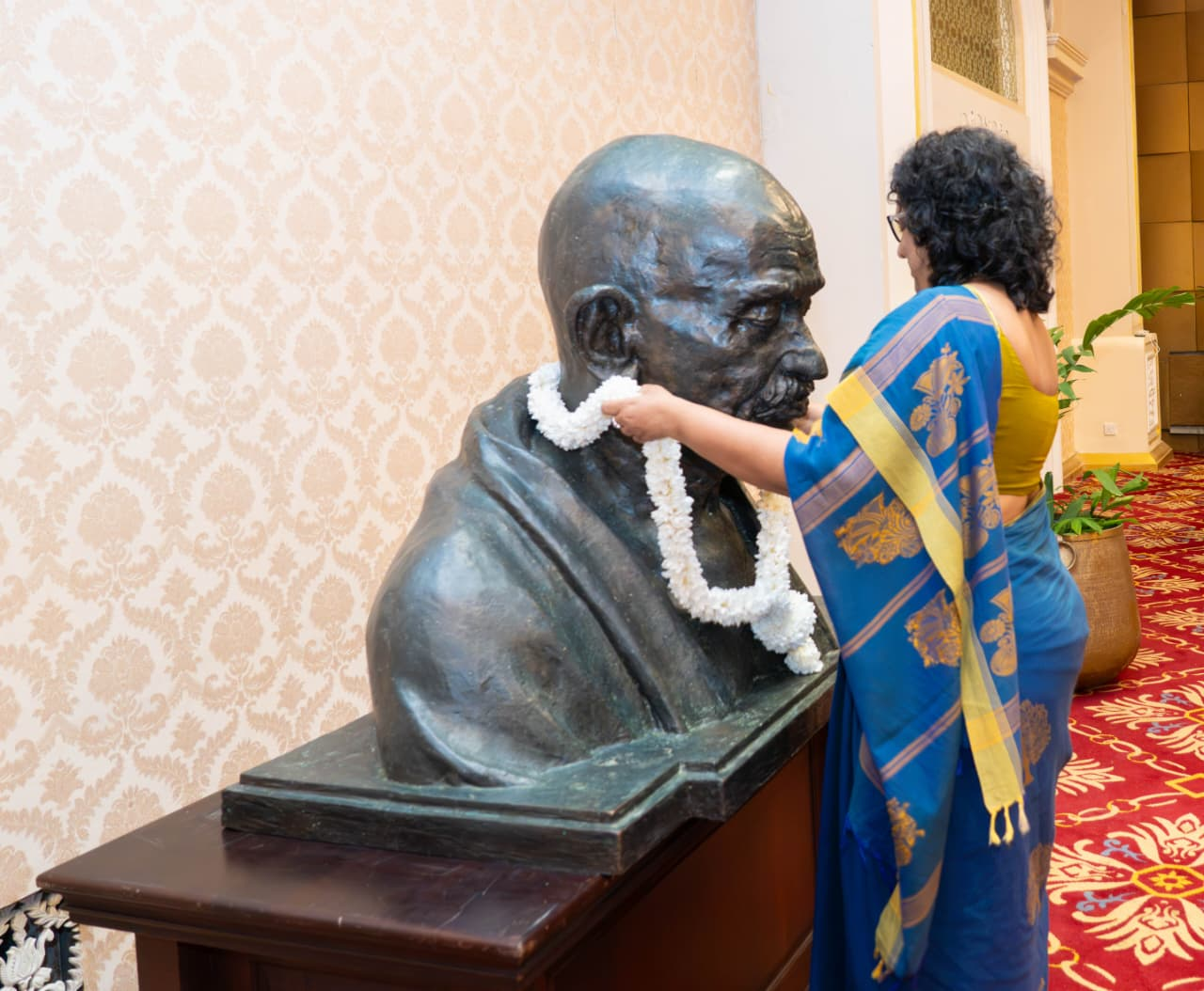
Prime Minister joins Gandhi Jayanti Commemoration

Showers or thundershowers will occur in most parts of the island after 1.00 p.m.

Unions resist tripartite EPF management plan

Two arrest warrants issued for Gnanasara thera

‘Dates have the highest sugar content to fight Coronavirus’

Sunday Island 27 December – Headlines

#SundayIsland 17th December – Headlines

Sunday Island – 28th March

Sunday Island Headlines – 21 March

Sunday Island – 21st February – Headlines
-

 Editorial7 days ago
Birth of a bad law
-

 News4 days ago
Police remove Thileepan statue in Jaffna
-

 News6 days ago
TIN mandatory for key transactions from Nov. 1
-

 Features5 days ago
The 22nd Amendment, constitutional recovery and illiberal slippage
-

 Features5 days ago
Of foreigners as CEOs of Lankan ventures
-

 News4 days ago
Sajith rejects Jt. Opp. protest sabotage claim; SJB TU chief demands remedial action
-

 Latest News2 days ago
Gold winner Tharanga gets brand-new Honda Vezel from SLAAJ
-

 Features4 days ago
Thailand’s biggest new global star …