
Opinion
Safety of mRNA vaccines: Pfizer, Moderna – Statement by Vaccine and Infectious Diseases Forum of Sri Lanka

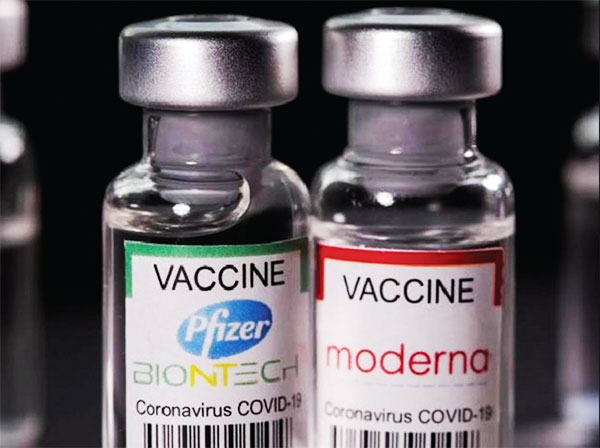
Our respected senior virologist in Sri Lanka, Professor Tissa Vitharana has written an article, on ‘Positioning science technology and research to meet new normal industrial challenges’. In paragraph 9 of this article, he has said that “I consider the Pfizer and Moderna vaccines as unsafe as they are based on the use of mRNA, which are composed of viable genetic material alone. This type of vaccine has not been used in humans before and it is uncertain how their mRNA will act once they combine with genetic material in our bodies.”
With due respect to him, the Vaccine and Infectious Diseases Forum of Sri Lanka would like to clarify its position with regards to this statement. This statement could create confusion among the public and could jeopardise the government’s efforts to vaccinate adults and children, in order to provide protection against this deadly virus. It is the decision by the global experts on vaccinology to give Pfizer or Moderna vaccine for children taking in to account of their safety and efficacy compared to all the other candidate vaccines. Many of our colleagues have already witnessed parents refusing to get the vaccine given to their children, after reading this article published in two national papers.
The Vaccine and Infectious Diseases Forum of Sri Lanka assures the safety of these vaccines for the use of humans including children.
First of all mRNA is not the genome. A genome consists of DNAs. mRNA is not the same as DNA, and it can’t combine with our DNA to change our genetic code. It is also relatively fragile, and once it is introduced in to the cell, it will be degraded within 72 hours. RNA can be transformed to DNA by one virus group called retroviruses. Human Immune deficiency Virus (HIV) is a retrovirus. They will do so by producing a special enzyme called reverse transcriptase. No other virus has that ability. Human cells do not have reverse transcriptase, and therefore, cannot convert the vaccine mRNA to DNA.
In all RNA viral diseases, the virus once it enters the host cell releases mRNA into the cell. Viral mRNA then utilizes host cell processes to produce their proteins. These proteins are then assembled together to form many daughter viruses, which in turn infects new cells. This is how viruses infect hosts. The process will go on until body defense mechanisms overcome the virus. This relationship had been there for many millions of years, even before the existence of man. But there had never been any viral RNA material incorporated into host DNA other than in retroviral infections.
Although mRNA vaccines are a relatively new technology, they are based on the same ancient premise: delivering mRNA into our cells, which they will use to manufacture a viral protein. But in this technology, it delivers only a small fragment of RNA which is only encoding spike protein of the virus. As such it does not produce anything other than the spike protein. It does not produce the virus, but only produces one single protein. The RNA fragment will be there inside the cell for less than 72 hours.
The other important consideration is that the mRNA used in vaccine making is a synthetic mRNA, not the exact viral mRNA.
In the US, an ant-vaccine group went to Supreme Court against mRNA vaccines. This group was headed by the lawyer Robert F. Kennedy Jr., nephew of ex-president John F. Kennedy, against a group of scientists including Bill Gates, the infectious diseases specialist and White House advisor Anthony Fauci and many others. The US Supreme Court dismissed the case saying that it is baseless as they could not prove it scientifically. Yet this anti-vaccine group went globally saying that these vaccines will change your DNA.
Our sincere advice to the public is that this is a false statement and that there is no scientific evidence what so ever to prove that any RNA material from a vaccine is incorporated in to our genome.
Globally, there is a rush to make vaccines and other treatment modules using this mRNA technology instead of traditional vaccine manufacturing methods, as it provides very robustly effective, safe vaccines. The manufacturing process is also very cheap and quick. There is ongoing research to produce vaccines using mRNA technology against cytomegalovirus (CMV), human metapneumovirus, respiratory syncytial virus, rabies, zika and vaccines against many cancers.
This paradigm shift of vaccine research is a solid proof of safety.
Dr. H T Wickremasinghe
Consultant Paediatrician
President
Vaccine and Infectious Disease Forum of Sri Lanka


If there exists a print media personality who does not receive the due recognition and appreciation he rightfully deserves, it undoubtedly is ‘Jeffrey’ of The Island newspaper. The works of many a journalist have been frequently highlighted and appreciated but the capabilities and efficiency of personnel of the calibre of ‘Jeffrey ‘ are, more or less, taken for granted.
In every sphere of life, professional or occupational, there are people who function, not necessarily from behind the scenes, but nevertheless perform an equally efficient service, which in all probability goes unnoticed.
To be frank, even before reading the headlines of the Newspaper, as is customary now, my eyes seek for the Cartoon of the day. Indeed, a sight for sore eyes each morning, the lovable ‘Jeffrey’ makes my day.
Suffice to say that a ‘Good Job done man’ type of occasional pat on the back, to a person who puts his very soul into his work, would touch the only place where it matters the most – his heart. If a smile could work wonders, then how much further would a word of appreciation go.
‘Jeffrey ‘ has, time and again through his cartoons, aptly proven his innovative and creative skills to present factual depiction of current affairs, both local and global. His drawing pen effortlessly covers all boundaries, irrespective of whatever nature. On a previous occasion, too, I have openly commended his abilities, finding it difficult to fathom how he could convey pertinent incidents, normally requiring hundreds of words to express, with a single drawing.
To all intents and purposes, ‘Jeffrey ‘ ranks much higher and could be considered as a rare find when compared with the numerous others actively engaged in this particular field of professionalism.
In ‘Jeffrey ‘, The Island newspaper indeed has a Cartoonist par excellence!
Jeffrey, more power to your elbow!
WILLIAM PHILLIPSZ

Scientists at Stanford Medicine have reported a discovery that could change how arthritis and joint damage are treated. In experiments on animals and human tissue, researchers found that blocking a protein linked to aging can restore worn cartilage in the knee and prevent arthritis after injury. The treatment works not by adding stem cells, but by reprogramming existing cartilage cells to behave in a more youthful way.
In aging mice, an injectable drug rebuilt knee cartilage that normally thins with age. In mice with knee injuries similar to anterior cruciate ligament tears, the same treatment prevented the onset of arthritis, a condition that often follows such injuries in humans. A pill form of the drug is already being tested in early clinical trials for age-related muscle weakness, raising hopes that a similar approach could one day be used for joints.
Human knee cartilage removed during joint replacement surgery also responded to the treatment. When exposed to the drug in the laboratory, the tissue began forming new cartilage that resembled healthy, functional joint cartilage. These findings suggest that cartilage lost to aging or arthritis might eventually be restored through injections into the joint or even oral medication, potentially reducing the need for knee and hip replacements.
Osteoarthritis affects about one in five adults in the United States and costs tens of billions of dollars annually in direct health care spending. Despite its prevalence, there is no drug that can stop or reverse the disease. Current treatment focuses on pain relief, physical therapy and, in advanced cases, joint replacement surgery.
The new therapy targets a protein known as 15-PGDH, which increases in the body with age. The research team classifies it as a gerozyme, a type of enzyme that contributes to the gradual decline of tissue function over time. Previous work from the same group showed that rising levels of 15-PGDH weaken muscles with age. Blocking the protein restored muscle strength and endurance in older mice, while forcing young mice to produce it caused muscle loss.
Unlike muscle, bone or blood, cartilage does not rely on stem cells to repair itself. Instead, cartilage cells called chondrocytes can change their gene activity. By inhibiting 15-PGDH, researchers found that these cells reverted to a more youthful state and began producing healthy cartilage again.
“This is a new way of regenerating adult tissue, and it has significant clinical promise for treating arthritis due to aging or injury,” said Helen Blau, professor of microbiology and immunology at Stanford and a senior author of the study.
There are three main types of cartilage in the body. Elastic cartilage forms flexible structures like the outer ear. Fibrocartilage is tough and shock absorbing, found between spinal vertebrae. Hyaline cartilage, also called articular cartilage, is smooth and glossy and allows joints such as the knees, hips and shoulders to move with minimal friction. Osteoarthritis mainly affects this last type.
The disease develops when joints are stressed by aging, injury or excess weight. Chondrocytes begin releasing inflammatory molecules and breaking down collagen, the main structural protein of cartilage. As collagen is lost, cartilage thins and softens, leading to pain, swelling and stiffness. Articular cartilage rarely regenerates on its own, and attempts to find stem cells capable of rebuilding it have largely failed.
In the new study, researchers compared knee cartilage from young and old mice and found that levels of 15-PGDH roughly doubled with age. When older mice were treated with a drug that blocks the protein, either throughout the body or directly in the joint, their knee cartilage thickened and regained function. Importantly, the new tissue was true hyaline cartilage rather than weaker fibrocartilage.
The results were equally striking in injured joints. In mice with ligament injuries, repeated injections over four weeks sharply reduced the likelihood of developing arthritis. Untreated animals showed high levels of 15-PGDH and developed arthritis within weeks. Treated animals moved more normally and placed more weight on the injured limb.
Detailed analysis showed that the treatment shifted the balance of cartilage cells. Cells associated with inflammation and cartilage breakdown became less common, while cells responsible for producing healthy joint cartilage increased markedly. This change occurred without the involvement of stem cells.
When human osteoarthritic cartilage was treated in the laboratory for one week, similar changes were observed. Levels of harmful gene activity fell, and signs of cartilage regeneration appeared.
The findings are encouraging but still early. While safety trials of a 15-PGDH inhibitor for muscle weakness have shown promising results, clinical trials focused on cartilage regeneration have yet to begin. Even so, researchers are optimistic.
“Imagine regrowing existing cartilage and avoiding joint replacement,” Blau said. For millions living with joint pain and stiffness, that possibility now seems closer than ever.

The RTI Commission has now confirmed what many suspected — although the RTI Act grants it independence to recruit staff, this authority is rendered toothless because the Treasury controls the purse strings. The Commission is left operating with inadequate manpower, limiting its institutional growth even as it struggles to meet rising public demand for information.
This raises an uncomfortable question: if the Treasury can repeatedly allocate billions to loss-making State-Owned Enterprises — some of which continue to hemorrhage public funds without reform — why is adequate funding for the RTI Commission treated as optional?
Strengthening transparency is not a luxury. It is the foundation of good governance. Every rupee spent on effective oversight helps prevent many more rupees being wasted through inefficiency, misuse, or opaque decision-making.
In such a context, can one really fault those who argue that restricting the Commission’s resources conveniently limits disclosures that may prove politically inconvenient? Whether deliberate or not, the outcome is the same: weaker accountability, reduced public scrutiny, and a system where opacity is easier than openness.
If the government is serious about reform, it must start by funding the institutions that keep it honest. Investing in RTI is not an expense — it is a safeguard for the public purse and the public trust.
A Concerned Citizen – Moratuwa

Shadab, Mirza, Abrar set up Pakistan’s easy win in first T20I

Shadab, Dhananjaya back as Pakistan chase in first T20I

Russia sends navy to guard oil tanker being pursued by US forces

Landslide Early Warnings issued to the Districts of Badulla, Kandy, Matale, Monaragala and Nuwara Eliya

Indian gang rape survivor back home after a week in hospital

Brilliant Bethell hundred pushes SCG Test to fifth day but Australia on target for 4-1

‘Dates have the highest sugar content to fight Coronavirus’

Sunday Island 27 December – Headlines

#SundayIsland 17th December – Headlines

Sunday Island – 28th March

Sunday Island Headlines – 21 March

Sunday Island – 21st February – Headlines
-

 News2 days ago
Broad support emerges for Faiszer’s sweeping proposals on long- delayed divorce and personal law reforms
-

 News2 days ago
Interception of SL fishing craft by Seychelles: Trawler owners demand international investigation
-

 News3 days ago
Private airline crew member nabbed with contraband gold
-

 News5 days ago
Health Minister sends letter of demand for one billion rupees in damages
-

 News19 hours ago
Govt. exploring possibility of converting EPF benefits into private sector pensions
-

 Opinion7 days ago
Remembering Douglas Devananda on New Year’s Day 2026
-

 News19 hours ago
Prez seeks Harsha’s help to address CC’s concerns over appointment of AG
-

 Features2 days ago
Educational reforms under the NPP government