
News
Safeguarding trust in Sri Lanka’s digital future

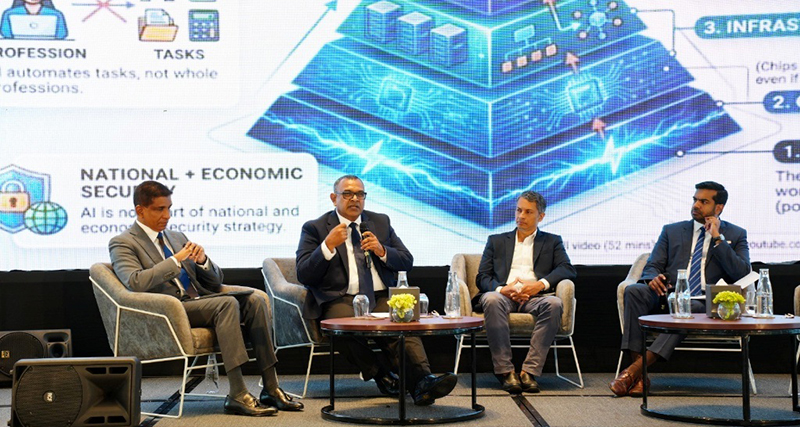
As data increasingly shapes economies, governance and everyday life, Sri Lanka reached an important milestone with the Second National Data Protection Symposium, held on 6 January 2026 at Cinnamon Life, Colombo, under the aegis of the Bar Association of Sri Lanka (BASL). The symposium, themed “Safeguarding Privacy in the Age of Intelligence – From Legal Compliance to Ethical Innovation”, brought together 27 speakers from the legal, regulatory, technology and corporate sectors, reflecting the breadth and urgency of the national conversation on data protection.
Opening the proceedings, Chairperson Revan Weerasinghe captured the spirit of the event by observing that “Data by the looks of it is key to understanding the world’s problems and rectifying it, for data drives innovation.” His remarks framed the central tension explored throughout the day: while data has immense potential to unlock innovation and economic growth, it can only do so sustainably when governed responsibly and ethically.
Addressing the gathering, BASL President Rajeev Amarasuriya emphasised the strategic moment Sri Lanka faces, noting that “Sri Lanka today has a rare opportunity to leapfrog traditional stages of development through the rapid adoption of digital technologies.” Speakers repeatedly stressed, however, that digitisation without public confidence is fragile. Trust, they argued, is the invisible infrastructure of the digital economy.
This theme was powerfully articulated by the Chief Guest, His Lordship Justice Arjuna Obeysekera, who stated: “Trust does not emerge because systems are fast or because apps are convenient… Trust emerges when people believe they remain sovereign over their identity.” He further observed that “Connectivity moves data but trust moves people. And the assurance of privacy is the bridge that connects the two.” These reflections underscored why data protection is ultimately about human dignity, autonomy and confidence in institutions.
The symposium translated principle into practice through a full day of expert presentations and panel discussions. Sessions examined practical implementation of data protection obligations, the Personal Data Protection Act as a strategic digital enabler, and the growing responsibilities of organisations and data protection officers. Panel discussions explored organisational accountability, continuous compliance, and embedding a privacy culture across public institutions and private enterprises. Sector-specific engagements addressed data protection in banking and finance, privacy risks in digital transactions and e-commerce, and the importance of consumer confidence in secure digital ecosystems. Forward-looking discussions on trust in the digital economy and the ethical boundaries of artificial intelligence highlighted the need for accountability, transparency and human oversight in data-driven innovation.
Collectively, the Second National Data Protection Symposium reaffirmed a clear message: data can drive innovation and digitisation, but only trust anchored in strong data governance and ethical practice can convert that innovation into lasting economic and social progress for Sri Lanka.



It has been reported that former Inspector General of Police (IGP) C.D. Wickramaratne has been found dead at his residence in Athurugiriya this morning (17)
it is suspected that he may have taken his own life.
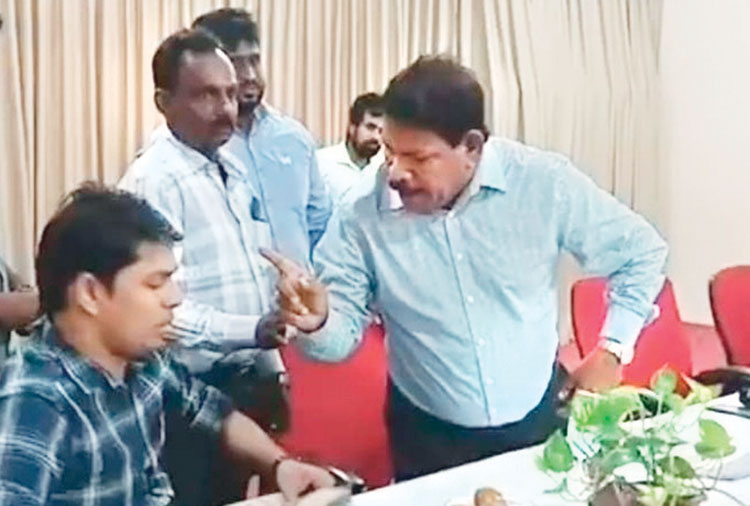
A heated argument broke out between Jaffna District MP Archchuna Ramanathan and Fisheries Minister Ramalingam Chandrasekar during the Kilinochchi District Coordination Committee meeting held yesterday (16).
A video footage of the incident shows the MP and the Minister engaging in a heated verbal exchange, following which a physical confrontation appeared to develop when the Minister attempted to grab files reportedly in the possession of MP Ramanathan.
“If you lay a hand on me, I’ll lay a hand on you too… got it?” Ramanathan is heard telling the Minister during the exchange.
Police and officials present at the meeting intervened to prevent the situation from escalating further.
The circumstances that led to the confrontation were not immediately clear.
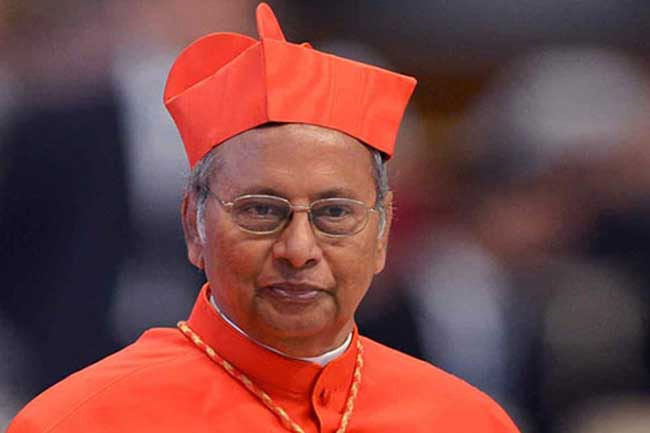
Archbishop of Colombo Malcolm Cardinal Ranjith has filed an intervening petition before the Court of Appeal in connection with a petition filed by former head of the State Intelligence Service, Major General (Retired) Suresh Sallay, challenging his arrest and detention under the Prevention of Terrorism Act over investigations into the Easter Sunday terror attacks.
The Cardinal has sought permission from the court to make submissions in relation to Sallay’s petition and requested that it be dismissed.

Former IGP C.D. Wickramaratne found dead at his residence

Venezuela earthquake: Number of known dead rises to nearly 5,000 victims

A few showers may occur in the Western, Sabaragamuwa and North-western provinces and in Kandy, Nuwara-Eliya, Galle and Matara districts

Harmer, Markram and Wolvaardt win top honours at CSA awards

War of words erupts between Minister Chandrasekar and Archchuna in North

Cardinal seeks dismissal of Sallay’s petition

‘Dates have the highest sugar content to fight Coronavirus’

Sunday Island 27 December – Headlines

#SundayIsland 17th December – Headlines

Sunday Island – 28th March

Sunday Island Headlines – 21 March

Sunday Island – 21st February – Headlines
-
 Features5 days ago
Prison riots and politics: NPP’s biggest challenge and Sri Lanka’s biggest opportunity
-

 Editorial6 days ago
What’s the world coming to?
-
 Features2 days ago
Dirty Money
-

 Editorial5 days ago
Much ado about crime: Fish or cut bait
-

 Features5 days ago
More on Saudi Arabia: ARAMCO and beyond
-

 Latest News3 days ago
Oil prices hit 1-month high as US-Iran attacks dim Strait of Hormuz outlook
-
 Midweek Review2 days ago
The sordid tale of theft and tragedy at Finance Ministry
-

 Features4 days ago
Deepening Democracy – Constitutions and Constitutionalism