
Sports
Rugby’s rich history full of silverware and remembering Commander Matthysz

By a Special Sports Correspondent
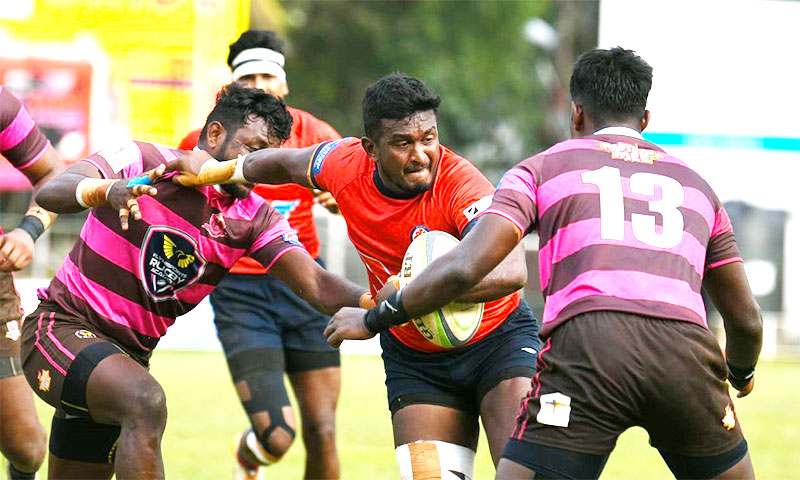
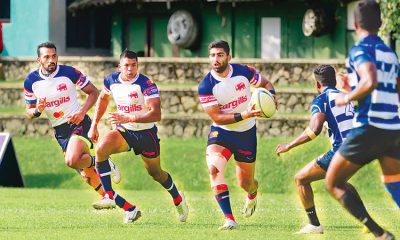
Sri Lanka rugby’s riches surface time and again when a match is played in the name of a trophy or a shield. The game played with the oval shaped ball has a long and illustrious history in this island spanning 145 years. Last Saturday (January 13) Ceylonese Rugby & Football Club (CR&FC) hosted Havelock Sports Club (Havies) in their traditional rugby encounter which is now played for the Commander Eustace Matthysz Trophy.
Rugby is a household name in this island and more than in the clubs scene games are played for shields and trophies when it comes to school rugby. When games are played in remembrance of individuals of repute it adds to the sport. The best example for this is the Bradby Shield which is played in the name of former Royal College principal E.L Bradby. This tradition can be seen in school rugby where there are so many games played for shields and trophies. The payback time for starting such practices is seen when a team is demoted to B Division, but still gets to play against A Division teams because the annual game is a traditional fixture and there is a trophy on offer. Luckily teams are not demoted in A Division club rugby; hence the tradition of all clubs playing against each other in the first round continues.
There was a period in rugby where much of its face was changed. Starting with the traditional home and away fixture club rugby had much to look forward to. But now there is no second leg between two teams if one team doesn’t make it to the Cup Competition. The bottom half teams in the league tournament are forced to play in the Plate Competition. Only the best four teams in the points table get the opportunity to contest the Cup Competition. This season reigning champions Kandy SC, CR & FC, CH & FC and Havelock SC are likely contenders to qualify for the Cup Competition of the tournament, which has one more week of matches left to complete its first round. Hence it’s these four teams which would see a rematch in the second round of the tournament.
The CR & FC vs CH & FC game and the CR & FC vs Havelocks SC games took top billing. But all that changed in the early 1990s when some renegade players from CR & FC left the Longden Place club and joined Kandy SC; going on to make the Nittawela Club a force to be reckoned with in the club rugby scene. Even this season despite the much publicity given for the CR & FC vs Havies game all roads will lead to Nittawela this Saturday (January 21) when the all-conquering Kandy SC, under the leadership of Lavanga Perera, hosts CR & FC in a game that will decide the leader of the points table after the first round of matches. Still with all the planning at matches in Western Province venues, the Nittawela Stadium, up in the central hills of Kandy, remains the much-visited ground to attract large crowds.
Another tournament that has still held on to its lofty status is the Clifford Cup competition. The trophy to be given away at this tournament was initially introduced by Lady Clifford for the game between All Ceylon and United Services Kandy. Match arrangements were to coincide with her birthday which fell on August 26, but the match was postponed and played on September 2. The war disturbed the tournament and it was revived as a quadrangular in 1926 before being recognized as the main tournament for clubs in 1950. Havelocks SC were the first winners of this event when it took the form of a fully-fledged inter-club league rugby tournament. The cup was used at rugby for many years after that, but it lost its pride when many other trophies were awarded. It was last offered in 1985 before it resurfaced in the rugby scene when SLR decided to bring the trophy back as a piece of silverware in rugby.








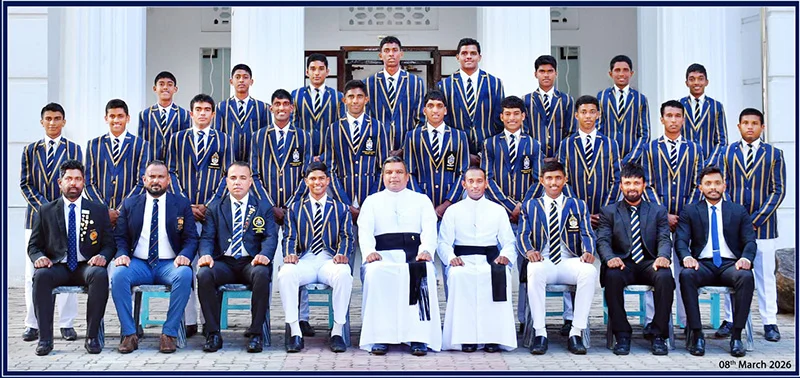
St. Peter’s Team with officials
Seated (ffrom left) R.P.H.P. Perera (Trainer and Physiotheraphist), Nalin Wijesinghe (Head Coach), Rohan Fernando (MiC), Enosh Peterson (Captain), Rev. Fr. Rohitha Rodrigo (Rector), Rev. Fr. Praveen Wijesekara (Priest in Charge), Asadisa Thejana (Vice Captain), Thushara Madushan (Asst. Coach), Dinuka Godakanda (2nd XI Coach).
Second row (from left) Dineth de Silva, Tharin Senvidu, Hiruka Silva, Joshua Sebastian, Sadeesha Kariyawasam, Savi Fernando, Jason Fernando, Thareen Sanketh, Janith Panditharathne, Standing Yathindra Jayaweera. Back row (from left) Dinsara Rathnaweera, Shadeesha Silva, Thenura Dissanayake, Shavidu Silva, Dimalsha Jayawardana, Evan Joshua Rodrigo, Menura Dissanayake, Oshadha Akalanka.
By Reemus Fernando
Unbeaten St. Joseph’s College will start as clear favourites when they meet arch-rivals St. Peter’s College in the prestigious “Battle of the Saints” Big Match, which gets underway at the SSC Grounds today.
Joes, led by Rishma Amarasinghe, arrive with an impressive unbeaten record this season and a well-balanced side that has shown both consistency and match-winning ability. With memories of their historic 2008 triumph still cherished, the Josephians will be determined to emulate that famous side led by Ruwantha Fernandopulle, which ended a 35-year drought. However, they too are currently in the midst of a long wait for another outright win in the series and will be eager to break that deadlock.
A major strength of the Josephian outfit lies in their formidable spin department. The inclusion of Sri Lanka Under-19 spinner Vigneswaran Akash further strengthens an already potent attack featuring Nushan Perera, who has claimed 69 wickets this season, and Vishwa Peiris with 50 scalps. Together, they form arguably the most dangerous spin unit in the schools circuit this year.
Their batting unit has also been equally impressive. Aveesha Samash has been the standout performer, amassing close to 800 runs, including a century and seven fifties. Skipper Amarasinghe has led responsibly, while Yenula Dantanarayana, Dilpa Maduranga and Senuja Wakunagoda have all made valuable contributions. This depth in batting, coupled with their bowling strength, makes Joes a formidable opponent.
In contrast, St. Peter’s College may not boast many outright victories this season, but they remain unbeaten thanks largely to a resilient and cohesive batting lineup. Led by skipper Enosh Peterson, who has found form at the right time with an average close to 40, the Petes will rely heavily on their batsmen to challenge the favourites.
Asadisa Silva has been exceptional, scoring 687 runs at an average of 53, including three centuries. He has been well supported by Joshua Sebastian, who averages 52, while Savi Fernando has accumulated over 500 runs. Jason Fernando has also contributed consistently, adding further stability to the lineup. The return of Thareen Sanketh from a shoulder injury is another positive, as he has shown signs of regaining form.
However, St. Peter’s face concerns in their bowling department. Off-spinner Sadeesha Silva, with over 40 wickets, and left-arm spinner Janith Panditharathna, who has claimed 27 wickets, have been the main contributors. Beyond them, the attack has lacked penetration, which could prove costly against a strong Josephian batting lineup.
It will also be interesting to see how both teams utilise the SSC conditions, particularly their pace bowlers, as neither side has seen significant impact from their seam attacks this season.
With Joes boasting superior balance and momentum, they will look to press for a rare outright victory. Meanwhile, the Petes, driven by their batting resilience, will aim to defy the odds and maintain their unbeaten run. The stage is set for another thrilling chapter in this historic rivalry.
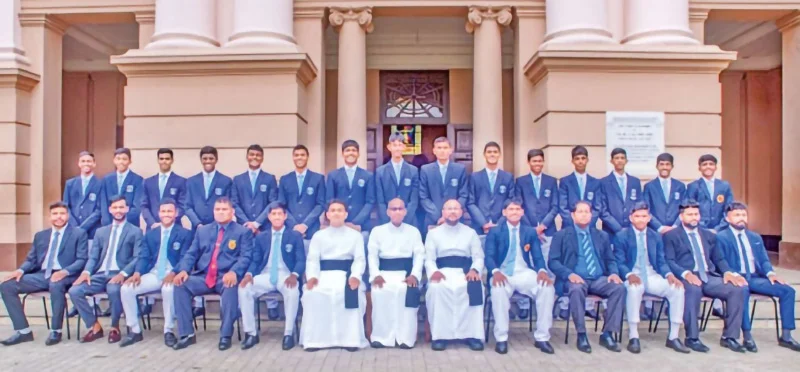
St. Joseph’s Team with officials
Seated (from left) Lahiru Wickramasinghe (First XI Asst. Coach), Lakmal de Silva (First XI Head Coach), Nushan Perera, Asiri Caldera (First XI MiC), Rishma Amarasinghe (Captain), Rev. Fr. Samesh Anthony (Prefect of Games), Rev. Fr. Ranjith Andradi (Rector), Rev. Fr. Priyan Tissera (Vice Rector), Senuja Wakunagoda (Vice – Captain), Sanjeewa Fernando (Second XI MiC), Aveesha Samash, Pradeep Munasinghe (Second XI Coach). Hasith Dilhara (Fielding coach), Miranga Wickramage (First XI Asst. Coach)
Standing (from left) Chethina Kavinda, Mario Suraweera, Dilpa Maduranga, Vishwa Peiris, Dihen de Silva, Nimthaka Goonewardena, Yenula Dantanarayana, Chamath Perera, Nethula Damthusa, Nirwan Jayathilaka, Demion de silva, Pamoda Dalpadado, Disinu Samarasingha, Thisanga Perera, Vigneshwaran Akash.
15TH STAFFORD MOTORS – MCA T20 LEAGUE CRICKET TOURNAMENT
A blistering unbeaten 105 off 38 balls with eleven boundaries and seven maximums by Sandeepa Halangoda was the highlight of Saturday’s matches of the 15th Stafford Motors – MCA G division T20 league cricket tournament.
Saturday’s matches were played at four venues, the MCA , D S Senanayake College ground, Dharmapala College ground and SLC ground Bandaragama.
In the morning games,
JF&I packaging defeated Pyramid Wilmar by four wickets despite Umeda Madushan’s three wicket haul at the MCA grounds.
In a low scoring game at Dharmapala College grounds in Pannipitiya, CDB ‘B’ restricted Jetwing Travels to 78 runs and won the game with six wickets in hand and 11 overs to spare.
In a one sided game at the D S Senanayake College ground, Emar Pharma registered their third win in four outings by annihilating Synergen Health by 162 runs. Dushyantha Darshana contributed with a half ton and Desha Fernando captured four wickets for the winners.
At the Sri Lanka Cricket [SLC] ground in Bandaragama Maliban Biscuits took the lead of group A of the tournament with a net run rate boosting win over WSO2 . Maliban restricted WSO2 to 103 runs and passed the target in 8.2 overs.
In the evening games,
At the MCA grounds, Future Life Holdings led group D with a close 14 run win over Singer Sri Lanka. Srimal Peiris and Mithun Jayawickrema shared seven wickets between them to restrict Future Life to 152/8 but Singer fell short of by 14 runs.
Alaris Lanka and Wiley Global shared points at the Dharmapala College grounds as their game was abandoned without a toss due to rain and wet ground conditions.
At the D S Senanayake College grounds, Mobitel powered by an unbeaten ton by Sandeepa Halangoda [105*]and half tons by Dasun Bandara [55] and Sachin Bulathsighala [64*] overcame 99X by 141 runs.
In a rain shortened ten over game at SLC ground Bandaragama LOLC Insurance overcame Regnis Appliances by 21 runs
At MCA grounds:JF&I Packaging by four wickets
Pyramid Wilmar
132/9 in 20 overs [Sahas Vihanga 35, Malintha Peiris 14, Umedha Madushan 19,Vishal Akash 20, Udara Athapttu 17*; Dihan Darshan 1-16, Isanka Lakshan 3-21, Chamath Yatawara 1-21, Gayan Hasanka 1-25, Dinesh Vishwajith 2-10]
JF&I Packaging
133/6 in 19.3 overs [Chamath Yatawara 16, Dhanushka Kevitiyagala 14, Sarinda Malavige 22, Tiran Dhanapala 26,Gayan Hasanka 25; Budhdhika Herath 1-32, Umeda Madushan 3-36, Udara Athapaththu 1-14, Chandimal Chanaka 1-21]
Future Life Holdings by 14 runs
Future Life Holdings
152/8 in 20 overs [Kavindu Ranahasa 60, Neluka Dilshan 13, Savindu Rodrigo28, Praveen Wanniarachchi 10; Mithun Jayawickrema 3-22, Gimhana Hettiarachchi 1-25, Srimal Peiris 4-34]
Singer Sri Lanka ‘B’
138/10 in 19.3 overs [ Sheyal Imesh 27, Ahamed Rifad 11, Mithun Jayawickrema 21, Akila Samarakoon 19, SajithSanjeewa 18; Tharuka Sooriyarachchi 1-19, Sahan Ranasinghe 2-14, Neluka Dilshan 1-22, Praveen Wanniarachchi 2-21, Malshan Lakshitha 2-32, Prabath Wijesinghe 2-08]
At Dharmapala College grounds:
CDB ‘B’ by six wickets
Jetwing Travels
78/10 in 19.5 overs [Budhdhika Chathuranga 17, Ranusha Pigera 16, Dinuka Peiris 17; Vishwa Rathnayake 1-07, Chathuranga Dikkumbura 1-13, Themira Niyomal 2-13, Dhanushka Dharmasiri 1-08, Isuru Jayaranga 2-12, Chamod Madushan 1-09]
CDB ‘B’
79/4 in 9.0 overs [Isuru Jayaranga 13, Themira Niyomal 14, Saman Ambilimeegama 22*, Dhanushka Dharmasiri 10*; Sanjeewa Prasanna 2-09, Dushantha Prasadh 1-22, Ashan Wijerathne 1-22]
At D S Senanayake grounds:
Emar Pharma annihilate Syngern Health by 162 runs
Emar Pharma
201/7 in 20 overs [Deshan Fernado 46, Dushyantha Darshana 63, Janith Jayasinghe 29, Devinda Ayesh 29; S Thuwaragashan 4-37, Isuru Weerasinghe 2-30]
Synergen Health
39/9 [all out] in 8.1 overs [Chanul Gawwrawamanna 07*; Deshan Fernando 4-20, Chandana Dodangoda 2-16, Devinda Ayesh 2-02]
Halangoda’s ton powers Mobitel to a 141 run win
Mobitl Pvt Ltd
249/3 in 20 overs [Krisha Santhusha 11, Dasun Bandara 55, Sachin Bulathsinghala 64*, Sandeepa Halangoda 105*; Saranga Liyanage 1-62, Arjuna de Silva 2-35]
99X
108/8 in 20 overs [Yasith Fernando 26, Sameera Piyasundera 22, Arjuna de Silva 29; Sachin Indrarathne 1-19, Sanesh Ekanayake 1-07, Rangana Rajapaksha 2-15, Budhdhika Hewa 1-18, Krishan Santhusha 1-21, Sandeepa Halangoda 1-05]
At SLC ground Bandaragama:
Maliban Biscuits by eight wickets
WSO
2 103/10 in 19.3 overs [Osanda Herath 47, Sasmitha Dilshan 10, Shan Anjana 12; Chamara Rathnayake 2-14, Dilip Sandaruwan 1-05, Chathuranga Dewapriya 3-21, Tharindu Siriwardena 2-21, Dilan Chathurng 1-22, Mohamad Shilmi 1-19]
Maliban Biscuits
107/2 in 8.2 overs [Tharindu Siriwardene 17, Gihan Anuruddha 2-44, Mohamed Shilmi 26*; Brian Benett 1-29, Shan Anjana 1-27]
LOLC Insurance by 21 runs in 10 over game
LOLC Insurance
108/6 in 10 overs [Tharindu Mohan 31, Asanka de Silva 14, Dinesh Chathuranga 34; Tharang Dammika 1-21, Asela Sanjeewa 1-24, Imalka Fernando 2-07]
Regnis Appiiances
87/5 in 10 overs [Gaveen Yatawara 26, Tharang Dammika 13, Yahal Samantha 17, Nimesh Madushanka 12*; Dinesh Chathuranga 2-20, Tharindu Mohan 1-17, Neranjaya Madushanka 1-10, Vishwa Kumara 1-03]


African football’s governing body has stripped Senegal of the Africa Cup of Nations (AFCON) title they won in a chaotic final two months ago and declared Morocco the champions.
In a stunning decision, the Confederation of African Football (CAF) said on Tuesday that its appeals board ruled that Senegal is “declared to have forfeited” the match, a 1-0 victory. The result, it said, was now “being officially recorded as 3-0” in favour of host nation Morocco.
At the January 18 final in Rabat, Senegal’s players walked off the pitch, led by coach Pape Thiaw, in protest against a penalty awarded late in regulation time to Morocco.
When play resumed after a delay of about 15 minutes, Morocco forward Brahim Diaz’s penalty was saved. In extra time, Pape Gueye scored the decisive goal that saw Senegal become champions of Africa for the second time.
The heated final also saw supporters trying to storm the field, players scuffling on the sidelines, reporters from the two countries fighting in media areas, and a bizarre sequence in which Moroccan ball boys tried to seize a towel being used by Senegalese goalkeeper Edouard Mendy – in an apparent bid to distract him and help their team win the continental title.
At a disciplinary hearing in January, CAF imposed fines of more than $1m as well as bans for Senegal and Morocco players and officials, but it had left the result untouched.
The case could go to a further appeal at the Court of Arbitration for Sport.
[Aljazeera]

Our objective is to ensure that the Commission to Investigate Allegations of Bribery or Corruption operates as an independent institution, free from any external influence – PM

Showers above 50 mm can be expected at some places in the Central, Sabaragamuwa and Uva provinces and in Ampara district.

Oil nears $110 a barrel after gas field strike

Iran’s intelligence minister Esmail Khatib killed in air strike

Heat Index at ‘Caution Level’ in the Western, Sabaragamuwa, North-central, Southern and North-western provinces and in Monaragala, Mannar, Vavuniya and Mullaitivu districts

Pay hike demand: CEB workers climb down from 40 % to 15–20%

‘Dates have the highest sugar content to fight Coronavirus’

Sunday Island 27 December – Headlines

#SundayIsland 17th December – Headlines

Sunday Island – 28th March

Sunday Island Headlines – 21 March

Sunday Island – 21st February – Headlines
-

 Business3 days ago
Browns EV launches fast-charging BAW E7 Pro at Rs. 5.8 million
-

 Life style4 days ago
From culture to empowerment: Indonesia’s vision for Sri Lanka
-
 Opinion6 days ago
M. D. Banda: Memories of Appachchi – II
-
 Business5 days ago
Sri Lanka Institute of Information Technology raises the bar for academic excellence
-

 Latest News4 days ago
QR code system will be implemented for fuel with effect from 06.00 a.m. today (15th)
-

 News2 days ago
Australian HC debunks misleading travel risk claims for Sri Lanka
-

 News1 day ago
CIABOC questions Ex-President GR on house for CJ’s maid
-

 News5 days ago
Crypto loopholes funnel Lankan funds abroad