
Sports
CR start Clifford Cup battle without Kandy SC


By A Special Sports Correspondent
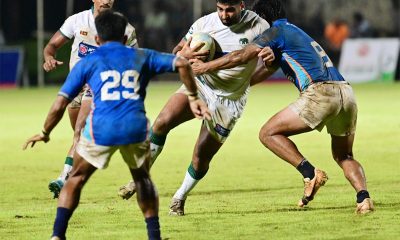
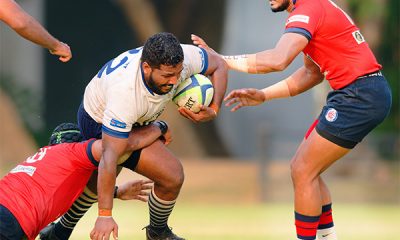
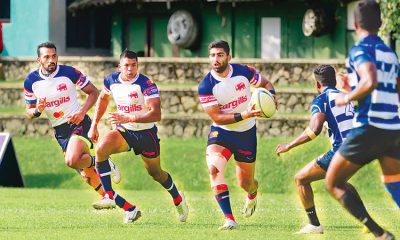
Ceylonese Rugby & Football Club (CR&FC) will be hot favourites to win the knockouts when the ‘Clifford Cup’ unfolds another chapter with seven out of the eight A Division teams battling for honours. The knockout tournament is scheduled to start today (February 28) with a quarter-final match between Police SC and Air Force which is scheduled to take place at Longden Place this evening. The other quarter final matches are: Havies vs Navy (February 29) and CH&FC vs Army (March 1). CR&FC receives a bye and moves to the semi finals.
This year’s runners-up at the league rugby tournament, Kandy SC, has pulled out of the tournament citing disagreements over venue arrangements for the knockout tournament. Kandy SC wanted all their matches in the Clifford Cup to be played at Nittawela, but the organizer of the tournament- Sri Lanka Rugby (SLR)-was not in favour of this request. This was the same scenario at the tournament last year too with Kandy SC pulling out of the tournament due to a similar disagreement.
Kandy SC could end up being the ‘looser’ for the decision taken to hold the SLR to ransom. They are not the champions this season and fans and the team’s sponsor would have received a golden opportunity to see the Nittawela side bounce back from two defeats had they opted to play in the knockouts. This Kandy SC side is a young outfit and the players need match practice and exposure at top level games. Given that most of the Kandy SC players also shun national duty, playing in all domestic tournaments would be just what the ‘doctor’ ordered for the players based in the cool climes of central province.
The Clifford Cup will now have to proceed without Kandy SC. CR&FC has taken over the slot that Kandy SC occupied as ‘kings of local rugby’. The second and third best teams in the knockout tournament will be planning their game around CR&FC, which has raised their game many notches with hard work, commitment and discipline. Changes like this in the top spot of rugby serves the game well. This writer is not writing with malice directed at Kandy, but there is now a breath of fresh air in the domestic rugby scene with a team from Colombo breaking Kandy SC’s dominance in the game played with the oval shaped ball. It would have been good for CR&FC if Kandy SC played in this tournament because that would have presented them with an opportunity of beating them thrice in a row and apart from giving western province the feel that there is a rugby kingdom here as well.
This concept of ‘the enemy or rival’ at sport is an interesting one. The Kandy-CR&FC rivalry began during the early 1990s when several players from Longden Place left Colombo and headed for Kandy SC over a captaincy dispute. Since then, these two teams have made their traditional encounter one hell of a contest; akin to a cricket big match like the Royal-Thomian. Despite whatever disagreements Kandy SC should have played in the knockout for the sake of playing against their arch-rival, CR&FC. Kandy’s absence is surely going to make CR mourn the loss of a much looked forward to battle at rugby; akin to a quarrel by two lovers.
By the way, the last week of matches at the league tournament was hectic and rugby analysts and statisticians at SLR probably had to work on their calculators and recall lessons on arithmetic to make the final points table. Interestingly after the first and second slots were decided it would have taxed the brains of SLR’s recorders of the game to find the third and fourth place finishers of the league tournament. Now, we are told by the SLR that Havelocks SC finished third and the fourth place was taken by Police SC (The eventual Plate Championship winner in the league) despite the ‘cops’ not booking a slot in the Cup Competition of the tournament. Only the teams finishing among the top four places in the points table after the first round of the league tournament were pooled into contest the Cup Competition. The rest of the teams contested the Plate Championship and Police did well to win that tournament despite losing to Air Force in the 10th and final week of the tournament. The surprise is that CH&FC, despite playing in the Cup Championships, finished fifth in the league tournament. A cursory look at the rest of the places in the points table reveals the following: Air Force Sports Club (sixth), Army Sports Club (seventh) and Navy Sports Club (eighth).
Havies can find itself being rated as the ‘dark horse’ at the upcoming Clifford Cup tournament; given the fact that they have improved with every game this season. Led by hooker and playmaker Azmir Fajudeen the players from the ‘Park Club’ have given CR&FC a run this season; losing 25-10 in the first round of the league tournament and then going down fighting 12-9 in the second-round game in the league tournament. However, CR&FC will receive a bye in the quarter finals of the knockout and move to the first semi finals scheduled for March 5. The second semi final of the tournament is scheduled for March 6 and the final on March 9. Both semi finals and the final are scheduled to be played at Race Course.
CH&FC can pat themselves on the back for a ‘well done’ this season, because they finished a hopeless eighth (Last) during last year’s league tournament. But it must be commended that the Gymkhana Club players have decided to stay in contention for more honours this season and contest the Clifford Cup. Last season (2022/23) even CH&FC pulled out of the Clifford Cup knockouts.
The Clifford Cup is one of Asia’s longest used pieces of silverware given away during presentation ceremonies at sport. The trophy came into being on September 2, 1911 when Lady Clifford presented this trophy to be given away at the game between All Ceylon and United Services and played in Kandy. The cup later served as the trophy given away in a quadrangular tournament. It was later on offer for the winner of the domestic inter-club league rugby tournament. Rugby records show the huge fan following for rugby when teams contested for the Clifford Cup. The cup was then used to be presented to the winner of the inter-club knockout tournament in 1985 and served this purpose for many years.









Football’s Asian Cup, hosted by Saudi Arabia, could be moved back a year to 2028 following a series of attacks on the country by Yemen’s Houthis.
The continental tournament will be rescheduled “if we need to” but the organisers are in “no hurry” to make a decision, Asian Football Confederation President Sheikh Salman bin Ebrahim Al Khalifa said on Thursday.
The 2027 Asian Cup is supposed to kick off on January 7 in the Saudi cities of Jeddah, Riyadh and al-Khobar.
The kingdom has in recent days come under sustained attack in a dramatic escalation from the Houthis.
“We can wait until the end of November,” Al Khalifa told reporters in Zurich on Wednesday about a decision on the fate of the Asian Cup.
“Things can change very quickly for better or worse in the region, and it is a question of seeing what happens,” he added.
“If we need to make a decision then we will, but we could move back a year to 2028 if we need to.
“But at the moment we are monitoring the situation and everything is on schedule.”
Cristiano Ronaldo’s Al-Nassr saw their Asian Champions League match delayed by an hour on Monday after Saudi Arabia’s Civil Defence said it had intercepted a missile fired towards Riyadh.
Three matches in Saudi domestic football, including one involving Al-Nassr, were postponed this week.
(Aljazeera)


All Island Schools Games Athletics Championships
by Reemus Fernando
The Under 18 boys’ shot put meet record will be under severe threat today, when the most talked-about thrower of the last All Island Schools Games Athletics Championships takes to the field on the opening day at Diyagama.
Mayon Rajasinghe, now competing for his third school in four years, has shown steady progress this season and appears to be peaking at the right time to attempt another record-breaking performance on the junior circuit.
Having recently set a new meet record of 17.31m at the Western Province Schools Games, Mayon will now try to surpass the All Island Schools Games Under 18 record of 17.15m.
The first two age-category records in the Games’ shot put event already bear his name. He set the current Under 14 record of 15.13m while representing Prince of Wales College, Moratuwa. Last year, while attending St. Joseph’s College, Darley Road, he shattered the Under 16 meet record with a throw of 18.57m using the 4kg shot. It is the furthest any Sri Lankan has thrown in the Under 16 category at any meet, from the Junior National Championships to the Sir John Tarbat Senior Championships to the Schools Games.
Yet the outstanding performance did not receive the recognition it deserved. His father, who also trains him, was adamant that the then 16-year-old deserved the meet’s Best Athlete title. The organisers disagreed, citing the differing weights of implements across age categories as their reason for setting the performance aside. No clear criteria had been announced before the meet, which made such disappointment all but inevitable. Senior Rajasinghe’s outburst after the presentation ceremony, and the social media backlash that followed, have had an effect: the Ministry of Education has now published criteria for selecting the meet’s best athlete. However, it remains doubtful whether the criteria in the competition manual can offer athletes in different age categories and disciplines an equal opportunity to have their performances assessed fairly.
This year Mayon represents Holy Cross College, Kalutara. He has picked up where he left off last year, breaking record after record, and is poised to make an impact once again.
The championship begins with a card of eight finals. Around 5,000 athletes in the Under 14, 16, 18 and 20 age categories, representing all nine provinces, will take part in the five-day event after qualifying through house, divisional, zonal and provincial competitions.

The much-anticipated 57th Annual Saints’ Quadrangular Tournament which brings together four of Sri Lanka’s leading Catholic schools, St. Anthony’s College, Kandy, St. Benedict’s College, Colombo 13, St.Joseph’s College, Colombo 10, and St. Peter’s College, Colombo 04, for a weekend of spirited competition, camaraderie and nostalgia is scheduled to take place this weekend (weather permitting).
This year’s tournament is being hosted by the St. Peter’s College Old Boys’ Union (SPCOBU) during its Centenary year, marking 100 years since the Union was founded in 1927. The Centenary celebrates a century of service to the College and the Peterite community, under the theme “Honouring the Past, Strengthening the Present, Inspiring the Peterite of Tomorrow.”
The origins of the ‘Saints Quadrangular Tournament’ trace back to 1963, during the Diamond Jubilee celebrations of St. Benedict’s College. An open invitation was extended to schools across the country for a cricket tournament, and coincidentally, only the above three premier Catholic institutions joined
What began as a two-day cricket encounter has evolved into a multi-sport carnival that continues to embody the true spirit of sportsmanship and fraternity.
In 2002, the organizers introduced a 25-over Cricket Tournament for players aged 40 and above, allowing past cricketers to once again represent their beloved alma mater. Two years later, in 2004, Basketball was added to the lineup, enriching the event further given the strong basketball heritage of the four schools.
Continuing its evolution, 7-a-side Rugby was introduced in 2014, transforming the Saints’ Quadrangular into a vibrant sports carnival that now features three major sports across four tournaments namely Cricket, over 40 Cricket, Basketball, and Rugby.

Asian Cup in Saudi Arabia could be postponed by a year amid Houthi attacks

Houthi missile attack on Yemeni presidential palace kills five, minister says

Physical development must be matched by the enrichment of people’s inner lives through aesthetics and culture – PM

Review of the operations of the 1818 Hotline introduced to report drug-related information

Showers in the Western, Southern, Central, Sabaragamuwa, North-Western and Northern provinces and in the Anuradhapura District

SJB: Govt. trying to reappoint Jayakody, who resigned from Cabinet amidst coal scam

‘Dates have the highest sugar content to fight Coronavirus’

Sunday Island 27 December – Headlines

#SundayIsland 17th December – Headlines

Sunday Island – 28th March

Sunday Island Headlines – 21 March

Sunday Island – 21st February – Headlines
-

 News6 days ago
Sri Lanka escalates anti-graft drive with Shiranthi’s jailing
-

 News7 days ago
NPP govt. reminded of its responsibilities as US warship leaves Colombo
-
 Latest News7 days ago
Farhan, Sadaqat help Pakistan ace 183 chase to go 1-0 up
-

 Latest News5 days ago
Farhan and Sadaqat help Pakistan seal series in style
-

 News6 days ago
Iranian ships stranded, Lanka fears US sanctions
-

 Latest News3 days ago
Nissanka’s return headlines Sri Lanka’s Test squad against Pakistan
-
 News7 days ago
Interdicted top House official Kularatne receives special recognition in Mexican Parliament
-
 Features5 days ago
Intake 16: 45 years of duty and honour