
Business
Ruchir Sharma urges Sri Lanka to spring a ‘surprise on the upside’ to catch foreign investors’ eye

By Sanath Nanayakkare
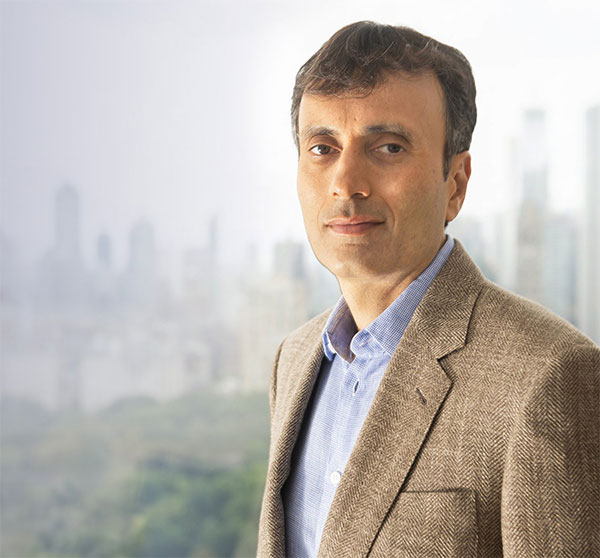
When a country is in an economic crisis, it creates an environment conducive to implementing economic reforms which would be difficult to do in good times, however, it still depends on how far the reformist leaders can shape the opinion of the people and the people’s willingness to take those reforms on board, Rockefeller International Chairman and Breakout Capital Founder/ CIO Ruchir Sharma said in Colombo recently.
He made this comment while delivering a public lecture at the Central Bank of Sri Lanka where Sharma shared key insights from his newest book, ‘The 10 Rules of Successful Nations’, illustrating what Sri Lanka can do to catch the eye of indifferent foreign investors.
“At a time of crisis, when a new reformist leader is elected to navigate the country through it, the reforms will be painful in the beginning. If the people say,” Okay, go ahead and do something to contain the crisis, that’s fine. That happened in Greece and today the country is a shining star in Europe. But what happened in Argentina was different as the people didn’t want to go ahead with reforms despite the crisis,” he said.
In this book, Sharma delves deep into 10 rules and areas of growth which are namely; demographics, politics, state, debt, currency, investment, inflation geography, inequality and sentiment. He said that he has given his weightings to the above rules from the perspective of an investor looking at a country’s investment outlook.
The following are some select excerpts from his speech particularly indicating where Sri Lanka is ranked on his 10 rules.
Rule 1- Demographics
“We noticed Sri Lanka’s working age population is projected to grow in the next 5-10 years at only 0.1% a year. That is a very low level. This means you need to do something else to offset it. It is very difficult for Sri Lanka to grow at a rate of more than 6% when your working age population is only growing at 0.1% unless it relies on immigration, automation or increase the retirement age of the labour force.”
Rule 2 –Politics
“Most countries carry out painful economic reforms only when they hit a crisis because the population is also ready to back the reformer. Even India made reforms under crisis. Sri Lanka is going to have elections this year and I don’t know which way people are going to be voting. However, implementing economic reforms and maintaining fiscal stability in the foreseeable future would be crucial for any political party that comes to power.”
Rule 3- State
“We have noticed Sri Lanka’s spending as a share of GDP is now under control. Spending is not the problem. But taxes as a share of GDP are very low in Sri Lanka.”
Rule 4- Debt
“Greece was in crisis and today it is a growing economy in Europe. They followed the right policies and got the debt under control and capitalized on tourism and exports to boost the economy. Sri Lanka can take a smooth and continuous trajectory down this path.”
Rule 5- Currency
“Sri Lankan currency ranks pretty well because it is very cheap in the eyes of investors which is at present stable and effective”.
Rule 6- Investment
Successful countries have investments as a share of their GDP of about 25-35% .That is the sweet spot. And more successful countries have a manufacturing base with a share of their GDP at about 20% or so. Sri Lanka is in the middle in this aspect.
Rule 7- Inflation
Sri Lanka has a success story on containing inflation because of reigning in monetary expansion and having a good monetary policy framework. Most central bankers are stuck in the old framework and focus a lot on consumer price increases. But we also need to consider asset price inflation (property prices), stock prices as well. If those too increase and are backed by a lot of debt financing, that could pose a problem.
Rule 8- Geography
Sri Lanka is on the right trade route but has not fully exploited it. Also, the growth isn’t spread out internally. So much of the population and growth activity are concentrated in Colombo area and the country needs to think about new cities or new urban centres.
Rule 9- Inequality
Too much inequality is not great for a country. But Sri Lanka is not affected by this as the country has few billionaires.
Rule 10- Sentiment
Countries which are in a crisis mode are the ones that carry out economic reforms and Sri Lanka can gain approval in this exercise.
“Generally Sri Lanka ranks relatively well from an investor’s perspective as there is a big improvement over the last couple of years. Now the talking point is what is going to happen on the political front. And once that is settled, Sri Lanka needs to determine its growth engine. The classic growth engine for Sri Lanka would be manufacturing-for- exports to enable rapid increase in per capita income.”
Sounding direct without being ruthless, Sharma said at the conclusion that the world’s investor community is indifferent to Sri Lanka and they don’t talk much about Sri Lanka as their expectations about the country are low.
However, he urged Sri Lanka to capitalize on its potential and spring a surprise on the upside to catch the investors’ eye.



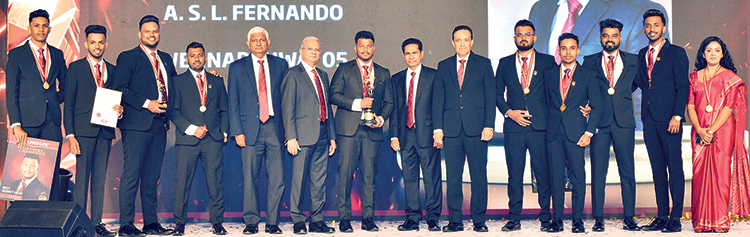
The power of momentum was the focus when Ceylinco Life, Sri Lanka’s life insurance market leader for an unbroken 22 years, celebrated the exceptional achievements of its top-performing sales force at its Annual Awards Ceremony 2026, held at Cinnamon Life Colombo.
Bringing together more than 300 of the company’s highest achievers, the event recognised Sales Officers who attained High Flyers status, qualified for the prestigious Million Dollar Round Table (MDRT), or earned ‘Sales Superstar’ status in 2025, each having met rigorous performance benchmarks. In total, close to 370 awards were presented at the ceremony, which was attended by over 450 participants including the company’s Board of Directors and senior management.
Themed ‘Unstoppable Champions,’ the awards ceremony underscored the spirit of resilience, ambition and consistent excellence that defines Ceylinco Life’s sales force, positioning the awardees as drivers of the company’s sustained market leadership.
The event was graced by Chief Guest Srinivasa Rao, Managing Director – Life and Health (South Asia and South East Asia) at Munich Re, and featured an evening of scintillating entertainment with performances by Sanka Dineth, Shashika Nisansala, the Naadro Band and Prashanthini, complemented by dance acts from Muddrika Dance Studio.
Among the highlights of the evening was the presentation of two Toyota Axio motor cars to R. P. Edirisinghe and S. S. H. M. T. Laksiri in recognition of their consistent excellence in qualifying as High Flyers and MDRT members. The top honours at the awards ceremony were presented to Mr A. S. L. Fernando as Best Agency Head, H. D. Pathirana as Best Agency Supervisor, A. I. P. Manjula as Best Life Insurance Advisor, and J. Meera as Best Regional Sales Manager.
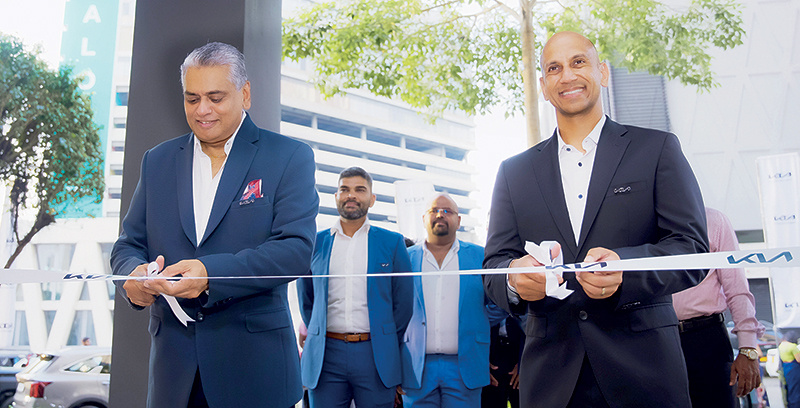
Top Korean nameplate Kia has reinforced its presence in Sri Lanka with the opening of a striking new showroom at the iconic Altair high-rise in Colombo, marking a significant step in the brand’s continued expansion and customer engagement in the country.
The new facility, unveiled exclusively to media on 7th April 2026, occupies approximately 2,700 square feet of prime space at Retail 3 of the Altair development.
Strategically positioned at the entrance to the complex for maximum visibility and accessibility, the showroom places Kia at the heart of one of Colombo’s most prominent luxury residential and lifestyle destinations.
Designed in line with Kia’s global brand guidelines, the showroom presents a modern, customer-centric environment that reflects the company’s focus on innovation, quality and service excellence. The space is intended to offer an immersive retail experience, enabling customers to explore the brand’s evolving portfolio in a setting that mirrors international standards.
“The opening of this new showroom signals Kia’s renewed commitment to Colombo, strengthening its proximity to customers while enhancing convenience and accessibility for those seeking to engage with the brand,” Kia Motors Lanka Chairman Mahen Thambiah said. “It represents a key milestone in our strategy to deepen customer relationships and expand the Kia footprint across key urban locations.”
Taking centre stage at the new showroom is the all-new Kia Tasman, the brand’s first-ever double cab pickup, which makes its debut in Sri Lanka in tandem with the opening. The introduction of the Tasman underscores Kia’s drive to diversify its offering and respond to the evolving demands of customers across multiple segments.
In addition to the Tasman, visitors to the Altair showroom can experience Kia’s full range of vehicles, further enhancing the brand’s appeal to a broad spectrum of automotive enthusiasts.
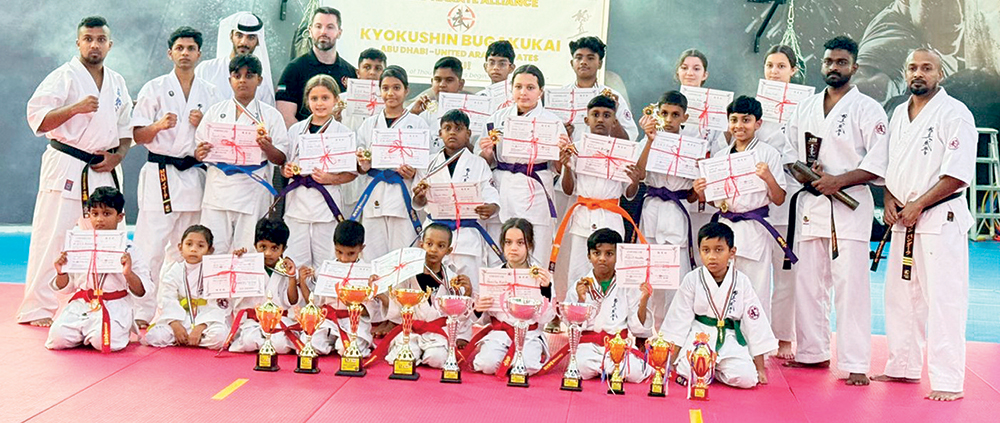
After nearly three decades on the mat, Sri Lankan martial arts instructor H. M. Nalin Sri Tikiri Bandara has built a career that stretches from local dojos in Kandy to international training arenas in the United Arab Emirates, shaping a growing generation of students through what he describes as “a lifelong journey of discipline and self-development.”
With more than 28 years of experience, Bandara has emerged as a prominent figure in martial arts education for children, youth and adults, particularly across Sri Lanka and the UAE, where he is currently based in Abu Dhabi.
Bandara’s martial arts journey began at a young age and has since spanned multiple disciplines, including Kyokushin Karate, Ashihara Karate, Mumonkai Karate, Brazilian Jiu-Jitsu and yoga.
He holds several international dan rankings, including 3rd Dan in Kyokushin Karate (Japan), 4th Dan in Ashihara Karate (Australia), 2nd Dan in Mumonkai Karate (Japan), and 1st Dan under Josui Kai Kan Karate (Japan). Years of training camps, seminars and competitions abroad, he says, have helped refine both technical skill and teaching philosophy.
Bandara is the founder and chief instructor of Nalin Dojo, which operates across multiple locations, including a main branch in Abu Dhabi and an established centre in Kandy. He also runs expansion programmes in schools and fitness centres in the UAE.
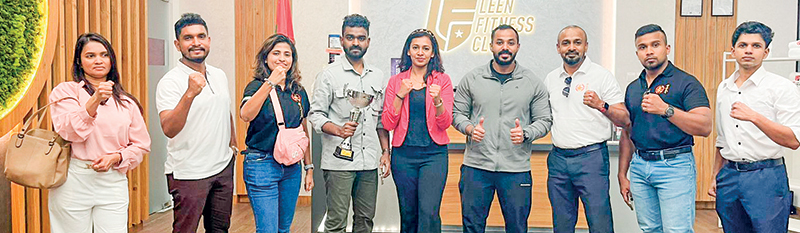
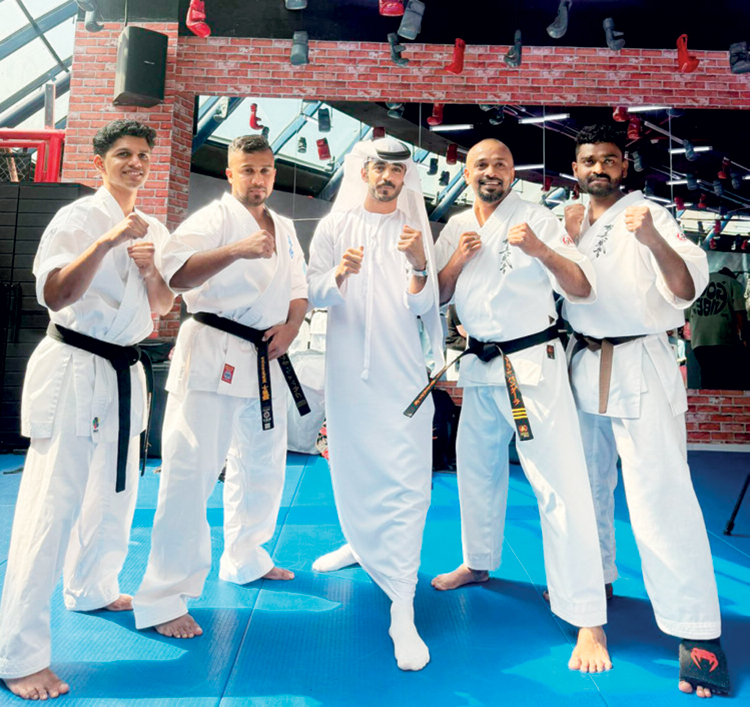
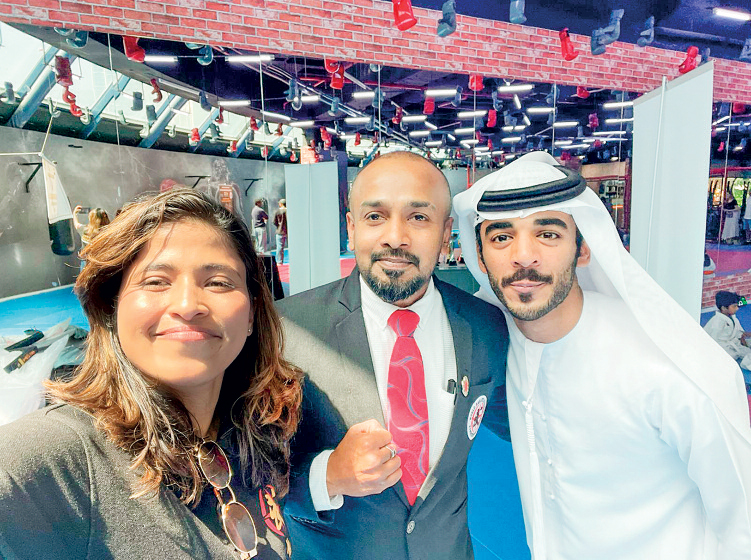
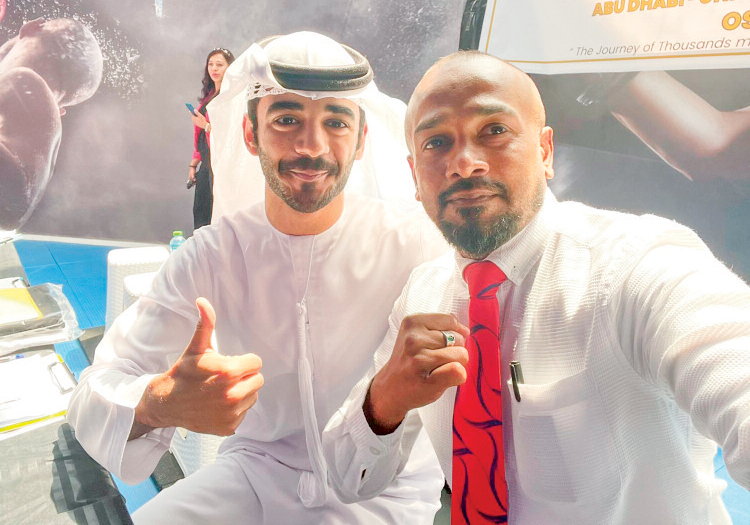 Collectively, his programmes have trained more than 2,000 students, ranging from children as young as four to adults.
He also serves as branch chief and representative of the World Karate Alliance Kyokushin Bugakukai, and contributes to the development of full-contact karate at national level in Sri Lanka.
At the core of his teaching is a hybrid approach he calls “Yoga Martial Arts”, blending karate discipline, yoga-based mental conditioning, Brazilian Jiu-Jitsu principles and sports science.
The focus, he says, extends beyond physical combat to character formation, emphasising discipline, respect, confidence-building and mental resilience.
“Martial arts is not just about fighting, it is about building better human beings,” Bandara said.
Much of his work is directed at children and adolescents, particularly in an era he describes as increasingly dominated by digital distractions.
He argues that structured martial arts training can reduce screen dependency, improve concentration, and strengthen emotional stability, while promoting healthier lifestyles.
“Children’s future is the future of the community,” he said, underscoring his belief that early discipline shapes long-term social outcomes.
Beyond regular training, Bandara organises grading examinations, workshops, school programmes and community fitness initiatives in both Sri Lanka and the UAE.
He has continued such activities even during periods of global disruption, maintaining regular engagement with students and instructors.
Looking ahead, Bandara plans to expand his dojo network across the UAE and internationally, while developing structured youth development programmes and training future instructors.
His long-term ambition is to build a sustainable martial arts ecosystem that integrates physical excellence with character education.
In a career defined by discipline and continuity, Bandara represents a generation of martial arts instructors blending traditional combat systems with modern wellness principles — and, in the process, attempting to shape not just fighters, but future citizens.
by SK Samaranayake

Bodies of 50 infants dumped at Trinidad graveyard

Indonesian Navy Sailing Ship KRI BIMA SUCI – 945 concludes official goodwill visit to Sri Lanka

Malinga, Reddy sink Chennai Super Kings chase to defend under-par 194 in Hyderabad

Stubbs, Miller win Delhi Capitals a thriller against Royal Challengers Bengaluru

Showers predicted in the Western, Central, Sabaragamuwa, Uva, North-western, North-central and Southern provinces after 1.00 pm.

Heat Index at Caution Level in the Northern, North-central, North-western, Western, Sabaragamuwa, Eastern and Southern provinces and in Monaragala district

‘Dates have the highest sugar content to fight Coronavirus’

Sunday Island 27 December – Headlines

#SundayIsland 17th December – Headlines

Sunday Island – 28th March

Sunday Island Headlines – 21 March

Sunday Island – 21st February – Headlines
-
 Latest News7 days ago
PNS TAIMUR & ASLAT arrive in Colombo
-

 Latest News7 days ago
Prasidh, Buttler set up comfortable win for Gujarat Titans
-

 News4 days ago
PNS TAIMUR & ASLAT set sail from Colombo
-

 Latest News5 days ago
“I extend my heartfelt wishes to all Sri Lankans for a peaceful and joyous Sinhala and Tamil New Year!” – President
-

 Business2 days ago
Harnessing nature’s wisdom: Experts highlight “Resist–Align” path to resilience
-
 Latest News7 days ago
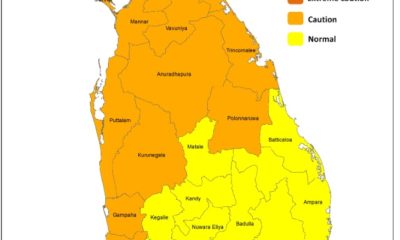
Heat Index at Caution level’ in the Northern, North-central, North-western, Western and Southern provinces and in Trincomalee district.
-
 News2 days ago
Heroin haul transported on 50-million-rupee contract
-

 News2 days ago
Gratiaen Trust announces longlist for the 33rd Annual Gratiaen Prize