
Business
Role of digital transformation in SL’s continued aviation sector growth


Sri Lanka’s aviation sector is experiencing a strong recovery, recording nearly 10 percent year-on-year passenger growth. Yet, without urgent digital transformation and stronger collaboration among stakeholders, this growth could quickly become a bottleneck, warned SITA Asia Pacific president Sumesh Patel.
Speaking to The Island Financial Review ahead of the SITA IT Aerotech Summit, at ITC Ratnadipa Wednesday which brought together SriLankan Airlines, Airport and Aviation Services (Sri Lanka) Ltd (AASL), Immigration, and Customs. He stressed that aviation is an industry that cannot operate in isolation.
“The first impression of any country is its airport. If Sri Lanka wants to leverage its location and tourism potential, it must make passenger journeys smoother, faster, and more connected, Patel told The Island Financial Review.
Colombo’s Bandaranaike International Airport (BIA) is already congested, and the long-delayed second terminal remains years away. Patel warned that current infrastructure will not be able to cope with projected demand.
“With 8–10 percent growth annually, Sri Lanka will face 40–50 percent more passengers in just four years. The question is: how do we manage this with the facilities we have now? he asked.
SITA has worked with AASL and SriLankan Airlines to expand self-service facilities at BIA. The airport currently operates eight self-check-in kiosks, with 20 more to be installed this month. Patel urged authorities to extend such services beyond SriLankan Airlines to include international carriers, easing counter congestion.
Patel emphasised that SITA solutions are designed with “security by design” principles, protecting over 1,000 airports and most major airlines globally.
“Aviation today is an interconnected digital ecosystem. Cybersecurity cannot be an afterthought—it must be embedded across systems, applications, and stakeholders, he said.
Artificial intelligence is also reshaping aviation. SITA’s OptiClimb solution uses AI and machine learning to optimise aircraft take-off profiles, reducing fuel burn and carbon emissions.
“Every aircraft is unique. Using AI, we provide tailored recommendations that cut costs and emissions. Fifty airlines already use this, including Singapore Airlines and Air India. We are in discussions with SriLankan Airlines to trial it here, Patel noted.
On sustainability, Patel admitted that no country is yet “fully there.” While sustainable aviation fuels (SAF) remain the long-term solution, their high cost and limited supply make immediate efficiency gains critical.
Sri Lanka’s greatest strengths, Patel said, lie in its diverse tourism offerings and strategic location.
“Sri Lanka caters to high-end tourists, budget travellers, nature lovers, and heritage seekers alike. If it positions itself as a hub, the economy can grow significantly. But this requires investment in passenger experience and seamless connectivity, he observed.
Asked about the country’s biggest weakness, Patel was candid:
“Five years ago, silos were a real issue—airlines, airports, and regulators weren’t aligned. That is improving now. Events like this summit are designed to get everyone onto the same page, because aviation cannot succeed in isolation.”
“We are not just another service provider. We are owned by 410 airlines and airports, including SriLankan Airlines. We’ve been here since 1968, opened our office in 1981, and we are here for the long haul, he said.
Concluding, Patel urged Sri Lanka to move beyond incremental fixes:
“The aviation industry here is doing extremely well. But growth without transformation will become a hindrance. If Sri Lanka embraces the right technologies, it can outperform even regional giants in passenger satisfaction and efficiency.”
By Ifham Nizam


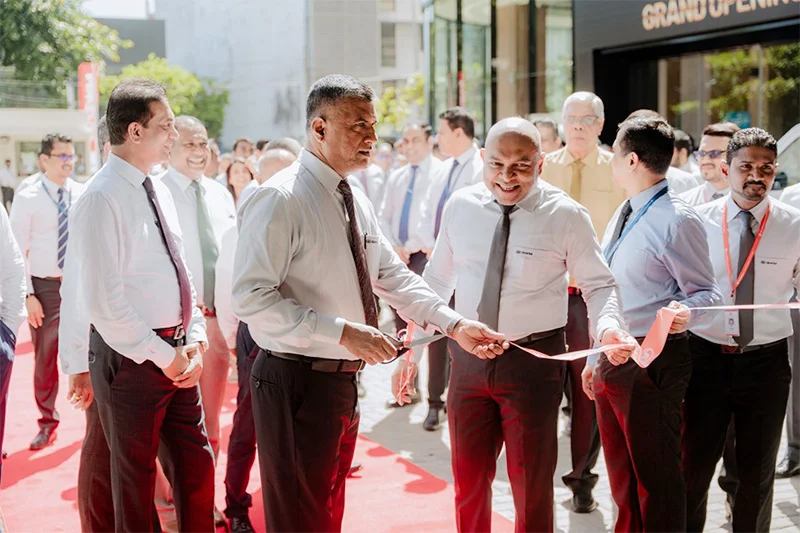
David Pieris Automobiles (Private) Limited (DPA), the four-wheeler sales arm of the David Pieris Group, announced the opening of its state-of-the-art GWM Flagship Experience Centre at 250, Access Tower 03, Union Place, Colombo 02, marking a significant milestone in the evolution of Sri Lanka’s automotive retail landscape.
The newly opened flagship facility is designed to deliver a truly world-class automotive experience, showcasing the latest innovations and technologies from GWM, one of the world’s leading automobile manufacturers. As the first and only vehicle experience centre of its kind in Sri Lanka, it offers customers an immersive journey that goes beyond the traditional showroom concept. Visitors can explore GWM’s premium range of SUVs and electric vehicles, including the HAVAL H6 HEV, HAVAL H6 PHEV, HAVAL H6 GT PHEV, TANK 300 HEV and TANK 500 HEV, while enjoying dedicated vehicle demonstration zones, test-drive opportunities, and a host of innovative customer engagement experiences designed to redefine the vehicle purchasing journey. GWM’s product portfolio in Sri Lanka will be further expanded in the coming months with the introduction of several new models, including a range of fully electric vehicles.
With a legacy spanning over four decades, the David Pieris Group has earned a reputation as one of Sri Lanka’s most trusted automotive organisations, particularly for its comprehensive after-sales support and customer service excellence. Strengthening its commitment to GWM customers, DPA has already established a dedicated, state-of-the-art GWM service centre at No. 75, Hyde Park Corner, Colombo 02, supported by an expanding network of authorised service dealers across the island to ensure convenient and reliable customer care.
Commenting on the opening, Mahesh Gunathilake, Director, David Pieris Automobiles, stated: “The opening of the GWM Flagship Experience Centre represents a significant milestone in our journey with the GWM brand in Sri Lanka. This is the country’s first dedicated state-of-the-art experience centre for GWM vehicles, offering customers the opportunity to experience world-class automotive technology, premium comfort and advanced safety features. GWM has successfully redefined modern mobility by delivering high-end luxury and innovation at an affordable price point, and we are proud to bring this exceptional experience to Sri Lankan motorists.”
The opening of the flagship facility further reinforces David Pieris Automobiles’ commitment to expanding GWM’s presence in Sri Lanka while providing customers with an unmatched ownership experience backed by the Group’s renowned sales and after-sales expertise.(DPA)
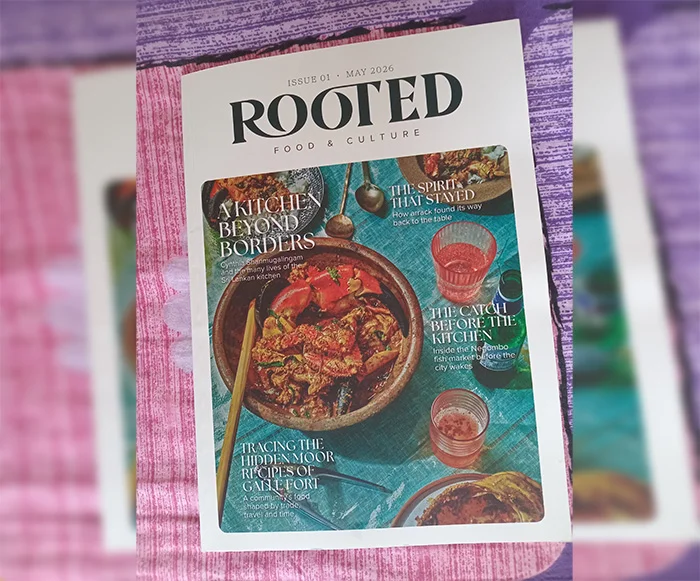
Issue no.1 of a ground-breaking journal on Sri Lankan food and culture has just been launched and it’s such an engaging ‘read’ that it just cannot be put down by the reader until s/he reaches the last word in the publication. Titled ‘ROOTED’ it is a publication of Rooted Publications Pvt. Ltd. Colombo (www.rootedsrilanka.com).
This is no run-of-the-mill journal on local ‘culinary delights’. It is a profoundly empathetic, sensitive exploration of the uniqueness of Sri Lankan food and the cultures of the country. In other words, it’s a close, appreciative examination of what makes the native food of Sri Lanka and its cultures special and hard to replicate and replace.
Writers of the arrestingly illustrated articles in ‘ROOTED’ have apparently spared no pains to travel the length and breadth of Sri Lanka to unravel, with mesmeric pleasure, the food and drink offers at the heart of Sri Lankan cuisine. The food connoisseur has all his curiosities satisfied in the journal and cannot prevent his taste buds from being stimulated on reading the contents of the journal.
Regardless of geographical or physical location what Sri Lanka has to offer its own people or the visitor to the country by way of particularly indigenous dishes and meal spreads are made to come alive in these pages. The connoisseurs and food experts are taken on an entrancing journey into homes transformed into family restaurants, aromatic eateries and bustling market places with sizzling catch along the sea coast of the island to its interior in this appetizing survey of Sri Lankan food.
What is distinct in terms of food and drink to the different ethnicities and cultures of the land are rendered in larger-than-life eye-catching portrayals via the pen and the lens. Consequently the journal not only celebrates food but also its distinctive cultural roots and identities. That is, people are serenaded alongside food.
In the process, the ‘ambul thials’, the ‘ala thel and brinjal badums’, the ‘thilapia curries’, the multifarious, ‘mouth-burning sambols’ and heady ‘Arrack shots’ experimentally mixed, to name just a few such offers of food and drink with a uniquely Sri Lankan stamp on them, are made to come alive in ‘ROOTED’.
The magazine has been put together by an editorial team headed by editors Chadini Fernando, Vidya Balachander and they need to be commended on a job well done.
By Lynn Ockersz
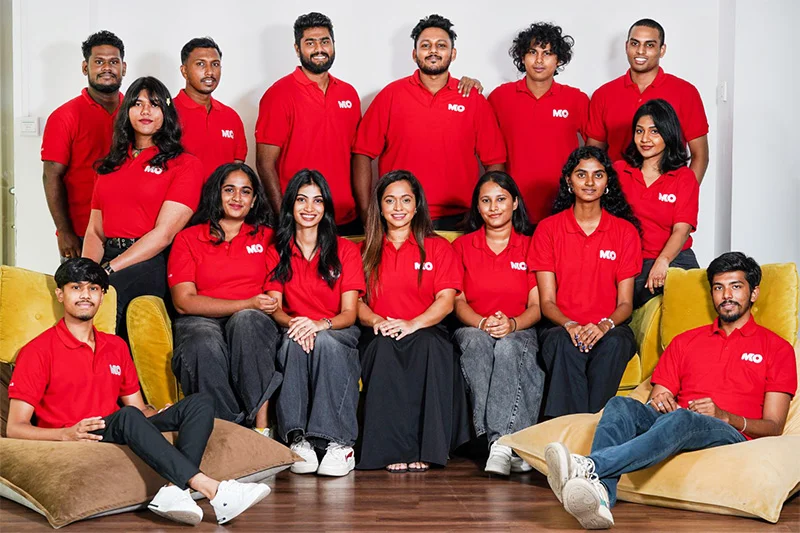
In Sri Lanka, selling something has always carried an unspoken risk for women. Share your number with a stranger. Arrange a meeting. Handle cash. Hope for the best.
MO Marketplace, live since June 2024, has removed every one of those friction points. Buyers and sellers on the platform never need to exchange personal contact details. Payments are held in escrow until delivery is confirmed. Pickup and drop-off is managed entirely by MO. Two people can complete a transaction from start to finish without ever speaking directly to each other.
For women running home-based businesses or women simply have too many clothes and things, that architecture is not a convenience. It is a fundamental shift in what is possible.
The evidence is in the listings. Clothing, fashion, and home goods dominate the platform, categories overwhelmingly driven by female sellers and buyers. From home-based clothing traders to small lifestyle businesses operating out of living rooms across Colombo, women are using MO to participate in commerce on their own terms, without compromising safety or privacy.
The platform has recorded 45,000 downloads and 14,000 registered users in 18 months, with peak monthly active users of 15,000. Commissions are capped at a flat 10%, significantly below the 15% to 30% charged by dominant platforms, making it accessible for small and micro sellers.
Coming mid-2026, AI tools will automatically generate listing descriptions and enhance product images, removing two of the most common barriers to getting started as a seller. Video selling is also on its way.
Sri Lanka has no shortage of entrepreneurial women. Until now it lacked a platform designed around how they actually need to trade.

Sallay refuses to end hunger strike unless probe is taken out of CID led by Shani

Lanka joins US-led Indo-Pacific Ports Forum

Vehicle imports remain steady despite surcharge – Customs

EU supports launch of Sri Lanka’s Revised National Green Reporting System Guidelines in partnership with UNIDO

Former Intelligence Colonel files petition to prevent his arrest in connection with 2019 Easter attacks

A tale of two govts.

‘Dates have the highest sugar content to fight Coronavirus’

Sunday Island 27 December – Headlines

#SundayIsland 17th December – Headlines

Sunday Island – 28th March

Sunday Island Headlines – 21 March

Sunday Island – 21st February – Headlines
-

 Latest News5 days ago
Kusal Mendis, Pathum Nissanka, bowlers put Sri Lanka 1-0 up
-

 News5 days ago
New US tariffs proposed on 60 countries, including Sri Lanka
-

 Features4 days ago
Power crept into the Sangha and is now tearing it apart
-

 Features4 days ago
Kondachchi wind farm and battery storage project to boost energy security, says Power Ministry Secretary
-

 Features4 days ago
Saudi Arabia sets new benchmark in Hajj management as 1.7 million pilgrims complete sacred journey
-

 News3 days ago
Asst. Manager, security officer arrested over Rs 30 mn snatch at Horana PB branch
-

 News2 days ago
Women’s T20 World Cup 2026 warm-up: Chamari Athapaththu’s 94 helps Sri Lanka beat Pakistan
-

 Editorial1 day ago
Probe Sallay’s complaint