
Business
Rising price of rice in Sri Lanka: The roots and remedies

By Manoj Thibbotuwawa
Rice is the dietary staple and the major domestic crop cultivated in Sri Lanka since ancient times. Therefore, the production and availability of rice are closely tied to food security as well as political stability in the country. Every government since independence has given prominence to the goal of achieving self-sufficiency in rice. Accordingly, a significant amount of resources are allocated for the supply of irrigation water, land development, research on technological improvements, farm mechanisation, and support facilities such as credit, subsidised inputs, and farmer welfare measures.
As a result, the cultivation of paddy and production of rice increased steadily with Sri Lanka reaching near self-sufficiency in rice and rice imports dropping to an insignificant amount. Despite these achievements, problems relating to the paddy and rice sector continue to occupy a foremost place among the country’s socio-economic issues. At present, supply shortages and rising retail prices have caused severe social unrest. In this background, this blog identifies the current problems in the rice sector and suggests some policy recommendations.
Demand and Supply Dynamics of Rice
Rice is an essential consumer good with inelastic demand in the local market and the consumption of rice is important not only to the economy but to Sri Lankan culture as well. Based on 2016 per capita consumption of 104.5 kg per annum, the annual national rice demand was 2.1 million MT which is equivalent to 3.2 million MT of paddy. After adjusting for seed paddy, processing, waste and other requirements, Sri Lanka needs to produce 4 million MT of paddy to fulfil the above national demand. No significant change in national requirement is expected in the near future due to the balance between gradual reduction in per capita consumption and population growth.
Sri Lanka managed to achieve this target over the last two years and is on course to achieve the same this year as well. The 2020 Yala output of 1.9 million MT paddy (equivalent to 1.3 million MT rice) produced around September 2020 was sufficient to feed the country for about six months. The 2020 Maha output of 3.1 million MT paddy (equivalent to 2 million MT rice) produced around March 2021 is sufficient to feed the population for about nine months. The Department of Agriculture estimated a harvest of 1.5 million
MT for the 2021 Yala. Therefore, any current or speculatory rice shortage is not expected.
The Problem: Pricing Dilemma
The rice market has a delicate system of price determination that is associated with availability in the market. It is connected to seasonal harvests of Maha and Yala leading to high fluctuation of prices over certain months of the year. From January, the prices of paddy and rice decline gradually and reach their lowest in March with the major Maha harvest. It increases slightly from April and undergoes a minor slump during July-August when the minor Yala harvest reaches the market. The rise of the prices of all types of rice is quite sharp from September onwards reaching the peak in December and begin to decline again in January continuing the cycle. The difficulties faced by consumers due to a sharp rise in rice price during September-January is one of the most politically sensitive issues in the country.
Severe disruptions happened to this usual pricing mechanism in recent times by the cooperative decision making and anti-competitive practices of large and leading millers who have large storage facilities, purchasing power and economic stability. Farmers are inherently disadvantaged in the market because a large number of farmers sell their harvest at the same time due to lack of capacity to store paddy and credit bound relationships due to up-front capital requirement for uncertain several months.
Cooperative decision-making by large millers who handle a sufficiently large (about 33.8%) share of purchase in the paddy market gain an oligopolistic advantage by releasing large stocks of rice to the market during the harvesting period to create a glut so that they can purchase paddy at minimum prices. Also, their anti-competitive practices such as exclusive supply agreements, horizontal cartel practices and compelling farmers to sell paddy only to them prevent small scale millers from purchasing paddy. Curtailing stocks thereafter create a scarcity of rice to maintain a high price till the next harvest period.
The Remedies
Different command-and-control methods such as adhoc price controls and emergency regulations were used by successive governments to control the market. These were easy to enact, yet have proven ineffective. Therefore, measures that provide facilitation, monitoring, and regulation should be the key strategies of the government in both the rice and paddy markets while allowing market forces of supply and demand to determine prices.
Promoting competition is the key to constrain the oligopolistic market power enjoyed by the large millers. However, small and medium millers will find it difficult to survive in the market due to strong competition from the successful, large ones that dominate the space with wide-ranging products including premium and mass markets. Thus, small and medium millers should be empowered through credit facilities to buy paddy and to upgrade their mills to achieve economies of scale and production cost advantage.
Further, organising them under a suitable collective business model such as cooperatives will facilitate competition while providing a sustainable solution. In the meantime, as a short-term measure, the Paddy Marketing Board (PMB) can increase its purchases so that these can be milled by small and medium millers on a quota basis and distributed through Sathosa.
While the Consumer Affairs Authority Act, No. 09 of 2003 was designed to control anti-competitive practices that harm consumers, this is constrained by resource limitations and information asymmetry. This can be minimised by establishing a market information system with mandatory reporting under Section 12 of the Paddy Marketing Board Act No. 14 of 1971 which provides for recording data on production, sale, supply, storage, purchase, distribution and milling of paddy and rice.
Other than the anti-competitive practices, the cost of production of paddy and bargaining power are also factors that determine the price received by farmers. Modern technologies should be promoted to optimise the input use so that the cost of production could be minimised. The current policy drive on organic farming could be rationalised to reduce the dependency on costly imported inputs such as chemical fertiliser and agrochemicals gradually.
Small-scale farmers should be organised under suitable operational units such as The Japan Agricultural Cooperatives (JA) so that their farming efforts are coordinated and consolidated to increase their collective bargaining power. Decisions on rice importation should be based purely on market conditions given by the proposed market information system. These strategies can stabilise the prices of paddy and rice without severe fluctuations and make paddy farming a viable livelihood with a sustained income for small-scale farmers.
Link to blog: https://www.ips.lk/talkingeconomics/2021/10/07/rising-price-of-rice-in-sri-lanka-the-roots-and-remedies/
Manoj Thibbotuwawa is a Research Fellow at IPS with research interests in agriculture, agribusiness value chains, food security, and environmental and natural resource economics. He holds a BSc (Agriculture) with Honours from the University of Peradeniya, an MSc (Agricultural Economics) from the Post-Graduate Institute of Agriculture at the University of Peradeniya, and a PhD from the University of Western Australia. (Talk with Manoj – manoj@ips.lk).

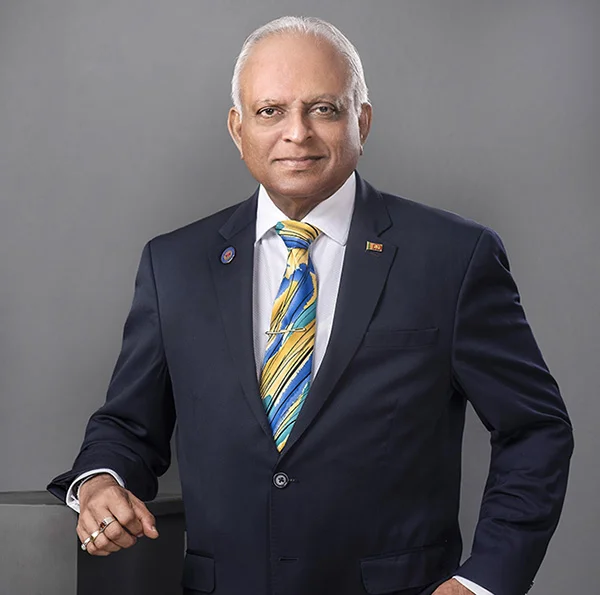
Sri Lanka’s export sector is bracing for fresh turbulence as the escalating conflict involving Iran and parts of the Middle East begins to send shockwaves through global trade, shipping and energy markets.
Though geographically distant from the conflict zone, Sri Lanka’s exporters are far from insulated. Industry leaders warn that higher freight costs, rising oil prices and increased trade risks could erode margins and disrupt key markets if hostilities intensify.
President of the National Chamber of Exporters of Sri Lanka, Indhra Kaushal Rajapaksa told The Island Financial Review that the situation is being closely monitored, as the export community is already feeling the early tremors of global instability.
“Sri Lanka may not be directly involved in the conflict, but we are deeply integrated into global supply chains. Any disruption in the Middle East immediately translates into higher costs and operational uncertainty for our exporters,” Rajapaksa said.
A major concern is the vulnerability of critical maritime corridors such as the Strait of Hormuz and the Red Sea, through which a significant share of global trade and oil shipments pass. Shipping lines have begun rerouting vessels and imposing emergency risk surcharges amid mounting security threats, while insurers are reassessing risk exposure in the region.
“Freight costs had only recently begun stabilising after the pandemic-era disruptions. Now, with vessels avoiding high-risk zones and insurers raising premiums, exporters are once again facing unpredictable shipping expenses,” he noted.
For time-sensitive exports such as apparel and perishables, delays could undermine Sri Lanka’s hard-earned reputation for reliability in competitive markets.
Exporters fear that prolonged instability could trigger sustained freight rate hikes similar to those witnessed during previous global disruptions.
The conflict has also driven global oil prices upward on fears of supply disruptions and shipping bottlenecks. Given that the Middle East accounts for a substantial share of global crude oil output, even perceived threats to supply have immediate price implications.
For Sri Lankan exporters, higher oil prices translate directly into increased fuel, electricity and transportation costs. Manufacturing sectors such as apparel, rubber products, plastics and food processing are particularly vulnerable, as energy forms a core input cost across operations.
“Energy is a fundamental cost component in nearly all export industries. When global oil prices rise, the impact cascades through logistics, production and even raw material pricing,” Rajapaksa explained, warning that sustained high energy costs could squeeze already thin margins.
Beyond cost pressures, the Middle East remains a crucial destination for Sri Lankan exports, especially tea and food products. Around 25 percent of Sri Lanka’s tea exports are shipped to Middle Eastern markets, making the region strategically important for the plantation sector.
“The Middle East is not just a transit route; it is a major market. If economic activity slows in those countries, or if banking and payment channels become complicated due to the conflict, our exporters will face direct consequences,” he cautioned.
War conditions also elevate trade finance and insurance risks. Cargo insurance premiums are climbing, and banks may adopt a more cautious stance toward trade credit involving affected regions.
Exporters could face payment delays, tighter financing conditions and higher compliance requirements, raising the overall cost and complexity of doing business.
This comes at a sensitive time for Sri Lanka’s economy, which is navigating recovery. Higher global oil prices would widen the import bill, potentially exerting pressure on the rupee and fuelling domestic inflation. While currency depreciation can sometimes enhance export competitiveness, rising input costs may offset any exchange rate advantage.
Despite the challenges, he pointed to potential opportunities if Sri Lanka responds strategically. As global buyers seek to diversify supply chains away from unstable regions, Sri Lanka could position itself as a reliable sourcing hub for apparel, rubber-based products, processed foods and value-added agricultural goods.
“In every global disruption there are risks, but there are also opportunities. If Sri Lanka strengthens trade facilitation, improves logistics efficiency and ensures policy consistency, we can attract buyers looking for stable alternatives,” he said.
He stressed that resilience and preparedness would be critical in the weeks ahead, as exporters closely watch developments in the Middle East and global energy markets, aware that distant conflicts can swiftly reshape local economic realities.
By Ifham Nizam

Ranil Wickremesinghe on Monday criticised the methodology adopted by U.S. President Donald Trump in dealing with Iran, stating that externally driven attempts to dismantle the leadership of another sovereign nation are unacceptable and fraught with dangerous global consequences.
Addressing a group of social media activists at the United National Party (UNP) office on Flower Road, Colombo, Wickremesinghe said that while geopolitical tensions in the Middle East were deepening, the principle of state sovereignty must not be undermined under any circumstances.
Referring to recent escalations between Washington and Tehran and remarks attributed to President Trump concerning Iran’s Supreme Leader Ali Khamenei, Wickremesinghe said:
“President Trump has alleged that Khamenei’s government was responsible for the deaths of hundreds of people in Iran and that action was taken to remove that leadership. However, the methodology used for dismantling the leadership of another administration in such a manner is not acceptable.”
He added that President Trump appeared to be seeking to engage in global affairs “as he likes,” warning that such actions carried far-reaching implications beyond the immediate theatre of conflict.
“What has happened following the Iran strikes is an issue with deep implications,” Wickremesinghe said, noting that the balance of power in sensitive regions must not be disturbed recklessly. Drawing a regional parallel, he observed that control of strategic sea lanes such as the Indian Ocean could not be handed over to a single dominant power.
On the economic fallout, Wickremesinghe sought to allay fears of a severe energy crisis in Sri Lanka. “Amid supply constraints because of Iran, it won’t be a big issue as other oil-producing countries will offer sufficient supplies,” he said. However, he expressed concern over the government’s overall economic management. “I don’t see this ballooning into a significant issue, but my concern is whether the government can manage the economy as it is.”
As he made these comments, the Sri Lankan government has yet to formally articulate its position on the escalating Middle East crisis, and Foreign Minister Vijitha Herath has not publicly clarified the government’s official stance.
Responding to a question on whether he was prepared to assume responsibility for governance again, Wickremesinghe said the present administration must be allowed to discharge its mandate. “Let the government go ahead and address the issues. We shouldn’t let them escape the responsibility they have taken upon themselves,” he said.
Commenting on the 90-day detention of former defence intelligence chief Suresh Saleh in connection with investigations into the 2019 Easter Sunday attacks, Wickremesinghe described the matter as a “closed case.” He pointed out that foreign intelligence agencies, including the Federal Bureau of Investigation (FBI), had already submitted their findings.
“Foreign intelligence bodies such as the FBI have submitted their reports and conclusions. The government’s probe direction is not in line with that. Pursuing the case afresh in this manner is a waste of public money,” he said.
Wickremesinghe’s remarks are particularly noteworthy given the long-standing perception of the UNP as broadly aligned with Western policy positions. During President Trump’s first term, when the U.S. administration threatened to suspend funding to the World Health Organization (WHO) at the height of the COVID-19 pandemic, Wickremesinghe publicly appealed to President Trump to reconsider this move , stating that developing countries such as Sri Lanka would face severe repercussions if global health funding were curtailed.
His latest comments therefore signal a clear defence of diplomatic norms and national sovereignty at a time of rising geopolitical volatility, while underscoring his view that global power rivalries must not override established principles of international conduct.
by Sanath Nanayakkare

– Offers free hearing tests throughout March
Dialog Axiata PLC, Sri Lanka’s #1 connectivity provider, marks World Hearing Day 2026 by offering free hearing tests throughout March at the Ratmalana Audiology Centre (RAC), reaffirming its commitment to expanding access to hearing care services across Sri Lanka.
Aligned with the 2026 global theme, “From communities to classrooms: hearing care for all children,” the initiative supports greater awareness of early detection and timely intervention, while making hearing screening services accessible to individuals of all ages. The programme is conducted in partnership with RAC, a collaborative project with the Ceylon School for the Deaf and Blind.
Free hearing tests will be available from 3rd to 31st March between 8:30 AM and 5:00 PM. Screenings are open to the public, including both children and adults, particularly those who may have limited access to hearing healthcare services. Appointments can be scheduled by contacting 011 730 7308 or 077 394 5945.
Over the years, Dialog has invested more than Rs. 70 million in the establishment and ongoing enhancement of RAC, which was set up in 2007 to support students of the Ceylon School for the Deaf and Blind while extending services to the wider community. RAC provides free hearing assessments for individuals referred by Government ENT specialists, alongside speech and language therapy, hearing aid evaluation and fitting, and follow-up rehabilitation services.

AKD warns of far reaching economic consequences of Middle East war

Pope invited to visit Sri Lanka

New Tourism Act to strengthen legal action against visa violators

Court of Appeal grants interim relief, allows foreigners to drive three-wheelers

War in Middle East sends shockwaves through Sri Lanka’s export sector

Semi-final showdowns set stage for Gujarat coronation

‘Dates have the highest sugar content to fight Coronavirus’

Sunday Island 27 December – Headlines

#SundayIsland 17th December – Headlines

Sunday Island – 28th March

Sunday Island Headlines – 21 March

Sunday Island – 21st February – Headlines
-

 Opinion5 days ago
Jamming and re-setting the world: What is the role of Donald Trump?
-
 Features5 days ago
An innocent bystander or a passive onlooker?
-

 Features2 days ago
Brilliant Navy officer no more
-
 Features6 days ago
Ratmalana Airport: The Truth, The Whole Truth, And Nothing But The Truth
-

 Opinion2 days ago
Sri Lanka – world’s worst facilities for cricket fans
-
 Business6 days ago
IRCSL transforms Sri Lanka’s insurance industry with first-ever Centralized Insurance Data Repository
-

 Business5 days ago
An efficacious strategy to boost exports of Sri Lanka in medium term
-

 Features3 days ago
Overseas visits to drum up foreign assistance for Sri Lanka