
Opinion
Returning to source with Aga

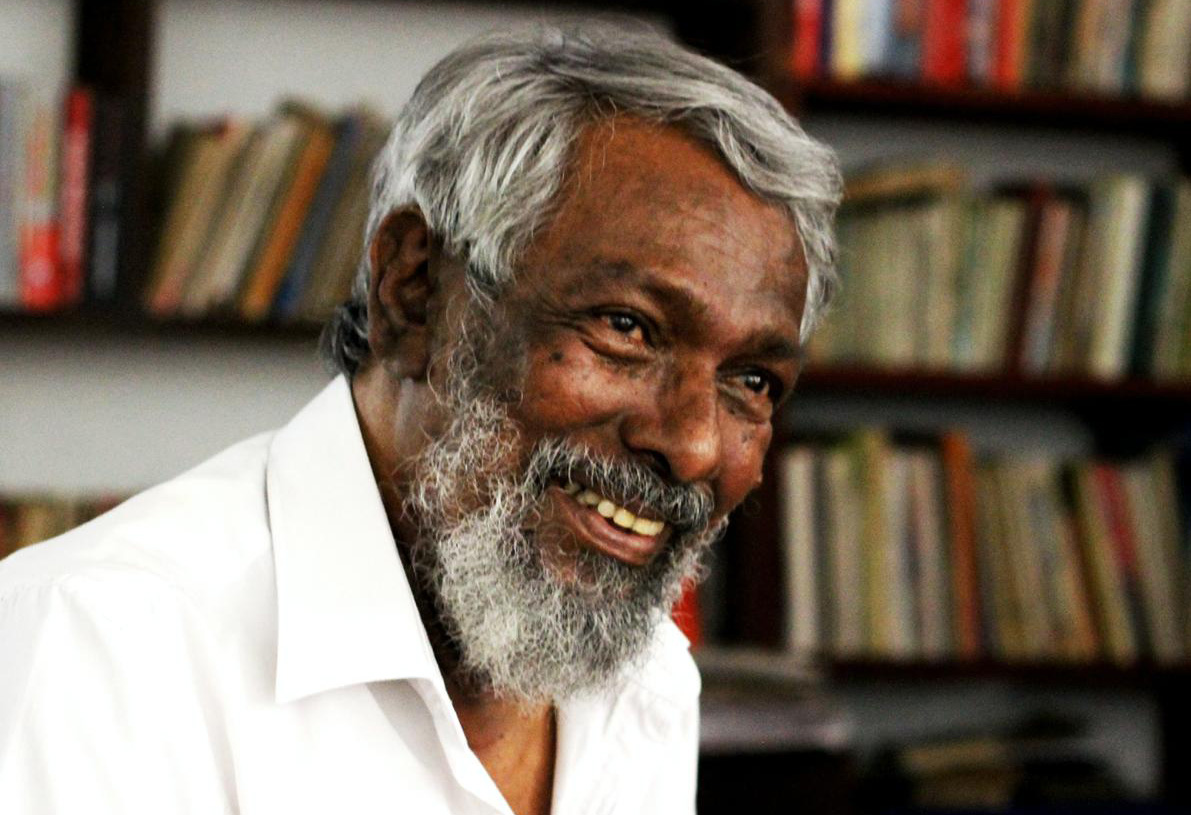
The last time I met Aga I had made up my mind to bring him a few things, stationery mostly, to help him along with his writing. His desk was a somewhat chaotic cluster of cardboard folders, containing loose sheets of paper on which had written his manuscripts – sometimes, a page would spill out onto the table and I worried how he could figure out what went where. At the centre of this celestial orbit were the party’s old weeklies and national congress reports, like a compass guiding his research.
Sadly, time got the better of us, and I never did get to refresh his stationary supply.
Aga Jayasena (15 February 1942–28 October 2025), was a communist as old as the Sri Lanka’s communist movement itself, being born less than a year before the founding of the Ceylon Communist Party (2–3 July 1943). He joined the party as a full-timer immediately after graduating from the University of Sri Jayewardenepura and cut his teeth organising peasants in Badulla and Monaragala. He recalled that he lacked the confidence to give his own speeches in his early days as an organiser, so would read aloud the articles from the communist daily Aththa. A lifelong learner, communicator, and educator, he soon found a place in the party’s central committee, politburo, education department, and as a national organiser.
I first saw Aga, and heard him speak, at the launch of his book on Frederick Engels. I was impressed but a little intimidated, he seemed to me quite stern and serious that day! It was only earlier this year that I picked up the courage to call him to do a series of interviews on his perspectives on the history of communist movement in Sri Lanka. My initial estimation of him was quite wrong, he was extremely warm and welcoming. Ah, Shiran! No point talking on the phone, come and meet me in person. After a few false starts, mainly due to his health, we met at his home in Pelawatte. Flipping through my notes, and listening to the recordings, I realise how unstructured these conversations were. We spoke for hours about various elements from history. But throughout, he was patient, kind, and analytical.
The following are some elements of what we discussed, including my own reflections and research based on the points he raised.
What stage are we in?
In his last days, Aga had thrown himself into the movement’s history to try and understand how the present came to be. He was busy writing his memoirs, including his reflections on the history of party, some of which were quite critical. In our discussions, he was emphatic about the efforts by founding leaders S. A. Wickramasinghe and M. G. Mendis to build the trade union and cooperative movements. The struggles in the trade union movements – especially the conflicts with A. E. Gunasinghe’s Ceylon Labour Party, which had taken a communal and collaborationist turn, during the strikes at the Wellawatte Spinning and Weaving Mills – pre-dated the founding of the Lanka Sama Samaja Party (LSSP). Similarly, when the communists were expelled from the LSSP in 1940, Wickramasinghe and his comrades first spent time building up the mass organisations – the Ceylon Trade Union Federation (CTFU) was established in 1941. The party had to come out of the movement, not the other way around.
For Aga, this was the key. He was critical, though not dismissive, of the penchant for conjuring up programmes on which to base a coalition. Having a programme was all good and well, but a programme needed to be creative and original, it had to identify the social forces that would propel the programme forward – who would be included and excluded in such a programme? In his words, a programme needed a “vehicle” – the mass organisations. He was strongly of the opinion that the communist movement needed to descend once again into the working class to rejuvenate itself and rebuild this vehicle.
Aga was also particular about the key theoretical questions. He asked: “What stage of the revolution are we in?” and “Is there a national question?” The questions were open ended, as if he knew the multiple-choice answers that lay before but was unsure which was correct in the current conjuncture. One thing was certain; more study was needed. But the movement lacked intellectuals of the calibre that once existed. And the tide of day-to-day crises and electoral compulsions pulled the movement ever forward, with scarcely a moment to pause, reflect, and evaluate.
Colombo to Cochin
Aga’s reading of the party’s beginnings in the working-class movement made him think about the role of Malayali workers in Ceylon. The CCP’s first mass base was among the Malayali workers. There were about 40,000 Malayalis in Ceylon by the 1940s, and around 2700 Malayali toddy tappers were organised by the CTFU-affiliated All-Ceylon Toddy Workers. In fact, the CCP itself was the product of a union between its predecessor the United Socialist Party, and the largely Malayali-based Ceylon Socialist Party. The first CCP constitution, adopted in 1944, specified that the flag should have the party’s name inscribed “in the Sinhalese, Tamil, Malayalam or English language as the case may be”. Similarly, the party’s first publications were quadrilingual – Forward (English), Janasakthi (Sinhala and Tamil), and Navasakthi (Malayalam). Columns in right-wing papers like Times of Ceylon used to derisively refer to the CCP as ‘Malayali comrades’.
Ceylonese communist ties to India were not limited to their organising the workers domiciled in Ceylon. The founders themselves had intimate connections with the Indian freedom movement – nurtured during periods of study in London and visits to India itself. In London, Wickramasinghe associated closely with Indian freedom fighter, and independent India’s first High Commissioner to the United Kingdom, V. K. Krishna Menon – the two organised a conference on ‘Socialism in India and Ceylon’. Wickramasinghe later travelled to India during the Meerut trial, and for a while lived alongside Sabarmati Ashram Mohandas Karamchand Gandhi. Then there is Buddhist monk Udakandala Sri Saranankara Thero, who studied in Santiniketan, the residential school established by Rabindranath Tagore. In India, Saranankara Thero, learned Bengali, became involved with the Indian freedom movement, and met Subhas Chandra Bose in prison.
But as independence came, efforts turned inwards towards national construction, and contradictions arose over citizenship, borders, markets, and so on. For the communists, the main international capital became the Soviet Union, which alone had the economic strength to maintain an internationally supportive network. Thus, bilateral relationships with neighbouring fraternal parties were deprioritised compared to the relationship with the Soviet Union, which served as the movement’s Mecca.
Aga wondered why that relationship with the Indian movement, particularly in Kerala, wasn’t nurtured more by both sides. Just across the Palk Straits, and over the Western Ghats, lay Kerala, which had democratically elected communists to power in 1959 (interestingly, the dismissal of this government by Nehru, with CIA-backing, occurred just months before the assassination of S. W. R. D. Bandaranaike). There are many parallels between Kerala and Sri Lanka. At the time of independence, both were plantation economies, with an underdeveloped industrial bourgeoisie and proletariat, and a dependency on food imports. Like Sri Lanka, Kerala was one of the last places on the subcontinent for a communist party cell to be formed – E. M. S. Namboodiripad attributed this to the relative underdevelopment of Kerala’s modern industries, a conclusion that may well be applied to Sri Lanka too.
Aga’s point intrigued me. Why were there no greater exchanges between the Sri Lankan and Keralite movements? Could there not have been exchanges of cadres for political education, and mutual translation of literature and poetry? Could Sri Lankan cadres not have been sent on fact-finding missions to Kerala’s vast cooperatives networks, community libraries, and healthcare centres? These questions may seem idealistic but they are very well worth asking given the close historical, cultural, and geographical links between the two polities.
Following Aga’s lead, my research led me to an interesting figure. P. Sankar was a Malayali trade unionist and founding member of the CTFU (where he was the vice president and assistant secretary), editor the CCP’s Malayalam weekly Navasakthi, and a CCP central committee member from 1943 to 1952. Sankar returned to India in 1952 – I am not sure the circumstances but it seems likely that the Ceylonese government’s policies against Indian immigrants must have played a role. Once back in Kerala, Sankar joined the Communist Party of India and was elected to the Kerala Legislative Assembly from Chittur in 1977. He died in 1991. Did he ever stay in touch with comrades in Sri Lanka?
I don’t think Aga was being Indo-centric or an Indophile when he suggested closer relations with the Indian movement. His point was that the conditions in India were far more similar to Sri Lanka than the distant Soviet Union. He argued that Sri Lankan communist youth were eager to go and study in the Soviet Union (an arrangement that evolved into a paternalistic relationship for the party) but what they learnt could not always be easily applied to Sri Lanka. I don’t know if he felt this way about his own time at the Academy of Social Science in Moscow. The Soviet Union certainly helped produce a great many Sri Lankan bureaucrats and public servants (for example, Dr. Anil Jasinghe, the health ministry secretary who helped lead the campaign against the COVID-19 pandemic, is a product of Soviet education) but not enough revolutionaries with original thinking. Aga was making an argument rooted in Sri Lankan reality.
Cream of the Crop
One memento I have from Aga is a copy of the Draft Political Report for the Eight National Congress of the Ceylon Communist Party (20–24 August 1972). The faded copy, its pages yellowed, sits on my desk as I type this. Between 1964 and 1972, a period of eight years, there were no national congresses held. Up to then, this was perhaps the longest period without a party congress. This was especially significant because it was a turbulent and transformative few years for the party, the left movement, and the country as a whole.
In 1964, the party had split along the Sino-Soviet fissure, N. Sanmugathasan took with him much of CTFU, the editors of the Sinhala and Tamil press, the peasant front organiser, and several youth front leaders. Thought its electoral impact may have been small, it was a significant blow to the unity of the mass organisations and the ideologically committed mid-level cadre. Then in 1965, Shan’s own party split, with the young Rohana Wijeweera peeling off the youth-wing and beginning to proselytise among rural educated Sinhala youth (Aga was one of those personally approached by Wijeweera) to establish the Janatha Vimukthi Peramuna (JVP).
Also in 1964, the United Left Front (ULF), consisting of the LSSP, CCP, and Philip Gunawardena’s Mahajana Eksath Peramuna, collapsed due to the LSSP breaking ranks to accept a cabinet position in the Sri Lanka Freedom Party (SLFP) government led by Sirimavo Bandaranaike. After decades of factionalism, the ULF had been virtually compelled to form due to unprecedent united trade union action leading to the formation of the Joint Committee of Trade Union Organisations in 1963.
Reflecting on the watershed collapse of the short-lived ULF, Aga said, “people let go of us”.
The centre-right government that took power in 1965 was the first to borrow from the International Monetary Fund. There was a renewed urgency for unity among progressive forces. By 1970, the long mooted LSSP-CCP-SLFP alignment finally came to fruition, and this United Front won the elections by a landslide. But the CCP was blocked from obtaining more than one ministerial position (the Ministry of Housing and Reconstruction held by Pieter Keuneman).
Then, in 1971, came the JVP insurrection. Aga recalled the turbulent conjuncture of that time – the assassination of Che Guevara in Bolivia in 1966 and the independent Tricontinental line of Cuba, the US war on Vietnam and the killing of Buddhist monks, and the proliferation of literature by Kim Il Sung translated into Sinhala. The insurrection shook the Old Left, which was completely taken aback by the violence. The deeply ingrained notion that there were no conditions for armed struggle in Sri Lanka were challenged. “The big question was why we didn’t see this coming”, Aga said.
Aga admitted a “soft corner” for the JVP of 1971. He was of the same generation of Rohana Wijeweera (born in 14 July 1943). He spoke of that generation in an almost bittersweet and rueful tone – they were the “cream”, he said, who could have been a powerful force for social transforma
He had just returned to the country after his political education in the Soviet Union, and communist youth all around the country were in ferment. Aga spoke as if whether he ended up on side or the other was a flip of the coin. After all, like many communists of his age, he had comrades on both sides.
In 1973, the Soviet-wing of the CCP split, a faction led by Wickramasinghe crossed over to the opposition (this group included Sarath Muttetuwegama, Aththa editor H. G. S. Ratnaweera, as well as a young Aga and D. E. W. Gunasekera). A faction led by Keuneman remained with Sirimavo Bandaranaike’s government. There were a range of reasons for this split, including the disagreement with the heavy-handed way in which the government had dealt with the JVP insurgents and the use of Criminal Justice Commissions (CJC) Act, No. 14 of 1972, which allowed evidence that would have been inadmissible under the normal procedures. This crucial period intrigued Aga. Some historical accounts claim that the Soviet embassy intervened to patch up ties between the two factions in 1976. Aga intimated that this didn’t happen on equal ground – the Soviets had “closed the tap” of financial support to Wickramasinghe’s faction.
I tend to speculate that Wickramasinghe, without the support of intellectual stalwarts – like P. Kandiah (died in 1960), G. V. S. De Silva (left the party in 1959), and Sanmugathasan and Kumarasiri (who formed the Peking faction in 1964) – perhaps lacked the theoretical confidence to mount a challenge to the Soviet-Keuneman line, and felt isolated. But that is purely my speculation. It is interesting that Sanmugathasan’s Memoirs of an Unrepentant Communist (1989) expresses venom towards Keuneman, but a reverence towards Wickramasinghe. Similarly, Kumarasiri wrote in his later years that Wickramasinghe – not Philip Gunawardena, who later allied with the UNP – was the person who came closest to deserving the title ‘Father of Socialism’ in Sri Lanka. Wickramaisnghe didn’t leave behind any memoirs, so we may never truly know his story.
I think Aga was drawn to the 1972 Draft Political Report because he felt the text contained within it some of the contradictions brewing in the party since the 1960s, and especially after the 1970 coalition and 1971 insurrection. The copy I have is in English and is missing ten pages. Some passages have been marked with a pencil, but I am not sure if this was done by Aga himself, since he would have surely read the Sinhala version instead. Here is one of the marked paragraphs:
“The Party entered the United Front without fully working out the relationship between its own programme and that of the United Front. In the absence of independent campaigns for the party programme, there was a certain ideological confusion in some party ranks and also its development and continuation of diverse ideological trends. This also created confusion among the politically advanced non-party sections, leading to doubts in their minds as to the revolutionary character of the CP. The neglect of the ideological struggle also contributed to the above.”
We Have no Mechanism
My first interview with Aga was about four months into the presidency of Anura Kumar Dissanayake (AKD) and the National People’s Power (NPP) government. Aga had an open mind about the NPP when we met. That said, he maintained it was not clear which way the government would go, and if and how the government would break from the neoliberal framework. He acknowledged that there had been a series of missed opportunities for détente between the JVP and the Communist Party of Sri Lanka over the last decade – most notably, during the joint-struggle to prevent the privatisation of Colombo Port’s East Container Terminal.
Aga understood the NPP’s decision to continue with the IMF programme, and felt it wise for the NPP to not rock the boat too much. Not because he endorsed the IMF programme but because he must have felt that the balance of power was strongly tilted in favour of the bondholders and local merchant capitalists, who could make the economy scream by withholding foreign currency, hoarding commodities, downgrading credit ratings, and so on.
He was also sympathetic to the fact that the NPP was walking into a collapsed state machinery. His choice of words, in Sinhala, still echoes in my mind – “අපිට යාන්ත්රණයක් නැහැ”, we have no mechanism. He felt the NPP’s first budget, constrained by the IMF’s conditions, was unable to satisfy any specific sector, but he was appreciative of the allocations towards the estate sector and the north and east. In general, he was appreciative of the NPP’s electoral gains in the north, but was critical of their lack of clarity on solving the national question. He felt that the provision of economic services and infrastructure alone would not be enough to sidestep the political question.
Aga was clearly in a nostalgic mood the times I met him. His mind kept drifting back to the fighters from history, many of whom did not leave behind any memoirs and who are not memorialised by those who remain. He wondered why his generation (the second generation of communists) never thought to sit and interview the first generation at length before they died. Tears came to his eyes as he spoke of A. Vaidialingam, one of the founders of the CCP, who few speak of today. “Vaidialingam was to the north, what Wickramasinghe was to the south”, Aga said. With Aga’s passing, that lineage is almost broken – so much of our movement’s history remains unwritten.
The last message I have from Aga is a voice note in appreciation of a talk I gave on the Bandung Spirit at the Bandaranaike Centre for International Studies earlier this year. In our interviews, he was often pensive and introspective, so it is nice to have a recording of his voice sounding so animated.
Aga’s passing strikes us just two months ahead of the 90th anniversary of the founding of the Lanka Sama Samaja Party – the beginning of the socialist movement in Sri Lanka. I hope that, like Aga, others in the left will take the time to reflect upon the past 90 years of struggle and write these histories. Not just to bask in the glories of the past, but to regain a sense of self, a confidence in our ideas and original aspirations, and a grounding to forge a way ahead.
(Shiran Illanperuma is a researcher at Tricontinental: Institute for Social Research and a co-editor of Wenhua Zongheng: A Journal of Contemporary Chinese Thought. He is a co-convenor of the Asia Progress Forum).
by Shiran Illanperuma


By Chula Goonasekera,
on behalf of the LEADS Forum
Based on discussions with Ajith Wijemanna, Director General of the Department of Meteorology, and Kithsiri Abayasinghe, former Director of the Department of Meteorology
Sri Lanka may be facing another major natural challenge. Unlike many disasters, however, the warning signs are already visible, giving the country an opportunity to prepare before the situation becomes critical.
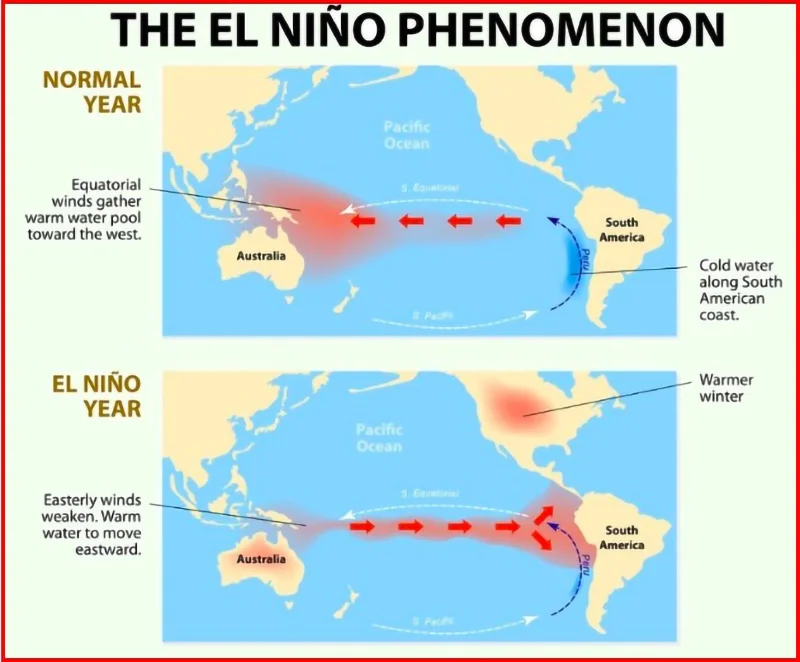
A recent discussion with two of Sri Lanka’s most experienced meteorologists highlighted concerns about the developing El Niño phenomenon and its potential consequences for the country. While no scientist can predict with certainty exactly how El Niño will evolve, current indications suggest the possibility of above-normal rainfall later this year, followed by reduced rainfall and potentially severe drought conditions in early 2027.
This is a warning Sri Lanka cannot afford to ignore.
Most Sri Lankans still remember the devastation caused by the Indian Ocean tsunami in December 2004. El Niño is fundamentally different. It does not arrive as a single catastrophic event. Instead, its effects can develop over many months, potentially bringing drought, water shortages, crop failures, extreme heat, wildfires, flooding and food insecurity.
The critical difference is that, unlike a tsunami, El Niño gives us time to prepare.
Sri Lanka therefore has a choice: act on the warnings now or pay a far greater price later.
We Must Not Wait for Disaster
The 2004 tsunami exposed Sri Lanka’s vulnerability to large-scale disasters and demonstrated the immense human and economic costs of inadequate preparedness.
El Niño cannot be prevented. However, many of its potentially damaging consequences can be reduced through early planning, effective coordination, public awareness and practical risk-reduction measures.
The purpose of this article is not to predict exactly what will happen. Rather, it is to ask a more important question:
Are we prepared for what could happen?
Depending on the intensity and evolution of El Niño, Sri Lanka could face:
· severe drought and prolonged dry spells;
· water shortages affecting households, agriculture and industry;
· reduced agricultural production and increased food insecurity;
· increased risks of forest and grassland fires;
· heatwaves and heat-related illness; and
· localised flooding caused by unusually heavy rainfall.
One threat deserves particular attention: wildfires.
During prolonged dry periods, fires can spread rapidly through forests and grasslands, destroying ecosystems, wildlife habitats, agricultural land, livelihoods and critical infrastructure, while placing enormous pressure on emergency services.
The lesson is straightforward: understanding potential worst-case scenarios before they occur greatly improves our ability to prevent them from becoming national catastrophes.
A Crucial Role for Disaster Management
We understand that Sri Lanka’s Disaster Management Centre (DMC) is already engaged in preparing the country for the potential impacts of a stronger El Niño event. Its focus must remain on helping communities prepare before emergencies arise, while ensuring that essential services continue to function during periods of crisis.
Disaster response and recovery come at a high cost to the public through government expenditure and taxpayer-funded resources. Investing in preparedness is therefore not only a humanitarian responsibility but also a sound economic strategy—particularly at a time when Sri Lanka continues to face considerable fiscal constraints and limited capacity to absorb another major shock.
The principle is clear:
Prevention is invariably less costly than recovery.
Every rupee invested in preparedness today can help prevent far greater social and economic losses tomorrow.
Listen to the Scientists
The public should pay close attention to forecasts and guidance issued by the Department of Meteorology.
At the same time, it is important to recognise that long-range forecasting is inherently complex. Climate systems involve countless interacting variables, many of which cannot be measured or predicted with complete accuracy months in advance.
When a forecast subsequently changes, this should not automatically be regarded as a failure of science. Forecasting is, by its nature, an assessment of probabilities and risks based on the best available evidence at a particular point in time.
The appropriate response is not to dismiss forecasts because they contain uncertainty, but to use them as tools for informed preparation.
What Should the Government Do?
The Government and relevant public institutions should urgently review Sri Lanka’s preparedness for drought, flooding, wildfires and extreme heat.
Key priorities should include:
· strengthening climate monitoring and early-warning systems;
· improving weather forecasting and public communication;
· developing comprehensive drought, flood and wildfire preparedness plans;
· enhancing reservoir, catchment and water-resource management;
· maintaining drainage infrastructure to reduce urban flooding;
· strengthening wildfire prevention, detection and response capabilities;
· investing in climate-resilient infrastructure; and
· establishing clear lines of responsibility and coordination among government agencies.
Coordination is particularly important. During a national emergency, citizens should never be left wondering which institution is responsible for taking action.
Water Security Must Be a National Priority
If prolonged dry conditions materialise, water security could become one of Sri Lanka’s most pressing challenges.
The country should strengthen groundwater protection, support the rehabilitation and maintenance of wells, and implement long-term water-security strategies in drought-prone regions. Such measures are important not only for human communities but also for agriculture, livestock and the natural ecosystems that sustain the country’s biodiversity.
Reservoirs and catchments must be managed carefully, while water conservation should be actively promoted among households, businesses, industries and farmers.
The key question is simple:
How much water will Sri Lanka require if the dry season lasts significantly longer than expected?
That question is far easier to answer before reservoirs begin to run dry.
Protecting Agriculture and Food Security
Agriculture remains highly vulnerable to drought and irregular rainfall. Significant disruption could result in rising food prices, reduced farm incomes and increased pressure on vulnerable households.
Sri Lanka should accelerate the adoption of drought-resistant crops, climate-smart farming techniques and efficient irrigation systems, including drip irrigation. Measures should also be taken to secure water and feed supplies for livestock, maintain strategic food reserves and strengthen weather-based advisory services for farmers.
Food security must be regarded not merely as an agricultural concern but as a matter of national resilience.
Preparing for Wildfires
Prolonged dry conditions can significantly increase wildfire risks. Sri Lanka must strengthen its capacity to prevent, detect and respond to fires before they escalate.
An effective strategy should rest on four pillars:
Prevention. Preparedness. Early detection. Rapid response.
Seasonal climate forecasts should be used to identify periods of heightened risk. Vegetation dryness, weather conditions and fire-prone regions should be monitored systematically, with modern technologies used wherever feasible.
Firebreaks should be established and maintained around vulnerable communities, forests and critical infrastructure. Dry vegetation and other combustible materials should be appropriately managed. Where environmentally and scientifically justified, carefully regulated controlled burning could also form part of an integrated fire-management strategy.
Human activity is responsible for many wildfires. During high-risk periods, open burning should therefore be restricted and unsafe land-clearing practices rigorously controlled. Public education campaigns should reinforce these measures.
Firefighting resources should be pre-positioned in high-risk areas before peak fire seasons begin. Adequate equipment and water supplies should be secured, and coordination strengthened among local authorities, fire services, forestry officials, disaster-management agencies and, where necessary, the armed forces.
Where practical and affordable, aerial firefighting capabilities should also be considered.
The guiding principle is straightforward:
Fight fires when they are small, rather than after they become uncontrollable.
Protecting Sri Lanka’s Natural Ecosystems
Healthy ecosystems are among the country’s most effective natural defences against climate stress.
Sri Lanka should protect wetlands and other water-retaining ecosystems, conserve forests, prevent unnecessary land clearing and fragmentation, and safeguard wildlife habitats from fire and degradation.
Forest conservation is not simply an environmental issue. It is central to water security, food security, biodiversity protection, public health and long-term national resilience.
Citizens Also Have a Responsibility
Preparedness cannot be the responsibility of government alone.
During dry periods, households should conserve water and avoid unnecessary waste. Communities should ensure that wells are cleaned, maintained and restored where necessary, particularly if prolonged disruptions to piped water supplies occur.
During periods of extreme heat, people should remain hydrated, avoid unnecessary outdoor activity and follow public health advice.
Families should maintain basic emergency plans and supplies. Communities in fire-prone areas should know evacuation routes and designated safe assembly points. Citizens should also avoid activities that could inadvertently start fires and remain alert to official warnings.
Particular attention should be given to vulnerable groups, including older people, people with disabilities and those with limited mobility. Communities should also be prepared for the health effects of wildfire smoke and deteriorating air quality.
From Response to Preparedness
Sri Lanka’s greatest challenge is not responding when disaster strikes. It is ensuring that natural hazards do not develop into national catastrophes.
This requires a fundamental shift from a culture of reaction to a culture of preparedness.
Government agencies, scientists, farmers, businesses, schools, community organisations and individual citizens all have important roles to play. A coordinated approach combining climate forecasting, land management, public education, community preparedness, early-warning systems and rapid emergency response can significantly reduce the risks posed by El Niño and other climate-related threats.
Even if severe drought conditions do not materialise, investments in preparedness will strengthen Sri Lanka’s resilience against future disasters. If severe conditions do occur, early preparation could save lives, protect livelihoods, reduce economic losses and prevent a difficult situation from escalating into a national crisis.
Sri Lanka has already learned, at enormous cost, the consequences of being unprepared. We should not wait for another disaster to teach us the same lesson.
The warning signs are present. The scientists are speaking. The risks are increasingly clear.
What remains is the political will and public commitment to act.
Preparation today will always cost less than recovery tomorrow.

After nearly 77 years of wildlife conservation, Sri Lanka must strengthen the institutions, professional leadership and political will needed to safeguard its natural heritage for generations to come.
By Dilum Alagiyawanna
Sri Lanka has a long and proud history of protecting its natural heritage. Generations of wildlife officers, forest officers, scientists, researchers, field staff and conservationists have worked, often under difficult circumstances, to protect our forests, wildlife and ecosystems. Their contribution deserves recognition and respect.
One important milestone in this journey came in October 1949, when the Wildlife department was established as a separate institution, following the Fauna and Flora Protection Ordinance of 1937 and the expansion of the country’s wildlife reserves. The creation of a dedicated department reflected an important recognition of the time: wildlife conservation required specialised institutional attention.
Today, nearly 77 years after its establishment, Sri Lanka has an opportunity not simply to reflect on that institutional journey, but to consider what kind of institutions and leadership we need for the next 75 years.
This is not an argument about the individuals currently holding positions in our conservation institutions. Nor is it intended to question the commitment, professionalism or sacrifices of the many public servants who have served these institutions over the years.
It is a broader institutional question.
What kind of leadership does Sri Lanka need to protect its natural heritage in the 21st century?
The issue is not who occupies a particular position today. It is whether our system of identifying, developing and appointing leaders is designed to meet the conservation challenges of tomorrow
A Changing conservation landscape
When many of our major conservation institutions were established, the principal challenges were relatively straightforward: establish protected areas, prevent poaching, enforce wildlife legislation and protect forests and wildlife from direct exploitation.
Those responsibilities remain fundamental.
But conservation today is considerably more complex.
Habitat fragmentation, expanding infrastructure, human-elephant conflict, climate change, invasive species, pollution, wildlife disease, road mortality, unplanned tourism and competing demands for land and water are placing increasing pressures on ecosystems.
Conservation can no longer be treated as an isolated environmental concern.
A highway can fragment a wildlife habitat. An irrigation project can alter an ecosystem. Poorly planned tourism can degrade a protected landscape. Agricultural expansion can affect wildlife movement. Climate change can alter species distributions, water availability and ecosystem resilience.
Conservation therefore intersects with agriculture, irrigation, energy, transport, tourism, disaster management, climate policy, land-use planning and national economic development.
It has become a multidisciplinary national policy challenge.
Beyond administration: What conservation leadership requires
There is nothing inherently wrong with a career public service.
Sri Lanka needs a professional, impartial and experienced public administration. Administrative knowledge, institutional memory and an understanding of government procedures are indispensable to the functioning of the State.
The question is whether administrative experience and seniority alone should be the principal criteria for leading institutions entrusted with complex living ecosystems and irreplaceable natural capital.
I believe they should not.
Leadership of major natural-resource institutions should combine administrative competence with scientific and technical understanding, field experience, strategic thinking, integrity, sound judgement and a demonstrated commitment to conservation outcomes.
This is not an argument for automatically replacing administrators with scientists. Nor is personal passion for nature, by itself, sufficient.
What Sri Lanka needs is mission-driven professional leadership.
A person leading a conservation institution should understand not only how to administer a government department, but also why that institution exists, what ecological outcomes it is expected to achieve and what may happen if those outcomes are not achieved.
Dr P. E. P. Deraniyagala: A legacy of scientific leadership
Sri Lanka’s own history provides a remarkable example of what can happen when scientific expertise, intellectual curiosity and institutional leadership come together.
Dr P. E. P. Deraniyagala was a zoologist, palaeontologist and naturalist whose contribution to Sri Lanka’s natural heritage extended far beyond the formal responsibilities of a government position.
He was appointed Director of the Colombo Museum in 1939 and, following the reorganisation of the museums, became the first Director of the Department of National Museums, a position he held until his retirement in 1963. His scientific work ranged from Sri Lanka’s living fauna to fossil elephants and other extinct prehistoric mammals.
It lies in what he brought to that position.
He brought scientific curiosity, intellectual independence, research capability and a lifelong commitment to understanding Sri Lanka’s natural heritage.
He did not simply administer an institution concerned with heritage. He contributed to the body of knowledge upon which our understanding of that heritage depended.
That is an important lesson for today.
Our conservation institutions must not merely administer conservation programmes. They must increasingly become knowledge-driven institutions capable of generating, interpreting and applying scientific evidence to management decisions.
From institutional continuity to institutional renewal
After nearly 77 years of experience, the appropriate response is not to criticise or dismantle the institutions that have served the country.
It is to ask how we can make them stronger, more scientifically capable, technologically advanced and better equipped for the next 75 years.
The challenges of 2026 are vastly different from those of 1949.
Satellite remote sensing, GIS, GPS telemetry, camera trapping, drones, genetic analysis, artificial intelligence and ecological modelling can transform how wildlife and ecosystems are understood and managed.
But technology alone cannot transform conservation.
Institutions need the scientific capacity to interpret information, the field capacity to collect reliable data and, above all, leadership capable of turning evidence into timely decisions.
A capable leader, however, also needs an institution with adequate resources, professional autonomy, scientific capacity and the authority to act. Leadership reform therefore cannot be reduced simply to changing individuals. It must also strengthen the institutional environment in which those individuals operate.
From species management to ecosystem stewardship
Sri Lanka must also move beyond a narrow concept of wildlife management.
An elephant is not simply an animal to be managed when it enters a village.
A leopard is not simply a species to be protected when a conflict occurs.
A forest is not simply a designated area on a map.
Each exists within a larger ecological system.
Effective conservation therefore requires landscape-level thinking: protecting habitats, maintaining ecological connectivity, securing watersheds, managing human activity and ensuring that development decisions properly account for ecological consequences.
Conservation expertise must therefore be incorporated into national development planning before decisions are made, rather than being brought into the process after environmental conflicts have already emerged.
Preventing conservation conflicts before they reach the courts
There is another reality that cannot be ignored.
For decades, conservationists, environmental organisations, researchers, professionals and concerned citizens have repeatedly found themselves having to seek administrative, political and sometimes judicial intervention when environmental concerns have not been adequately resolved through normal institutional processes.
The courts have consequently become an important safeguard for environmental protection.
But this should make us ask a deeper question.
Why should citizens repeatedly have to go to court to protect a forest, wildlife habitat, wetland or other environmentally sensitive area when the State already has institutions, laws, scientists and regulatory mechanisms designed to address these matters?
Judicial intervention is an essential component of a democratic system and an important safeguard for the public interest. But courts should not have to become the primary mechanism through which conservation policy is resolved, case by case.
A judicial determination necessarily operates within the legal and evidentiary framework before the court. It cannot substitute for a scientifically informed conservation policy or a strong institutional mechanism capable of identifying and resolving environmental risks at an early stage.
The objective should therefore be to build institutions strong enough to prevent many of these disputes from reaching the courtroom in the first place.
Conservationists and environmental organisations should ideally be able to engage with government institutions early in the decision-making process, supported by credible scientific evidence and transparent procedures, rather than being forced into the role of permanent opponents of the State.
Leadership that gets decisions right
This is precisely why Sri Lanka needs conservation leadership with the knowledge, independence, judgement and courage to make the right decisions at the right time.
Good conservation leadership is not simply about enforcing the law after a conflict has emerged.
It is about anticipating problems, understanding ecological consequences, identifying risks early and taking scientifically sound decisions before an issue becomes a political, social or legal dispute.
Sometimes the right decision may require saying no.
Sometimes it may require proposing a better alternative.
And sometimes it may require bringing scientists, communities, development agencies and political decision-makers together early enough to find a solution that protects both the public interest and the environment.
This is not about confrontation with governments or development.
It is about preventing unnecessary confrontation by getting the decision right in the first place.
The right leader can prevent a conservation problem from becoming an administrative problem, an administrative problem from becoming a political problem, and a political problem from ultimately becoming a legal dispute.
The best conservation decision is often the one that prevents the conflict from arising in the first place.
Conservation requires political will
Strong professional leadership, however, is not enough.
Conservation also requires political leadership with the vision, commitment and political will to support the right decisions, particularly when they may be difficult or politically inconvenient.
India’s Project Tiger, launched in 1973, provides a compelling example. The Government of India established the programme in response to the serious decline of tiger populations, creating a national conservation initiative that combined scientific management, protected areas and strong political commitment.
Indira Gandhi’s interest in environmental protection and her government’s support helped create the political conditions for major conservation initiatives during that period.
The lesson is not that political leaders should run conservation institutions.
It is the opposite.
Political leadership must create the space, authority and support for professional conservation institutions to do their job properly.
A scientifically sound decision made by a conservation institution can achieve little if political leadership is unwilling to stand behind it. Conversely, political will, working together with scientific and professional leadership, can turn a good conservation idea into a transformative national programme.
Sri Lanka needs both sides of this equation:
professional conservation leadership capable of making the right decisions, and political leadership with the will to support those decisions in the national interest.
The ideal relationship is not political interference in conservation.
It is political commitment to evidence-based conservation.
Natural Heritage Is National Capital
Sri Lanka’s natural resources should also be recognised as national capital.
Forests support water security.
Wetlands provide natural flood protection.
Healthy watersheds support agriculture and hydropower.
Biodiversity supports tourism.
Marine ecosystems support fisheries.
Intact landscapes provide resilience against climate-related disasters.
When these systems are degraded, the country incurs an economic cost.
The question should therefore not simply be:
How much will conservation cost?
It should also be:
How much will it cost Sri Lanka if we fail to conserve its natural capital?
This is why conservation expertise must be integrated into national development decision-making from the beginning.
Choosing the leaders for tomorrow
Sri Lanka does not lack people with knowledge, experience and commitment.
Our universities, research institutions, wildlife and forest services, professional organisations and civil society contain scientists, researchers, field practitioners and conservationists with considerable expertise.
What is needed is a system that allows this expertise to contribute more effectively to institutional leadership.
Future appointments to senior positions in natural-resource institutions should therefore consider more than administrative seniority.
They should consider:
Scientific and technical competence
Conservation and field experience
Strategic leadership
Institutional management capability
Integrity and independence
Understanding of communities and stakeholders
A demonstrated record of achieving meaningful outcomes
Such a system would not weaken the public service.
It would strengthen it by bringing administrative excellence and conservation excellence together.
The Wildlife Department is a useful lens through which to examine this broader question, but the issue extends far beyond wildlife. It concerns every institution entrusted with Sri Lanka’s forests, biodiversity, wetlands, coastal ecosystems, marine resources and other forms of natural capital.
What should Sri Lanka’s conservation institutions look like for the next 75 years?
Sri Lanka should be proud of the conservation institutions it has built since the middle of the last century.
But institutional pride should never become institutional complacency.
The establishment of the Wildlife Department in 1949 was itself an example of institutional adaptation. The country recognised that wildlife conservation had become sufficiently important and specialised to require a dedicated institution.
The same principle applies today.
The conservation challenges of 2026 are vastly different from those of 1949.
The answer is not to abandon what was built.
It is to evolve it.
We need conservation institutions that are stronger, more scientific, more innovative and better equipped to influence national development decisions.
We need leadership selection systems that recognise conservation as a specialised professional responsibility.
We need a public service in which administrative excellence is complemented by scientific expertise, field experience and a genuine commitment to conservation outcomes.
And we need political leadership with the vision and will to recognise that protecting natural capital is not an obstacle to national development, but an essential condition for sustainable national prosperity.
This is not about replacing individuals.
It is about building a better system for the future.
It is not about weakening existing institutions.
It is about strengthening them for the challenges ahead.
And it is not about choosing between development and conservation.
It is about ensuring that development does not destroy the natural capital upon which Sri Lanka’s long-term prosperity depends.
After nearly 77 years of dedicated wildlife conservation, perhaps this is the right moment to ask a fundamental question:
What should Sri Lanka’s conservation institutions look like for the next 75 years?
The answer should not reject the past.
It should be an ambitious evolution of it.
Because when the next generation looks back at our time, they will not judge us simply by how well we administered the institutions we inherited.
They will judge us by what forests remained standing, what species survived, what ecosystems remained intact, and whether we had the wisdom and courage to pass on Sri Lanka’s extraordinary natural heritage in better condition than we received it.
Author: Dilum Alagiyawanna is a telecommunications engineer turned environmental and wildlife conservationist, citizen scientist and wildlife documentary filmmaker. His work bridges science, public policy and sustainable development, with particular emphasis on the long-term conservation of Sri Lanka’s elephants and other threatened species.
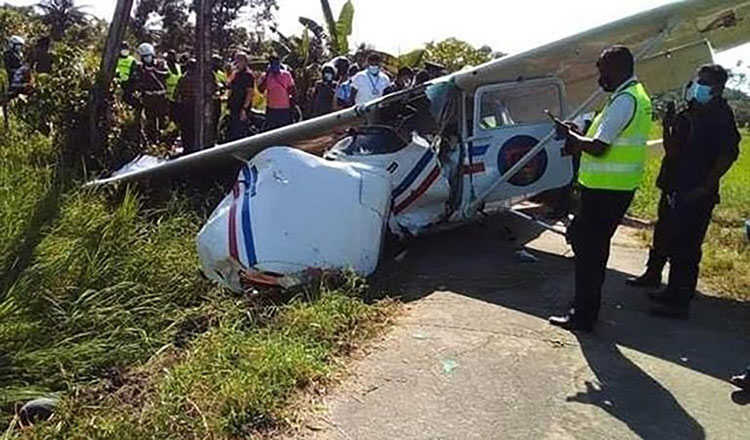
On Monday 27 December 2021, according to a Flight Safety Foundation narrative, “Cessna 172L 4R-GAF (ex 4R-HDC) of Sakurai Aviation crash landed in a paddy field in Paththayam Watta, Kimbulapitiya, Negombo in the Gampaha district close to Bandaranaike International Airport (VCBI) after the aircraft suffered an engine RPM fluctuation and subsequent engine failure. Three of the four occupants were injured. The charter flight was on its way to Koggala Airport (VCCK) from Sigiriya Airport (VCCS) when the problems started to occur. It had initially taken off from Ratmalana Airport (VCCC) and was supposed to land there after departing Koggala Airport (VCCK). The flight was going to make an emergency landing at Bandaranaike International Airport (VCBI) but while the aircraft was descending the pilot in command informed the controller that he had no control over the engine power. During the final approach to runway 22 the pilot in command then declared a “MAYDAY” call and the aircraft crash landed soon after.”
The touchdown itself at the paddy field was safe but due to a concrete road, which was not visible from to air at low level and running across the field, the nose wheel hit it and broke off creating the destruction and injury.
With the economic recovery, the present government has started reconstructing the highways and expressways that were suspended in the recent past. In countries like the United States of America (USA) there are straight stretches of expressways and highways, at regular intervals, where light to medium size aircraft could safely land in an emergency unlike the accident described above. Not only that, that particular stretch of road is maintained by the local Regulating Authority like the Federal Aviation Administration (FAA) in the case of the USA.
A Safe Landing on an Expressway in India.
The Sri Lanka National Aviation Policy of 2017 also recommends that there should be helipads at regular intervals along the expressways/ highways to facilitate medical evacuation in case of motor accidents. It should be noted that the Minister in Charge of Aviation and Highways is one and the same
Will the Government spare a thought for safer multimodal transport especially when there is a push to make Domestic Aviation available for tourism? Or will it be just another pipe dream?
Capt. G A Fernando
Former member of the Accident Investigation Team, Civil Aviation Authority, Sri Lanka.(CAASL)
Immediate past President of Aircraft Owners and Operators Association, Sri Lanka. (AOAOA)

Nahida, Marufa help Bangladesh brush aside Indonesia

Showers will occur in the Western, Sabaragamuwa, Southern and Uva provinces and in Kandy and Nuwara-Eliya districts

Sun directly overhead Kalpitiya, Talawa, Sinharagama, Galkadawala, Nachchaduwa, Padikaramaduwa, Gomarankalla and Verugal about 12.10 noon today (01)

SJB asks what Speaker intended to do about allegations against CJ

Navy Chief attends strategic-level discussions in Delhi

ICRS: Sustained and collective efforts critical to address issue of missing persons

‘Dates have the highest sugar content to fight Coronavirus’

Sunday Island 27 December – Headlines

#SundayIsland 17th December – Headlines

Sunday Island – 28th March

Sunday Island Headlines – 21 March

Sunday Island – 21st February – Headlines
-

 News4 days ago
Eight politicians in drug kingpin probe
-

 Features2 days ago
“Wrap Me Up in My Blazer”— A Gentlemanly Bradby Reminiscence
-
 Business4 days ago
Sri Lanka opens up: A new season of direct connectivity
-
 Features4 days ago
Redefining ageing in Sri Lanka
-
 Features6 days ago
Insights from Chieftains of Uva: Genealogy of two Kandyan Families – Part II
-
 Latest News5 days ago
Nepal-Tibet floods: What happened, what caused them and who is missing?
-

 Editorial6 days ago
Warning of power cuts: El Niño and corruption
-

 Features6 days ago
Export diversification: Missing the wood for the trees – Part I