
Opinion
Requiem for Science?


We must stick to science when science gets political. Scientists claim that the endeavour of science is the ultimate pursuit of truth.
ASH NARAIN ROY
“The Pope? How many divisions has he?” This is how Stalin retorted when Churchill reportedly suggested to him the possibility of the Pope being associated with some of the decisions taken at the 1943 Tehran conference which was the strategy meeting between Stalin, Roosevelt, and Churchill. Arrogance comes from ignorance. In politics and in life, ignorance is not a virtue. During the Stalin era, the self-serving Communist leaders saw their political beliefs as so all-encompassing that even science became political. If science contradicted communism, what good was it? It was simply not science. Are we any different today? It is ironical that at a time when it’s theoretically possible to send signals using mathematical calculations and quantum communications across interstellar space, the post-truth world should be witnessing the blatant politicisation of science. Or is it the slow death of science? Of course, the suppression of science is not a new phenomenon. The politicisation of science and technology has been a familiar game of autocrats. This affliction has now spread to democracies across the globe. President Trump forced the approval of unproved drugs such as hydroxychloroquine and remdesivir. George W.
Bush refused federal funding for embryonic stem-cell research. Globally commercial agenda dictates policies and procurement of drugs. Antipathy towards mathematical thinking is clear and evident. There are some who argue that we are approaching the limits of knowledge and hence further theorizing will only lead to speculation that cannot be verified or falsified by experiment. The hostility towards climate science is even more intense. There is no dearth of leaders who trash science and peddle conspiracy theories to cultivate certain constituencies of supporters. Populists and autocrats bank on monetising non-science. Conservatism, xenophobia, and climate change denial are inextricably linked. The extractive industry too has joined the bandwagon. Leaders like Trump and Bolsonaro are not looking for truth; they have found the truth.
No wonder, Trump called climate change “an expensive hoax.” Bolsonaro, the “Trump of the Tropics,” is the most dangerous climate denier in the world. He has downplayed the Covid threat, peddled conspiracy theories, ridiculed health measures and sabotaged vaccination efforts. Some say the Brazilian president is a practitioner of “ecological Leninism.” Brazil’s former foreign minister Ernesto Araujo, who argued that there was a lack of scientific proof over the causes of global warming, went as far to say that climate change advocates were stirring up alarmism for political ends. It was part of a leftist conspiracy against Brazil, whose sovereignty is under attack. Nobel laureate Venki Ramakrishnan says that “science flourishes where there is a real freedom of thought, opinion and minimal ideological interference.” We are living in a profoundly anti-science moment.
Some call it “post-theory science.” How can science flourish when denial, distraction, accusation and lies are part of the democratic game? Doubt is essential for science. In the age of social media, we are more likely to trust content that aligns with our views. Today, people are feeling genuinely a sense of mental discomfort when confronted with evidence that contradicts the view they hold. Social science is wrestling with this problem of what is understood as “cognitive dissonance.” We are in the belly of the beast. Technology is helping the autocrats to perpetuate their myths. Thanks to the smartphonification of life, we now have more memories in our pockets and less in our heads. The Uberisation of work, imposition of algorithmic management and commodification of data have resulted in global elites deflecting from the drivers of inequalities. All this is happening when we are dancing on the Titanic and the iceberg is not far away. But who cares? Make-believe is now fake-believe. Screen time is as addictive as junk food.
With the advent of dystopian technology, we are unwittingly submitting ourselves to a devil’s bargain. A study by sociologist Gordon Gauchat suggests that despite increasing higher levels of education in the US, the public’s trust in the scientific community has been decreasing. In 1974, conservatives with college degrees had the highest level of trust in science and the scientific community. Today, they have the lowest. Some of the bitterest attacks on climate scientists in the US are made by commentators of Fox News. They ridicule climate science and dismiss global warming as “the greatest scam in history.” There is another danger. The data deluge threatens to make the scientific method obsolete. Will big data mark the end of theory? Do we need digital dieting? With “every fool and every demon” invoking what Richard Falk calls “the voice of destiny,” the 21st century is threatening to become an age of nescience and unreason.
Social pathology is another problem. The slow death of liberalism and secularism has resulted in the blatant politicisation of science. In many countries scientists teach things which are obviously untrue as it supports the prevailing ideology. We are witnessing an epoch of breathless hype and scornful naysaying. Of course, science can’t claim absolutism and scientists too have their own biases. It is scientists’ job to weed out culturally relative truths and examine their rationality. Do we need deification of science? Perhaps no. Science is not a deity to have faith in it; faith is the domain of religion. Science can’t become a theology. Science is a theory. Critique and challenging long-held beliefs are germane to science. Politicisation of science too is problematic. Science can inform our choices, but it can’t guarantee wisdom. Friedrich Nietzsche exhorted his contemporaries to free themselves from scientific ‘piety.’ He argued that there are continuities between theology and modern faith in science.
Both blind adherence and hostile suspicion are dangerous. We must stick to science when science gets political. Scientists claim that the endeavour of science is the ultimate pursuit of truth. But truth has multiple shades of grey. There are spaces where multiple truths exist at once. Scientists are not new gods. There are no absolute truths in science. Nothing is ever completely settled. All knowledge is just probable knowledge. There are only approximate truths. Scientific truths are provisional. Even Newton’s law has its limits. Scientists must admit what they don’t know. Renowned physicist Edwin Hubble said famously that scientists must possess a healthy scepticism, suspended judgement, and disciplined imagination” towards others’ ideas but also towards their own.
(The Statesman/ANN)


The resignation of Energy Minister Kumara Jayakody comes after several weeks of controversy over his ministerial role. The controversy sharpened when the minister was indicted by the Commission on Bribery and Corruption for a transaction he was involved in ten years ago as a government official in the Fertiliser Corporation. The other issue was the government’s purchase of substandard coal from a new supplier. Minister Jayakody’s resignation followed the appointment of a Special Presidential Commission of Inquiry to investigate coal and petroleum purchases. The minister who resigned, along with the Secretary to the Ministry of Energy, Udayanga Hemapala, stated that they did not wish to compromise the integrity of the investigation to be undertaken by the Commission of Inquiry.
The government’s initial resistance to holding the minister accountable for the costly purchase was based on the argument that the official procedure had been followed in ordering the coal. However, the fact that the procedure permitted a disadvantageous purchase which has come to light on this occasion suggests a weakness in the process. The government’s appointment of the Special Presidential Commission of Inquiry to examine purchases as far back as 2009 follows from this observation. In this time 450 purchases are reported to have been made, and if several of them were as disadvantageous as this one, the cost to the country can be imagined. The need to investigate transactions since 2009 also arises from the possibility that loopholes in official government procedures in the past would have permitted private enrichment at a high cost to the country.
Concerns have been expressed in the past that the purchase of coal and petroleum, often on an emergency basis, enabled the use of emergency procurement processes which do not require going through the full tender procedures. The government has pledged to eradicate corruption as its priority. As a result, the general population would expect it to do everything within its power to correct those systems that permitted such corruption. Accountability is not only forward looking to ensure non-corrupt practices in the present, it is also backward looking to ensure that corrupt practices of the past are discontinued. This would be a matter of concern to those who headed government ministries and departments in previous governments. Those who have misapplied the systems can be expected to do their utmost to resist any investigation into the past.
Politically Astute
One of the main reasons for the government’s continuing popularity among the general population, as reflected in February 2026 public opinion poll by Verité Research, has been its willingness to address the problem of corruption. Public opinion studies have consistently shown that corruption remains one of the top concerns of citizens in Sri Lanka. The arrests and indictments of members of former governments have been viewed with general satisfaction as paving the way to a less corrupt society. At the same time, the resignations of Minister Kumara Jayakody and Secretary Udayanga Hemapala are an indication that not even government members will be spared if they are found to have crossed red lines. This is an important signal, as public confidence depends not only on holding political opponents to account but also on demonstrating fairness and consistency within one’s own ranks.
There appears to be a strategy on the part of the opposition to target government leaders and allege corruption so that ministers will be forced to step down. Organised protests against other ministers, and demonstrations outside their homes, are on the rise. The government appears not to want to give in to this opposition strategy and therefore delayed the resignation of Minister Jayakody until it had itself established the Special Presidential Commission of Inquiry. It enabled the minister to step down without it seeming that the government was yielding to opposition pressure. In political terms, this was a calibrated response that sought to balance the need for accountability with the need to maintain authority and coherence in governance.
The demand by opposition parties to focus attention on the coal problem could also be seen as an attempt to shift the national debate from the corruption of the past to controversies in the present. The opposition’s endeavour would be to take the heat off themselves in regard to the corruption of the past and turn it onto the government by making it the focus of inquiries into corruption. The decision to set up a Special Presidential Commission of Inquiry accompanied by the resignation of the minister and the ministry secretary was a politically astute way of demonstrating that the government will have no tolerance for corruption. It will also help to remind the general public about the rampant corruption of past governments which prevents the opposition’s corruption accusations against the government from gaining traction amongst the people.
New Practice
The resignation of a government minister who faces allegations but has not been convicted is still a relatively new practice in Sri Lanka. The general practice in Sri Lanka up to the present time has been for those in government service, if found to be at fault, to be transferred rather than removed from office. This is commonly seen in the case of police officers who, if found to have used excessive force or engaged in abuse, are transferred to another station rather than subjected to more serious disciplinary action. A similar pattern was seen in the case of former minister Keheliya Rambukwella, who faced allegations of corruption in the health field but was reassigned to a different portfolio rather than removed from government.
Against this background, the present resignation assumes greater importance. It signals a willingness to break with past practices and to establish a higher standard of conduct in public office. However, a single instance does not in itself create a lasting change. What is required is the consistent application of the same principle across all cases, irrespective of political affiliation or convenience. This is where the government has an opportunity to strengthen its credibility. By ensuring that the same standards of accountability are applied to its own members as to those of previous governments, it can demonstrate that its commitment to good governance is not selective.
The establishment of the Special Presidential Commission of Inquiry, the willingness to accept ministerial resignation, and the recognition of systemic weaknesses in procurement are all steps in the right direction. The challenge now is to ensure that these steps are followed through with determination and consistency. If the investigations are conducted impartially and lead to meaningful reforms, the present controversy could mark a turning point. The resignation of the minister should not be seen as an isolated event but as the beginning of a new practice. If it becomes part of a broader pattern of accountability, it can contribute to a new political culture and to restoring public trust in government.
by Jehan Perera

The Island newspaper’s lead news item on the 12th of April 2026 was on the CEB request to shut down rooftop solar power during the low demand periods. Their argument is that rooftop solar panels produce about 300 MW power during the day and there is no procedure to balance the grid with such a load.
We as well as a large academic and industrial consortium members have been trying to promote solar energy as a viable and sustainable power source since the early 1990’s. We formed the Solar Energy Society and made representations to Government politicians about the need to have solar power generation. This continuous promotional work contributed to the rapid increase in PV solar companies from three in the early 1990’s to over 650 active PV solar companies established today in the country. These companies have created tens of thousands of high-quality jobs, as well as moving in the right direction for sustainable development.
However, all these efforts appear to have been in vain since the CEB policy makers have continuously rejected solar energy as a viable alternative. Their power generation plans at that time did not include solar energy at all but only relied on imported coal power plants and diesel power generation. Even at the meetings where CEB senior staff were present, we emphasised the importance of installation of battery storage facilities and grid balancing for which they have done nothing at all over the past three decades. Now they have grudgingly accepted the need to include solar energy, which was an election promise of the present government. The government policy is that Sri Lanka should go for renewables to satisfy 70% of its energy needs by 2030 and soon move towards the green hydrogen technology by using solar and wind energy.
The question is why the diesel generators and hydropower stations cannot be shut off one by one to accommodate the solar power generated during the daytime. Unlike a coal-fired plant, diesel generators and hydro power plants can be shut off in a relatively shorter period of time. Norochchalai Lakvijaya power plant produces around 900 MW of power while the total country requirement is 2500 MW on a daily basis. The remainder is provided by diesel generators, hydro and other renewable energy sources.
The need for work to achieve this goal of grid balancing should be the primary responsibility of the CEB. Modern grid balancing systems are in operation in countries such as Germany where around 56% of its energy come from renewable sources. They also plan to increase this to reach 80% of the energy required through renewables by 2030. Our CEB is hell bent on diesel power plants. Who benefits from such emergency power purchases is anybody’s guess?
The Government and the CEB should realise that all roof top solar plants are privately financed through personal funds or bank loans with no financial burden on the Government. It is a crime to request them not to operate these solar panels and get the necessary credits for the power transmitted to the national grid. It appears that the results of CEB’s lack of grid balancing experience and unwillingness to learn over three decades have now passed to the privately-funded rooftop solar panel owners. It is unfortunate that the Government is not considering the contributions of ordinary individuals who provide clean power to the national grid at no cost to the Government. Over 150,000 rooftop solar panels owners are severely affected by these ruthless decisions by the CEB, and this will lead to the un-popularity of this new government in the end.
by Professors Oliver Ileperuma and I M Dharmadasa

It was with shock that I realized that the article in the Sunday Island of April 5 about the winsome graduate gazing serenely at her surroundings was, in fact, an obituary about Nilanthi Jayasinghe, a former colleague who I had held in high esteem. I had lost touch with Nilanthi since my retirement and this news that she had passed away, saddened me deeply
I knew and had worked with Nilanthi – Mrs Jayasinghe as we used to call her – at the Open University of Sri Lanka in the 1990s. As Director, Operations, she was a figure that we as heads of academic departments, relied on; a central bastion of the complex structure that underpinned academic activities at Sri Lanka’s major distance education provider. Few people realize what it takes to provide distance education in an environment not geared to this form of teaching/learning – the volume of Information that has to be created, printed and delivered; the variety of timetables that have to be scheduled; the massive amount of continuous assessment assignments and tests that have to be prepared and sent out; the organization of a multitude of face-to face teaching sessions; the complex scheduling of examinations and tests – all this needed to be attended to for a student population of more than 20,000 and for 23 centres of study dotted across Sri Lanka.
It was an unenviable task but Nilanthi Jayasinghe with her flair for organization, handled it all with aplomb and a deep sense of commitment. If there were delays and inconclusive action on our part, she never reprimanded but would work with us to sort things out. Her work as Director, Operations brought her into contact with staff across the spectrum-from the Vice-Chancellor to the apprentice in the Open University’s Printing Press. Nilanthi treated everyone with dignity and as a result, was respected by all at the university. She was sensitive, kind-hearted, a good friend who would readily share problems and help to solve them. The year NIlanthi retired, I was out of the island. When I came back to the Open University, I felt bereft without the steadfast support of her stalwart presence .
The article in the ‘Sunday Island’ describes her life after retirement, looking after family members and enjoying the presence of a granddaughter.
After a lifetime of commitment to others, Nilanthi Jayasinghe truly deserved this happiness.
May she be blessed with peace.
Ryhana Raheem
Professor Emeritus
Open University of Sri Lanka.

Showers or thundershowers will occur at most places of the island after 1.00 pm

Rs 13 bn NDB fraud: Int’l forensic audit ordered

Easter Sunday commemorations

Former Minister Gamage under CIABOC probe over recruiting 134 persons from Galle district

Coal scam: SJB says NAO report obstacle to NPP bid to suppress the truth

Of masterminds

‘Dates have the highest sugar content to fight Coronavirus’

Sunday Island 27 December – Headlines

#SundayIsland 17th December – Headlines

Sunday Island – 28th March

Sunday Island Headlines – 21 March

Sunday Island – 21st February – Headlines
-

 News6 days ago
PNS TAIMUR & ASLAT set sail from Colombo
-

 Business3 days ago
Harnessing nature’s wisdom: Experts highlight “Resist–Align” path to resilience
-

 News3 days ago
Gratiaen Trust announces longlist for the 33rd Annual Gratiaen Prize
-

 Latest News7 days ago
“I extend my heartfelt wishes to all Sri Lankans for a peaceful and joyous Sinhala and Tamil New Year!” – President
-

 News2 days ago
From Nuwara Eliya to Dubai: Isha Holdings markets Agri products abroad
-
 News3 days ago
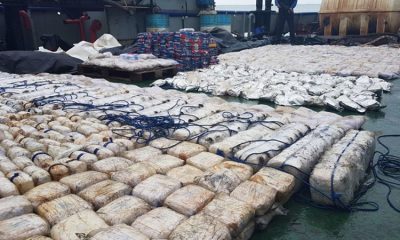
Heroin haul transported on 50-million-rupee contract
-

 Latest News5 days ago
Singapore Zoo’s first Sri Lankan leopard cubs make their public debut
-

 Latest News7 days ago
US blockade of Iran would worsen global energy crisis, analysts say