
Opinion
IMF may have changed, but Sri Lanka has not

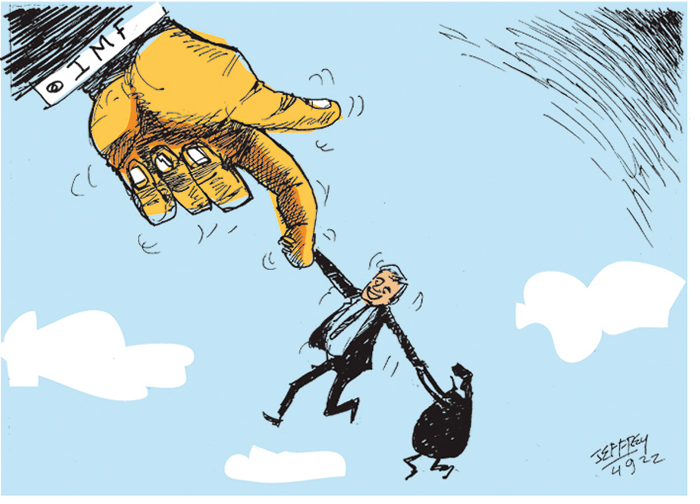
The IMF has told us in no uncertain terms that corruption and waste have to be brought under control. Yet, a minister would directly solicit a bribe from a Japanese company and get away with it. Doesn’t the Cabinet have any control over officials who change the conditions in the tender, and decide to buy coal for two years with no thought for the price fluctuations.Although the IMF, the Paris Club, the US, the UK, Europe, China and Japan have all got together to help us. Do we deserve their help? The corrupt system needs a shake-up.
The IMF was formed in 1945 at the Bretton Woods Conference based on the ideas of Dexter White and John Maynard Keynes. At the beginning it had 29 members. The objective was to expedite the economic development of underdeveloped countries. It focused on three areas – policy development, financial assistance and capacity development. The funds came mainly from the US, western countries and Japan. Keynesian policies, which did not discourage welfarism and government intervention in economic policies, initially benefited many developing countries and also the poor in rich countries. From the end of World War II to about the early 70s, these policies were not harmful to the global poor.
In the 70s Margaret Thatcher came to power in Britain and Ronald Reagan in the US. They were of the opinion that welfarism and government role were an impediment to economic development. The basis of neo-liberalism is the idea that the market is the prime determinant of not only prices of goods, and matters related to trade and commerce, but also social characters and human values. This means there is no need for the government to intervene on behalf of the people, and market forces most efficiently guide the economy with benefits to all stakeholders. This theory was first mooted by Friedrich von Hayek, and it was more or less a refutation of welfare capitalism advocated by John Maynard Keynes, which had been in practice since the end of Word War II in 1945. Hayek advised Margaret Thatcher on the virtues of neo-liberal economic policies, and those were subsequently adopted during Reagan’s time in the US and Margaret Thatcher’s in the UK.
These policies virtually detached the government from economic management. During the era of welfare capitalism and Keynesianism, which existed from the late 40s to the early 70s, the governments in the western countries adopted measures to protect the ordinary people from the depredations of market forces. Reagan and Thatcher, however, viewed those policies as an impediment to economic development. They believed that unrestrained market forces were a better driver of the economy. Thus were born neo-liberalism and its offshoot globalisation, which was designed to force the rest of the world to fall in line and accept their open-borders, export-led growth policy. The IMF, WTO and the World Bank were reoriented to serve this purpose.
These neo-liberal policies prevailed until the outbreak of the international debt crisis in 1982. In the latter half of the 1970s, developing countries borrowed heavily to pay for increasingly costly oil imports and to finance ambitious investment projects, many of which turned out to be white elephants. The IMF traced their problems to poor policies, unproductive borrowing, and incomplete programme implementation. In disbursing funds, the IMF became more selective about the recipients of concessional support, and required stricter and more extensive conditionality.
The 1980s the world learnt that a programme was unlikely to succeed if the impact of economic reforms on the poor—and resulting social unrest and opposition—was not addressed. This prompted the IMF to focus its help not only on poor countries, but also on the poor within countries. Analysis of poverty issues in Policy Framework Papers became a standard part of programme negotiations. Programmes continued to emphasise fiscal consolidation as a prerequisite for macroeconomic stability, but there were growing pledges to strengthen social spending, especially for health and education.
In the meantime, however, many low-income countries faced the problem of debt accumulation beyond their repaying capacity. In 1996, the IMF and the World Bank developed the Heavily Indebted Poor Country (HIPC) initiative, under which low-income countries with multi-year track records of good policies, would qualify for grants in association with their concessional loans.
The HIPC initiative soon came under heavy criticism for “offering too little relief too slowly to too few,” with only four countries obtaining a full stock of available debt relief before the end of the century. In 1999, the Bretton Woods institutions “enhanced” the initiative, by lowering the bar for judging whether debt was unsustainable, and providing debt relief and grants sooner to qualifying countries. Within three years, enhanced HIPC could deliver almost US$1 billion in debt relief to 25 countries.
By the turn of the century, the IMF’s engagement with low-income countries centered on three pillars: better funded and designed programmes, debt relief to facilitate poverty reduction efforts, and technical assistance. Although the IMF had long offered technical assistance to its members, the focus shifted to African countries, which by the early 2000s were receiving more than one-quarter of the IMF’s technical assistance. These efforts paid rich dividends. By 2019, 36 out of 39 eligible countries had received debt relief totaling some $125 billion, allowing them to increase social spending, especially on health and education, while remaining within budgetary envelopes. While most did not fully achieve their UN Millennium Development Goals, many made substantial progress.
Sri Lanka, to begin with, was better in terms of economic development than the African countries. It achieved middle income status. From 2010 to 2015 it recorded the highest GDP growth in South Asia, and was well on the way to prosperity. But the economy was like a wounded animal, burdened with so many unproductive projects and huge unsustainable debts. We were living beyond our means. Consumerism and aggrandizement became the order of the day. Few blunders by the government in 2020 and 2021 made the economy go bankrupt.
Apart from living beyond means, corruption, bribery, mismanagement and waste ate in to the vitals of the country. Yahapalana committed the Treasury bond scams. Then came the sugar scam under the new regime. And the most recent coal scam. Nether politicians nor bureaucrats have changed!
The IMF has told us in no uncertain terms that corruption and waste have to be brought under control. Yet, a minister would directly solicit a bribe from a Japanese company and get away with it. Doesn’t the Cabinet have any control over officials who change the conditions in the tender, and decide to buy coal for two years with no thought for the price fluctuations.Although the IMF, the Paris Club, the US, the UK, Europe, China and Japan have all got together to help us. Do we deserve their help? The corrupt system needs a shake-up.
N.A.de S. AMARATUNGA








The Island newspaper’s lead news item on the 12th of April 2026 was on the CEB request to shut down rooftop solar power during the low demand periods. Their argument is that rooftop solar panels produce about 300 MW power during the day and there is no procedure to balance the grid with such a load.
We as well as a large academic and industrial consortium members have been trying to promote solar energy as a viable and sustainable power source since the early 1990’s. We formed the Solar Energy Society and made representations to Government politicians about the need to have solar power generation. This continuous promotional work contributed to the rapid increase in PV solar companies from three in the early 1990’s to over 650 active PV solar companies established today in the country. These companies have created tens of thousands of high-quality jobs, as well as moving in the right direction for sustainable development.
However, all these efforts appear to have been in vain since the CEB policy makers have continuously rejected solar energy as a viable alternative. Their power generation plans at that time did not include solar energy at all but only relied on imported coal power plants and diesel power generation. Even at the meetings where CEB senior staff were present, we emphasised the importance of installation of battery storage facilities and grid balancing for which they have done nothing at all over the past three decades. Now they have grudgingly accepted the need to include solar energy, which was an election promise of the present government. The government policy is that Sri Lanka should go for renewables to satisfy 70% of its energy needs by 2030 and soon move towards the green hydrogen technology by using solar and wind energy.
The question is why the diesel generators and hydropower stations cannot be shut off one by one to accommodate the solar power generated during the daytime. Unlike a coal-fired plant, diesel generators and hydro power plants can be shut off in a relatively shorter period of time. Norochchalai Lakvijaya power plant produces around 900 MW of power while the total country requirement is 2500 MW on a daily basis. The remainder is provided by diesel generators, hydro and other renewable energy sources.
The need for work to achieve this goal of grid balancing should be the primary responsibility of the CEB. Modern grid balancing systems are in operation in countries such as Germany where around 56% of its energy come from renewable sources. They also plan to increase this to reach 80% of the energy required through renewables by 2030. Our CEB is hell bent on diesel power plants. Who benefits from such emergency power purchases is anybody’s guess?
The Government and the CEB should realise that all roof top solar plants are privately financed through personal funds or bank loans with no financial burden on the Government. It is a crime to request them not to operate these solar panels and get the necessary credits for the power transmitted to the national grid. It appears that the results of CEB’s lack of grid balancing experience and unwillingness to learn over three decades have now passed to the privately-funded rooftop solar panel owners. It is unfortunate that the Government is not considering the contributions of ordinary individuals who provide clean power to the national grid at no cost to the Government. Over 150,000 rooftop solar panels owners are severely affected by these ruthless decisions by the CEB, and this will lead to the un-popularity of this new government in the end.
by Professors Oliver Ileperuma and I M Dharmadasa
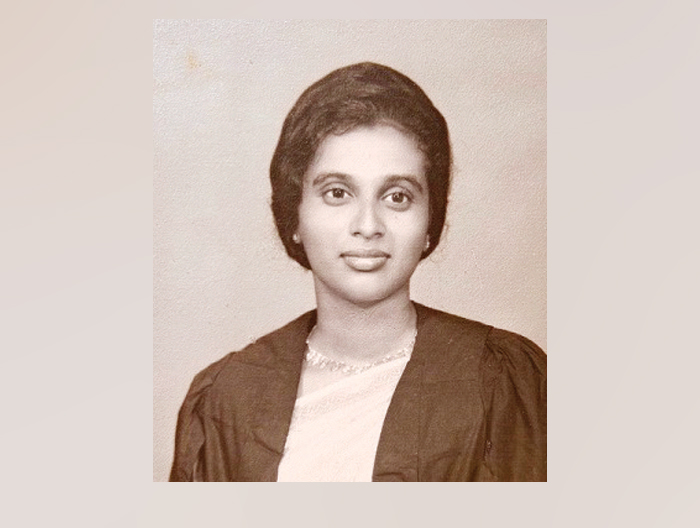
It was with shock that I realized that the article in the Sunday Island of April 5 about the winsome graduate gazing serenely at her surroundings was, in fact, an obituary about Nilanthi Jayasinghe, a former colleague who I had held in high esteem. I had lost touch with Nilanthi since my retirement and this news that she had passed away, saddened me deeply
I knew and had worked with Nilanthi – Mrs Jayasinghe as we used to call her – at the Open University of Sri Lanka in the 1990s. As Director, Operations, she was a figure that we as heads of academic departments, relied on; a central bastion of the complex structure that underpinned academic activities at Sri Lanka’s major distance education provider. Few people realize what it takes to provide distance education in an environment not geared to this form of teaching/learning – the volume of Information that has to be created, printed and delivered; the variety of timetables that have to be scheduled; the massive amount of continuous assessment assignments and tests that have to be prepared and sent out; the organization of a multitude of face-to face teaching sessions; the complex scheduling of examinations and tests – all this needed to be attended to for a student population of more than 20,000 and for 23 centres of study dotted across Sri Lanka.
It was an unenviable task but Nilanthi Jayasinghe with her flair for organization, handled it all with aplomb and a deep sense of commitment. If there were delays and inconclusive action on our part, she never reprimanded but would work with us to sort things out. Her work as Director, Operations brought her into contact with staff across the spectrum-from the Vice-Chancellor to the apprentice in the Open University’s Printing Press. Nilanthi treated everyone with dignity and as a result, was respected by all at the university. She was sensitive, kind-hearted, a good friend who would readily share problems and help to solve them. The year NIlanthi retired, I was out of the island. When I came back to the Open University, I felt bereft without the steadfast support of her stalwart presence .
The article in the ‘Sunday Island’ describes her life after retirement, looking after family members and enjoying the presence of a granddaughter.
After a lifetime of commitment to others, Nilanthi Jayasinghe truly deserved this happiness.
May she be blessed with peace.
Ryhana Raheem
Professor Emeritus
Open University of Sri Lanka.
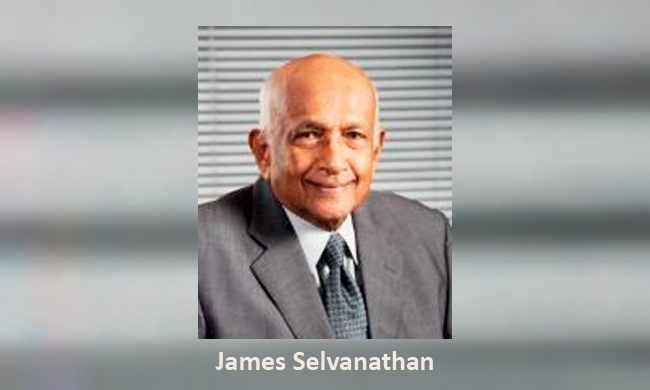
James Mather (Selvan to all of us) who passed away recently at the age of 95 was one of the leading Chartered Accountants in the country. He was the senior partner of Ernst and Young for long years, and the mentor for a generation of chartered accountants. He was confidante and adviser to many of the leading businessmen of his time. His career spanned over six decades. A man who never sought the limelight, he was very influential in Ceylon/Sri Lanka’s business world.
Selvan Mather was born in 1930 to a well-known Christian family in Jaffna. His father, Rev. James Mather was Head of the Methodist Church in Ceylon. Selvan was educated at Trinity College Kandy, and he had a life-long connection with the school. He entered the University of Ceylon in the late 1940s, at a time when Ivor Jennings was Vice-Chancellor.
He read economics and passed out with an honours degree. For short periods he was in the Department of Income Tax and with the newly established Central Bank of Ceylon. The Central Bank facilitated him to go to England to qualify as a chartered accountant. His two referees, when seeking admission to an accountancy firm in the U.K. were M.D.H. Jayawardena, then Minister of Finance and the Auditor General of Ceylon, L.A. Weerasinghe. Being a chartered accountant was a rare event those days.
On his return from England, his career was with Ernst and Young where he became senior partner. He was close advisor and confidante to many of the leading businessmen. He was admitted to its Hall of Fame by the Institute of Chartered Accountants.
To strike a personal note, I got to know him 50 years ago when he applied for a fellowship given by the Asian Productivity Organisation (APO) in Tokyo. I was in the Ministry of Planning and Economic Affairs at the time, and the Ministry was handling APO affairs in Colombo. He told me later that he enjoyed his time in Tokyo. From that time, we kept up a friendship with him and Nelun, which lasted 50 years.
My wife, Rukmal, and I lived in Windsor England, for about 25 years. During that time, Nelun and Selvan were regular visitors to England. I remember taking him for long walks in Windsor Great Park, and on the grounds of Eton College which were nearby. We went on long car tours in England covering the Cotswolds, the Peak districts and the Potteries. I remember celebrating Selvan’s 70th birthday in London at a Greek restaurant, along with his great friends, Nihal and Doreen Vitarana. Memories remain, although Selvan is no more.
In the last decades of his life we saw Nelun and him often. A few of us, Manik de Silva, Nihal and Srima Seneviratne and a few others met regulsrly for lunch. We will all miss Selvan who was mine of his life and times very much.
Selvan leaves his wife Nelun and three children and their husbands – Rohan, Shyamala and Indi, and Rehana and Akram. It was a close-knit family and they will miss him.
Leelananda De Silva.

Dasun Shanaka handed one-year PSL ban

Nahid, Tanzid help Bangladesh level New Zealand series

Five UAE cricketers given citizenship through naturalisation

Moni, Sharmin help Bangladesh register maiden ODI win against Sri Lanka

Advisory for Severe Lightning issued for all provinces of Sri Lanka

Oil prices rise after Trump says Iranian ship seized

‘Dates have the highest sugar content to fight Coronavirus’

Sunday Island 27 December – Headlines

#SundayIsland 17th December – Headlines

Sunday Island – 28th March

Sunday Island Headlines – 21 March

Sunday Island – 21st February – Headlines
-

 News5 days ago
PNS TAIMUR & ASLAT set sail from Colombo
-

 Business3 days ago
Harnessing nature’s wisdom: Experts highlight “Resist–Align” path to resilience
-

 News3 days ago
Gratiaen Trust announces longlist for the 33rd Annual Gratiaen Prize
-

 Latest News7 days ago
“I extend my heartfelt wishes to all Sri Lankans for a peaceful and joyous Sinhala and Tamil New Year!” – President
-

 News2 days ago
From Nuwara Eliya to Dubai: Isha Holdings markets Agri products abroad
-
 News3 days ago
Heroin haul transported on 50-million-rupee contract
-

 Latest News4 days ago
Singapore Zoo’s first Sri Lankan leopard cubs make their public debut
-
 Latest News7 days ago
US blockade of Iran would worsen global energy crisis, analysts say