
Features
Remembering Mervyn de Silva on his 25th Death Anniversary


BY JAYANTHA SOMASUNDARAM
When Mervyn de Silva left us on 22nd June 1999, it was not just the twentieth century that was drawing to a close. In retrospect one could sense, and now we know, that with his passing, an era in the literary history of Sri Lanka had ended. Because he was the last of a golden age of journalism, an illustrious tradition of English journalism in Sri Lanka that gave us H. A. J. Hulugalle, Jayantha Padmanabha, Tarzie Vittachi and Denzil Peiris. They were brilliant editors who provided us with not just world-class newspapers; they were also erudite men who helped build a Ceylonese literati that any society can be proud of.
I make no apologies for repeating what I have written before on my editor, my guru, my role model and my friend Mervyn de Silva, because all of it remains just as valid as it did a quarter of a century ago. The defining attributes of Mervyn and their importance bear repetition and deserve considered reflection.
To me Mervyn’s life was a series of literary and intellectual achievements that unfolded with Cartesian precision, building one upon the other.
The foundation being the liberal education received at school and university as well as through his voracious and explorative reading. Also, the intellectual sparing of his early days and his punishing regime of writing and literary engagement. A foundation through which he acquired and imbibed all that was admirable in Western culture, literature and thought.
Mervyn’s obvious and comprehensive modernity was a conspicuous stigmata of his socio-cultural milieu, one in which he and his peers had been moulded by almost half a millennium of saturated exposure to European thought, mores, literature, lifestyle and values. These were cemented by the British Public School experience that already shaped Mervyn’s father at Trinity College, and would then mould Mervyn himself at Royal College and the English Department of the University of Ceylon.
Mervyn was to transform these literary and intellectual skills into a career in journalism at Lake House that climaxed in the early seventies with him becoming editor of the Daily News and the Sunday Observer.
Royal College & the University of Ceylon
By then he was Sri Lanka’s best-known journalist. He would cover and report on the country for the most prestigious international journals: The Economist, Newsweek and the London Financial Times. He also reported for the BBC. As a foreign correspondent he was the driving force behind the Foreign Correspondents’ Association, serving as its president. Through all of this he left an indelible mark on journalism and the media in this country.
Not surprisingly his modernity also made him a connoisseur of ‘Cultural Christianity’ which he accessed through the works of masters like T.S.Eliot. And though Mervyn was steadfastly secular, even agnostic, his Cultural Christianity was reminiscent of what Eliot’s biographer , when describing Eliot’s late religious conversion, explained as serving to “attach Eliot to the English community and English culture.”
But he went beyond being just another Westernised dilettante. The rise of nationalism that came with the post-colonial years interacted with and impacted on his Western sophistication to give this country, for the first time, an editor who was liberal in the most profound sense of the word, in that he was sensitive to the aspirations of the emerging Sinhala and Tamil speaking world. History provided us at this critical juncture in time, with someone who was not just adrift between two worlds, but a link between two dimensions of Ceylonese life.
No doubt he had been influenced both at Royal and in the University’s English Department by those who in what was still early days, questioned and criticised the status quo; Dickie Attygalle, Regi Siriwardena and Professor Ludowyke.
Moreover his inherited family heritage did carry the strands of indigenous religion, values and pride. And perhaps this latent tension which I with my own diverse heritage can instinctively appreciate, also provided Mervyn the critic of the establishment, the rebel against the existing order and the outsider who wanted to change the status quo, with the capacity to contain this inherent contradiction. Or as Izzeth Hussain described Mervyn: “Underneath was always a troubled intelligence, sensitive and vulnerable, the non-conformist always on the side of the underdog…without illusions about men of power and their world, and incapable of identifying himself with any political party…”
His compelling mission to use his modernising drive to see beyond its own circumscribed horizon led him to replicate his radical vision beyond this Island’s shores and apply it to unlock at a global level the unraveling of a new exciting post-colonial world. And this came with the second level of his specialisation and challenges – international affairs.
Cold War & Non Alignment
In the aftermath of Bandaranaike’s 1956 victory, Mervyn’s Peradeniya batchmate, the young MEP Parliamentarian Nimal Karunatilleke, introduced him to the new Prime Minister who unceremoniously told Mervyn to take over and deliver the weekly foreign affairs commentary that was aired on the then Radio Ceylon.
He schooled himself in foreign affairs so that he became the country’s foremost writer and broadcaster in this field. As Secretary-General of the Ceylon Institute of World Affairs (CIWA) he fashioned a forum where the issues of the day could be discussed and developed.
One of my earliest recollections of Mervyn was at a presentation by Shirley Amerasinghe, Colombo’s Permanent Representative at the United Nations. While Maj. Gen. Anton Muttukumaru presided it was the debonair Mervyn, immaculately dressed, pipe in hand, who gave the vote of thanks. He opened with: They say it’s a good thing that diplomats have long noses, because they cannot see beyond them! It was pure Mervyn; charming, witty, the consummate speaker, a treat to listen to.
Later, the two-day seminar that he was to organise in 1972 for the CIWA at the Taprobane on The Indian Ocean Region, brought together some provocative minds of the day, among them jurist Lalith Athulathmudali, diplomat Yogeswaran Duraisamy, academic K. H. Jayasinghe, writer Hector Abhayavardhana and strategist Rajan Kadirgamar.
At a time when the Cold War had left the emerging states in the South with little option but to formulate their own foreign policy, Sri Lanka was fortunate to have in Mervyn someone who was gifted with a sense of history. It enabled him to respond to the flood of ideas coming out of the South as it grappled with its newfound freedom and evolved a policy of Non Alignment for the emerging post-colonial world.
At one level Mervyn was a very public person. He enjoyed the limelight, the academia-driven exchanges, the diplomatic circuit and the cocktail parties. But his family, Lakshmi his wife and Dayan his son were a source of strength to him and the object of his unwavering affection and commitment. Though my acquaintance with Mervyn’s wife Lakshmi was limited, in his tribute to his mother, Dayan clearly explains her role and significance in Mervyn’s life and career. “It was only my mother whose firmness and strength, determination and discipline, constancy and consistency, engagement and fighting spirit that kept him on track and able to achieve that which he did, reaching the top of his profession of journalism nationally and internationally, scaling the heights of global political access and encounter, and with his greatness posthumously recognised. He knew he owed her!”
Understandably the mainstream media could not accommodate him or contain him; so, he had to break out, he had to do his own thing. And so began the third phase of his journey, he set out to create and fashion a literary vehicle that quintessentially could carry his Progressive Liberal vision. And in 1978 was born The Lanka Guardian.
Lanka Guardian
He shared his vision with me on a quiet afternoon at the Orient Club. This was where Mervyn retired each day, and as his eye focused on the billiard table, his mind grappled with the challenge of launching a new journal, a different magazine.
In those early days, The Lanka Guardian drew on the literary talents of independent writers like S. Pathiravitharne, Regi Siriwardene and V. P. Vittachi – providing them, and later countless other writers with a unique forum. Mervyn also built around him a loyal team, Hugh Abeyaratne who single-handedly sub-edited the magazine, Gamini Dissanayake who looked after the business side and Shahareen Ismail behind her typewriter. And from a small office at the YMBA Building in Fort, they opened a window through which a generation could view Sri Lanka, could share ideas, could debate issues and could publish poetry.
In the years that followed, as tame journalism became the hallmark of the mainstream media, the Guardian stood out as a fiercely independent magazine, which opened its pages to diverse views and distant voices. It was honest and intelligent in a world that had become mediocre and mundane. It conveyed news, made analyses and poked fun, as everything around was reduced to stultified regimentation. As Sri Lanka passed through the darkness of the eighties and nineties, as violence swept the land, destroying dissent and creativity, Mervyn ensured that the Guardian hit the streets. It was his statement of faith, his belief in getting truth and opinion out there, regardless of the cost.
The Lanka Guardian
in Mervyn’s hands was more than a magazine, it was a torch that he kept alight as one after the other all other lamps were extinguished. It became a lifeline as people in different corners of the world waited each fortnight to sense and touch the real Sri Lanka; its events, its people, its ideas – its hopes and dreams. Mervyn and the Guardian in the words of the poet Matthew Arnold were “Wandering between two worlds, one dead, the other powerless to be born.”
Mervyn kept at it with tenacity, undaunted by the challenges. At that tenuous moment in time, it was his testament, his legacy. History called him to independently take a stand as a critical commentator, and this he did without a moment’s hesitation. And he kept at it until the very end, thinking, speaking, writing, and broadcasting, never disheartened by the carnage, the futility and the vanity of that era.
He kept true to the end. Surely could he have said when it was all over, like that tragic hero Mark Anthony before him: “Unarm Eros, the long day’s task is done.”



A prominent feature of the first year of the NPP government is that it has not engaged in the institutional reforms which was expected of it. This observation comes in the context of the extraordinary mandate with which the government was elected and the high expectations that accompanied its rise to power. When in opposition and in its election manifesto, the JVP and NPP took a prominent role in advocating good governance systems for the country. They insisted on constitutional reform that included the abolition of the executive presidency and the concentration of power it epitomises, the strengthening of independent institutions that overlook key state institutions such as the judiciary, public service and police, and the reform or repeal of repressive laws such as the PTA and the Online Safety Act.
The transformation of a political party that averaged between three to five percent of the popular vote into one that currently forms the government with a two thirds majority in parliament is a testament to the faith that the general population placed in the JVP/ NPP combine. This faith was the outcome of more than three decades of disciplined conduct in the aftermath of the bitter experience of the 1988 to 1990 period of JVP insurrection. The manner in which the handful of JVP parliamentarians engaged in debate with well researched critiques of government policy and actions, and their service in times of disaster such as the tsunami of 2004 won them the trust of the people. This faith was bolstered by the Aragalaya movement which galvanized the citizens against the ruling elites of the past.
In this context, the long delay to repeal the Prevention of Terrorism Act which has earned notoriety for its abuse especially against ethnic and religious minorities, has been a disappointment to those who value human rights. So has been the delay in appointing an Auditor General, so important in ensuring accountability for the money expended by the state. The PTA has a long history of being used without restraint against those deemed to be anti-state which, ironically enough, included the JVP in the period 1988 to 1990. The draft Protection of the State from Terrorism Act (PSTA), published in December 2025, is the latest attempt to repeal and replace the PTA. Unfortunately, the PSTA largely replicates the structure, logic and dangers of previous failed counter terrorism bills, including the Counter Terrorism Act of 2018 and the Anti Terrorism Act proposed in 2023.
Misguided Assumption
Despite its stated commitment to rule of law and fundamental rights, the draft PTSA reproduces many of the core defects of the PTA. In a preliminary statement, the Centre for Policy Alternatives has observed among other things that “if there is a Detention Order made against the person, then in combination, the period of remand and detention can extend up to two years. This means that a person can languish in detention for up to two years without being charged with a crime. Such a long period again raises questions of the power of the State to target individuals, exacerbated by Sri Lanka’s history of long periods of remand and detention, which has contributed to abuse and violence.” Human Rights lawyer Ermiza Tegal has warned against the broad definition of terrorism under the proposed law: “The definition empowers state officials to term acts of dissent and civil disobedience as ‘terrorism’ and will lawfully permit disproportionate and excessive responses.” The legitimate and peaceful protests against abuse of power by the authorities cannot be classified as acts of terror.
The willingness to retain such powers reflects the surmise that the government feels that keeping in place the structures that come from the past is to their benefit, as they can utilise those powers in a crisis. Due to the strict discipline that exists within the JVP/NPP at this time there may be an assumption that those the party appoints will not abuse their trust. However, the country’s experience with draconian laws designed for exceptional circumstances demonstrates that they tend to become tools of routine governance. On the plus side, the government has given two months for public comment which will become meaningful if the inputs from civil society actors are taken into consideration.
Worldwide experience has repeatedly demonstrated that integrity at the level of individual leaders, while necessary, is not sufficient to guarantee good governance over time. This is where the absence of institutional reform becomes significant. The aftermath of Cyclone Ditwah in particular has necessitated massive procurements of emergency relief which have to be disbursed at maximum speed. There are also significant amounts of foreign aid flowing into the country to help it deal with the relief and recovery phase. There are protocols in place that need to be followed and monitored so that a fiasco like the disappearance of tsunami aid in 2004 does not recur. To the government’s credit there are no such allegations at the present time. But precautions need to be in place, and those precautions depend less on trust in individuals than on the strength and independence of oversight institutions.
Inappropriate Appointments
It is in this context that the government’s efforts to appoint its own preferred nominees to the Auditor General’s Department has also come as a disappointment to civil society groups. The unsuitability of the latest presidential nominee has given rise to the surmise that this nomination was a time buying exercise to make an acting appointment. For the fourth time, the Constitutional Council refused to accept the president’s nominee. The term of the three independent civil society members of the Constitutional Council ends in January which would give the government the opportunity to appoint three new members of its choice and get its way in the future.
The failure to appoint a permanent Auditor General has created an institutional vacuum at a critical moment. The Auditor General acts as a watchdog, ensuring effective service delivery promoting integrity in public administration and providing an independent review of the performance and accountability. Transparency International has observed “The sequence of events following the retirement of the previous Auditor General points to a broader political inertia and a governance failure. Despite the clear constitutional importance of the role, the appointment process has remained protracted and opaque, raising serious questions about political will and commitment to accountability.”
It would appear that the government leadership takes the position they have been given the mandate to govern the country which requires implementation by those they have confidence in. This may explain their approach to the appointment (or non-appointment) at this time of the Auditor General. Yet this approach carries risks. Institutions are designed to function beyond the lifespan of any one government and to protect the public interest even when those in power are tempted to act otherwise. The challenge and opportunity for the NPP government is to safeguard independent institutions and enact just laws, so that the promise of system change endures beyond personalities and political cycles.
by Jehan Perera

 A new batch arrived at our Faculty again. Students representing almost all districts of the country remind me once again of the wonderful opportunity we have for promoting social and ethnic cohesion at our universities. Sadly, however, many students do not interact with each other during the first few semesters, not only because they do not speak each other’s language(s), but also because of the fear and distrust that still prevails among communities in our society.
General education reform presents an opportunity to explore ways to promote social and ethnic cohesion. A school curriculum could foster shared values, empathy, and critical thinking, through social studies and civics education, implement inclusive language policies, and raise critical awareness about our collective histories. Yet, the government’s new policy document, Transforming General Education in Sri Lanka 2025, leaves us little to look forward to in this regard.
The policy document points to several “salient” features within it, including: 1) a school credit system to quantify learning; 2) module-based formative and summative assessments to replace end-of-term tests; 3) skills assessment in Grade 9 consisting of a ‘literacy and numeracy test’ and a ‘career interest test’; 4) a comprehensive GPA-based reporting system spanning the various phases of education; 5) blended learning that combines online with classroom teaching; 6) learning units to guide students to select their preferred career pathways; 7) technology modules; 8) innovation labs; and 9) Early Childhood Education (ECE). Notably, social and ethnic cohesion does not appear in this list. Here, I explore how the proposed curriculum reforms align (or do not align) with the NPP’s pledge to inculcate “[s]afety, mutual understanding, trust and rights of all ethnicities and religious groups” (p.127), in their 2024 Election Manifesto.
Language/ethnicity in the present curriculum
The civil war ended over 15 years ago, but our general education system has done little to bring ethnic communities together. In fact, most students still cannot speak in the “second national language” (SNL) and textbooks continue to reinforce negative stereotyping of ethnic minorities, while leaving out crucial elements of our post-independence history.
Although SNL has been a compulsory subject since the 1990s, the hours dedicated to SNL are few, curricula poorly developed, and trained teachers few (Perera, 2025). Perhaps due to unconscious bias and for ideological reasons, SNL is not valued by parents and school communities more broadly. Most students, who enter our Faculty, only have basic reading/writing skills in SNL, apart from the few Muslim and Tamil students who schooled outside the North and the East; they pick up SNL by virtue of their environment, not the school curriculum.
Regardless of ethnic background, most undergraduates seem to be ignorant about crucial aspects of our country’s history of ethnic conflict. The Grade 11 history textbook, which contains the only chapter on the post-independence period, does not mention the civil war or the events that led up to it. While the textbook valourises ‘Sinhala Only’ as an anti-colonial policy (p.11), the material covering the period thereafter fails to mention the anti-Tamil riots, rise of rebel groups, escalation of civil war, and JVP insurrections. The words “Tamil” and “Muslim” appear most frequently in the chapter, ‘National Renaissance,’ which cursorily mentions “Sinhalese-Muslim riots” vis-à-vis the Temperance Movement (p.57). The disenfranchisement of the Malaiyaha Tamils and their history are completely left out.
Given the horrifying experiences of war and exclusion experienced by many of our peoples since independence, and because most students still learn in mono-ethnic schools having little interaction with the ‘Other’, it is not surprising that our undergraduates find it difficult to mix across language and ethnic communities. This environment also creates fertile ground for polarizing discourses that further divide and segregate students once they enter university.
More of the same?
How does Transforming General Education seek to address these problems? The introduction begins on a positive note: “The proposed reforms will create citizens with a critical consciousness who will respect and appreciate the diversity they see around them, along the lines of ethnicity, religion, gender, disability, and other areas of difference” (p.1). Although National Education Goal no. 8 somewhat problematically aims to “Develop a patriotic Sri Lankan citizen fostering national cohesion, national integrity, and national unity while respecting cultural diversity (p. 2), the curriculum reforms aim to embed values of “equity, inclusivity, and social justice” (p. 9) through education. Such buzzwords appear through the introduction, but are not reflected in the reforms.
Learning SNL is promoted under Language and Literacy (Learning Area no. 1) as “a critical means of reconciliation and co-existence”, but the number of hours assigned to SNL are minimal. For instance, at primary level (Grades 1 to 5), only 0.3 to 1 hour is allocated to SNL per week. Meanwhile, at junior secondary level (Grades 6 to 9), out of 35 credits (30 credits across 15 essential subjects that include SNL, history and civics; 3 credits of further learning modules; and 2 credits of transversal skills modules (p. 13, pp.18-19), SNL receives 1 credit (10 hours) per term. Like other essential subjects, SNL is to be assessed through formative and summative assessments within modules. As details of the Grade 9 skills assessment are not provided in the document, it is unclear whether SNL assessments will be included in the ‘Literacy and numeracy test’. At senior secondary level – phase 1 (Grades 10-11 – O/L equivalent), SNL is listed as an elective.
Refreshingly, the policy document does acknowledge the detrimental effects of funding cuts in the humanities and social sciences, and highlights their importance for creating knowledge that could help to “eradicate socioeconomic divisions and inequalities” (p.5-6). It goes on to point to the salience of the Humanities and Social Sciences Education under Learning Area no. 6 (p.12):
“Humanities and Social Sciences education is vital for students to develop as well as critique various forms of identities so that they have an awareness of their role in their immediate communities and nation. Such awareness will allow them to contribute towards the strengthening of democracy and intercommunal dialogue, which is necessary for peace and reconciliation. Furthermore, a strong grounding in the Humanities and Social Sciences will lead to equity and social justice concerning caste, disability, gender, and other features of social stratification.”
Sadly, the seemingly progressive philosophy guiding has not moulded the new curriculum. Subjects that could potentially address social/ethnic cohesion, such as environmental studies, history and civics, are not listed as learning areas at the primary level. History is allocated 20 hours (2 credits) across four years at junior secondary level (Grades 6 to 9), while only 10 hours (1 credit) are allocated to civics. Meanwhile, at the O/L, students will learn 5 compulsory subjects (Mother Tongue, English, Mathematics, Science, and Religion and Value Education), and 2 electives—SNL, history and civics are bunched together with the likes of entrepreneurship here. Unlike the compulsory subjects, which are allocated 140 hours (14 credits or 70 hours each) across two years, those who opt for history or civics as electives would only have 20 hours (2 credits) of learning in each. A further 14 credits per term are for further learning modules, which will allow students to explore their interests before committing to a A/L stream or career path.
With the distribution of credits across a large number of subjects, and the few credits available for SNL, history and civics, social/ethnic cohesion will likely remain on the back burner. It appears to be neglected at primary level, is dealt sparingly at junior secondary level, and relegated to electives in senior years. This means that students will be able to progress through their entire school years, like we did, with very basic competencies in SNL and little understanding of history.
Going forward
Whether the students who experience this curriculum will be able to “resist and respond to hegemonic, divisive forces that pose a threat to social harmony and multicultural coexistence” (p.9) as anticipated in the policy, is questionable. Education policymakers and others must call for more attention to social and ethnic cohesion in the curriculum. However, changes to the curriculum would only be meaningful if accompanied by constitutional reform, abolition of policies, such as the Prevention of Terrorism Act (and its proxies), and other political changes.
For now, our school system remains divided by ethnicity and religion. Research from conflict-ridden societies suggests that lack of intercultural exposure in mono-ethnic schools leads to ignorance, prejudice, and polarized positions on politics and national identity. While such problems must be addressed in broader education reform efforts that also safeguard minority identities, the new curriculum revision presents an opportune moment to move this agenda forward.
(Ramya Kumar is attached to the Department of Community and Family Medicine, Faculty of Medicine, University of Jaffna).
Kuppi is a politics and pedagogy happening on the margins of the lecture hall that parodies, subverts, and simultaneously reaffirms social hierarchies.
by Ramya Kumar

Certain songs become ever-present every December, and with Christmas just two days away, I thought of highlighting the Top 10 Most Popular Festive Songs.
The famous festive songs usually feature timeless classics like ‘White Christmas,’ ‘Silent Night,’ and ‘Jingle Bells,’ alongside modern staples like Mariah Carey’s ‘All I Want for Christmas Is You,’ Wham’s ‘Last Christmas,’ and Brenda Lee’s ‘Rockin’ Around the Christmas Tree.’
The following renowned Christmas songs are celebrated for their lasting impact and festive spirit:
* ‘White Christmas’ — Bing Crosby
The most famous holiday song ever recorded, with estimated worldwide sales exceeding 50 million copies. It remains the best-selling single of all time.
* ‘All I Want for Christmas Is You’ — Mariah Carey
A modern anthem that dominates global charts every December. As of late 2025, it holds an 18x Platinum certification in the US and is often ranked as the No. 1 popular holiday track.

Mariah Carey: ‘All I Want for Christmas Is You’
* ‘Silent Night’ — Traditional
Widely considered the quintessential Christmas carol, it is valued for its peaceful melody and has been recorded by hundreds of artistes, most famously by Bing Crosby.
* ‘Jingle Bells’ — Traditional
One of the most universally recognised and widely sung songs globally, making it a staple for children and festive gatherings.
* ‘Rockin’ Around the Christmas Tree’ — Brenda Lee
Recorded when Lee was just 13, this rock ‘n’ roll favourite has seen a massive resurgence in the 2020s, often rivaling Mariah Carey for the top spot on the Billboard Hot 100.
* ‘Last Christmas’ — Wham!
A bittersweet ’80s pop classic that has spent decades in the top 10 during the holiday season. It recently achieved 7x Platinum status in the UK.
* ‘Jingle Bell Rock’ — Bobby Helms
A festive rockabilly standard released in 1957 that remains a staple of holiday radio and playlists.
* ‘The Christmas Song (Chestnuts Roasting on an Open Fire)’— Nat King Cole
Known for its smooth, warm vocals, this track is frequently cited as the ultimate Christmas jazz standard.

Wham! ‘Last Christmas’
* ‘It’s the Most Wonderful Time of the Year’ — Andy Williams
Released in 1963, this high-energy big band track is famous for capturing the “hectic merriment” of the season.
* ‘Rudolph the Red-Nosed Reindeer’ — Gene Autry
A beloved narrative song that has sold approximately 25 million copies worldwide, cementing the character’s place in Christmas folklore.
Other perennial favourites often in the mix:
* ‘Feliz Navidad’ – José Feliciano
* ‘A Holly Jolly Christmas’ – Burl Ives
* ‘Let It Snow! Let It Snow! Let It Snow!’ – Frank Sinatra
Let me also add that this Thursday’s ‘SceneAround’ feature (25th December) will be a Christmas edition, highlighting special Christmas and New Year messages put together by well-known personalities for readers of The Island.

Implementation of the loan scheme, “Sustainable Agriculture Program”

Cabinet nod to implement ‘Suraksha’ Student Insurance Programme in the year 2025 / 26
Establishment of Consultancy Boards for strengthening and promoting local production industries.

Match fees more than doubled for women’s domestic cricketers in India

National progress can be achieved only when everyone fulfills the responsibilities entrusted to them with steadfast determination, unity of purpose and resilience in the face of any challenge – President

Indonesia’s Gede Priandana becomes first to pick five wickets in an over in T20Is

‘Dates have the highest sugar content to fight Coronavirus’

Sunday Island 27 December – Headlines

#SundayIsland 17th December – Headlines

Sunday Island – 28th March

Sunday Island Headlines – 21 March

Sunday Island – 21st February – Headlines
-

 News24 hours ago
Members of Lankan Community in Washington D.C. donates to ‘Rebuilding Sri Lanka’ Flood Relief Fund
-

 Midweek Review7 days ago
How massive Akuregoda defence complex was built with proceeds from sale of Galle Face land to Shangri-La
-
 News6 days ago
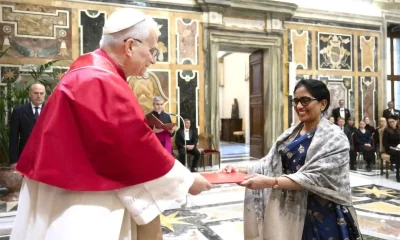
Pope fires broadside: ‘The Holy See won’t be a silent bystander to the grave disparities, injustices, and fundamental human rights violations’
-

 News6 days ago
Pakistan hands over 200 tonnes of humanitarian aid to Lanka
-

 Business5 days ago
Unlocking Sri Lanka’s hidden wealth: A $2 billion mineral opportunity awaits
-

 News7 days ago
Burnt elephant dies after delayed rescue; activists demand arrests
-

 Editorial7 days ago
Colombo Port facing strategic neglect
-

 News5 days ago
Army engineers set up new Nayaru emergency bridge