
Life style
Recorded history of mankind in restored and colourised black and photos

Canadians, Englishmen, and Americans affected the tides of the war by storming the beaches of Normandy! Many young men knew they might never return home once they joined the fight. Sgt. Jensen worked with the 626th engineer light equipment company. He said that other soldiers didn’t even know where they were going until they arrived. It told us everything we needed to know. It really surprised us to be heading to Normandy. We were either at high school or jobs after high school. We were not soldiers, at least not yet.
Teenage German Soldier In Distress After His Capture
 It is difficult to find WWII photos that are not emotionally charged. Look at this photo of 16-year-old German soldier Hans-Georg Henke. He was captured on April 3, 1945, by the US 9th Army. It seems his parents died a year earlier, and that tragic event made him join the Luftwaffe. John Florea, the photographer, described the boy as shocked and crying. He was a young boy who went through the worst of the war.
A German Soldier In A Dugout During The Great War
The war was a massive trench fight. In the Civil War, soldiers dug trenches to provide defense and give them a place to fight from. In Belgium and France, soldiers had to stay in the trenches for weeks on end resulting in “trench foot” and assorted other diseases. Rats were constant companions. Further, the trenches offered only limited protection from heavy artillery shelling and no protection at all from poison gas attacks. Soldiers had to rise from the ditches to engage the enemy. Unfortunately, in front of them was usually an open field (often mined) with little cover, and they were likely to be wounded or killed as they advanced. Note in the photo that this soldier has apparently cut a helmet in half and attached a portion to his neck and lower face area in hope of protecting these areas from shrapnel and bullets. He also carries a “potato masher” hand grenade on his belt and a formidable bayonet attached to his rifle.
Paratroopers Of Easy Company Chilling At Adolf Hitler’s Home
You see men laughing and having a great time. It is even better than you thought. The soldiers in Easy Company had been chilling in Hitler’s castle in the Bavarian Alps. In the miniseries “Band of Brothers”, you will see this particular scene. Hitler purchased many homes across Europe, including this one in Berchtesgaden. It was bombed on April 25, 1945. On May 4, SS troops set the hiding bunker on fire just hours before U.S. troops entered the bunker through secret tunnels. The soldiers rewarded themselves by stealing the beer and getting drunk.
Lawrence Of Arabia In Real Life
Lawrence found himself in an unlikely position during the Great War. He was a British demolition artist who worked with Arab rebel allies to destroy isolated Ottoman bridges. Lawrence of Arabia, he was. He committed assaults on 79 bridges on the railway and demolished them. Railways were so damaged that some parts still show traces of the attacks.
Japanese Military Commander
In Traditional Armor
A photo by Felice Beato in 1863. It was hand-colored in the original version. He took full-length portraits in the studio because he was intrigued by traditional costumes and cultural traditions. His photos of Japan came with vignetting that made them more painterly. This photo was taken of Koboto Santaro, a Japanese commander. We don’t know what he has in his hand, but stay away.
The Red Army Liberated The Auschwitz-Birkenau
When the Soviet Army arrived at Auschwitz on January 27th, 1945, they found a warehouse of belongings. They found syringes, needles, prosthetic limbs, and shoes. Then they found out it was full of sick and starving people the Nazis had left behind. Elisavetskii was one of the first soldiers to go into the camp, “They rushed toward us, shouted, fell on their knees, kissed our boots, and threw their arms around our legs.”
A Soldier Heading Home After
The War
Ernst Haas, in a photo essay called “Homecoming,” showed the desperation and confusion in Europe in the aftermath of the Holocaust. A Soldier
A Civil War Veteran In Pennsylvania
The Civil War veterans were still around in the 20th century. In 1956, the last one of them passed away. If they could follow orders and hold a gun, they went to war regardless of their age. The survivors were able to tell a lot of stories to the kids in their later years. This photo was taken in 1935.
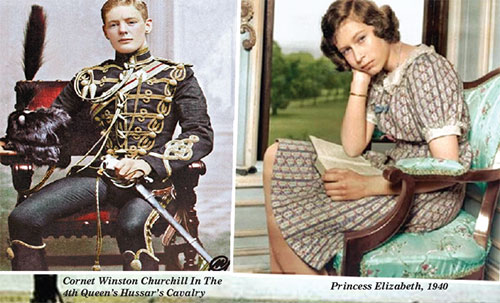
Cornet Winston Churchill In
The 4th Queen’s Hussar’s Cavalry
Winston Churchill is best known for his dedication to England. As a young man, he was part of the 4th Queen’s Hussar’s Calvary. He was 21 years old in this photo.
The Seaforth Highlanders And Dog In French Trench
The Great War was unmatched in its brutality and carnage. Soldiers from all over the world were often extremely underprepared for war. However, The Seaforth Highlanders of Scotland stepped up to fight. They became known as the Northern Scottish Brigade after the merger of the 78th Highlanders and the 72nd Highlanders. The men originally served in India, but were reassigned to France. Later moved to Palestine and Iraq.
A Young Woman Called Eunice Hancock With A Compressed-Air Grinder In An Aircraft Plant
Men were in the war against Germany and Japan. Women filled in the voids in the job market by taking jobs in utilities, transportation, and manufacturing. Almost 2 million women went to work to make armaments and machine parts for the war effort. The working women in the labor force increased from 27% to 37%. A Young
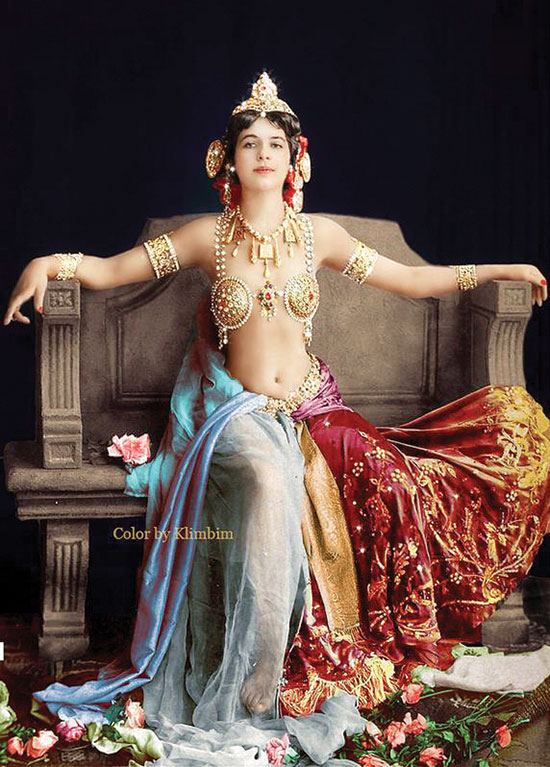
Mata Hari Was A True Icon
The lovely Mata Hari was a spy and dancer storming the planet. People named her a democrat, a courtesan, and more! This is what the National Ballet director and choreographer Ted Brandsen has to tell about her: “What intrigued us is the tale of a woman with an intense lust for life and a strong instinct to live, reinvent and change herself. She had a lot of terrible stuff happening to her, and she tried to spin it somehow to find her way out.”
 Mata Hari Blew The French Firing Squad A Kiss
Mata Hari became a spy during the Great War. She combined sex and espionage in her life. She started out with some talent for impersonation. During her early career, she masqueraded as Lady MacLeod, the child of an English lord. As a spy she only lasted a few days. On the 15th of October, she was shot to death by a firing squad. She wore no blindfold and blew a kiss to the men.
Men Of The 1st Infantry Division Leaving England For Normandy On D-Day
The Battle of Normandy went on from June 1944 to August 1944. The parties in Western Europe battled for supremacy, and the fight was not easy. We doubt that the 156,000 soldiers knew that the fighting would go on for nearly a month. It began on June 6 but was meant to begin earlier. The operation was delayed due to bad weather. Eisenhower’s final speech was to the brave troops, “You’re about to embark on the Great Crusade.” Your eyes are upon the world.
Dutch Resistance Fighters On The Streets Of Breda After Its Liberation
The world was shocked when Germany invaded Europe in 1939. The Nazis were much faster and more violent than anyone imagined. Resistance fighters from different regions banded together to help liberate their countries. The Dutch underground provided intelligence, radio communications, and household sabotage. In 1944, the south was liberated. The north was not liberated for another 8 months.
King Ferdinand and Queen Marie of Romania In Dover, England
Marie of Romania was born in Edinburgh, Scotland in the year 1875.
It was only 18 years later that she married Crown Prince Ferdinand and became an Eastern European monarch. Researchers have found that she was extremely influential in Ferdinand choosing to ally with the British rather than the Germans. They spent over two decades in Romania before they travelled over to Western Europe to perform royal duties on a diplomatic tour. It was 1924 when they visited Belgium, France, Switzerland and the United Kingdom. “Apart from the common aims, which we pursue, there are other and dear ties between us. Her Majesty the Queen, my dear cousin, is British born,” King George V offered when speaking about the couple.
Princess Elizabeth Wanted To Help With The War Effort
It was the peak of WWII, and everyone was feeling patriotic, wanting to help with the war effort. Even Princess Elizabeth is no exception! She nagged her father, the King, into allowing her to help out. After turning 18, she obtained the permission she needed to train as a truck driver and mechanic, as a part of the Women’s Auxiliary Territorial Service. Now the Queen of the United Kingdom (among other territories), we think it is awesome that she desired so greatly to do physically help her country back then.
A German Soldier Duo And Their Donkey
We all know how pig a part animals played during the war. They were used to carry injured soldiers, weaponry and ammunition back and forth and between checkpoints. They were also used to clear out the land. Horses, donkeys, mules, dogs among many other animals were all used during the horrific events of war. The soldiers pictured were prepared for their upcoming battle; even their horse was prepared also.
A Russian Sniper
The Russian sniper pictured below is Roza Georgiyevna Shanina. She was an active sniper during WWII and was only one of many Russian women active in the military at the time. She was special however. A volunteer, she was a sharpshooter. By the end of war she had 59 confirmed kills, some feat. She was tragically killed in 1945 during the East Prussian Offensive.
Princess Elizabeth, 1940
Prior to becoming the Monarch of the UK, Elizabeth was very much once a Princess, and a teenager. If you look below, you can see a photograph of her reading a book in a beautiful day-off frock, casually relaxing by a window. The attention to detail by the coloring of this photo is pretty amazing.


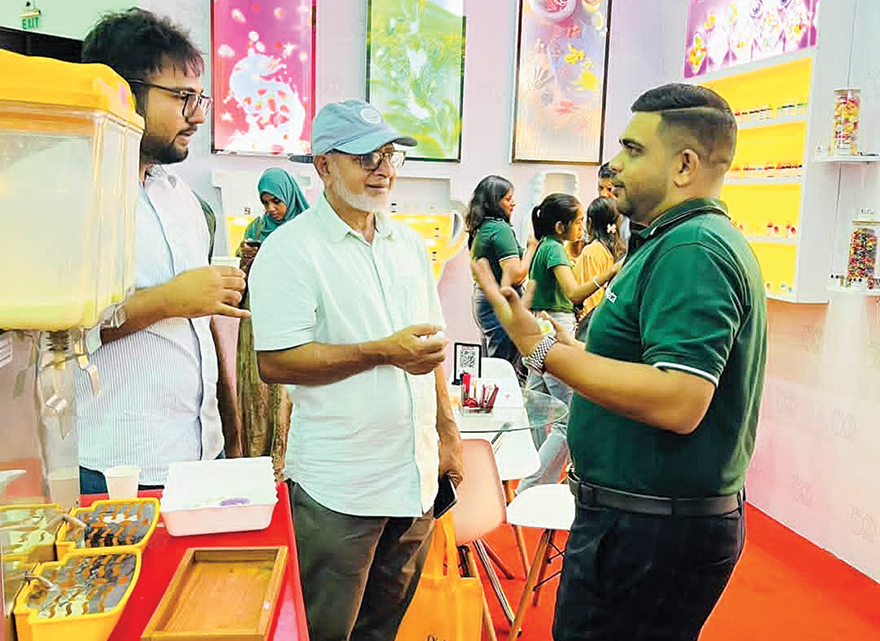
Salman Faiz has turned his family legacy into a modern sensory empire. Educated in London, he returned to Sri Lanka with a global perspective and a refined vision, transforming the family legacy into a modern sensory powerhouse blending flavours,colours and fragrances to craft immersive sensory experiences from elegant fine fragrances to natural essential oils and offering brand offerings in Sri Lanka. Growing up in a world perfumed with possibility, Aromatic Laboratories (Pvt) Limited founded by his father he has immersed himself from an early age in the delicate alchemy of fragrances, flavours and essential oils.
 Salman Faiz did not step into Aromatic Laboratories Pvt Limited, he stepped into a world already alive with fragrance, precision and quiet ambition. Long before he became the Chairman of this large enterprise, founded by his father M. A. Faiz and uncle M.R. Mansoor his inheritance was being shaped in laboratories perfumed with possibility and in conversations that stretched from Colombo to outside the shores of Sri Lanka, where his father forged early international ties, with the world of fine fragrance.
Growing up amidst raw materials sourced from the world’s most respected fragrance houses, Salman Faiz absorbed the discipline of formulation and the poetry of aroma almost by instinct. When Salman stepped into the role of Chairman, he expanded the company’s scope from a trusted supplier into a fully integrated sensory solution provider. The scope of operations included manufacturing of flavours, fragrances, food colours and ingredients, essential oils and bespoke formulations including cosmetic ingredients. They are also leading supplier of premium fragrances for the cosmetic,personal care and wellness sectors Soon the business boomed, and the company strengthened its international sourcing, introduced contemporary product lines and extended its footprint beyond Sri Lanka’s borders.
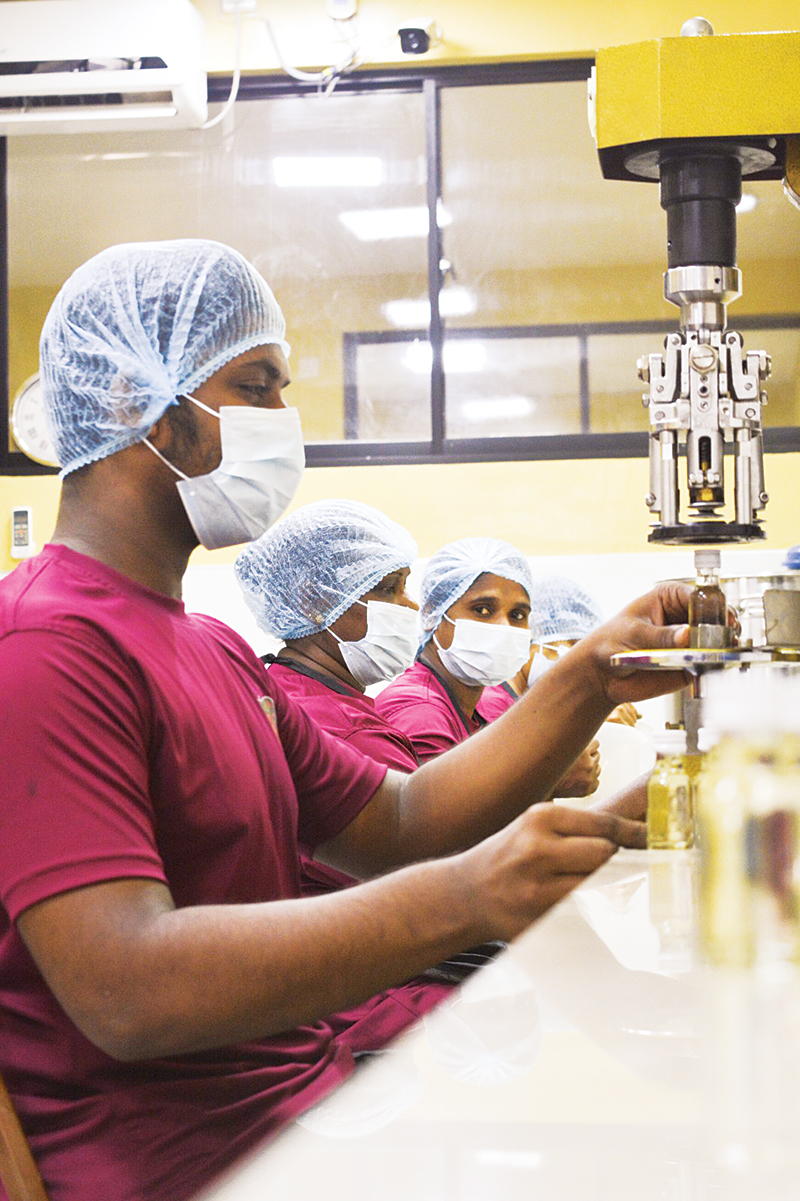
Where raw materials transform into refined fragrance

Salman Faiz -carrying forward a legacy
Today, Aromatic Laboratories stands as a rare example of a second generation. Sri Lankan enterprise that has retained its soul while embracing scale and sophistication. Under Salman Faiz’s leadership, the company continues to honour his father’s founding philosophy that every scent and flavour carries a memory, or story,and a human touch. He imbibed his father’s policy that success was measured not by profit alone but the care taken in creation, the relationships matured with suppliers and the trust earned by clients.
“We are one of the leading companies manufacturing fragrances, dealing with imports,exports in Sri Lanka. We customise fragrances to suit specific applications. We also source our raw materials from leading French company Roberte’t in Grasse
Following his father, for Salman even in moments of challenge, he insisted on grace over haste, quality over conveniences and long term vision over immediate reward under Salman Faiz’s stewardship the business has evolved from a trusted family enterprise into a modern sensory powerhouse.
Now the company exports globally to France, Germany, the UK, the UAE, the Maldives and collaborates with several international perfumes and introduces contemporary products that reflect both sophistication and tradition.
We are one of the leading companies. We are one of the leading companies manufacturing fine and industrial fragrance in Sri Lanka. We customise fragrances to suit specific applications said Faiz
‘We also source our raw materials from renowned companies, in Germany, France, Dubai,Germany and many others.Our connection with Robertet, a leading French parfume House in Grasse, France runs deep, my father has been working closely with the iconic French company for years, laying the foundation for the partnership, We continue even today says Faiz”
Today this business stands as a rare example of second generation Sri Lankan entrepreneurship that retains its souls while embracing scale and modernity. Every aroma, every colour and every flavour is imbued with the care, discipline, and vision passed down from father to son – a living legacy perfected under Salmon Faiz’s guidance.
By Zanita Careem
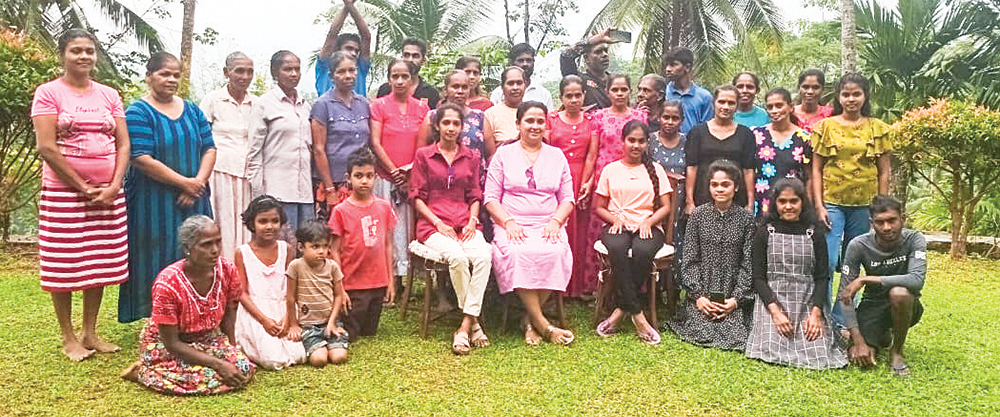
Harini and Chanaka cultivating change
When Harini and Chanaka Mallikarachchi returned to Sri Lanka after more than ten years in the United States, it wasn’t nostalgia alone that they brought home . It was purpose.Beneath the polished resumes and strong computer science backgrounds lay something far more personal- longing to reconnect with the land, and to give back to the country that shaped their memories. From that quiet but powerful decision was born Agri Vision not just an agricultural venture but a community driven movement grounded in sustainability ,empowerment and heritage. They transform agriculture through a software product developed by Avya Technologies (Pvt Limited) Combining global expertise with a deep love for their homeland, they created a pioneering platform that empowers local farmers and introduce innovative, sustainable solutions to the country’s agri sector.
After living for many years building lives and careers in theUnited States, Harini and Chanaka felt a powerful pull back to their roots. With impressive careers in the computer and IT sector, gaining global experience and expertise yet, despite their success abroad, their hearts remained tied to Sri Lanka – connection that inspired their return where they now channel their technological know-how to advance local agriculture.
For Harini and Chanaka, the visionaries behind Agri Vision are redefining sustainable agriculture in Sri Lanka. With a passion for innovation and community impact, they have built Agri Vision into a hub for advanced agri solutions, blending global expertise with local insight.
In Sri Lanka’s evolving agricultural landscape, where sustainability and authenticity are no longer optional but essential. Harini and Chanaka are shaping a vision that is both rooted and forward looking. In the heart of Lanka’s countryside, Uruwela estate Harini and Chanaka alongside the ever inspiring sister Malathi, the trio drives Agri Vision an initiative that fuses cutting edge technology with age old agricultural wisdom. At the core of their agri philosophy lies two carefully nurtured brands artisan tea and pure cinnamon, each reflecting a commitment to quality, heritage and people.
Armed with global exposure and professional backgrounds in the technology sector,they chose to channel thier experiences into agriculture, believing that true progress begins at home.
-
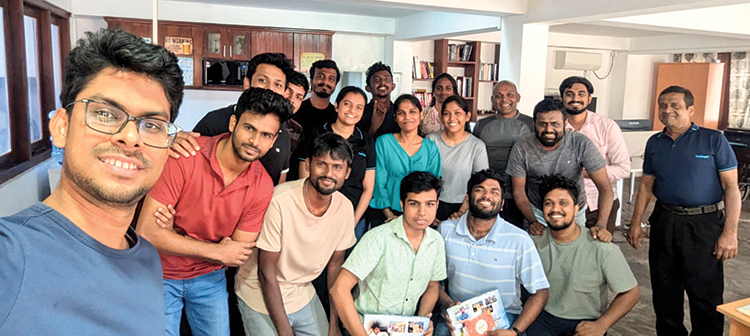
- Avya Technologies (Pvt) ltd software company that developed Agri Vision
-
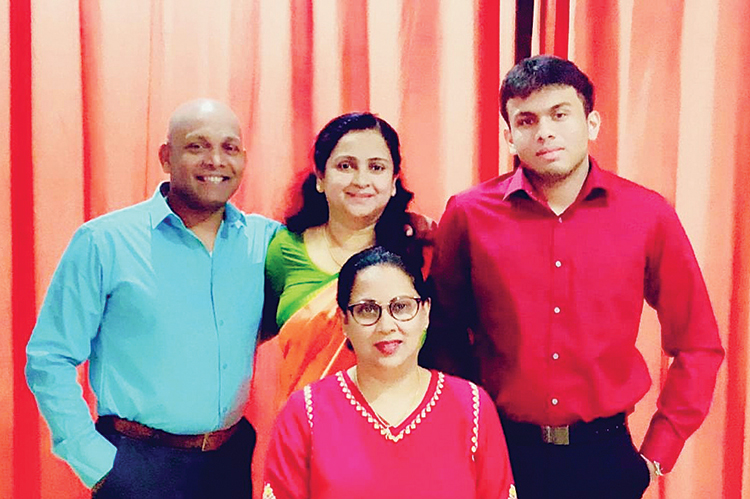
- Chanaka,Harini and Shakya Mallikarachchi and Malathi Malathi dias (middle)
But the story of Agri Vision is as much about relationships as it is about technology. Harini with her sharp analytical mind, ensures the operations runs seamlessly Chanaka, the strategist looks outward, connecting Agri Vision to globally best practices and Malathi is their wind behind the wings, ensures every project maintains a personal community focussed ethos. They cultivate hope, opportunity and a blueprint for a future where agriculture serves both the land and the people who depend on it .
For the trio, agriculture is not merely about cultivation, it is about connection. It is about understanding the rhythm of the land, respecting generations of farming knowledge, and that growth is shared by the communities that sustain it. This belief forms the backbone of Agro’s vision, one that places communities not only on the periphery, but at the very heart of every endeavour.
Artisan tea is a celebration of craft and origin sourced from selected growing regions and produced with meticulous attention to detail, the tea embodier purity, traceability and refinement, each leaf is carefully handled to preserve character and flavour, reflecting Sri Lanka’s enduring legacy as a world class tea origin while appealing to a new generation of conscious consumers complementing this is pure Cinnamon, a tribute to authentic Ceylon, Cinnamon. In a market saturated with substitutes, Agri vision’s commitment to genuine sourcing and ethical processing stands firm.
By working closely with cinnamon growers and adhering to traditional harvesting methods, the brands safeguards both quality and cultural heritage.
What truly distinguishes Harini and Chanake’s Agri Vision is their community approach. By building long term partnerships with smallholders. Farmers, the company ensures fair practises, skill development and sustainable livelihoods, These relationships foster trust and resilience, creating an ecosystem where farmers are valued stakeholders in the journey, not just suppliers.
Agri vision integrates sustainable practices and global quality standards without compromising authenticity. This harmony allows Artisan Tea and Pure Cinnamon to resonate beyond borders, carrying with them stories of land, people and purpose.
As the brands continue to grow Harini and Chanaka remain anchored in their founding belief that success of agriculture is by the strength of the communities nurtured along the way. In every leaf of tea and every quill of cinnamon lies a simple yet powerful vision – Agriculture with communities at heart.
By Zanita Careem
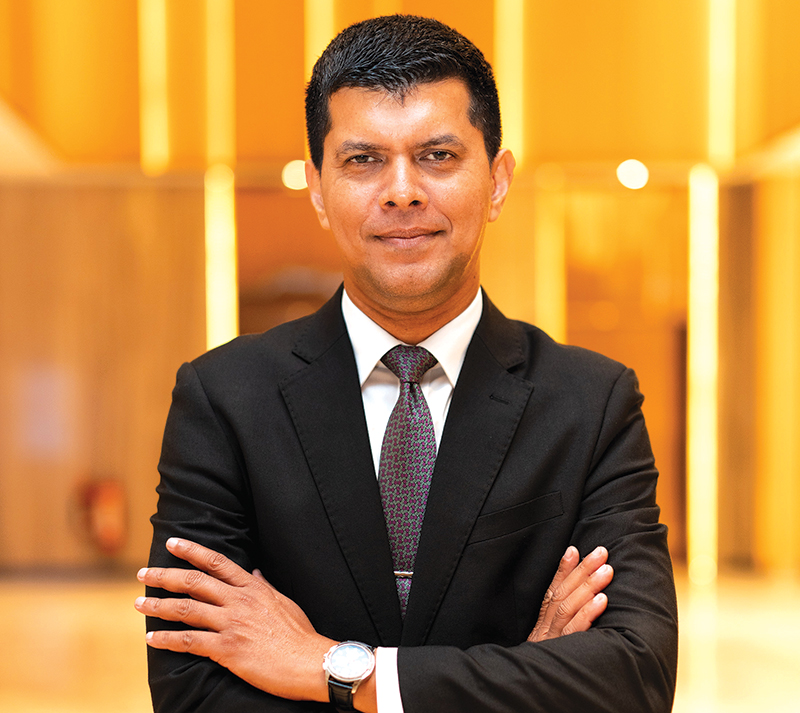
Courtyard by Marriott Colombo has welcomed Suranga Peelikumbura as its new General Manager, ushering in a chapter defined by vision, warmth, and global sophistication.
Suranga’s story is one of both breadth and depth. Over two decades, he has carried the Marriott spirit across continents, from the shimmering luxury of The Ritz-Carlton in Doha to the refined hospitality of Ireland, and most recently to the helm of Resplendent Ceylon as Vice President of Operations. His journey reflects not only international mastery but also a devotion to Sri Lanka’s own hospitality narrative.
What distinguishes Suranga is not simply his credentials but the philosophy that guides him. “Relationships come first, whether with our associates, guests, partners, or vendors. Business may follow, but it is the strength of these connections that defines us.” It is this belief, rooted in both global perspective and local heart, that now shapes his leadership at Courtyard Colombo.
At a recent gathering of corporate leaders, travel partners, and media friends, Suranga paid tribute to outgoing General Manager Elton Hurtis, hon oring his vision and the opportunities he created for associates to flourish across the Marriott world. With deep respect for that legacy, Suranga now steps forward to elevate guest experiences, strengthen community ties, and continue the tradition of excellence that defines Courtyard Colombo.
From his beginnings at The Lanka Oberoi and Cinnamon Grand Colombo to his leadership roles at Weligama Bay Marriott and Resplendent Ceylon, Suranga’s career is a testament to both resilience and refinement. His return to Marriott is not merely a professional milestone, it is a homecoming.

Winless Afghanistan look to keep slim hopes alive against upbeat UAE

Showers expected in the Central, Western, Sabaragamuwa, Southern and Uva provinces and in Ampara and Batticaloa districts

Patali: Four out of 25 low-quality coal shipments caused Rs. 1,759 mn loss

Cardinal warns of ‘epidemic’ breakdown of family life in Lanka

Three suspects arrested in double murder of lawyer and wife in Thalangama

UK Labour campaigner for sanctions against ex-military chiefs due tomorrow

‘Dates have the highest sugar content to fight Coronavirus’

Sunday Island 27 December – Headlines

#SundayIsland 17th December – Headlines

Sunday Island – 28th March

Sunday Island Headlines – 21 March

Sunday Island – 21st February – Headlines
-
 Life style1 day ago
Marriot new GM Suranga
-
 Midweek Review5 days ago
A question of national pride
-

 Business5 days ago
Autodoc 360 relocates to reinforce commitment to premium auto care
-
 Features1 day ago
Monks’ march, in America and Sri Lanka
-
 Opinion4 days ago
Will computers ever be intelligent?
-

 Features1 day ago
The Rise of Takaichi
-

 Features1 day ago
Wetlands of Sri Lanka:
-
 Midweek Review5 days ago
Theatre and Anthropocentrism in the age of Climate Emergency