
Editorial
Real war ahead

Thursday 6th August, 2020
Hurly-burly is done and everyone is now agog. Thankfully, there has been a bloodless election. We can only hope that the post election period will be without any untoward incidents. The Election Commission (EC) has, in its wisdom, delayed the process of counting although it insists that all counting centres are safe. Dusk may be falling today when the final result is out. One can guess the winner, but it ain’t over until the fat lady sings.
The country has been without a Parliament for more than five months, and nobody has made an issue of it save those who strove to have the previous Parliament reconvened instead of pressing for an early general election. People learned to live without the local government institutions for more than two years thanks to the previous government, which specialised in postponing elections. Hardly anyone is interested in provincial council elections, which have been postponed indefinitely. Not even the TNA, which has an enormous appetite for devolution, is keen to have the PC polls.
There has been a severe erosion of public trust in Parliament, and the task before the incoming dispensation as well as the Opposition will be to live up to people’s expectations and restore their faith in the national legislature. UNP leader and former Prime Minister Ranil Wickremesinghe got it right when he said, albeit in jest, that people wanted all 225 MP dumped into the Diyawanna lake.
A democratically elected stable government is a prerequisite for restoring investor confidence, reviving the economy and improving the country’s credit ratings. But political stability alone will not help get the battered economy back on an even keel. Much more needs to be done. Stringent measures are called for to achieve economic revival. All three political parties—the SLPP, the SJB and the UNP—have promised the moon to the public, and it is doubtful whether the next government will be able to fulfil people’s expectations.
The world of work has suffered a body blow, and COVID-19 is bound to cause many more job losses and a drastic drop in productivity across the globe due to lockdowns and other such drastic measures. The pandemic is believed to have left about half a million people unemployed in this country. Developing countries are without the wherewithal to cushion the blow.
The next government to be formed shortly will have its work cut out to find foreign exchange, which alone can help solve the balance of payment crisis and ease import restrictions. There is a pressing need for a mega stimulus package to revive the economy. We will be lucky if there is no negative economic growth. Import restrictions, however necessary they may be as a short-term remedy, will prove counterproductive, economically and politically, in the long run. Sri Lanka’s trading partners have already frowned on the blanket ban on imports. There is also the problem of debt repayment, for which dollars will have to be earned or borrowed in a hurry. Aid comes with strings attached. Successive governments have committed the country to disastrous bi-lateral agreements, out of desperation for the much-needed forex, and whether the next administration will be able to make a difference remains to be seen.
How will the next government raise funds to pay state employees and pensioners within the next few months? It will find itself in an unenviable position.
The incumbent government introduced some relief measures such as tax cuts with a view to winning the general election, which it could not afford to lose. The next dispensation will not hesitate to recoup the losses, and the signs are that there will be tax and tariff increases in the near future.
The interval in hell, as it were, we have been enjoying all these months will be over soon.


Thursday 2nd April, 2026
The truth about the 2019 Easter Sunday terror attacks remains buried under a mountain of conspiracy theories. The way most stakeholders have sought to get at the truth reminds us of the ancient folk tale, The Blind Men and the Elephant. They have grasped only fragments of what they believe to be the truth, each assuming that his or her limited perspective represents the entire reality. There are still others who have let their political prejudices and self-interest colour their vision of the issue, making it even more difficult to uncover the truth. However, all these viewpoints need to be examined carefully if investigators are to avoid the confirmation bias that could make them selective in gathering and examining evidence. It is against this backdrop that a host of arguments and counterarguments in Udaya Gammanpila’s book (in Sinhala), Pasku praharaye mahamolakaru soya yema (“Searching for the mastermind behind the Easter Sunday attacks”), launched on 31 March, should be viewed.
Udaya’s book is an attempt to demolish some dominant conspiracy theories about the mastermind behind the Easter Sunday carnage, challenge the credibility of the investigators who have launched a fresh probe into the terror attacks and assail the integrity of the ongoing investigation.
Former Attorney General (AG) Dappula de Livera caused quite a stir by claiming that there had been a ‘grand conspiracy’ behind the Easter Sunday attacks because he failed to secure a service extension from the then President Gotabaya Rajapaksa, Udaya has alleged, claiming that the former AG has refused to cooperate with investigators and support his claim with evidence.
The book says President Anura Kumara Dissanayake shelved the report of the Alwis Committee appointed by President Ranil Wickremesinghe. The committee held former Senior DIG Ravi Seneviratne, who was in charge of the CID at the time of the Easter Sunday attacks, accountable for the CID’s lapses that led to the carnage. President Dissanayake brought Seneviratne out of retirement and appointed him Secretary to the Ministry of Public Security. Udaya claims that former SSP Shani Abeysekera, who was reappointed CID Director in retirement, in an affidavit in a Fundamental Rights case, concealed the fact that on 12 April 2019, nine days before the Easter Sunday attacks, the military intelligence had sent a detailed report to the CID about the involvement of Zahran Hashim’s terror group, National Thowheed Jamaath (NTJ), in the killing of two policemen at Vavunathivu in November 2018, pointing out that the CID would be able to ascertain more information by interrogating Zahran’s brother Rilwan and another person called Army Mohamed. Udaya is of the view that Abeysekera concealed this fact to cover up his failure to prevent the carnage despite having received credible information about Zahran’s terrorist activities. The intelligence agencies provided 337 reports on Islamic extremist groups and Zahran’s terrorist activities to the police, Udaya has said, quoting from a probe commission report and arguing that if they had been behind the Easter Sunday attacks, they would never have furnished such information to the police.
The alleged disappearance of Sara Jasmine, widow of the Katuwapitiya bomber, Muhammadu Hastun, is used as a peg to hang the conspiracy theory that she fled to India as she had links to India’s RAW. Minister Nalinda Jayatissa himself propagated this claim while in the Opposition. Some politicians have alleged that Gotabaya Rajapaksa had a fresh DNA test conducted, at the behest of the then top intelligence officer Maj. General Suresh Sallay, to mislead the world into believing that Sara was among the NTJ activists killed in suicide blasts at Sainamaradu a few days after the Easter Sunday attacks. In the first two tests, DNA samples obtained from Sara’s mother did not match the DNA profiles of the victims. Udaya says that as the forensic reconstruction of the remains of the Sainamaradu bomb victims was extremely difficult, many body parts collected from the blast site had been buried in a bag; the third DNA test was conducted on the remains in the bag, and that was the reason for the different test results.
Udaya has said Azad Moulana, whose claims form the basis for a Channel 4 programme that holds Sri Lankan military intelligence responsible for the Easter Sunday carnage, is a lawbreaker, seeking political asylum in a developed country. Claiming that Moulana had links with the NTJ and helped Zahran’s brother, Rilwan, receive treatment for injuries sustained in a test blast in the East, Udaya has pointed out that the house where Moulana says Sallay met Zahran in February 2018 had been built only in August/September 2018. Most of all, Sallay was abroad from December 2016 to December 2019. The NTJ bomber who failed to explode himself at the Taj Hotel went to Dehiwala on his own, according to instructions given by Zahran before the attacks, and therefore Moulana’s claim that the military intelligence sought his help to give someone at the Taj Hotel transport does not bear scrutiny, Udaya says.
As for the unexploded bomb at the Taj Hotel, a list of hotel guests’ names was sent to intelligence agencies only a few moments before the blasts on 21 April, and the bomber, Jameel Mohamed, had used his father’s name for registration, and therefore even if the list had been sent earlier, nobody would have been able to trace him, Udaya argues in his book, pointing out that military intelligence officers tried to contact Jameel only after being alerted by a retired SSP, who had served as an intelligence officer. Jameel’s wife, who panicked, unable to contact her husband after receiving a voice message from him, kept on calling his number while he was still at the Taj Hotel. All calls that went unanswered, as seen in hotel CCTV footage, were from Jameel’s wife and not from the military intelligence, Udaya says. Jameel’s wife then contacted Jameel’s brother, who sought the help of the aforementioned former SPP. Bombs had gone off by that time, and the former SSP, realising the gravity of the situation, informed the intelligence agencies. Jameel contacted his wife, using a security guard’s telephone from a mosque in Dehiwala, where he went from the Taj Hotel. In the meantime, the intelligence officers rushed to his house, used his wife’s phone to call the unknown number, spoke to the security guard and asked him not to allow Jameel to leave. Jameel, who had left by that time, blew himself up in a guesthouse in the area.
Udaya argues that an efficient intelligence operative, using the nom de guerre, Sonic Sonic, who has been described in some quarters as the Easter Sunday terror mastermind, won the confidence of Podi Zahran (Rahuman Mohamed Zahran) working for the NTJ and obtained information about the terror group. According to Udaya’s book, after the Easter Sunday blasts, Sonic Sonic did not ask Podi Zahran to have IS take responsibility for the attacks, contrary to conspiracy theorists’ claims; instead, he only asked Podi Zahran why IS had not taken responsibility if it was behind the carnage, and this query has been misinterpreted as an attempt to pressure Podi Zahran to have IS say it was behind the attacks, as part of a cover-up.
What one gathers from Udaya’s book is that Zahran was the IS leader in Sri Lanka, and he organised and executed the Easter Sunday attacks. Drawing inspiration from the Bangladesh IS leader who carried out a suicide attack, Zahran blew himself up as he did not want to be caught alive. Following the raid on the Wanathawilluwa camp, where a huge stock of explosives belonging to the NTJ was taken into custody, and the breakaway of a group of NTJ members, including the ‘Deputy IS leader in Sri Lanka’, Mohamed Naufer, Zahran feared that someone would betray him and there would be a crackdown on his terror network.
Udaya’s book provides fresh insights into some crucial issues that have been used to concoct conspiracy theories and level unsubstantiated allegations against the intelligence agencies. It is bound to provoke debate. One can only hope that there will not be a witch-hunt against the author.
Wednesday 1st April, 2026
The JVP-NPP government continues to signal left and turn right. President Anura Kumara Dissanayake often does the diametrical opposite of what he promised to do while he was an Opposition MP, so much so that his political opponents mockingly ask whether former JVP MP Dissanayake has disappeared and the incumbent President is a doppelganger. SLPP General Secretary Sagara Kariyawasam tongue in cheek lamented, at a media briefing on Monday, that the former progressive Opposition MP Dissanayake had gone missing and someone else resembling him had become President.
President Dissanayake is unashamedly defending Energy Minister Kumara Jayakody, who is under a cloud, claiming that ministers cannot be sacked for what they allegedly did before being appointed to the Cabinet. But while in the Opposition, he said no politician facing allegations of wrongdoing must be elected to Parliament or any other institution, much less elevated to the Cabinet. Jayakody has also been accused of manipulating the coal procurement process in favour of an India company, which has supplied more than a dozen shipments of low-grade coal, causing a massive decrease in electricity generation at the Norochcholai power plant and a huge increase in oil-fired electricity generation as a result. This is one of the reasons for the latest electricity tariff hike.
During his presidential election campaign, Dissanayake promised that if elected President, he would ensure that nobody would be above the law. But Minister Jayakody was not arrested and remanded despite a serious charge against him that he caused a loss of about Rs. 8 million to the state through a crooked deal while serving as the procurement manager of the state-owned fertiliser company about 10 years ago. He was indicted and bailed out on the same day recently. This is in sharp contrast to the manner in which the Commission to Investigate Allegations of Bribery or Corruption has acted against former Minister Johnston Fernando and his two sons; they have been arrested and held on remand for the alleged misuse of a state-owned lorry and causing a loss of about Rs. 2.5 million to the Treasury.
Dissanayake and his party urged the previous governments to uphold transparency and accountability among other things. They pressured the SLPP-UNP government to disclose the current IMF agreement. But President Dissanayake and his ministers refuse to reveal the contents of their MoUs/pacts with India and the US.
Dissanayake used to launch into tirades against India and the US while he was an Opposition MP, demanding an end to their interference with Sri Lanka’s internal affairs. He once declared in Parliament that Jaffna had become a den of Indian spies on a mission to destabilise this country. But today he is eating out of the hands of Indian and American leaders.
A powerful millers’ cartel is manipulating the rice market. Dissanayake used to thunder in Parliament, condemning previous governments for pandering to the whims and fancies of big-time rice millers. But since his election as President, he has not cared to take any action to tame the millers’ Mafia, and farmers and consumer rights groups accuse his government of going out of its way to look after the interests of the large-scale millers who are known to have huge slush funds to bankroll election campaigns.
Dissanayake and his comrades condemned the previous government for keeping fuel prices high by increasing taxes, imposing a loss-recovery levy and obtaining illegal commissions from petroleum suppliers. The JVP/NPP made a solemn pledge to do away with corruption, reduce taxes and special levies and bring fuel prices to affordable levels. But the fuel prices soared under the JVP-NPP government even before the eruption of the Iran war. It has ignored a proposal that the loss-recovery levy on fuel be converted into a special commodity tax that can be collected from the private companies engaged in fuel trade. President Dissanayake’s government has enabled supermarket chains to monetise environmental pollution, as it were, by charging customers for single-use polythene bags instead of providing them with biodegradable grocery bags free of charge, as in other countries. It has ignored a proposal by environmentalists that supermarkets, etc., be made to transfer the proceeds from the polythene tax to the Treasury so that they can be utilised for environment protection/conservation projects.
The rich are getting richer under the current dispensation, with rice millers importing Rolls-Royces and indulging in a vulgar display of their wealth while farmers are forced to pawn their agricultural equipment and consumers are complaining of high prices of rice. The JVP/NPP politicians, who came to power promising to practise austerity, are now moving about in the fuel-guzzling luxury vehicles they promised to auction at Galle Face to raise funds for education and health. What they are practising at present runs counter to the Marxist ideals they claimed to espouse while out of power.
Thus, a wag asks whether we are witnessing a transfer of consciousness, whereby some capitalists of the same ilk as J. R. Jayewardene have taken possession of the JVP bigwigs’ frames.
Tuesday 31st March, 2026
Irate Americans are pouring into the streets to pressure President Donald Trump to step down. Ironically, their “No Kings” protests have erupted while Trump, ably assisted by Israeli Prime Minister Benjamin Netanyahu, is striving to engineer a regime change in Tehran. Protesters are saying, “Regime Change must begin at home”. Has Trump been hoist with his own petard? Trump has called the protesters a bunch of fools who do not realise the importance of his efforts to seize control of Iran’s oil resources. Is he trying to “make America great again” by plundering the wealth of other countries?
Iran has upended modern warfare and military theories by standing up to the US and Israel. By carrying out devastating retaliatory attacks, unveiling new military capabilities, such as the Mach 15 hypersonic missiles, and altering the dynamics of the Middle East conflict, Iran has triggered a paradigm shift in asymmetric warfare. Its approach to US-Israeli aggression has made military experts in Washington and Tel Aviv rethink their strategies and cast doubt on intelligence assessments and modern theories of war. Iran’s modus operandi has come under severe criticism, but its allies have pointed out that the world powers resorted to far worse things in previous conflicts, such as atomic bomb attacks, massacres, genocide and chemical warfare. As Cicero has observed, inter arma enim silent leges—in war, the laws fall silent. War is hell, as General Sherman said. This is why no country should start military conflicts.
Like a golfer going for a spectacular hole-in-one on the 18th, President Trump, who perhaps knows golf better than statecraft or warfare, egged on by Netanyahu, sent US warplanes to attack Iran. He obviously expected to make short work of the Iranian government, engineer a regime change, install a puppet government, as he did in Venezuela, and gain unrestricted access to Iran’s oil resources. But his strategy, driven by instinct rather than careful planning or expert advice, has turned out to be the geopolitical and military equivalent of a shank, if not an outright duff.
It is not possible to predict how the Iran war is going to end, much less who will win, but Trump and Netanyahu have their work cut out to steer it in the direction they desire. They are reportedly faulting their intelligence chiefs for wrong predictions about a regime collapse in Iran. Teheran’s resilience and obduracy stem from some key factors, which include an ideology of martyrdom, the current regime’s reliance on institutions rather than individuals, and a formidable axis of resistance Iran has built painstakingly for decades.
Hezbollah has opened a new front against Israel. The Houthis have started attacking Israel with missiles and threatened to close the Bab el-Mandeb Strait, which lies on the same sea route as the Suez Canal, connecting the Mediterranean Sea with the Indian Ocean. The geographical location of this chokepoint has made it extremely vulnerable to Houthi attacks. In fact, the Houthis carried out a spate of attacks on this vital shipping route from 2023 to 2025, causing massive losses to the global economy.
Iran has been able to broaden the war and make the world economy scream. The West is blind to war crimes committed by its allies and realises the need to stop wars only when it reels from severe economic shocks. The world is also facing the threat of global connectivity being disrupted. Iran has not ruled out the possibility of targeting the submarine Internet cables in the Red Sea, if push comes to shove.
A ground invasion of Iran by the US and Israel or even by a larger coalition would be extremely difficult for several military, geographic, and political reasons. Analysts often point to several major obstacles: geography and terrain making Iran a natural fortress; Iran’s size and its military and asymmetric capabilities, including a large numbers of ballistic missiles and drones; mobile missile launchers and underground facilities; proxy forces across the Middle East; naval mines and anti-ship missiles that threaten shipping; a risk of regional escalation, and severe blows to the global economy.
While the US is deploying more troops to the Middle East, Chief of the General Staff of the Israel Defence Forces Eyal Zamir has reportedly warned that the Israeli military is “going to collapse on itself” due to severe manpower shortages. He raised these concerns during a recent security Cabinet meeting chaired by PM Netanyahu. Has Israel indicated to the US that it is not in a position to deploy a large number of troops for a ground war in Iran? Sending troops to the Middle East is one thing but deploying them in Iran for combat is quite another. The White House says Trump has made no final decision on a ground assault in Iran. The US and Israel find themselves in a situation their leaders did not bargain for. Trump’s predecessors were wise enough not to take on Iran and risk a full-blown war. While trying to work out an exit strategy in the Iran war, Trump now has protests at home to contend with.

Trump to give primetime address on Iran war as questions swirl over his next move

PM opens ‘Silver Age Center,’ an Elder Care, Training and Research Centre built with modern facilities in Kataragama

Heat Index at Caution Level in the Western, Sabaragamuwa, Southern, Eastern, North-western, Northern and North-central provinces and in Monaragala district

Atmospheric conditions will be favorable for afternoon thundershowers in most parts of the island over the next few days from today (02 April)

Sri Lanka cannot procure Russian oil before US sanctions return – Champika

Japanese boost for public transport here

‘Dates have the highest sugar content to fight Coronavirus’

Sunday Island 27 December – Headlines

#SundayIsland 17th December – Headlines

Sunday Island – 28th March

Sunday Island Headlines – 21 March

Sunday Island – 21st February – Headlines
-

 Features5 days ago
A World Order in Crisis: War, Power, and Resistance
-

 News6 days ago
Energy Minister indicted on corruption charges ahead of no-faith motion against him
-

 Sports6 days ago
SLC to hold EGM in April
-

 Opinion6 days ago
When elephants fight, it is the grass that suffers
-

 Latest News7 days ago
A strong Technical and Vocational Education and Training (TVET) system equips individuals with practical, relevant, and future-oriented skills helping to innovate responsibly towards a greener and sustainable future – PM
-
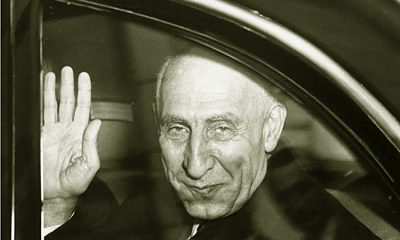
 Features6 days ago
Lest we forget
-
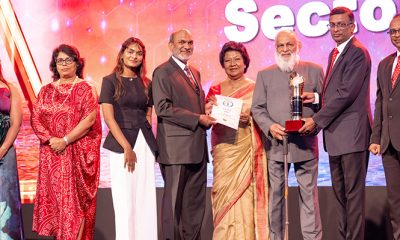
 Business6 days ago
Pan Asia Bank empowers export sector as Strategic Partner of NCE Export Awards
-

 News2 days ago
Tariff shock from 01 April as power costs climb across the board