
Editorial
Business as usual in the House


Thursday’s farcical re-election of Ranjith Siyambalapitiya as the Deputy Speaker of the incumbent Parliament is a clear demonstration, if any is needed, that it’s business as usual in the Sri Lanka Parliament. This despite the revolutionary fervor of the people outside that first the Rajapaksas, aiya and malli, and thereafter the other clansmen must go. ITAK MP, Shanakiyan Rasamanickam, put it neatly. He said that the 65 Members who voted for Mr. Imthiaz Bakeer Markar represented the people. The 148 who voted for the eventual winner represented the Rajapaksas.
The way that papadam crumbled defies rational explanation. First, Siyambalapitiya, elected on the SLFP ticket resigned some weeks ago saying that having being elected from the blue party (which incidentally had an arrangement with the Rajapaksa pohottuwa) was resigning as his party had decided to leave the ruling group. He said that the president, no less, had refused to accept his resignation and he, in deference to this request, would stay on till May 1 when he would quit. He even said that he will not draw any of the pay and perks of his office until his eventual departure. And so it (presumably) was.
Then came his eventual departure. The ex and back-again deputy speaker then left office and the House last week solemnly set about electing his successor. But voila, who was that successor? None other than Siyambalapitiya himself, proposed by longtime minister and dyed-in-the-wool SLFPer, Nimal Siripala de Silva seconded by equally senior Susil Premajayantha aka Premajayanth. The latter, readers would remember, not long ago got shunted to the ‘B’ team after a long innings in the ‘A’ team and was sulking somewhat until he suddenly found himself sacked altogether, a fate later suffered by Weerawansa and Gammanpila, and took a three-wheeler home to don his black coat and return to practicing law.
If this was not a deal between the Rajapaksas and the SLFP, one cannot know what a deal is. So we are back to business as usual with various opportune arrangements made to suit needs of the moment. These are often accompanied by consideration, both visible and invisible as the Galle Face agitators are loudly proclaiming; and the rest of the country has long known but done nothing about until the advent of the aragalaya. How independent are the claimed “independents” who recently crossed from one side of the House to the other? Not much, the results of the deputy speaker’s election (more correctly re-election) shows.
Wimal Weerawansa, one of the more garrulous of that group was absent at the voting. He has not up to the time of writing offered an explanation of why this was so. TNA leader R. Sampanthan, is a very old man and may not have been well enough to attend. Justice Wigneswaran too has been mum on the subject and would hopefully offer and explanation sooner or later; like in the old days on the bench when judgments were reserved or delivered with a terse “reasons later.” Why three MPs spoilt their votes – how this was done was not made public – is also inexplicable. While there’s been a lot of noise in the public domain over the years that many of our MPs are uneducated or not educated enough to perform legislative and other parliamentary duties, nobody has been accused of being illiterate. All that a valid vote required was the name of the candidate of choice and the signature of the voter.
Why Siyambalapitiya’s resignation went to the president is a mystery that remains uncleared. Commonsense would dictate that it should go to the speaker. Standing Orders, we are told, has no provision as to whom a presiding member of the House, whether speaker, deputy speaker or deputy chairman of committees should tender a resignation. So Siyambalapitiya had chosen to go to the president and the speaker, apparently, had waited to hear what the outcome was before the election of a successor was taken up. Although a solemn ritual of placing a screen and a ballot box in the well of the house was conducted, and names of members were called out to vote, opposition whip Lakshman Kiriella was heard asking “where’s the secrecy when MPs must sign the ballot paper?” But that is the way Standing Orders prescribe for taking a secret ballots.
There was no response to the demand that ballot papers be immediately destroyed. Presumably they would be kept in the safe custody of the Secretary General of Parliament. But strange are the ways of our Parliament. There isn’t a trace of the impeachment motion against former President Ranasinghe Premadasa which a former speaker “entertained” and then stopped entertaining. Where it went, who signed it and who didn’t and whether it still exists will presumably remain for ever in the realm of the unknown. It also needs clarification whether an MP voting in secret has the freedom to write he/she was abstaining on the ballot paper. And if that was done were the votes deemed “spoilt?” Perhaps we’ll know in the fullness of time and will also learn the strategy underlying Thursday’s events.
That apart, this issue of our newspaper today offers readers a range of analytical commentary on the ongoing drama both at Galle Face and elsewhere. There is also a perception among television viewers that events around us are taking a new flavour to what prevailed before with the Frontline Socialist Party-aligned Inter University Students Federation adopting a more boisterous attitude than previously on view in their demonstrations. It has been previously reported that the FSP is the only political presence at Galle Face. Whether this can cause an ‘infection,’ and how all this will unravel, only time can tell.


Thursday 25th June, 2026
The government has decided to scrap the long-held legal requirement to mark voters’ fingers with indelible ink at polling stations. It is in overdrive to introduce necessary legal amendments, we are told. The reasons given for its decision is that the practice of using indelible ink causes “operational inefficiencies” and “significant additional costs”. The Election Commission has claimed that the scrapping of the indelible ink requirement is its brainchild.
The JVP-NPP government is busy amending election laws and working on a new electoral system while doing everything in its power to postpone the Provincial Council (PC) elections further. If only the election monitors had continued to pressure the government to hold the PC polls rather than focusing on relatively inconsequential matters.
The use of indelible ink is not a silver bullet capable of preventing electoral malpractices, and therefore one can argue that its discontinuation may not render the electoral system any more vulnerable to practices, such as multiple voting. But whether it is prudent to do away with such safeguards against election malpractices, relying solely on the voter identification requirement is a moot point, given the fact that none of the main political parties are respecters of people’s franchise.
The UNP resorted to election malpractices and unleashed barbaric violence to retain its hold on power in the 1980s, when it used a heavily rigged referendum to make a general election disappear. The SJB, an offshoot of the UNP, is widely viewed as sharing the latter’s political DNA. The SLFP and its allies also rigged elections. In 1999, they chased away polling agents and stuffed ballot boxes in full view of the police to win the North Western PC polls. Some of the SLFP organisers responsible for violating election laws in that despicable manner are currently in the SLPP. The TNA fully endorsed the election boycott ordered by the LTTE in 2005 and even announced it. The JVP employed brutal methods such as shooting, beheading and quartering as part of its campaign to sabotage elections in the late 1980s. What guarantee is there that such political parties are any different from the proverbial cat that calmly held a lamp on a dining table only to revert to its old ways at the sight of a mouse?
As for the legal requirement of national identity cards (NICs) and other proofs of identity for voting, one may recall that the JVP seized the NICs of thousands of people during its reign of terror in the late 1980s. Some of the current JVP leaders have declared that they will not let go of power. They stand accused of working towards a one-party rule.
The Cabinet of Ministers is reported to have decided to remove provisions related to the use of indelible ink from election laws, while retaining voter identification requirements. Accordingly, the Presidential Elections Act, the Parliamentary Elections Act, the Provincial Council Elections Act, the Local Authorities Elections Ordinance, etc., are to be amended. One can only hope that the government will not turn amending election laws into a mega political project and use it as a pretext to postpone elections it is reluctant to face.
Most of all, a watchful eye needs to be kept on the amendments to be introduced, for there is no guarantee that the amendment Bills will not be stuffed with sections without judicial sanction to further the interests of the government. It has been revealed that when the Parliamentary Election Act of 1981 was amended in 1988, the words, “any member” (of a political party) were surreptitiously inserted thereinto after ratification to provide for the appointment of persons of party leaders choice to fill National List vacancies. In 2017, during the UNP-led Yahapalana government, several sections were incorporated into the Provincial Council Elections amendment Bill arbitrarily at the committee stage to provide for postponing the PC polls indefinitely. Controversy surrounds the manner in which the Online Safety Bill was “passed” in 2024. It was declared ratified amidst a noisy protest in the House.
Indelible ink is used by the countries in this part of the world as an antidote to multiple voting. Other democracies, especially in the West, have no need for it as they have reliable voter identification systems, which are however not totally foolproof. It is not prudent to presume that the franchise and the electoral process are invulnerable in this country, given the tainted records of the political parties that remain unremorseful. Hence, it is imperative that all safeguards against election malpractices be retained and strengthened.
Wednesday 24th June, 2026
The JVP-NPP government yesterday did not scruple to deprive the Opposition of an opportunity to debate some vital issues affecting the judiciary, in Parliament. The Opposition made a request to the Speaker, under Standing Orders, for a debate on the vacancies numbering four each in the Supreme Court (SC) and the Court of Appeal (CA) and an alleged move to raise the retirement ages of the SC and CA judges. But the government raised objections and put paid to the Opposition’s efforts, triggering protests in the House. It was obvious that the government members did not want even a brief debate on the aforementioned issues as they could not defend their position.
Some Opposition MPs rightly pointed out that the judicial power of the people was exercised by the legislature through courts, etc., according to the Constitution, and therefore Parliament was duty bound to debate issues, such as vacancies in the judiciary and a questionable government move to increase some judges’ retirement ages. Leader of the House and Minister Bimal Rathnayake took a swipe at the Opposition, recalling an attempt by some MPs to summon the Supreme Court judges before a parliamentary committee over a judgement during the previous government. True, the members of the SLPP-UNP government, currently in the Opposition, undermined the judiciary by criticising judges whose rulings were not to their liking and by postponing elections in violation of court orders. But two wrongs do not make a right.
The Bar Association of Sri Lanka, the Colombo High Court Lawyers’ Association, etc., have severely criticised the alleged government move to extend the retirement ages of judges of the SC and the CA and urged it to fill the vacancies in those two courts. The Opposition has gone to the extent of claiming that the government is trying to leverage judges’ promotions, etc., to further its political interests at the expense of the integrity of the judiciary. These are issues that must be debated in Parliament urgently.
As the dynamic balance of Vata, Pitta and Kapha is to a person’s wellbeing, in Ayurveda, so is the harmonious functioning of the three branches of government, the legislature, the executive and the judiciary, to a country’s democratic health. In both cases imbalance invites trouble. Unfortunately, no government has fully adhered to the principle of the separation of powers during the last several decades, and the Executive Presidency has made a bad situation worse. All Executive Presidents have meddled with the legislature and the judiciary. ‘Change’ that the current administration promised during its election campaigns has become pie in the sky. President Anura Kumara Dissanayake stands accused of having the legislature under his thumb and undermining the judiciary.
JVP/NPP politicians never miss an opportunity to boast of their two-thirds majority. Minister Rathnayake yesterday reminded the Opposition of the government’s supermajority. A common trait of all Sri Lankan politicians is that they let power go to their heads. Steamroller majorities are apparently jinxed in this country. Intoxicated with power, governments exude arrogance, become aggressive, suppress dissent and dig their own political graves in the process. No government with a supermajority has secured a second term at a free and fair election in this country. The J. R. Jayewardene government, which had a five-sixth majority obtained under the first-past-the-post system, retained its hold on power in 1982 through a heavily-rigged referendum. The UNP won the 1989 general election mainly because of the JVP’s reign of terror, which prevented many people from voting and created a situation where the UNP could stuff ballot boxes. Two-thirds majorities could not save the SLFP-led United Front government (1970-1977), the Mahinda Rajapaksa government (2010-2015) and the Gotabaya Rajapaksa government. Such is the transient nature of political power and huge parliamentary majorities.
The JVP-NPP government can abuse its parliamentary majority to bulldoze its way through, but there is no way it can justify its refusal to allow issues affecting judicial independence to be debated in Parliament. It ought to remember that the power of the people is far greater than the people in power, as a saying goes.
Tuesday 23rd June, 2026
The Financial Crimes Investigation Division (FCID) has uncovered a large-scale foreign exchange fraud and arrested a Colombo-based businessman who is reported to have transferred millions of US dollars out of the country through a large number of shell companies since 2023. He has been allegedly involved in money laundering and illegal transfer of funds for phantom imports, according to media reports. The FCID deserves praise for its successful raid, but there is reason to believe that it is only scratching the surface of the problem. Much more needs to be done.
There are many other foreign currency racketeers who deprive Sri Lanka’s banking system of a colossal amount of dollars annually through various illegal operations. Among them are many exporters. Public Security Minister Ananda Wijepala told Parliament about two weeks ago that investigations had revealed that a large number of import-export entities operated only for short periods of around six months. He said the Customs had identified 105 local companies operating 227 accounts in 13 banks, with funds transferred overseas on 26,108 occasions between 01 January, 2023 and 30 September, 2025, for phantom imports. Besides, there are many businessmen who park most of their export proceeds overseas and resort to unlawful practices, such as misinvoicing, to mislead the Customs.
Informal fund transfer systems like hawala and undiyal have thrived under successive governments due to better exchange rates offered by them, faster transfers, virtual absence of documentation and, most of all, secrecy. They facilitate unregulated forex flows with impunity, much to the detriment of the economy. It has been reported that many expatriate Sri Lankan workers use these informal channels to transfer funds.
The country gains only when migrant workers send remittances through official channels, for foreign currency enters the banking system; the Central Bank can accumulate reserves, and remittance inflows appear in official balance-of-payments statistics. When remittances are diverted through hawala or undiyal networks, foreign exchange bypasses the banking system, distorting balance-of-payments data, reducing official reserve accumulation and making the Central Bank lose regulatory oversight on foreign currency flows. These informal fund transfer systems not only take their toll on the country’s foreign currency reserves but also pose a threat to national security as they are used for funding illegal activities including terrorism. Curiously, there has been no all-out effort to neutralise these networks.
One may recall that when the first signs of a foreign currency crisis appeared in 2021, the media raised the issue of unregulated forex flows through informal fund transfer systems with the then government leaders, who sought to make light of the situation, claiming that there was no need for action against such operations. A few months later, the country was left with no forex even for essential imports, and those leaders had to outrun protesters. The present-day leaders are likely to face a similar fate unless illegal fund transfer operations are disrupted and everything possible is done to build foreign currency reserves. which are under tremendous pressure.
There is a pressing need for stronger laws to deal with foreign currency racketeers. The abolition of the Exchange Control Act of 1953 and the introduction of the Foreign Exchange Act of 2017 during the UNP-led Yahapalana government have stood foreign currency racketeers in good stead, as we pointed out in a previous editorial comment. The Exchange Control Act was the primary legislative framework governing foreign currency, gold, securities, and cross-border financial transactions in Sri Lanka. The Foreign Exchange Act introduced under the pretext of liberalising the foreign currency flow converted non-bailable criminal offences into civil offences. The incumbent government should seriously consider restoring the Exchange Control Act if it is to deal with racketeers effectively and shore up foreign currency reserves.

South Africa stun South Korea to reach World Cup knockouts for the first time

Tremors of 7.5, 7.2 kill 32, injure hundreds in Venezuela

Former Minister Wijeyadasa Rajapakshe’s son arrested by CIABOC

Morocco come back after historic Haiti goals to reach World Cup last 32

Strong earthquake strikes northern Japan

Vinicius nets twice and Neymar returns as Brazil ease by Scotland

‘Dates have the highest sugar content to fight Coronavirus’

Sunday Island 27 December – Headlines

#SundayIsland 17th December – Headlines

Sunday Island – 28th March

Sunday Island Headlines – 21 March

Sunday Island – 21st February – Headlines
-

 News6 days ago
Creditor receives USD 2.5 mn as Lankan public bears loss from theft of Treasury funds
-

 News5 days ago
Creditor not yet paid
-
 News5 days ago
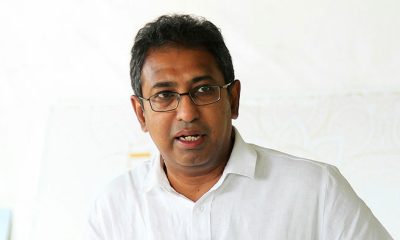
Consumers bearing 22% tax burden despite 18% VAT claim: Dr. Harsha de Silva
-

 Features4 days ago
Nanda Pethiyagoda Wanasundara as three generations of family saw her
-

 Features3 days ago
Sri Lanka developing independent hydrographic capabilities
-

 Opinion6 days ago
SriLankan Airbus struck by lightning
-

 Editorial4 days ago
Fuel crisis: Beyond price debate
-

 Latest News4 days ago
Sooryavanshi thumps fastest List A fifty as India A win tri-series