
Sports
Rajitha, Kumara, Asitha help Sri Lanka grab advantage after day two


Sri Lanka’s seamers edged the visitors ahead on the second day of play at Hagley Oval as New Zealand’s batters were made to grind in their pursuit of Sri Lanka’s first innings total of 355. Asitha Fernando and Lahiru Kumara picked up two wickets apiece, while Kasun Rajitha, arguably the pick of the bowlers, grabbed a deserved scalp in the final half hour of play. For the hosts, Tom Latham top scored with a dogged 67, while Daryl Mitchell remained unbeaten on 40 alongside Michael Bracewell on 9 at stumps.
The day was one that belonged to the seamers, however, starting with the New Zealand pair of Tim Southee and Matt Henry, who picked up four more wickets between them to wrap up the Sri Lankan innings in the morning session.
Dhananjaya de Silva, Sri Lanka’s last recognised batter, fell having added just 10 runs to his overnight total, wafting at one outside off, while the rest of the Lankan tail came together to add a further 40, as Sri Lanka finished on 355.
The New Zealand openers for their part made it through the six overs prior to lunch with little trouble. Post lunch, while Latham was going, New Zealand’s progress was slow but steady. Alongside his opening partner Devon Conway, he weathered the early movement utilised by the likes of Asitha and Rajitha, while there was also a little bit more zip to the surface as opposed to the opening day, which aided the likes of Kumara.
Nevertheless the pair stuck to their tasks, milking ones and twos on the onside and down the ground, while awaiting rare short and wide deliveries to secure boundaries. The pair would put on 67 for the opening stand, however just when Sri Lanka’s seamers might have been tiring Asitha provided the breakthrough, getting one to nip back and trap Conway leg before. Conway might count himself a touch unfortunate though to have been given out by the on-field umpire, with DRS showing umpire’s call on both impact and whether it was hitting the wickets.
That wicket would give Sri Lanka a renewed burst of energy to seek a second before the break, and Kane Williamson would oblige on the stroke of tea, with an uppish drive straight to the man catching at cover. Henry Nicholls would then fall shortly after the restart, top edging a pull off Lahiru Kumara.
At this point Sri Lanka were well and truly on top, a state of affairs punctuated by the excellent Rajitha, who would torment Mitchell – who had just arrived at the crease – probing and teasing his off stump. That Mitchell would survive this period was a minor miracle, particularly after one delivery that – to borrow a phrase from football parlance – might have given him twisted blood.
Angling in from slightly wide of the crease, Rajitha would pitch this on the border of offstump, on the edge of a good length, and then get it to shape away right at the death, beating Mitchell and the stumps by the barest of margins. If not for a graze on the outside of the pad, his stumps would have certainly been under threat.
Sri Lanka’s only misstep might have been offering Angelo Mathews, with his 115kph gentle seamers, the ball during this period, though the thought process behind it – providing the front line seamers a rest while still utilising the swing on offer – was understandable. This period offered the New Zealand batters a minor reprieve, with Mitchell memorably launching Mathews down the ground for a six.
Mitchell and Latham would proceed to put on 58 together before another moment of brilliance swung the pendulum back towards the visitors. Following periods of spin from Prabath Jayasuriya and Dhananjaya de Silva, Asitha returned to dismiss Latham in explosive fashion – a leg stump yorker from around the wicket, and an animated send off to boot.
Rajitha would then finally get the wicket his performance deserved, getting Blundell to nick one through after yet another exquisite out swinger on off stump.
Mitchell and Bracewell would survive till stumps, but with a 193-run deficit ahead of them, Sri Lanka would undoubtedly be the happier of the two sides going into day three.
Brief Scores:
Sri Lanka 355 (Kusal Mendis 87,Dimuth Karunaratne 50; Tim Southee 5- 64, Matt Henry 4-80) lead New Zealand 165/5 (Tom Latham 67; Daryl Mitchell 40*; Lahiru Kumara 2-34, Asitha Fernando 2-42) by 190 runs
(Cricinfo)


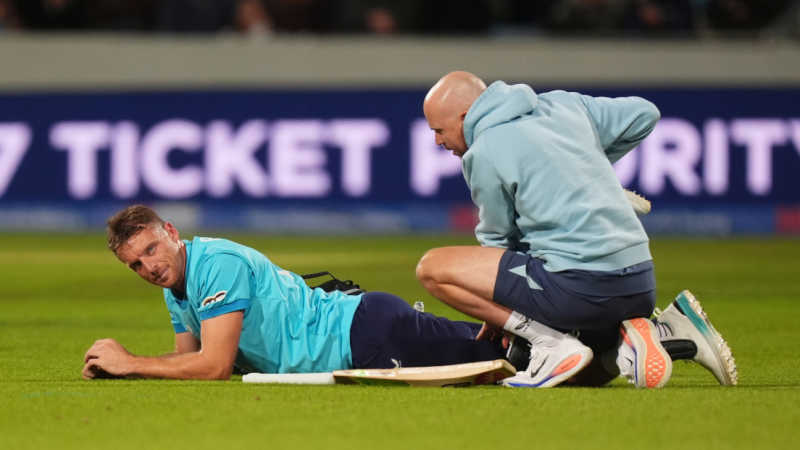
Jos Buttler has been ruled out of England’s ODI series decider against Sri Lanka at The Oval on Sunday, with Jordan Cox likely to replace him and keep wicket. Don Lawrence who is yet to win an international cap in either white-ball format, has been called up to the squad as cover.
Buttler pulled up with a left hamstring injury while running between the wickets in Thursday’s second ODI at Headingley and received treatment from England physio Steve Haw, a recent recruit from rugby union club Exeter Chiefs. He faced two more balls before retiring hurt, and briefly hobbled back to the middle before holing out as England slipped to a 16-run defeat.
Buttler’s eventual 69 was his highest score in ODIs in three years, but his injury will be something of a concern. He is now 36, and has been affected by various soft-tissue injuries in recent years. These have mainly been calf injuries, but he also suffered a similar left-hamstring issue during the 2024 IPL season.
England do not yet know the extent of Buttler’s injury but expect to have more information early next week once he has been for an MRI scan.
In Buttler’s absence, Cox is likely to win only his fourth ODI cap on Sunday and is expected to take the gloves ahead of Tom Banton. Kevin Pietersen, England’s new white-ball mentor, said on Thursday night that opportunities available through injuries would help build depth ahead of next year’s World Cup.
“[We need to] have certain players in certain positions, in order for us to know that if something like this happens to Jos in, say, the final round of whatever game in South Africa, and you’ve got to go and play a quarter-final, that somebody can step up into Jos’s boots – like we’re going to need to have on Sunday,” Pietersen said.
Lawrence, who made three half-centuries in four innings in England’s recent Test series win over Pakistan, has been withdrawn from Surrey’s ongoing Country Championship match at Somerset, having made his sixth hundred of the season on Thursday. He will train with the ODI squad at The Oval on Saturday.
Lawrence was previously called up to England’s ODI squad to face Pakistan in 2021 when their first-choice side went into Covid isolation, but did not play a game in the series. He has only played 28 List A games in his career, the most recent of them in May 2019.
(Cricinfo)
by Reemus Fernando
Rumesh Tharanga’s remarkable rise has forced enthusiasts to pin their hopes entirely on the World Ultimate Javelin Champion for a gold medal at the ongoing Asian Games in Nagoya, Japan. In Sri Lanka’s athletics contingent of more than twenty athletes, there are two other javelin throwers: former national record holder Sumedha Ranasinghe and women’s national javelin record holder Dilhani Lekamge.
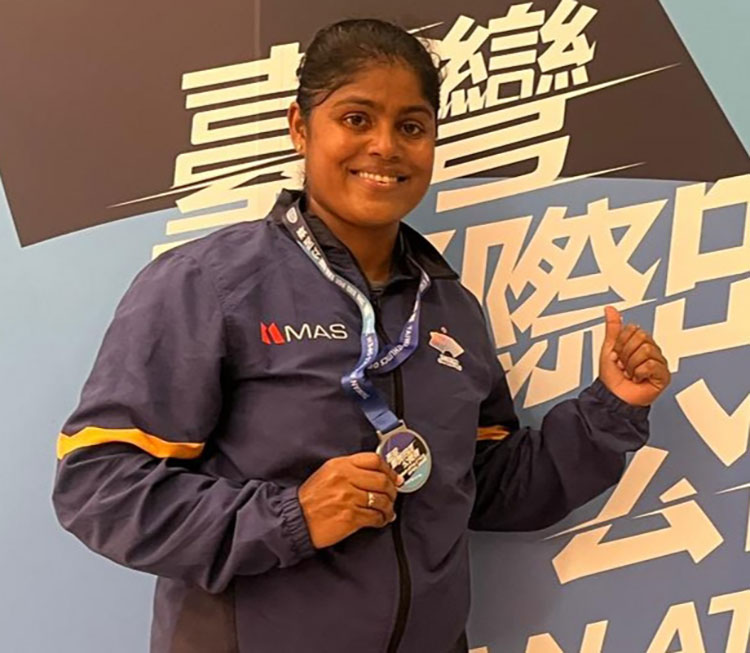
Lekamge heads into today’s competition with a realistic opportunity to add another major continental medal to her collection, although the women’s javelin field is expected to be highly competitive.
The experienced Sri Lankan thrower already knows what it takes to reach the Asian Games podium. At the 2023 Hangzhou Games, Lekamge produced a 61.57m throw to win silver behind India’s Annu Rani, while China’s Huihui Lyu took bronze.
Her current form also provides encouragement. Lekamge has been on the rise, throwing 56.79m to win silver at the Asian Throwing Championships in South Korea in May, before producing a significantly better 58.98m at the World Athletics Continental Tour Silver meeting in Bhubaneswar in August. That effort placed her second, just 15cm behind Brazil’s Jucilene Sales de Lima.
At the recently held National Championships, she went further, clearing 59.46m.
The veteran’s 61.57m national record, set in Hangzhou in 2023, remains a significant benchmark. If she can reproduce anything close to that distance in Nagoya, she would put herself firmly into medal contention.
The Asian field has developed considerably in recent times. At the 2025 Asian Championships, China’s Su Lingdan won with 63.29m, Japan’s Momone Ueda was second with 59.39m and Sae Takemoto third with 58.94m, while Lekamge finished sixth with 55.53m.
This season, China and Japan have dominated Asian rankings, their throwers accounting for eight of the top ten performances recorded by female athletes.
Hence the challenge is clear for the athlete trained by Pradeep Nishantha.
”She is in good form. She has peaked well, and if she can deliver her best, she will win a medal,” Nishantha told The Sunday Island.
Lekamge needs to match the level that carried her beyond 60 metres while maintaining the consistency she showed in Bhubaneswar and at the National Championships.
Lekamge, who turns 40 in less than three months, brings something equally valuable to the competition — extensive experience at major championships. Her Asian Games silver, Asian Championships medals and two top-eight Commonwealth Games finishes underline her ability to perform at major events.
With the women’s javelin competition set to feature several throwers capable of approaching or exceeding the 60-metre mark, Lekamge’s medal prospects could ultimately hinge on one big throw. Her silver-winning feat at the last edition did not receive the attention it deserved. Whether the evergreen javelin thrower wins another podium finish at these Games or not, her perseverance in a less rewarding career should be celebrated.
by Rex Clementine
After four straight drubbings, there is finally a pulse in Sri Lanka’s campaign in England. Their come from behind victory at Headingley not only kept the three match ODI series alive but also offered a timely reminder that this side, for all its recent shortcomings, still has some fight left in it.
England needed 71 runs from the final 80 balls and appeared to have the game firmly within their grasp. Then came a remarkable exhibition of reverse swing. Sri Lanka conceded just 54 runs during that period, squeezing the life out of the chase to secure a hard fought 16 run win.
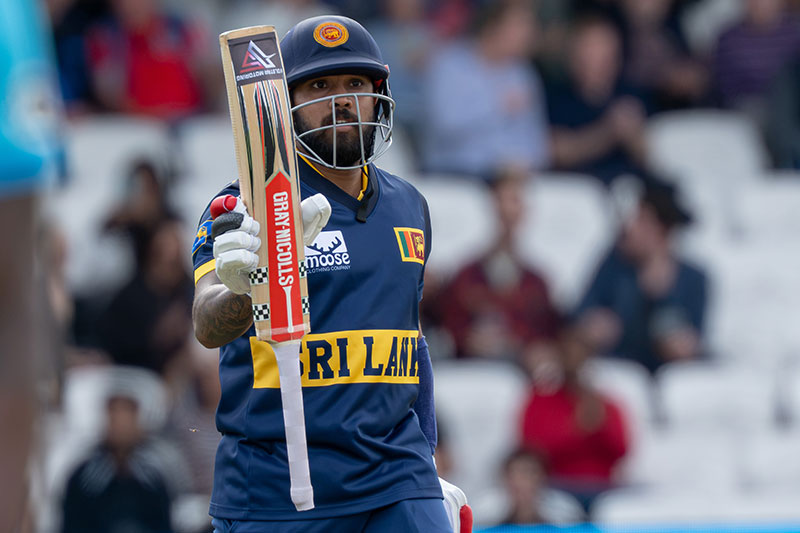
Dunith Wellalage showed that there are new strings to his bow. Long regarded as a clever left-arm spinner with plenty of batting ability, he demonstrated greater maturity with the ball and considerable muscle with the bat.
More importantly, after the misery of the T20 series, Sri Lanka breathed life back into their tour by making some bold calls. They need more of the same if they are to arrest this wretched run that has left supporters frustrated and disillusioned.
Take Maheesh Theekshana. Not so long ago, he was the number one ranked ODI bowler in the world. He remains fourth in the rankings currently, so leaving him out at Headingley was no small decision.
For too long, Sri Lankan selectors have been reluctant to move away from established names, even when performances demanded it. Their continued reliance on Dasun Shanaka is a case in point. So too was the decision to hand Niroshan Dickwella yet another lifeline after all those scandals.
But in backing the relatively unknown leg-spinner Sachindu Colombage, the selectors have shown that they are capable of thinking outside the box. That sort of courage needs to become the rule rather than the exception.
Another, much harder, decision is looming.
What do they do with Wanindu Hasaranga?
Hasaranga remains one of Sri Lanka’s most gifted white ball cricketers, but his recurring fitness problems can no longer be brushed aside. Ahead of virtually every major tournament there seems to be an injury concern. Sri Lanka felt the pinch again during February’s T20 World Cup when he was withdrawn with a hamstring injury.
Now the same problem appears to have resurfaced.
With the 50 over World Cup little more than a year away, Sri Lanka have to decide whether they can continue building their plans around a player whose availability has become increasingly difficult to predict. It may be time for a golden handshake and to look beyond him rather than arrive at another World Cup scrambling for alternatives.
There are indications, too, that the management, having patiently watched events unfold, is prepared to read the riot act. Test captain Dhananjaya de Silva is not the only established player whose position should come under scrutiny. Reputation cannot continue to provide immunity when performances are not forthcoming.
ODI cricket remains Sri Lanka’s strongest format in terms of the rankings and that gives them something tangible to build on. If they move purposefully from here, identify the right personnel and give them clearly defined roles, there is no reason why they cannot travel to South Africa next November believing they can make a serious impression at the World Cup.
Winning this series in England would provide a considerable morale boost. There are more ODIs to come in Pakistan and New Zealand before next year’s Asia Cup, giving the selectors enough cricket to assemble the pieces of the jigsaw before the sport’s showpiece event.
The key word, however, is continuity.
Sri Lanka have made a mockery of World Cup planning in the last two editions.
In 2019, several players were recalled despite not having played ODI cricket for more than two years, while some had been out of the international game for nearly four years. Four years later, Sri Lanka went to the 2023 World Cup with a non playing captain, while a hastily conceived youth policy spectacularly backfired.
There is nothing inherently wrong with a youth policy. Sidath Wettimuny showed years ago how regeneration should be handled: identify talent, back it and give players enough time to grow into their roles. What Sri Lankan cricket has lacked in recent years is not talent but clarity and continuity.
The selectors should perhaps identify a core group of around 20 players now and ask one simple question of each of them: can this player help us win games in South Africa?
Every subsequent selection should be made with that World Cup in mind.
Not long ago, Milan Rathnayake was being groomed as a seam bowling all-rounder, with the thinking that his skill set could provide the balance required in South African conditions. That experiment appears to have been quietly abandoned. If the selectors have changed their minds, there should at least be a cricketing rationale behind it. Otherwise, you are left wondering what happened to the long term plan.
Headingley showed what can happen when Sri Lanka are prepared to make brave calls. One victory, of course, does not erase four successive hammerings. But it can provide a starting point.

Buttler out of Oval decider as Lawrence earns ODI call-up

Showers will occur in the Western, Eastern, Uva and Sabaragamuwa provinces and in Galle, Matara, Kandy and Nuwara-Eliya districts.

Nor’easter brings flooding as New York and New Jersey declare emergency 2 hours ago

Trump rejects Iran deal to reopen Strait of Hormuz in seven days

Govt plans to hire 121,000 state workers, redistribute tax revenue

Parliament clears 22A amid protests

‘Dates have the highest sugar content to fight Coronavirus’

Sunday Island 27 December – Headlines

#SundayIsland 17th December – Headlines

Sunday Island – 28th March

Sunday Island Headlines – 21 March

Sunday Island – 21st February – Headlines
-
 News4 days ago
Mastermind Naufer Moulavi among 15 found guilty
-
 News6 days ago
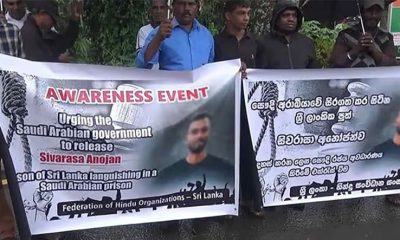
Hatton youth protest against reported death sentence for Lankan in Saudi Arabia
-

 News5 days ago
Protest against setting up of cement factory in highly populated area near BIA
-

 News6 days ago
Mahaweli rises as heavy rain triggers flood, landslide fears
-

 Latest News7 days ago
Landslide Red Alerts issued to the districts of Kandy, Kegalle and Nuwara Eliya
-
 Midweek Review4 days ago
Thileepan’s fast unto death: An authentic narrative that many missed
-

 Editorial4 days ago
Big Bad Bills
-
Editorial5 days ago
Trouble beginning in earnest