
Latest News
Rahmat’s gritty hundred extends Afghanistan lead


Afghanistan dragged themselves to a position of advantage on an attritional third day, with Rahmat Shah’s gritty century, his third in Test cricket, headlining their much improved batting display from their first innings.
On the second day where 13 wickets fell, Afghanistan conceded an 86-run first-innings lead to Zimbabwe and lost three wickets before wiping out even half the deficit.
But on Saturday, Rahmat, with help from Shahidullah and debutant Ismat Aslam, stretched Afghanistan’s lead beyond 200 with three wickets still remaining, before rain forced early stumps.
For Zimbabwe, Blessing Muzarabani added two wickets to his overnight tally of two, while Richard Ngarava struck twice, including the prized scalp of Rahmat, but they know with Ismat still at the crease along with Rashid Khan, who is capable of scoring some quick runs, they are going to be staring at a steep chase on a pitch where batting fourth is a daunting proposition.
Afghanistan’s innings revolved around two partnerships. The first was a 67-run stand between Rahmat and Shahidullah that saw the visitors take a 50-run lead by the time it was broken. The pair got together after Afghanistan lost two wickets in the first hour of play while still 17 runs behind.
From the way Rahmat started the day, it was evident he wanted to bat long for Afghanistan to get into a winning position. He played out 19 balls before scoring the first run off his bat on the day.
Ngarava removed the nightwatcher Zia-ur-Rehman the very next ball, and dismissed Afsar Zazai soon after.
This prompted Rahmat to take the initiative as he punished two consecutive bad balls from Muzarabani – a full toss and a half-volley – with drives down the ground for boundaries.
There was a short rain delay that followed, after which the two dealt in singles till Afghanistan were in the lead in the 30th over.
Rahmat and Shahidullah took on Sikandar Raza and Newman Nyamhuri for two boundaries off the next two overs before Rahmat brought up a half-century off 99 balls. The boundaries kept coming as the two trudged along to lunch with a 39-run lead.
In the fourth over after tea, a smart piece of captaincy brought about Shahidullah’s downfall.
With Muzarabani testing him outside off from around the wicket, Craig Ervine brought on a silly point fielder and the next delivery, Shahidullah fended at a length ball in the corridor to offer the simplest of chances to Takudzwanashe Kaitano at silly point.
Zimbabwe knew they had to capitalise on the opportunity, and put the screws on Afghanistan.
Ismat, who was out without scoring in the first innings, copped a blow on the helmet trying to duck under a Muzarabani bouncer that stayed low and needed multiple check-ups from the physio over the next few overs.
Rahmat survived an lbw chance when Raza, who toiled away for 23 wicketless overs in the day, got one to spin in sharply to strike his pad only for the umpire to turn it down. Rahmat responded by dancing down the track and lofting him down the ground for a boundary before he took a hit on the shoulder from an Ngarava short ball.
But the two were unfazed and went about steadily increasing Afghanistan’s lead. Rahmat brought up his century with a single of Nyamhuri off 209 balls, following up on his double in the first Test.
Ismat, who was on 16 off 46 at the point, then started to shift gears with two boundaries off Nyamhuri before tea.
After tea, there were 11 consecutive overs of spin, but Raza and Bennett couldn’t break through or keep the scoring rate down to apply pressure.
As soon as the new ball became available, Zimbabwe found some immediate chances. Ngarava drew the edge from Ismat but he was dropped by Ervine at first slip, when he was three runs short of his fifty. One over later, Ismat brought up a half-century.
The set batters used the extra pace of the new ball to cash in on a few more boundaries before Muzarabani finally broke the stand on 132 – the highest for the seventh wicket for Afghanistan.
Muzarabani got a length ball to seam in past Rahmat’s inside edge and hit his back pad. Rahmat wasn’t best pleased when the umpire ruled him out leg before, but with no DRS available in this series, he had to walk back after a marathon innings.
Rashid then quickly moved to 12 off as many deliveries, hitting Nyamhuri through midwicket for a boundary off what proved to be the last ball of the day before the players were called off for rain.
Brief scores:
Afghanistan 157 and 291/7 in 91 overs (Rahmat Shah 139, Ismat Alam 64*; Blessing Muzarabani 4-71, Richard Ngarava 2-47) lead Zimbabwe 243 in 73.3 overs (Craig Ervine 75, Sikandar Raza 61, Sean Williams 49; Rashid Khan 4-94, Yamin Ahmadzai 3-62, Fareed Ahmad 2-27) by 205 runs
[Cricinfo]


Chennai Super Kings left the bottom of the table and joined four other teams on four points by achieving two successive wins for the first time in exactly two years. Despite losing the toss and bowling in heavy dew, CSK kept Kolkata Knight Riders winless this season by sealing a 32-run victory at Chepauk.
Sanju Samson, Dewald Brevis and Ayush Mhatre got CSK to 192 on a surface that was not easy to dominate on outside the powerplay, and then Anshul Kamboj and Khaleel Ahmed got the big wickets of Finn Allen and Sunil Narine inside the powerplay. Having scored double of KKR’s 36 in the first six overs, CSK slammed the door with their spinners bowling eight overs for 47 runs and four wickets.
Facing early elimination now, KKR’s bowling improved with the return of Varun Chakravarthy, but their batting continued to be lightweight for the modern T20 game even though they pushed Narine up to open the batting.
It was perhaps a blessing in disguise that CSK’s struggling captain Ruturaj Gaikwad didn’t hang around for too long, allowing Samson and Mhatre use of the field restrictions. Both of them hit Vaibhav Arora for a hat-trick of fours each to go with Mhatre’s successive sixes off Cameron Green, who opened the bowling, got some shape but couldn’t stick to plans. Arora came back to bounce Mhatre out at the end of the powerplay, but his 16-ball 38 had done the damage already. Both teams practically cancelled each other out on runs outside the powerplay, but CSK’s 72 to KKR’s 36 in the first six overs proved decisive.
Sunil Narine led the middle-overs slowdown as Samson decided to see him out without taking risks. Varun started well with only one boundary in his first two overs, but the surprise package was the high pace of Kartik Tyagi, who not only bowled Samson just short of his fifty but also possibly delayed the arrival of Shivam Dube, who could have likely broken up overs of spin. Narine, Anukul Roy and Varun continued to deny batters freedom as just 70 came in nine overs after the powerplay.
Struggling for fluency, Brevis managed to get the better of Arora in the 16th over, which went for 20 runs, but Narine and Tyagi again denied CSK a finishing kick. Narine conceded one boundary in the 17th, and Tyagi bowled overs 18 and 20 for just 14 runs, giving KKR hope as they went into the chase.
KKR finally opened with the ideal combination, but Khaleel and Kamboj got just enough movement off the pitch to frustrate Allen and Narine. Playing his fifth match, Allen was yet to make it out of the powerplay as he edged Kamboj to cover-point. Narine managed to hit two sixes and two fours, but Khaleel frustrated him with wide lines and the round-the-wicket angle. Khaleel eventually had him caught at short third, moments after he had been dropped off Kamboj.
Raghuvanshi and Rahane are not the most dynamic duo in T20 cricket, and CSK snuck in overs of fingerspin and rookie Gurjapneet Singh while they were in the middle. Two catches went down off Hosein before he finally had Raghuvanshi caught for 27 off 19. Despite hitting two sixes off Gurjapneet, Rahane managed just 28 off 22.
Rahane eventually fell to a wrong’un from Noor Ahmad, who had been held back for the more threatening KKR batters: Rovman Powell, Green and Rinku Singh. He followed it up by bowling Green for a golden duck with his quick stock ball. Noor went on to add Rinku to his haul as the asking rate went beyond reach. He ended up with 3 for 21 in his four to go with Hosein’s 1 for 26 collected in an unbroken spell of four overs. By the time the two were done, the game was all but over with KKR needing 86 off the last five overs.
Brief scores:
Chennai Super Kings 192 for 5 in 20 overs (Sanju Samson 48, Ayush Mhatre 38, Dewald Brevis 41, Sarfaraz Khan 23, Shivam Dube 13*; Vaibhav Arora 1-55, Anukul Roi 1-21, Kartik Tyagi 2-35) beat Kolkata Knight Riders 160 for 7 in 20 overs (Sunil Narine 24, Ajinkya Rahane 28, Angkrish Raghuvansi 27, Rovman Powell 31*, Ramandeep Singh 35; Khaleel Ahmed 1-24, Anshul Kamboj 2-32, Akeal Hosein 1-26, Noor Ahmed 3-21) by 32 runs
[Cricinfo]

About 250 Rohingya and Bangladeshis, including children, are missing after their boat capsized last week in the Andaman Sea, according to the United Nations’ refugee and migration agencies.
The trawler, which had departed from Bangladesh and was bound for Malaysia, “reportedly sank due to heavy winds, rough seas and overcrowding”, the agencies said.
The Bangladesh Coast Guard told AFP news agency one of its ships rescued nine people from the vessel on 9 April. It is unclear when exactly the boat capsized.
Hundreds of thousands of Rohingya, one of Myanmar’s many ethnic minorities, have been fleeing across the border into Bangladesh since a deadly crackdown in 2017.
The Rohingya, who are primarily Muslim, are denied citizenship by the government of Myanmar, a Buddhist-majority country.
Poor living conditions in Bangladesh however have also prompted some Rohingya to make precarious journeys on overcrowded vessels to Malaysia, a Muslim country which some envision to be a safe haven in the region.
Rafiqul Islam, one of the survivors, told AFP he floated for nearly 36 hours before being rescued, adding that he was burned by oil that spilled from the vessel.
The 40-year-old said the promise of a job in Malaysia was what persuaded him to get on the boat.
“This tragic incident reflects the dire consequences of protracted displacement and the absence of durable solutions for the Rohingya,” the UN High Commissioner for Refugees (UNHCR) said in its statement jointly issued with the International Organization for Migration.
Ongoing violence in Rakhine, their home state in Myanmar, has “faded hopes of safe return in the near future”, the agencies said, noting that shrinking humanitarian assistance and challenging living conditions in refugee camps have pushed them to “take such dangerous sea journeys in search of safety and opportunity”.
These boats are often small and cramped, lacking in basic facilities like fresh water and sanitation. They do not always make it to their destinations. Some die at sea, while others are sometimes detained or deported.
Some have also been turned away upon nearing Malaysia and Indonesia, either by authorities or local coastal communities. In January 2025, Malaysia turned away two boats carrying around 300 refugees after giving the passengers food and water.
“People are dying in the fighting, dying from hunger. So some think it’s better to die at sea than to die slowly here,” a Rohingya refugee in Cox’s Bazar, Bangladesh, had previously told Reuters.
In their statement on Tuesday, the UN agencies called on the international community to sustain funding for Rohingya refugees and their host communities in Bangladesh.
They added: “As Bangladesh marks its new year, this tragedy is a reminder of the efforts urgently needed to address the root causes of displacement in Myanmar and create conditions that would allow Rohingya refugees return home voluntarily, safely and with dignity.”
[BBC]
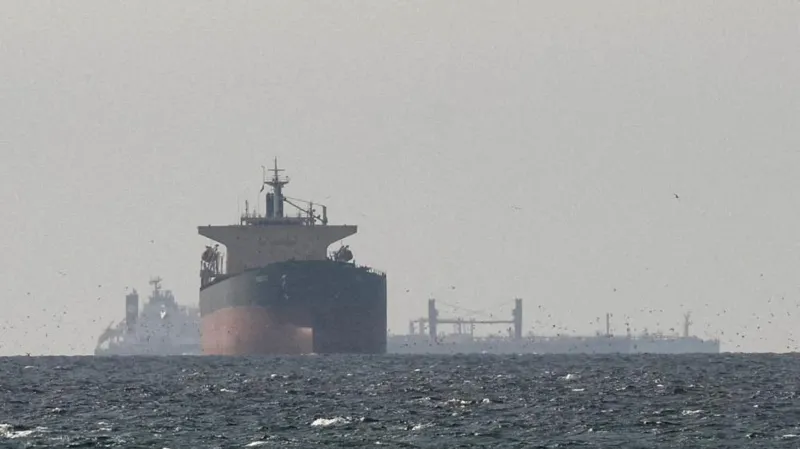
President Donald Trump has suggested talks aimed at ending the war in Iran could resume this week, after negotiations collapsed at the weekend, prompting the US to blockade Iranian ports.
“You should stay there [Islamabad], really, because something could be happening over the next two days, and we’re more inclined to go there,” Trump was quoted as saying in an interview with the New York Post.
His remarks came as the American military said no ships had passed through the US-enforced blockade of Iranian ports and coastal areas in the first 24 hours of the operation.
The stand-off has raised doubts over the prospects for a two-week ceasefire that is due to expire next week.
The Iranian side has not yet responded to Trump’s remarks, but United Nations Secretary General António Guterres said it was “highly probable” that talks would restart.
Gulf, Pakistani and Iranian officials also said negotiating teams from Washington and Tehran could return to Pakistan later this week, with no date yet agreed, Reuters news agency reports.
Hopes that diplomacy might continue helped soothe oil markets, pushing benchmark prices below $100 on Tuesday.
Iran has effectively shut the Strait of Hormuz, a crucial global waterway for oil and gas transport, since it came under attack from US and Israeli air strikes on 28 February.
More than a dozen US warships and some 10,000 US military personnel are now enforcing the blockade against vessels of any country entering or leaving Iranian ports, starving Iran of a vital economic lifeline.
It is aimed at putting pressure on Tehran by targeting two of the country’s major money sources: oil revenue and the significant tolls Iran demanded from ships for passage through the critical waterway.
US Central Command (Centcom), which has responsibility for US military activity in the Middle East and parts of Central Asia, said six merchant vessels had “complied with direction” from American forces to turn around and return to Iranian ports in the first 24 hours of the blockade.
Ship-tracking data analysed by BBC Verify showed that at least four Iran-linked shipping vessels had crossed the Strait of Hormuz despite the blockade. At least two of the ships had previously been at Iranian ports.
A further three ships that were not linked to Iran were seen to have crossed the strait after the blockade started on Monday, BBC Verify found.
Initial high-level negotiations that took place in the Pakistani capital of Islamabad over the weekend failed to produce any deal, with the US saying that Iran hadn’t agreed to its terms.
Iran’s nuclear ambitions were a key sticking point.
The US had proposed a 20-year suspension of all uranium enrichment by Iran, a US official told the BBC’s US partner CBS News.
But Tehran had suggested a halt of five years, sources told other US media.
Vice-President JD Vance, who led the US negotiations in Islamabad, told a conservative political event on Tuesday that he believed Iran wanted a deal.
“There is a lot of, of course, mistrust between Iran and the United States of America,” Vance told a Turning Point USA event in Georgia. “You are not going to solve that problem overnight.”
As the International Monetary Fund (IMF) warned the war could plunge the global economy into recession, US Treasury Secretary Scott Bessent told the BBC that a small bit of economic pain is worthwhile for long-term international security.
But China described the blockade as “dangerous and irresponsible” and warned that it would only “exacerbate tensions and undermine the already fragile ceasefire agreement”.
Meanwhile, Israel and Lebanon have agreed to launch direct negotiations after talks in Washington on Tuesday, stemming from Israeli airstrikes on its northern neighbour targeting the Iran-backed militant group Hezbollah.
The meeting at the US state department marked the first direct talks between the two countries’ officials since 1993.
A US official stressed to the BBC that there was no link between the negotiations between the US and Iran in Islamabad and the Israel-Lebanon talks in Washington.
[BBC]

Chennai Super Kings win two in a row for the first time since April 2024

250 missing after migrant boat sinks in Indian Ocean

Trump hints Iran talks could resume this week as US port blockade continues

Sun directly overhead Pandatharippu, Thellippalai, Varuthaleivilan, Vasavilan, and Manatkaadu about 12:10 noon today (15)

Showers will occur at several places in the Western, Sabaragamuwa, Central, Southern, and North-western provinces, and in Anuradhapura district after 1.00 pm.

Heat Index at ‘Caution Level’ in the Northern, North-central, North-western, Western, Eastern and Southern provinces and in Monaragala district

‘Dates have the highest sugar content to fight Coronavirus’

Sunday Island 27 December – Headlines

#SundayIsland 17th December – Headlines

Sunday Island – 28th March

Sunday Island Headlines – 21 March

Sunday Island – 21st February – Headlines
-

 News3 days ago
CEB orders temporary shutdown of large rooftop solar systems
-

 News6 days ago
AG: Coal procurement full of irregularities
-

 Business5 days ago
Israeli attack on Lebanon triggers local stock market volatility
-
 Features3 days ago
From Royal College Platoon to National Cadet Corps: 145 years of discipline, leadership, and modern challenges
-

 Business6 days ago
Hayleys Mobility introduces Premium OMODA C9 PHEV
-

 Business5 days ago
HNB Assurance marks 25 years with strategic transformation to ‘HNB Life’
-

 Sports6 days ago
DS to face St. Anthony’s in ‘Bridges of Brotherhood’ cricket encounter
-

 Latest News2 days ago
PNS TAIMUR & ASLAT arrive in Colombo