
News
Racketeers imported luxury cars, fraudulently declaring them as tractors: COPA

State coffers suffered huge losses
A probe conducted by the Auditor General’s Department and the Parliamentary watchdog committee, COPA (Committee on Public Accounts) has revealed that a large number of luxury cars and SUVs have been imported with the help of forged documents that declared them as tractors.
During a recent COPA investigation into the Department of Motor Traffic (DMT), it was disclosed that the files related to the registration of those vehicles had gone missing.
COPA Chairman Aravinda Senaratne pointed out that BMWs and Mercedes-Benz cars had been declared as tractors. A total of 158 such cases had been specifically identified, the COPA said.
At the last COPA meeting, the DMT was instructed to provide details regarding those instances, but the Department has not yet done so. Some officials had already been identified and charged with the fraudulent registration of vehicles, Senaratne said.
“Wrong information about these vehicles has been entered deliberately. Their years of manufacture have been altered. According to our records, whenever an issue is raised, officials claim that the relevant files are missing,” Senaratne stated.
Current Commissioner General of the DMT, Nishantha Weerasinghe, said that those incidents had occurred before he assumed office.
Former DMT Commissioner General Sumith Alahakoon revealed that he had lodged two complaints with the CID. “When I took office, there were about 12 container loads of files flagged for errors. Out of those, 118 files were recovered by internal auditors and submitted to the CID. Thereafter, I was removed from my post,” he said.
The COPA Chairman accused the current DMT Commissioner General and his officials of failing to follow up on the complaints lodged with the CID by his predecessor.
When asked about action taken against the prime suspect in the fraud involving the luxury cars imported as tractors, the current Commissioner General said the suspect had been released due to insufficient evidence. A system analyst had been interdicted as investigators found that the database contained wrong information about vehicle imports.
COPA member MP Chandana Sooriyarachchi remarked that COPA investigations would be meaningless if officials sought to absolve themselves of responsibility simply by claiming that files had gone missing.
Sooriyarachchi said such fraudulent actions had cost the state coffers billions of rupees.The COPA Chairman said all aspects of the case would be thoroughly investigated.
by Saman Indrajith







Easter Sunday carnage:
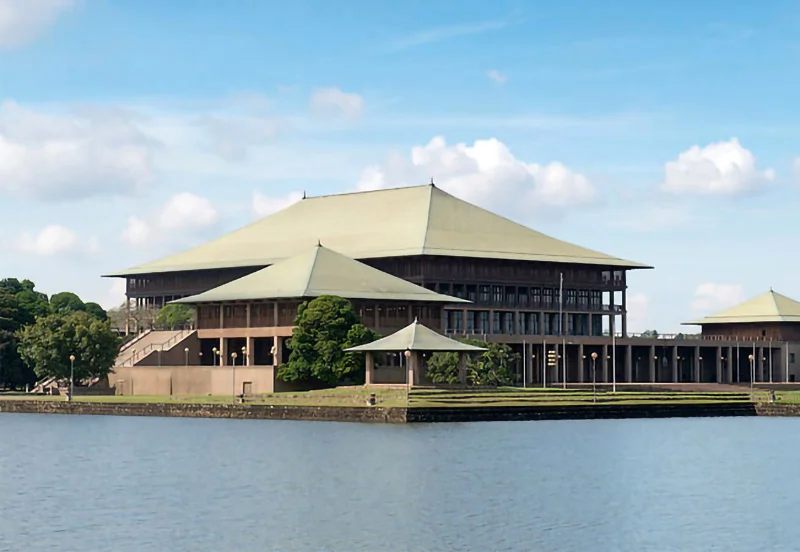
Investigations into the 2019 Easter Sunday terror attacks will not be halted due to protests, demonstrations or Satyagraha campaigns, Minister of Public Security Ananda Wijepala told Parliament yesterday (10), while alleging that investigators had gathered sufficient evidence to establish the involvement of former State Intelligence Service (SIS) Director, retired Major General Suresh Sallay, in a conspiracy linked to the attacks.
Making a special ministerial statement in the House, the Minister said that evidence uncovered during ongoing investigations indicated that Sallay had prior knowledge of the planned attacks and related extremist activities before the coordinated bombings that claimed more than 270 lives and injured hundreds of others, on April 21, 2019.
Wijepala claimed that three weeks before the attacks, Sallay had deployed four Muslim individuals to gather intelligence, including information on the number of worshippers attending mass at a church in Negombo.
According to the Minister, the principal individual among the four had been identified by witnesses to the CID as an ISIS extremist and had subsequently gone missing following the Easter Sunday attacks.
“There is evidence suggesting that Major General Sallay met the informant who had tipped off Army Intelligence regarding the attacks at a hotel in Colombo,” Wijepala said.
The Minister maintained that investigators had uncovered evidence indicating that Sallay had taken steps to prevent the disclosure of information that could have revealed crucial details relating to the attacks and the events leading up to them.
Referring to allegations that Sallay had been subjected to inhumane treatment while in custody, Wijepala rejected such claims, describing them as false and misleading.
He told Parliament that the former intelligence chief had been afforded all facilities and privileges due to a primary suspect under the law, including unrestricted access to legal counsel.
“The Magistrate personally visited Sallay to ascertain his health and wellbeing. At no stage did he complained of any inhumane treatment. Neither has he lodged complaints with any other relevant authority in that regard,” the Minister said.
Wijepala also disclosed that Sallay had thus far declined to provide investigators with the passwords to his laptop computer and mobile phone, a move he described as an attempt to obstruct the investigative process.
“He is acting in a manner that hinders the progress of investigations,” the Minister alleged.
The Public Security Minister maintained that the government remained committed to uncovering the full truth behind the Easter Sunday attacks and bringing all those responsible before the law, irrespective of their status or position.
Emphasising that the investigation would continue without interference, Wijepala said attempts to exert pressure through public protests or Satyagraha campaigns would not influence the course of the inquiry.
“The investigations into the Easter Sunday attacks will not be halted by any protests or Satyagraha,” he said.
By Saman Indrajith

A total of 267,138 children dropped out of the school system between 2018 and 2024, Prime Minister and Minister of Education Dr. Harini Amarasuriya informed Parliament yesterday (10).
Responding to a question raised by SJB Ratnapura District SJB MP Hesha Withanage, the Prime Minister said that the government did not possess definitive data on school dropouts from 2010 to the early part of 2017.
She explained that the figures for the period from 2018 to 2024 had been derived from annual school census reports using an internationally recognised methodology that takes into account student enrolment figures and dropout rates from Grade One to Grade Ten.
According to the statistics presented to Parliament, 38,839 students dropped out of school in 2018,
while the figure increased to 41,503 in 2019. In 2020, the number stood at 32,540 before declining further to 25,492 in 2021.
However, a sharp increase was recorded in 2022, when 52,596 students were identified as having left the school system. The figure remained high in 2023 at 50,345 before declining to 25,823 in 2024.
The Prime Minister cautioned that the figures did not necessarily indicate that all students classified as dropouts had completely discontinued their education.
She noted that some students may have transferred to schools in other provinces, enrolled in international schools, or migrated overseas with their families while continuing their studies.
Dr. Amarasuriya said that such cases could not be separately identified under the methodology used to compile the statistics and were, therefore, included in the overall dropout figures.
Addressing the causes of school dropouts, the Prime Minister said a range of factors contributed to students leaving the formal education system.
These included personal circumstances, school-related issues, family and economic difficulties, social influences, as well as students opting for alternative educational pathways and training opportunities, she said.
By Saman Indrajith
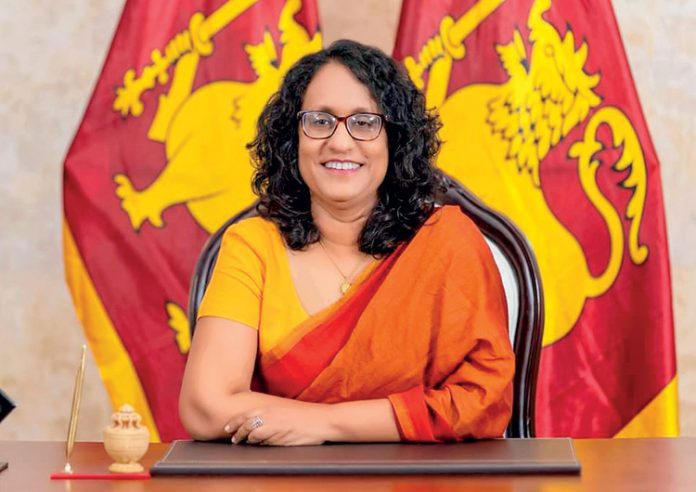
Prime Minister Harini Amarasuriya told Parliament yesterday that Provincial Council elections would not be conducted under the existing proportional representation system and would instead be held under a new electoral system.
Responding to a question raised by MP Ravi Karunanayake, the Prime Minister said there was no justification for holding elections without ensuring adequate representation for women and youth in Provincial Councils.
She said that the government’s position was to first finalise reforms to the electoral system before proceeding with polls.
The Prime Minister also provided a detailed breakdown of when the terms of Provincial Councils expired, noting that all nine councils had been without elected administrations for several years. According to her, the Sabaragamuwa Provincial Council term ended on September 29, 2017, followed by the Eastern and North Central Councils on September 30 and October 1, 2017 respectively.
The Central and North Western Provincial Councils ended their terms on October 08 and 10, 2018, while the Northern Provincial Council term ended on October 24, 2018. The Southern Provincial Council term expired on April 10, 2019, followed by the Western Provincial Council on April 21, 2019, and the Uva Provincial Council on October 8, 2019.
Amarasuriya said that under Section 10(a) of the Provincial Councils Elections Act No. 2 of 1988, the Election Commission was required to publish a notice of intention to hold an election within one week after the dissolution or expiry of a council, following a direction from the President.
However, she noted that the Election Commission had not issued such notices due to the absence of enabling legal provisions following subsequent amendments.
She further explained that under Section 3A of the Provincial Councils Elections (Amendment) Act No. 17 of 2017, the holding of elections is linked to the completion of a delimitation process. This requires the appointment of a Delimitation Committee by the President to define electorates within administrative districts and submit its report to Parliament, with elections to be held only after parliamentary approval.
The Prime Minister said the delimitation process has not yet been completed, which has prevented the conduct of Provincial Council elections under the revised framework.
Amarasuriya also informed Parliament that a parliamentary select committee had been appointed to examine and make recommendations on whether Provincial Council elections could be conducted under the previous electoral system through further amendments to existing legislation.
The committee, titled the “Select Committee of Parliament to look into and report to Parliament on the matter of selecting the Electoral System under which the Provincial Council Elections should be held and submit its proposals and recommendations in that regard,” comprises MPs Vijitha Herath (Chairman), Nizam Kariapper, Chandana Sooriyarachchi, Darmapriya Wijesinghe, Samanmali Gunasingha, Shanakiyan Rasamanickam, Lakshman Nipuna Arachchi, Mano Ganesan, Ranjith Madduma Bandara, Arun Hemachandra, Sunil Watagala and Muneer Mulaffer.
She said further decisions regarding the holding of Provincial Council elections will be taken based on the recommendations of the parliamentary select committee.

Canada introduces bill to ban social media for children under 16

Lutkenhaus, 17, upsets Olympic champion Wanyonyi in Oslo

An Everest guide’s miraculous survival raises questions for tourism industry

Whale graveyard dating back five million years discovered

Trump says US will hit Iran ‘hard’ again today

Showers will occur at times in the Western, Sabaragamuwa and North-western provinces and in Galle, Matara, Kandy and Nuwara-Eliya districts

‘Dates have the highest sugar content to fight Coronavirus’

Sunday Island 27 December – Headlines

#SundayIsland 17th December – Headlines

Sunday Island – 28th March

Sunday Island Headlines – 21 March

Sunday Island – 21st February – Headlines
-
 Features6 days ago
Power crept into the Sangha and is now tearing it apart
-

 Features6 days ago
Kondachchi wind farm and battery storage project to boost energy security, says Power Ministry Secretary
-

 News4 days ago
Women’s T20 World Cup 2026 warm-up: Chamari Athapaththu’s 94 helps Sri Lanka beat Pakistan
-
 Features6 days ago
Saudi Arabia sets new benchmark in Hajj management as 1.7 million pilgrims complete sacred journey
-

 News5 days ago
Asst. Manager, security officer arrested over Rs 30 mn snatch at Horana PB branch
-

 Editorial3 days ago
Probe Sallay’s complaint
-

 News4 days ago
Lankan-Canadian inducted to Toronto Sports Hall of Fame
-
 News1 day ago
Local firms move millions of dollars overseas for phantom imports: Govt.