
Foreign News
Queen Margrethe II: Danish monarch announces abdication live on TV

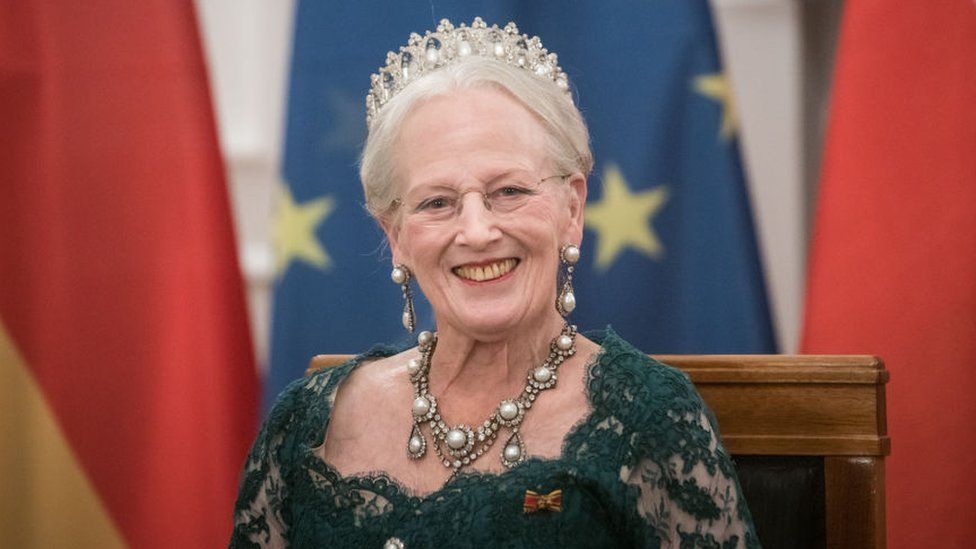
Denmark’s Queen Margrethe II has announced her surprise abdication in a new year TV address.
She will formally step down on 14 January, which will be 52 years to the day since she became queen. “I will leave the throne to my son, Crown Prince Frederik,” she announced.
The 83-year-old is the world’s only reigning queen and the longest serving current monarch in Europe, taking the throne after the death of her father King Frederik IX in 1972.
She revealed the decision was made after a period of reflection following surgery on her back in early 2023. “The surgery naturally gave rise to thinking about the future – whether the time had come to leave the responsibility to the next generation,” she said. “I have decided that now is the right time,” she added, and offered her thanks to the Danish public for their support over the years.
Prime Minister Mette Frederiksen thanked the queen for her service. “On behalf of the entire population, I would like to extend a heartfelt thank you to Her Majesty The Queen for her lifelong dedication and tireless efforts for the Kingdom,” she said in a statement.
“Although the duty and position of regent has been handed down for more than 1,000 years, it is still difficult to understand that the time has now come for a change of throne,” the statement read. “Many of us have never known another regent. Queen Margrethe is the epitome of Denmark and throughout the years has put words and feelings into who we are as a people and as a nation.”
Unlike British royal tradition, there will be no formal crowning ceremony for Crown Prince Frederik, who is 55. Instead, his accession will be announced from Amalienborg Castle in Copenhagen on the day. He will take her place as King of Denmark and head of state in the country – which is a constitutional monarchy – as well as in Greenland and the Faroe Islands.

Queen Margrethe is a popular figure in Denmark, and many Danes had expected her to remain on the throne until her death. “She is to us what Queen Elizabeth was to you,” Danish journalist Tine Gotzsche told the BBC.
Queen Margrethe attended the funeral of Queen Elizabeth II in 2022, and they celebrated their respective jubilees in the same year. She had not been expected to become Queen when she was born. But when she was 13, Danish law changed to allow women to take the throne.
More than a decade ago, Queen Margrethe reflected that she was inspired by the late British Queen “that I must somehow understand that I must dedicate my life to my nation like she has done, and in that way she has been very important to me.”
The pair had been the world’s only remaining female sovereigns before Queen Elizabeth’s death. Elizabeth reigned for 70 years.
Some also consider her the world’s longest reigning monarch. The Sultan of Brunei has been on the throne for longer, but his country only gained independence in 1984.
She is also the longest-serving monarch in Danish history, after surpassing King Christian IV, of Denmark and Norway, earlier this year.
Affectionately known as Daisy, Queen Margrethe is known for her smoking habits and rejection of mobile phones and the internet – declaring herself “very happy” without them.
Gotzsche said the Danish royal transition is a moment of mixed celebration and sadness.

“She has always been there, she has been ageing with all of us,” she said, but added: “the Crown Prince is in a very good position to take over, the succession is laid out – it’s very logical, and it absolutely makes sense.”
Crown Prince Frederik, like Britain’s King Charles III, is known for his passion for the environment. He has vowed to “guide the ship” of Denmark into the future.
His wife, Princess Mary, grew up on the Australian island of Tasmania and was working as a lawyer when the pair met in 2000.
They are considered by some to represent modern values and have tried to give their four children as normal an upbringing as possible, sending them mainly to state schools.
During her time on the throne, Queen Margrethe continued to work as an artist and was well known for her love of the arts. She also has a passion for archaeology and has taken part in several excavations.
She studied in the UK, spending time at Cambridge’s Girton College and the London School of Economics.
In 1967, she married French diplomat Henri de Laborde de Monpezat, who served as her royal consort until his death in 2018.
Each year on New Year’s Eve, she delivers a speech broadcast on television. This year, aside from the announcement, she also spoke of the wars in the Middle East and Ukraine, as well as the importance of addressing climate change.
Facing similar challenges of modern society as other royal families across Europe, the Danish royal family has decided to slim down its number of royals. This led to a very public rift last year after Crown Prince Frederik’s younger brother Prince Joachim’s children were stripped of their royal titles.
(BBC)


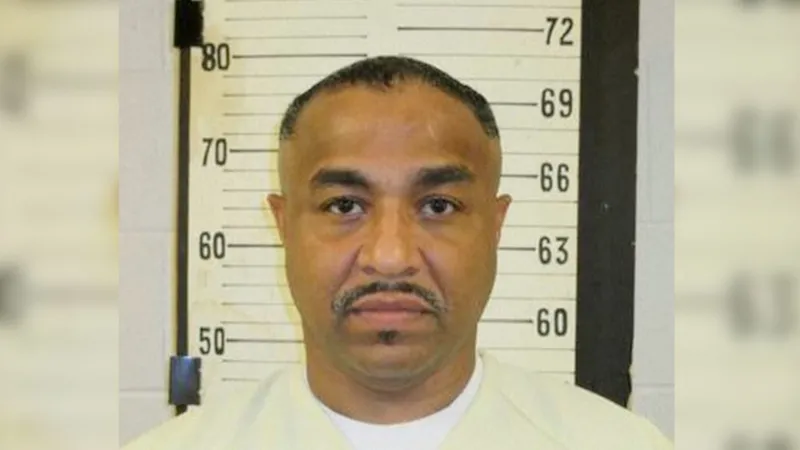
The execution of a Tennessee death row inmate has been postponed after staff were unable to find a vein to administer a lethal drug.
Tony Carruthers, convicted of kidnapping and murdering three people in 1994, was set to be executed on Thursday.
But the state’s Department of Corrections said that while its medical team did find a primary IV line to carry out the lethal injection, they could not find a suitable second vein to establish a backup line, which is required under lethal injection execution protocol.
In response, Tennessee Governor Bill Lee said he would grant Carruthers a temporary reprieve from execution for one year.
After finding the primary injection line, “the team continued to follow the protocol, but could not find another suitable vein”, the corrections department said in a statement.
“The team attempted to insert a central line pursuant to the protocol, but the procedure was unsuccessful,” the statement continued. “The execution was then called off.”
Carruthers was convicted in 1996 for the kidnapping and murders of Marcellos Anderson, his mother Delois Anderson, and Frederick Tucker.
The men were beaten and shot and the three were buried alive in a Memphis cemetery.
Carruthers’ case has drawn national attention as advocates like the American Civil Liberties Union (ACLU) have argued there were significant problems with his trial, including that he was forced to represent himself.
Carruthers himself has consistently maintained his innocence.
“His trial was riddled with errors. He was denied legal counsel. There was no physical evidence linked to him,” the ACLU said in a press release demanding the “wrongful execution” of Carruthers be called off.
“The evidence against him that was presented at trial came from informants who have since recanted their statements or been discredited,” the ACLU continued.
The nonprofit group also collected more than 130,000 signatures calling for the execution to be halted to allow for “necessary fingerprint and DNA testing”.
Advocates and community groups delivered that petition to the governor’s office at the Tennessee capitol on Monday, but Gov Lee announced the following day that Carruthers’ execution would go forward as planned.
Last week, Kim Kardashian took up Carruthers’ cause, urging her fans in a social media post to call the governor’s office and demand the DNA evidence be tested “before it’s too late”, according to US media.
In a petition for clemency filed on Wednesday, attorneys for Carruthers argued that his current mental state – resulting from Schizoaffective Disorder, Bipolar Type, and brain damage – is too impaired for him to be executed.
“These disorders manifest in current symptoms of unending, synergistic, and complex delusions that thwart a rational understanding of his imminent execution,” his lawyers argued.
In response to the news of the temporary reprieve, Maria DeLiberato, senior counsel at the ACLU’s Capital Punishment Project, said the ACLU will continue fighting on Carruthers’ behalf.
“Tennessee cannot continue torturing a man while refusing to answer serious questions about his innocence,” DeLiberato said.
[BBC]
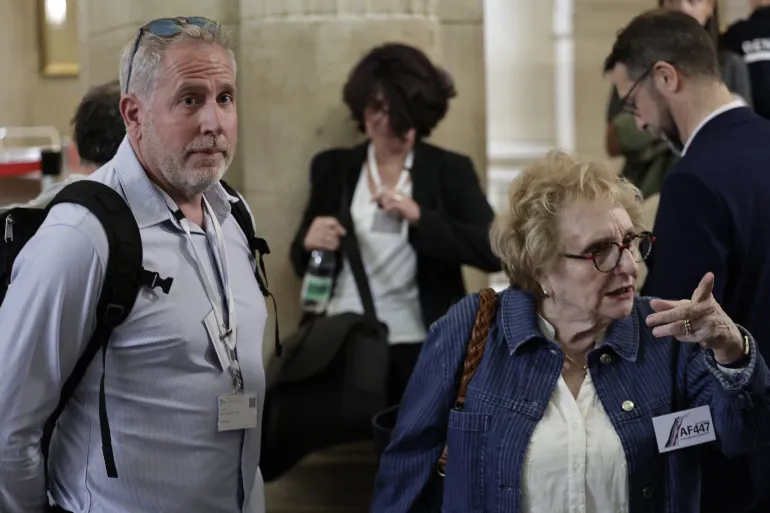
A French appeals court has found Airbus and Air France guilty of manslaughter in 2009 Rio de Janeiro – Paris crash that killed 228 people – the worst aviation disaster in the country’s history.
The Paris Court of Appeal ruled on Thursday that both companies were “solely and entirely responsible for the crash of flight AF447”, and ordered a payment of 225,000 euros ($261,720) for each passenger, the maximum fine possible for corporate manslaughter.
Although the penalties are largely symbolic, they capped an eight-week trial that victims’ families saw as a last chance to find justice two years after a lower court acquited Airbus and Air France.
Both companies have repeatedly denied all charges.
Following the ruling, Airbus said it would appeal to France’s highest court, saying the latest finding contradicted submissions from prosecutors and the 2023 acquittal.
Prosecutors previously warned that an appeal was likely and denounced the companies’ behaviour throughout the decade-plus legal process.
“Nothing has come of it – not a single word of sincere comfort,” said prosecutor Rodolphe Juy-Birmann as the trial was under way last November. “One word sums up this whole circus: indecency.”

The crash unfolded on June 1, 2009, when flight AF447 disappeared from radar screens as it headed from Rio de Janeiro in Brazil to the French capital Paris with 216 passengers and 12 crew.
Two years passed before a deep-sea search uncovered the plane’s black boxes, which record flight data.
Investigators found the pilots had pushed the jet into a climb as it struggled with sensors blocked with ice during a mid-Atlantic storm. The plane stalled and crashed into the ocean.
While Airbus and Air France have blamed pilot error, the lawyers for passengers’ families argued that both companies knew that there was a problem with the plane’s pitot tubes, which measure flight speed.
Pilots were not trained to deal with such an emergency as the tubes malfunctioned, prosecutors said, triggering alarms in the cockpit and turning off the plane’s autopilot function.
Air France lawyer Pascal Weil said in October that the company “had the means to conduct high-altitude training, but we did not do so because we sincerely believed it was unnecessary”.
[Aljazeera]
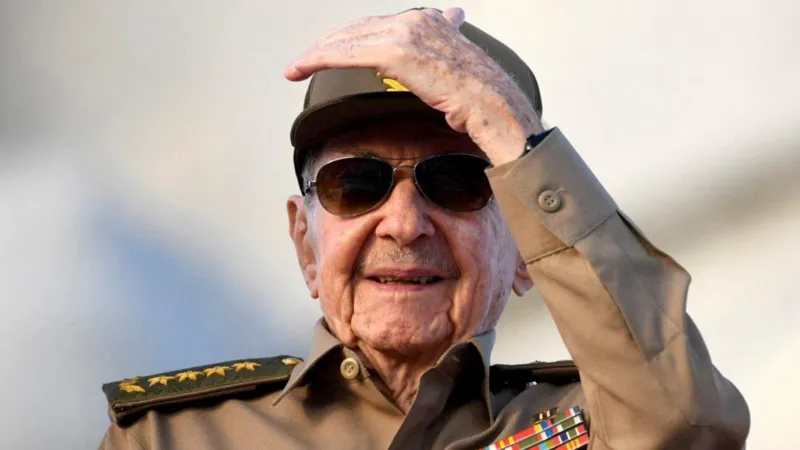
The US has charged former Cuban leader Raúl Castro with conspiracy to kill US nationals and other crimes over the 1996 downing of two planes between Cuba and Florida.
The case unveiled on Wednesday accuses Castro and five others in the shooting down of the aircraft belonging to Cuban-American group Brothers to the Rescue and killing four people, including three Americans.
Castro, now 94, was then head of the country’s armed forces and faced international condemnation over the crash.
As the US seeks to exert increasing pressure on Cuba’s communist rule, President Miguel Díaz-Canel called the charges “a political manoeuvre, devoid of any legal foundation”.
Speaking at Freedom Tower in Miami, Acting Attorney General Todd Blanche announced that the US would also charge Castro with destruction of aircraft, and four individual counts of murder over the deaths of Armando Alejandre Jr, Carlos Alberto Costa, Mario Manuel de la Peña, and Pablo Morales.
“The United States, and President Trump, does not, and will not, forget its citizens,” Blanche said.
The charges must be argued in a US court, with some carrying the possibility life terms. The murder charges each carry a maximum penalty of death or life imprisonment.
The justice department’s new charges take aim at a key figurehead of Cuba’s communist leadership when it is facing intense US pressure to make significant political and economic reforms to its one-party rule there.
“I think the strategy is to increase the pressure gradually to the point where the Cuban government will give in and surrender at the bargaining table,” said Wiliam LeoGrand, a expert on Latin American politics at American University.
The US has issued sanctions on the country and imposed a blockade on oil to Cuba that has resulted in blackouts and food shortages.
Earlier on Wednesday, US Secretary of State Marco Rubio issued a message to the Cuban people timed to the country’s independence day.
“President Trump is offering a new path between the US and a new Cuba,” Rubio said.
Rubio told citizens of the island that a Cuban military run conglomerate known as GAESA is primarily responsible for the blackouts and food shortages that the country continues to endure.
GAESA owns or operates most of the lucrative parts of the Cuban economy from the ports to the petrol pumps to five-star hotels.
In response to Rubio’s message, Díaz-Canel accused the US of lying and imposing a collective punishment on the Cuban people.
 Acting US Attorney General Todd Blanche announced the charges in Miami. (BBC)
Díaz-Canel also said that the indictment of Castro was being used to “justify the folly of a military aggression against Cuba” and accused the US of distorting the facts around the downing of the plane.
Asked by reporters about the prospects of bringing Castro to the US to face charges, Blanche responded that there was a warrant for his arrest.
He did not confirm whether the US would try to capture Castro, but said, “we expect he will show up here, by his own will or another way”.
American University’s LeoGrande said he believes the US is ready to capture the former Cuban leader “if the Cubans don’t surrender at the bargaining table”.
In January, the US staged a military operation to seize former Venezuelan President Nicolás Maduro and bring him to the US, after the justice department indicted him.
It transformed Venezuela’s relationship with Washington, something LeoGrande cautioned would be unlikely to have the same effect in Cuba, noting Castro retired almost a decade ago.
Nearly 95 years old, Castro, the brother of late Cuban leader Fidel Castro, remains an influential figure, acknowledged on the island as the surviving “leader of the Cuban Revolution”.
Blanche said he would “not compare cases” between Castro’s and that of Maduro.
President Donald Trump was asked about the political aspect of Wednesday’s indictment.
“A lot of those people are related to me in the sense that I’ve had such a great relationship with Cuban-Americans,” Trump said. “On a humanitarian basis, we’re here to help.”
While Castro is not expected to be extradited or to appear in the case, all options appear to be on the table, says attorney Lindsey Lazopoulos Friedman, who served as a prosecutor in the US attorney’s office in Miami.
“If he did appear in the case, he would be afforded the same legal rights as any other defendant,” Friedman said, adding that would ultimately include a trial by jury.
“No one expects that the case will follow this typical path… but the indictment is compelling and is supported by significant evidence,” she told the BBC.
Cuba unlikely to bow without a fight
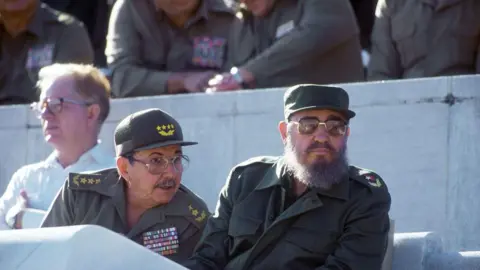
The Miami centre where US officials announced the indictment of Raúl Castro was full of Cuban Americans, mostly representing Cuban exile organisations that have for decades led opposition of the Cuban government from within the United States.
Surrounded by pictures of the four people who died in the 1996 crashes, many at the Miami event described being thrilled by the news.
“It was time, 67 years of that murderous regime,” said Isela Fiterre. “Raúl Castro did not merely kill four individuals. Over the course of many years, he has killed countless people,” Fiterre said.
She said it is never too late for justice and that she is grateful to the Trump administration for taking this step.
Another attendee, Mercedes Puid-Soto, echoed those sentiments.
“I feel very happy. Justice has been served,” she said. “It’s very important that the families can close that chapter, and we Cubans too.”
“It’s unlikely that the Cuban regime will surrender to the United States without a fight,” Vigil noted. “And any move that includes working with the Cuban regime would be very difficult for the Cuban diaspora in the United States to accept.”
US and Cuban representatives, including Raúl Castro’s grandson Raúl Guillermo Rodriguez Castro, have held “conversations” in recent months, but US charges against the former president are unlikely to smooth these contacts.
On the contrary, the Cuban side showed signs of further entrenching into its “no surrender, no concessions” position against US pressure, with Cuban state media outlets blasting what they called the “false accusations”.
(BBC)

Attacks on Ebola centres intensify in eastern DRC amid outbreak fears

Oil prices fall amid mixed signals on US-Iran peace deal

Kuldeep and Rahul help Delhi Capitals sign off with big win

Trump tells US negotiators ‘not to rush’ into deal with Iran

Showers will occur at times in the Western, Sabaragamuwa and North-western provinces and in Galle, Matara, Kandy and Nuwara-Eliya districts

No PC polls this year, says Tilvin

‘Dates have the highest sugar content to fight Coronavirus’

Sunday Island 27 December – Headlines

#SundayIsland 17th December – Headlines

Sunday Island – 28th March

Sunday Island Headlines – 21 March

Sunday Island – 21st February – Headlines
-

 Features6 days ago
Octopus, Leech, and Snake: How Sri Lanka’s banks feast while the nation starves
-

 Sports6 days ago
Sri Lanka women’s volleyball team ready for Central Asian challenge
-

 Opinion5 days ago
Murder of Ehelepola family, Bogambara Wewa and Sightings of Wangediya
-

 News5 days ago
Steps underway to safeguard Sri Lanka’s maritime heritage
-
 Features2 days ago
The NPP’s pivot to the past
-

 Editorial5 days ago
A play without its protagonist
-

 Opinion4 days ago
The need to reform Buddhist ecclesiastical order
-

 Midweek Review6 days ago
Overall SLPP failures stressed in new Aragalaya narrative