
Business
Public tug of war on wage hike for plantation sector workers

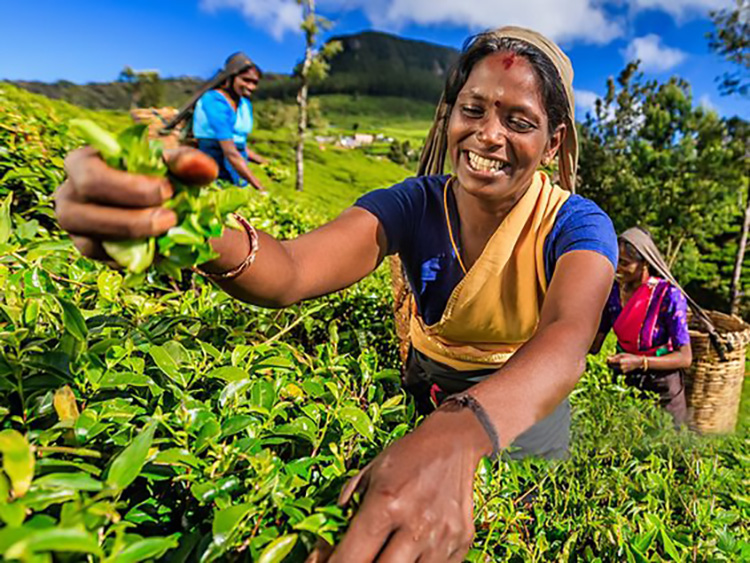
Planters’ Association says it’s an arbitrary, reckless decision by the government
They reiterate their commitment to a productivity-linked wage model
Warns against any attempt at expropriation by the government
The plantation industry raised its strongest possible objections to the government’s arbitrary, reckless, unilateral decision to drastically hike minimum wages for tea and rubber sector workers by an unprecedented 70%.All producer stakeholders issued a unified warning against the devastating impact the latest increase would have on the plantation sector, leading crippling operational challenges, ultimately leading to severe economic instability for the nation.
“This decision was made without proper consultation or consideration of the needs of all industry stakeholders. In particular, it fails to provide any consideration and threatens to cripple every segment of the Sri Lankan tea and rubber industry. This current effort to force such a clearly unsustainable mandatory minimum wage on tea and rubber smallholders and the Regional Plantation Companies (RPCS) is impossible for the industry to absorb, even with radical cuts to basic operational necessities. The continuity of the entire plantation sector is now at risk, and most critically the livelihoods of the very workers and communities who are connected to the industry across Sri Lanka,” The Planters’ Association of Ceylon stated.
As a result of the decision, the cost of production for tea and rubber is set to rise dramatically, with estimates indicating a minimum 45% increase in the cost per kilogram of tea. This surge in operational costs will render Sri Lanka’s tea and rubber industries uncompetitive in the global market, further exacerbating the financial strain on these sectors.
Additionally, the wage hike will place an enormous burden on Regional Plantation Companies (RPCs), which will face an annual increase in excess of Rs. 35 billion inclusive of EPF/ETF and gratuity payments. This financial strain is unsustainable and threatens the livelihoods of thousands of workers in the plantation sector.
The PA also noted that the current approach of the Government in attempting to coercively set wages for the private sector, and interfere in management of the sector from key Government figures represent a stark violation of the terms of the IMF agreement, which is crucial for Sri Lanka’s economic recovery. This decision is very clearly driven by short-term populist politics aimed at securing electoral victories rather than fostering long-term economic health of the industry, and securing the interests of workers.
The IMF’s $3 billion Extended Fund Facility (EFF) for Sri Lanka is contingent on several stringent conditions aimed at ensuring fiscal consolidation including reduced intervention in state-owned enterprises (SOE). Historically, state control over enterprises has led to inefficiencies and financial burdens, as evidenced by the failures of numerous state-run businesses in Sri Lanka.
Historically, the state has consistently failed to manage State-Owned Enterprises (SOEs) effectively, leading to steep losses and in many instances, near total collapse. By the time of privatization in 1992, state owned plantations made continuous losses that had to be heavily subsidized by the Government up to Rs. 5 billion per year which was borne by the Treasury.
A further Rs. 8 billion was owed by the JEDB and SLSPC to the Bank of Ceylon and Peoples’ Bank as a result of a US$ 300 million lending facility which was extended to the state plantations by the World Bank. While these funds were intended for the improvement of the plantations industry, there were no significant improvements and the plantations did not have the ability to repay the debts, and the Government was eventually compelled to absorb this debt.
Following privatization, worker wages appreciated sharply, and with a significantly larger workforce of 327,123 within the RPC sector the industry was able to operate more effectively, investing substantially towards the development of the industry, including all of the key certifications and standards that have allowed Pure Ceylon Tea, and rubber to maintain a reputation for unmatched quality relative to global competitors.
These efforts have led to improvements in efficiency and productivity, which are now at risk due to the proposed wage hike. It is also important to note that all these companies are publicly traded companies listed on the Colombo Stock Exchange. Any attempt at a second and immediate expropriation by the Government will therefore contravene Securities and Exchange Commission and SEC rules, the Companies Act and other related statutory provisions.
Such an arbitrary and impractical decision also risks severe damage to local and foreign investor confidence alike. The PA warned that this would have negative consequences beyond the plantation industry, especially at a time when Sri Lanka desperately requires foreign direct investment to help boost strategically important sectors in manufacturing and services, as well as the agriculture sector.
The PA has long advocated for a shift to a productivity-linked wage model or a revenue share model, which aligns worker compensation with productivity and revenue earned at auction. This approach not only incentivizes productivity but also ensures a fair and sustainable wage system for workers. Already workers under revenue share under the previous wage structure recorded earnings in excess of the minimum wage that was recently gazette.
The current daily attendance-based minimum wage model is outdated and does not reflect the realities of the modern plantation industry. Any disruption to production or quality standards could send shockwaves through export markets, diminishing export revenues and competitiveness.
“We urge policymakers to prioritize long-term economic stability over short-sighted decisions and to consider the industry’s proposals for a productivity-linked wage model,” the PA said.










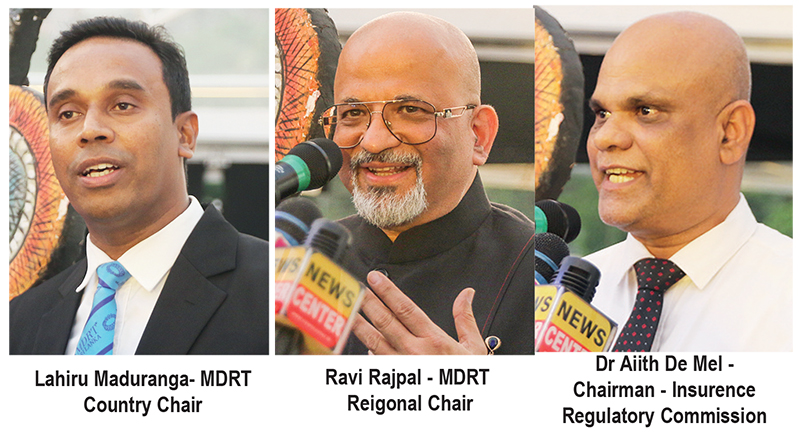
In a first for Sri Lanka’s insurance industry, the country will host MDRT Sri Lanka Day 2026, also known as International Insurance Day, bringing together global leaders, professionals and organisations from the international financial services and insurance sectors.
The initiative, organised by the Million Dollar Round Table (MDRT), will mark Sri Lanka’s inaugural MDRT Day and is scheduled to be held on 18 May 2026.
MDRT Country Chair – Sri Lanka, Lahiru Maduranga, said the event would provide a significant opportunity to position Sri Lanka on the global insurance and financial services map.
“This is an excellent opportunity for Sri Lanka to host such a prestigious event and to promote the country’s standing globally,” Maduranga said.
He made these remarks at the official sundown launch announcing the event, held on 26 January at 8 Degrees on the Lake, Cinnamon Lakeside, Colombo.
The launch was attended by the Chairman and Director General of the Insurance Regulatory Commission of Sri Lanka, chief executive officers of insurance companies, and regional and zonal chairs of MDRT, at which the official date of MDRT Sri Lanka Day 2026 was unveiled.
Maduranga said the landmark event aims to bring the spirit and experience of the MDRT Annual Meeting to the Sri Lankan MDRT community. The programme will feature the MDRT President, Executive Committee members and internationally renowned speakers, offering world-class insights, inspiration and professional development aligned with MDRT values.
He noted that many Sri Lankan MDRT members face challenges in attending the Annual Meeting overseas due to foreign exchange constraints and visa limitations. Of more than 1,200 MDRT achievers in Sri Lanka, only around 50 were able to attend the Annual Meeting in the United States.
“This initiative marks a significant step forward in strengthening the MDRT culture in Sri Lanka and in elevating professional standards within the local insurance services sector,” Maduranga said.
The MDRT Membership Communication Committee (MCC) serves as the official liaison between MDRT Headquarters in the United States and the Sri Lankan MDRT community, overseeing communication, engagement and coordination with the local financial services sector.
Founded in 1927 in the United States, the Million Dollar Round Table (MDRT) is the world’s most prestigious association of insurance and financial services professionals. MDRT represents the highest standards of professional excellence, ethics and performance in the industry. Its Annual Meeting, traditionally held in the United States, attracts more than 10,000 top-performing members from around the world each year.
By Hiran H Senewiratne
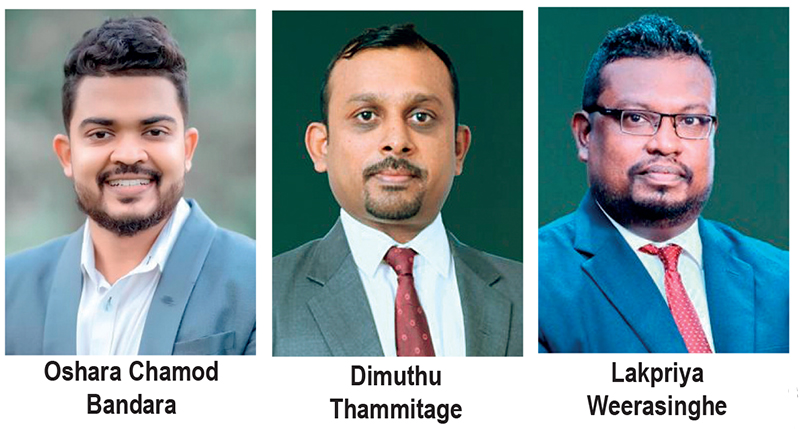
With the aim of fostering a passion for rugby among students in private universities and higher education institutes across Sri Lanka, ESOFT UNI Kandy has launched a special sports development initiative.
As a part of this program, a series of rugby encounters were recently organized between the ESOFT UNI Kandy rugby team and the SLIIT Kandy Uni rugby team. The matches were held at the Peradeniya University Rugby Grounds.
Two highly competitive matches were played during the event. In the first game, the ESOFT UNI Kandy rugby team secured a victory over SLIIT Kandy Uni with a score of 17-07. They maintained their winning streak in the second match as well, defeating their opponents with a final score of 12-07.
This initiative is seen as a significant step toward building a robust sporting culture within the private higher education sector in the hill capital.
The initiation has been started with Rugby and will soon be extended to Cricket, Football, Martial Arts, Badminton, Hockey, Chess, and other areas of sports as well. ESU believes that the development of soft skills, parallel to higher education, will help shape highly capable, industry-ready, and employable students who can confidently face any personal and professional challenges they encounter during their journey.
Dimuthu Thammitage, General Manager, ESU Central Region said: Today’s job market demands highly employable individuals who possess not only educational qualifications but also strong soft skills, which can be effectively developed through sports. Therefore, we warmly invite other educational institutions to join hands with us in producing highly employable students together through sports.
Lakpriya Weerasinghe, Deputy General Manager, ESU Kandy said: At ESOFT Uni, we believe that sports play a vital role in improving students’ personalities through the development of essential soft skills. Therefore, we encourage our students to actively join our clubs and enhance their soft skills alongside their academic education.
Oshara Chamod Bandara, MIC Rugby Club, ESU Kandy said: Sports are iconic to Kandy. As the MIC of the ESU Kandy Rugby Team, I am truly happy to see the enthusiasm of our students towards sports while actively engaging in their studies. I warmly invite other students to join our clubs and further develop their skills alongside their academic journey.
Text and Pix By S.K. Samaranayake

Altair Residences have, over the past six months, seen more than 100 individual title deeds being executed by apartment owners, providing owners with a clear, registered, legal title to their apartments in accordance with Sri Lankan property law. This has been a key initiative by the new owners and management of Altair to improve governance and will continue in an orderly manner in the coming months.
With the transition of ownership to Blackstone India, Altair’s Management Council has also been formally constituted, enabling owners to play an active and proactive role in the management of the Altair building. In addition, the management council has appointed Realty Management Services (RMS), a subsidiary of Overseas Realty Ceylon PLC, as the new facility manager of Altair.
Commenting on these milestones, Thilan Wijesinghe, Chairman of TWC Holdings, who, together with a team from TWC, represents Blackstone’s interests in Sri Lanka, said, “The issuance of individual title deeds is a critical step in any professionally developed residential asset. Over the past six months, this process at Altair has moved forward in a structured and transparent manner, alongside the formal establishment of owner-led governance. This, combined with the appointment of experienced facility managers are fundamental building block for long-term value-creation for apartment owners and proper asset stewardship.”
With ongoing improvements to the building being undertaken by Indocean Developers Pvt Ltd (IDPL), the owning company of Altair, the issuance of deeds to owners is expected to accelerate over the coming months.

India qualify for Under-19 World Cup semi-finals, Pakistan knocked out

Tom Banton fifty steers DLS chase to seal series for England

Pakistan to boycott T20 World Cup group match against India

England to bowl first in Pallekelle

No child should be deprived of vocational or higher education due to poverty – PM

Ireland thump Thailand to qualify for 2026 women’s T20 World Cup

‘Dates have the highest sugar content to fight Coronavirus’

Sunday Island 27 December – Headlines

#SundayIsland 17th December – Headlines

Sunday Island – 28th March

Sunday Island Headlines – 21 March

Sunday Island – 21st February – Headlines
-
 Business7 days ago
ComBank, UnionPay launch SplendorPlus Card for travelers to China
-
 Business4 days ago
Climate risks, poverty, and recovery financing in focus at CEPA policy panel
-
 Opinion3 days ago
Sri Lanka, the Stars,and statesmen
-

 Business2 days ago
Hayleys Mobility ushering in a new era of premium sustainable mobility
-

 Opinion7 days ago
Luck knocks at your door every day
-

 Business2 days ago
Advice Lab unveils new 13,000+ sqft office, marking major expansion in financial services BPO to Australia
-
 Business2 days ago
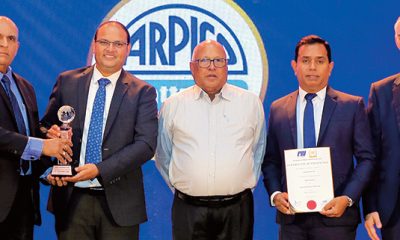
Arpico NextGen Mattress gains recognition for innovation
-

 Business21 hours ago
Altair issues over 100+ title deeds post ownership change