
News
Prof. Peiris warns Pub. Administration Secy. of three-year jail term

Govt defeat at LG polls certain, early general election inevitable
By Shamindra Ferdinando
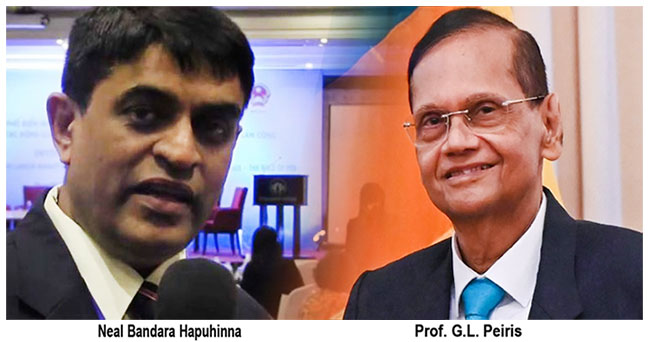
Breakaway SLPP group Nidahasa Janatha Sabhawa says a general election is inevitable early this year. Top rebel group spokesperson Prof. G.L. Peiris, MP, on Monday (16) asserted that the Wickremesinghe-Rajapaksa government was trying to postpone Local Government polls scheduled for Feb-March, somehow, as it realized continuation of current arrangement wouldn’t be possible in the wake of certain defeat at the forthcoming polls.
Addressing the media at their Nawala Office, the former External Affairs Minister said that the parliamentary majority the ruling coalition still enjoyed didn’t reflect the actual situation on the ground.
In spite of UNP leader Ranil Wickremesinghe being elected by parliament on July 20, 2022 to complete the remainder of Gotabaya Rajapaksa’s five year term, contentious issues, such as the resolution of the national issue couldn’t be addressed by an administration that didn’t have a popular mandate.
The parliamentary approval for 2023 budget received on Dec 08, 2022 too hadn’t given Wickremesinghe’s government confidence to face the electorate at the LG polls, Prof. Peiris said. Therefore, the government ‘s reluctance to face LG polls meant that it was not in a position to contest general election, Prof. Peiris said, predicting mini poll would be followed by general election within 3-4 months.
Referring to Supreme Court taking up two fundamental rights petitions filed by Opposition political parties, tomorrow (Jan. 18), Prof. Peiris said that the government couldn’t reverse the electoral process now.
Prof. Peiris said that the declaration made by EC pertaining to the acceptance of nominations from Jan 18-21 meant ongoing government efforts to put off LG polls couldn’t succeed, under any circumstances.
Demanding that Attorney General Sanjay Rajaratnam, PC, take appropriate measures against Public Administration Secretary Neal Bandara Hapuhinna for trying to halt the electoral process, Prof Peiris said the Opposition wouldn’t hesitate to move court against the concerned official in case the AG failed to do what was expected of him.
President Wickremesinghe brought in Hapuhinna as Public Administration Secretary in place of Priyantha Mayadunne.
The National List MP said that Hapuhinna couldn’t absolve himself of the responsibility for interfering in the process by claiming he acted on the instructions of the Cabinet-of-Ministers. The rebel MP warned that Hapuhinna’s offense carried a three year jail sentence.
Hapuhinna on Jan. 10 directed District Secretaries not to accept deposits. He withdrew the orders within hours in the face of unwavering stand taken by the EC.
Prof. Peiris emphasized that the executive or the Cabinet of Ministers couldn’t interfere with the electoral process. Declaring that Hapuhinna was personally responsible for the illegal directive issued by him, Prof. Peiris pointed out how the recent Supreme Court judgment pertaining to 2019 Easter Sunday carnage held the accused personally responsible for the lapses that caused death and destruction.
Prof. Peiris warned Hapuhinna of dire consequences unless he tendered a proper apology to court.
The former minister scoffed at the ongoing attempt to justify the postponement of LG polls on the basis of insufficient funds as required financial allocation had been made in budget 2023. The projected government expenditure had been estimated at Rs.5, 819 bn whereas the allocation for LG poll was Rs. 10 bn, or just 0.17 percent of the total expenditure.
Commenting on recent statements that had been attributed to the EC, Prof. Peiris said that actually the poll could be conducted at a lower cost to the taxpayer.
The SLPP National List MP alleged that the recent claim the IMF asked the government to stop printing money therefore it was not in a position to meet even the basic requirements was a transparent bid to deceive the public.
The lawmaker challenged the government to table staff level agreement between the government and the IMF reached on Sept. 01, 2022. “In spite of repeated requests, the government didn’t submit the agreement,” Prof. Peiris said, questioning the validity of the often repeated claim the government couldn’t print money in terms of the said agreement.
If so, the government owed an explanation as to how as much as Rs 278 bn had been printed between Oct 1, 2022 and Dec 31, 2022, the former minister said.
Asserting that interest rates had been increased extraordinarily last year, during April 01-Dec 31, 2022 period, a staggering Rs 848 were paid as interests, the lawmaker said.
If the government is genuinely concerned about runaway expenditure, State Ministries could be abolished, Prof. Peiris said, asking whether the powers intended to fill the remaining 12 vacancies in the cabinet.
The postponement of LG polls for whatever reason could have a detrimental impact with the IMF loan facility, the ex-minister warned.







News
AgriConnect Sri Lanka’ to be launched on 30 October to Modernise the Agricultural Sector Through Digitalisation

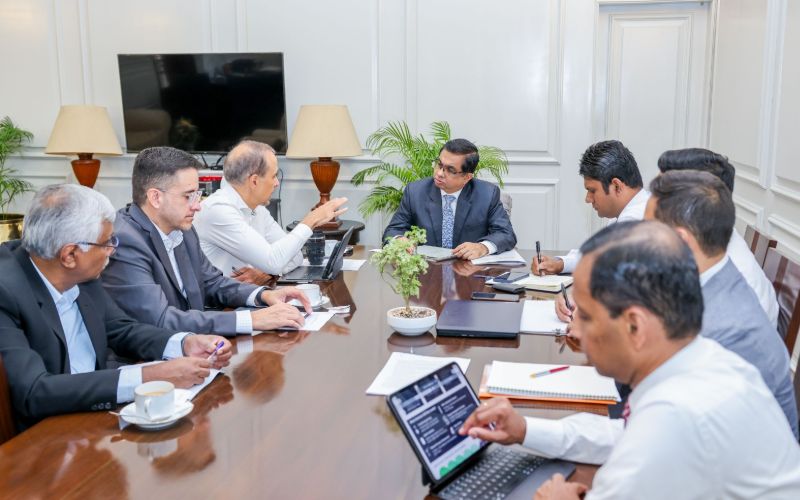
A discussion on the official launch of the ‘AgriConnect Sri Lanka’ programme was held at the Presidential Secretariat on Tuesday (13) morning between Secretary to the President Dr. Nandika Sanath Kumanayake and a delegation led by Gevorg Sargsyan, World Bank Group Manager for Sri Lanka and the Maldives.
The discussion focused on the official launch of the ‘AgriConnect Sri Lanka’ programme, scheduled to take place on 30 October at TRACE Expert City.
The World Bank delegation provided a comprehensive briefing on the programme and emphasised that Sri Lanka is set to become the first country in South Asia to join this global initiative of the World Bank Group, marking a significant milestone.
Victor Anthonypillai, Senior Country Officer of the International Finance Corporation (IFC), Tomas Ricardo Rosada Villamar Practice Manager at the World Bank, Felipe F. Dizon, Senior Economist and Athula Senaratne, Senior Agriculture Specialist, also attended the meeting. The Presidential Secretariat was represented by Senior Assistant Secretary to the President Dr Danushka Perera and Assistant Secretary to the President R. A. Ruwanpathirana.
President’s Media Division (PMD)

Appointment of committee eyewash, says UNP
The government is considering changes to prison regulations pertaining to the treatment of Buddhist monks serving jail terms, including their right to wear monastic robes when taken outside prison.
Justice and National Integration Minister Harshana Nanayakkara announced the proposed changes yesterday (14) following the submission of an interim report by a committee appointed to review the rules and procedures governing prisons.
The report was handed over to Secretary to the President Dr Nandika Sanath Kumanayake at the Presidential Secretariat.
One of the key recommendations is to amend Prison Standing Order 356 by introducing a new provision, 356(A). The proposed revision would require prison authorities to consult the Department of Buddhist Affairs on the removal of a monk’s robes upon admission to prison. The Commissioner of Prisons would be allowed 10 days to notify the department and take the necessary steps.
A separate amendment to Departmental Order 550 would allow Buddhist monks to wear their robes whenever they are taken outside prison, unless their respective Nikaya formally requests that the privilege be withdrawn.
The committee has also recommended extending similar arrangements, with suitable modifications, to members of other religious clergy who are imprisoned.
The proposals follow concerns raised over the treatment of Ven. Galagoda Aththe Gnanasara Thera after he was taken into custody. President Anura Kumara Dissanayake subsequently held discussions with representatives of the three main Buddhist Nikayas and appointed the committee to examine the existing legal framework.
Nanayakkara said the interim report had been forwarded to the Acting Commissioner General of Prisons, along with instructions to revise the relevant standing orders in accordance with its recommendations.
The proposed amendments have yet to be confirmed as formally implemented.
Meanwhile, the UNP yesterday criticised the government’s decision to appoint a committee to make recommendations on the attire to be worn by imprisoned Buddhist monks and other religious leaders when taken outside prison, describing the move as unnecessary.
In a statement issued yesterday (14), the UNP said the procedures governing the matter were already clearly set out in the Department of Prisons’ Standing Orders, making the appointment of a separate committee unwarranted.
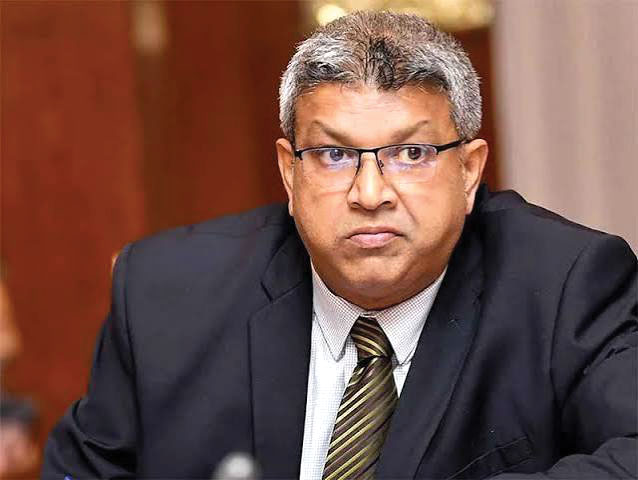
The party cited remarks by Professor G.L. Peiris, Convenor of the Janathawadi Joint Opposition, who had described the committee’s appointment as a
“complete eyewash” and questioned the need for such a move.
Referring to Standing Order 550 of the Prisons Department, the UNP said convicted prisoners appearing before court for legal proceedings should not be required to wear prison uniforms.
It further stated that the regulations allowed prisoners to wear civilian clothing consistent with what they wore before imprisonment, including attire appropriate to their cultural and religious backgrounds.
The UNP accused the government of unnecessarily prolonging the issue by appointing a committee, despite the existence of regulations governing prisoners’ attire.
The party also called on the government to seek forgiveness from the Mahanayake Thera and the Sangha Council of the Kotte Sri Kalyani Samagri Dharma Maha Sangha Sabha of the Siyam Maha Nikaya over the decision concerning the religious attire of Ven. Galagoda Aththe Gnanasara Thera.
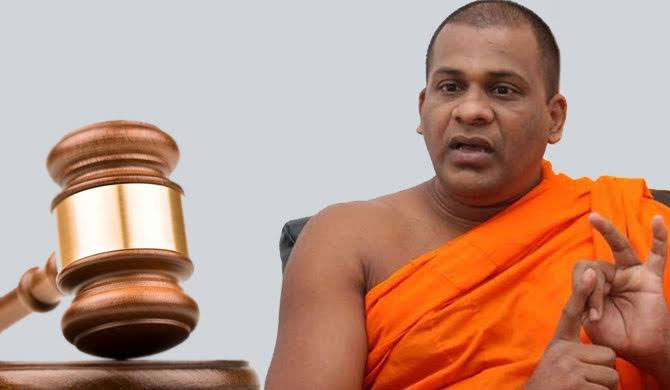
Court of Appeal President Justice Rohantha Abeysuriya yesterday withdrew from the bench hearing petitions challenging the decision by prison authorities to require Ven. Galagoda Aththe Gnanasara Thera to wear prison attire following his imprisonment.
The decision was announced when the petitions seeking to invalidate the prison authorities’ decision were taken up for consideration on October 14.
Following his withdrawal, a three-judge bench was appointed to hear the petitions.
The petitions relate to the prison authorities’ decision to require Gnanasara Thera to wear prison attire after he was taken into custody to serve the remainder of his sentence for contempt of court.
In September this year, the Supreme Court annulled the presidential pardon granted to Gnanasara Thera by former President Maithripala Sirisena in May 2019.
Following the ruling, the Court of Appeal directed the Commissioner General of Prisons to take the necessary steps to enforce the remainder of the monk’s prison sentence.
Gnanasara Thera had originally been sentenced to six years’ imprisonment for contempt of court but had served only around nine months before receiving the presidential pardon in 2019.

SriLankan Airlines wins prestigious SATA 2026 Visitors’ Choice Award for Leading International Airline

Look out for Mayon as field event athletes begin action at Diyagama

JXG enters LMD’s Most Respected Entities in Sri Lanka 2026 for the first time, securing a place among the first 50

Bourse bounces back on oil price reduction springboard

The Executive Centre expands Sri Lankan footprint with new premium, flexible workspace at World Trade Center

57th Annual Saints’ Quadrangular Tournament on Saturday and Sunday

‘Dates have the highest sugar content to fight Coronavirus’

Sunday Island 27 December – Headlines

#SundayIsland 17th December – Headlines

Sunday Island – 28th March

Sunday Island Headlines – 21 March

Sunday Island – 21st February – Headlines
-

 News7 days ago
NDB fraud Rs 60mn more than reported
-

 News7 days ago
Removing monk’s robes matter for Sangha to decide: Mahanayake Theras
-

 News5 days ago
Sri Lanka escalates anti-graft drive with Shiranthi’s jailing
-

 News6 days ago
NPP govt. reminded of its responsibilities as US warship leaves Colombo
-

 Latest News6 days ago
Farhan, Sadaqat help Pakistan ace 183 chase to go 1-0 up
-
 News7 days ago
BHC, Colombo: “LTTE remains a proscribed org. in the UK”
-

 Latest News4 days ago
Farhan and Sadaqat help Pakistan seal series in style
-

 News5 days ago
Iranian ships stranded, Lanka fears US sanctions