
Latest News
Pro-EU leader claims Moldova victory despite alleged Russian meddling


Moldova’s pro-EU President Maia Sandu has claimed a second term after a tense election run-off seen as a choice between Europe and Russia.
With most preliminary results counted, Sandu was leading with almost 55% of the vote, and in a late-night speech she promised to be president for all Moldovans.
Her rival Alexandr Stoianoglo, who was backed by the pro-Russian Party of Socialists, had promised a closer relationship with Moscow.
During the vote, the president’s national security adviser said there had been “massive interference” from Russia in Moldova’s electoral process that had “high potential to distort the outcome”.
Russia had already denied meddling in the vote, which came a week after another key Eastern European election in Georgia, whose president said it had been a “Russian special operation”.
Stoianoglo, who was fired as prosecutor general by Sandu, has denied being pro-Kremlin.
As polls closed, both Maia Sandu, 52, and her rival thanked voters, with Stoianoglo speaking in Russian as well as Romanian. Although Romanian is Moldova’s main language, Russian is widely spoken because of its Soviet past.
Voting ended in Moldova at 21:00 (19:00 GMT), with a 54% turnout higher than four years ago, and especially high among expat voters at polling stations abroad.
Stoianoglo took an early lead and won the vote in Moldova itself with more than 51%, according to the preliminary results. Sandu was far ahead in the capital Chisinau, and was completely dominant among expat voters.
As she overtook her challenger late on Sunday night, there was cheering at her campaign headquarters and chants of “victory”.
In a hoarse voice she praised her compatriots for saving Moldova and giving “a lesson in democracy, worthy of being written in history books”.
Then, moving into Russian, she said: “I have heard your voice – both those who supported me and those who voted for Mr. Stoianoglo. In our choice for a dignified future, no-one lost… we need to stand united.”
Maia Sandu’s foreign policy adviser, Olga Rosca, told the BBC she was proud of the result.
Asked whether she was surprised that Stoianoglo had won in Moldova itself, she said the vote in Moldova and abroad should be seen as one and the same: “We never divide people into Moldovans at home and expatriates – we see Moldovans as one family.”
With elections coming next year she said the president had “clearly indicated she has heard the mood for change. On several occasions between the [two presidential] votes she said the fight against corruption must be intensified and justice reform must be accelerated – she’s committed to this work”.
The final result will be declared on Monday.
EU Commission President Ursula von der Leyen congratulated Sandu, saying “it takes a rare kind of strength to overcome the challenges you’ve faced in this election.
“I’m glad to continue working with you towards a European future for Moldova and its people,” her message on X said.
Casting his ballot, Alexandr Stoianoglo had promised to be an “apolitical president”, and that he had voted for “a Moldova that should develop in harmony with both the West and the East”.
Stoianoglo polled particularly well in rural areas and the south, while Sandu was ahead in the cities and with young voters.
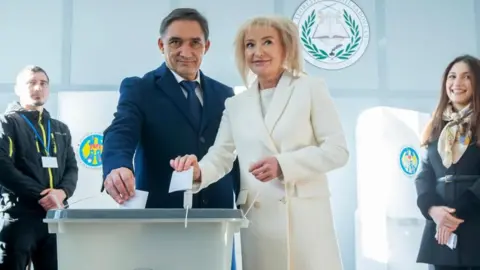
After casting her ballot, Sandu had warned of “thieves” who sought to buy their vote and their country.
Presidential national security adviser Stanislav Secrieru said Russia had organised buses and large charter flights to bring voters to polling stations.
Bomb scares had briefly disrupted voting in Moldova, at UK polling stations in Liverpool and Northampton and at Frankfurt and Kaiserslautern in Germany, he added.

Moldova’s authorities have long warned that a fugitive oligarch called Ilan Shor has spent $39m (£30m) trying to buy the election for Moscow with handouts to 138,000 Moldovans.
Shor, who is based in Moscow, denies wrongdoing but did promise cash payments to anyone prepared to back his call for a “firm No” to the EU.
Commentators and politicians had warned that a Stoianoglo victory could radically change the political landscape in the Danube and Black Sea region, not because he was some kind of “Trojan horse”, but rather because Russia has thrown its weight behind him.
There were queues at polling stations in Moscow, Italy and among voters from a mainly Russian-speaking breakaway region of Transnistria, who had to cross the River Dniester into Moldovan-controlled territory to vote. Transnistria is home to a Russian military base and a huge arms depot.
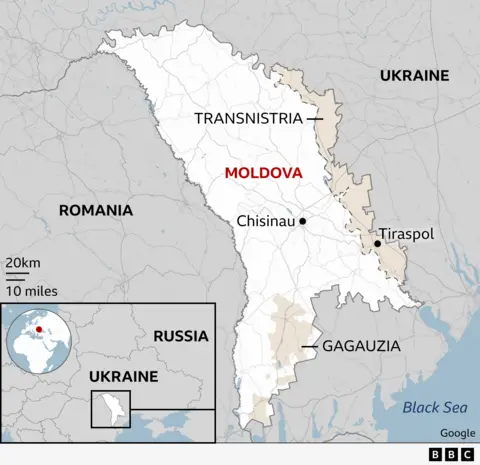
Moldova’s election commission said it was aware of reports of organised and illegal transports of voters by air and land in Russia, Belarus, Azerbaijan and Turkey, and appealed to the public to report further violations.
Although Sandu had easily won the first round of the vote, several candidates swung behind Stoianoglo, although the third-placed candidate refused to back either of the two.
The first round coincided with a nail-biting referendum on backing a change to the constitution embracing the commitment to join the EU.
In the end the vote passed by a tiny margin in favour, and Maia Sandu said there had been clear evidence of attempts to buy 300,000 votes.
[BBC]

Latest News
Dilki Wathsala Marambage appointed as Director General of the Department of Technical Education and Training

The Cabinet of Ministers granted approval to the proposal forwarded by the Prime Minister in her capacity as the Minister of Education, Higher Education and Vocational Education to appoint Mrs. Dilki Wathsala Marambage to the post of Director General of the Department of Technical Education and Training.
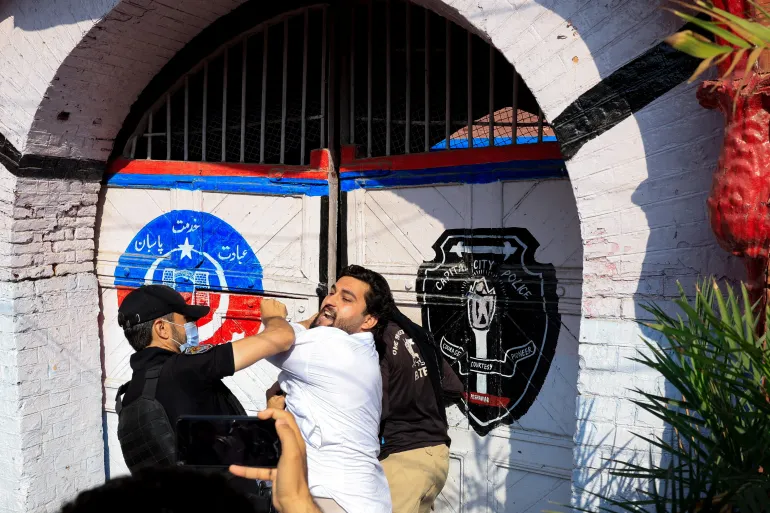
The Pakistan Tehreek-e-Insaf party of jailed ex-Prime Minister Imran Khan is planning to legally challenge the federal government’s Sunday takeover of Khyber Pakhtunkhwa, a province that the party governed.
Sheikh Waqas Akram, the PTI’s central information secretary, told Al Jazeera that the party would challenge the imposition of emergency laws — suspending civil liberties — and governor’s rule in the province in court on Tuesday. A petition had been drafted by a legal committee headed by PTI secretary general Salman Akram Raja, but Akram did not say whether it would be filed in the Supreme Court or the Federal Constitutional Court.
The federal government’s moves have emerged as Pakistan’s latest political flashpoint, with competing narratives from the government and the PTI, at a time when the party was in the middle of a delayed march towards Islamabad, aimed at pressuring authorities to release former PM Khan, who has been in incarceration for more than three years.
Interior Minister Mohsin Naqvi on Monday justified the government’s moves by arguing that federal rule in Khyber Pakhtunkhwa was needed for Pakistan to effectively combat “terrorism” in the province that shares a porous border with Afghanistan.
“No war can be won, however many resources you bring, whatever you do, until the government there leads it,” Naqvi said in Peshawar on Monday.
On Sunday, President Asif Ali Zardari imposed emergency rule and governor’s rule, suspending the PTI government in the northwestern province. The party has governed Khyber Pakhtunkhwa since 2013.
[Aljazeera]

Pathum Nissanka’s return to the red-ball fold provides a downtrodden Sri Lanka with a timely boost, while debuts are also in the offing for wicketkeeper Anjala Bandara and seamer Eshan Malinga after both were named in Sri Lanka’s 15-man squad for the upcoming two-Test series against Pakistan.
The 22-year-old Bandara is tipped to make the playing XI following Kusal Mendis’ promotion to captain, with the longtime Test keeper now likely to play solely as a specialist batter. Malinga’s inclusion is less certain, with Asitha Fernando, Lahiru Kumara, Milan Rathnayake and Dilshan Madushanka – who returns to the squad having been omitted from the one named for the second Test against India – all in line to make up Sri Lanka’s pace contingent. Dinesh Chandimal, who missed the second India Test with an injury, is also in the squad.
Making way are Kamil Mishara and Sahan Arachchige – both of whom had drafted in for the second Test against India – as well as Lahiru Udara, Niroshan Dickwella and Vishwa Fernando.
Malinga’s inclusion comes as Sri Lanka’s red-ball fast-bowling stocks had been waning. Former skipper Dhananjaya, who has been retained in the squad, had been vocal during the India tour of Sri Lanka’s need for more express seamers in the playing XI – aside from Lahiru Kumara, who is capable of clocking speeds in the 140kph range, most other options tend to veer around the low 130s. Malinga is certainly capable of matching Kumara on the speed gun, and that could point towards a potential first Test cap.
Bandara has been a player of genuine promise since making his debut in 2022, with his 31 first-class matches fetching 2239 runs at an average 65.85. There had been a clamour among fans for The Colombo CC keeper to be included in the squad to face India, but that spot was eventually taken by Dickwella.
The rest of the squad pans out as expected, with Nissanka’s return the headline. Pasindu Sooriyabandara, who made his debut earlier this year against India, retains his place ahead of the more experienced Udara. However if Bandara does take up wicketkeeping duties as expected, it Dhananjaya could be the odd man out, with Chandimal, Kamindu Mendis, Sonal Dinusha and Kusal Mendis all assured a spot in the playing XI. Sri Lanka have two spin bowling options in Prabath Jayasuriya and Keshara Nuwantha.
The first Test will take place in Rawalpindi on November 9.
Sri Lanka squad for Pakistan Tests
Pathum Nissanka, Pasindu Sooriyabandara, Dinesh Chandimal, Kamindu Mendis, Sonal Dinusha, Kusal Mendis (capt), Dhananjaya De Silva, Anjala Bandara, Keshara Nuwantha, Prabath Jayasuriya, Milan Rathnayaka, Lahiru Kumara, Asitha Fernando, Dilshan Madushanka, Eshan Malinga
[Cricinfo]

Cabinet approves redrafting of State Assets Management Act
Cooperative Employees Commission Act No. 12 of 1972 to be amended
Dilki Wathsala Marambage appointed as Director General of the Department of Technical Education and Training
Declaration of Naakolagane Sanctuary under the Fauna and Flora Protection Ordinance
Cabinet approves transfer and maintenance of selected roads presently under PC’s and Local Authorities to the RDA
Obtaining financial facilities for the Water Supply and Sanitation Improvement Program (Sub-program 2) from the ADB

‘Dates have the highest sugar content to fight Coronavirus’

Sunday Island 27 December – Headlines

#SundayIsland 17th December – Headlines

Sunday Island – 28th March

Sunday Island Headlines – 21 March

Sunday Island – 21st February – Headlines
-

 Features6 days ago
The Sri Lankan who made Scottish history
-

 Sports6 days ago
Nissanka absence opens door for Sri Lanka’s young guns
-

 News5 days ago
NDB fraud Rs 60mn more than reported
-

 News7 days ago
Gnansara Thera to be assigned to prison printing section: Officials
-

 News5 days ago
Removing monk’s robes matter for Sangha to decide: Mahanayake Theras
-
 News7 days ago
OIC of FCID summoned before Maligakanda Magistrate
-

 Features6 days ago
Future of Sri Lanka’s state university system: Should it be shut down and reopened?
-
 News6 days ago
Shiranthi R remanded until 13 Oct.