
Business
Price-gouging, a double whammy to consumers

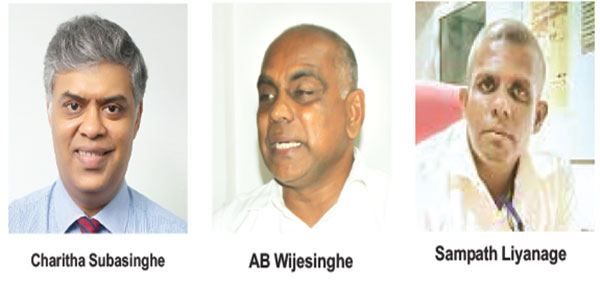
By Claude Gunasekera
The prevalent Price Gouging of almost all the goods in the country has created a double whammy to the citizens of Sri Lanka despite their hardship with Covid-19 pandemic. Price gouging is illegal during a state of emergency in the laws of consumer protection. Some countries even without laws, issue executive orders to prohibit the action during times of emergency or during a pandemic.
Consumer prices hiked at a faster pace than never before. Except for very few locally produced food & household items and some pharmaceutical, all the other prices have increased. Despite the import restrictions, all items that are permitted to import are in unaffordable prices, including products that are locally manufactured with imported raw material. Even the 100% local produce have increased their prices due to the price increase of Petroleum, Gas and other production overheads add on to it keeping additional margins on the increased cost of living.
“30 percent of Fast Moving Consumer Goods (FMCG) in a retail store is complete direct imported products and 35 percent of local products dependent on imported raw material and the rest of 35 percent only considered complete local produce. The Price Crisis is mainly with the first and second categories consisting most demanding essential goods, which is 65 percent of regular day to day consumer needs. Meanwhile prices are increased for at least another 20 percent of local produce in the complete local produce category. It is estimated that around 85 percent of consumer goods are increased in price” said Charitha Subasinghe, President- Retail at John Keells Holdings PLC, Head of Keells Super Retail Chain. He said Inflation is a biggest challenge globally and Sri Lanka has its own foreign exchange issues and import restrictions thus creating a spike of price and product shortages.
Glenfrey De Mel, Chairman Star Media Network, a graduate of the Colombo Law Faculty who is engaged in Human Rights claimed that “It is a democratic right of the masses to have a purchasing power over essential commodities while human life and the price of essentials are closely related. When prices of essentials become incompatible with the financial well-being of the people, there is no end to the agony of the poor and under privileged families”.
“The present government failed to take right decisions, at right time, to control the existing price gouging. The government failed to implement appropriate policies to balance the economy and control the cost of living of the masses. A few Big Traders dominate the entire imports of essential commodities and control the whole national market with unethical influence of the government. The government supports them for political gains without even considering the majority of their voters who elected them. Therefore, the government is solely accountable for this stern blunder” said Dinusha Sampath Liyanage, Chairman / Managing Director of Sampath Group of Companies, the holding entity of ‘Sampath Food City’ Supermarket Chain. He told ‘The Island’ that people’s elected government is responsible to provide necessary needs of the citizen especially the essential foods and services at an affordable price and create a balance between income and purchasing power while maintaining an acceptable inflation rate.
Liyanage further told ‘The Island’ that instead making allegations to the government or to the big trader, as an entrepreneur engaged in the retailing business, he could offer maximum possible discounts at all 20 outlets of the ‘Sampath Food City’ Supermarket chain at this crucial juncture as a concession to all walk in customers. He said profits are required for survival of a business, but profitability is not the prime aim at this moment since he realizes the anguish of the innocent consumer. Sampath Supermarket chain is the leading retail network in the Kalutara District with a large customer base over 250,000 patronizing their outlets. He said certain fruits and vegetables that are sold in his supermarkets are direct from his own farms and since there is no intermediary trade margins involved they could pass on that price benefit to the customer under the theme ‘Direct from Farm to the Consumer Hands’. “We are unique compared to other retail chains, since we offer discounts to all the products available in house. We offer 25% discount on fruits & vegetables and many other special discounts time to time on main essential goods such as rice, wheat flour, sugar, dhal, onion, potato, milk powder, biscuits etc.
A. B. Wijesinghe, Chairman ‘Lion Super’ retail chain, functioning 7 supermarkets in the outskirts of Kandy told ‘The Island’ “We pitch a different customer segment than the national supermarkets does. Our primary concern is the low and middle income ordinary consumer in the neighborhood simply the ‘villagers’ with a focused brotherhood relationship approach with a personalized service. He said they are catering to them with much understanding of their purchasing power and offer the best possible prices even less than the neighboring retail store. He also said the lowest price theory began not during this crisis period, but the core objective of setting up the original ‘Singhe’ retail chain was to offer the lowest price in the market. He continues to move on the same mission under the new brand of Lion Supermarkets.
“We operate 7 supermarkets in the outskirts of Kandy and launched a ‘Double Discount’ offer at all our outlets as a special concession to deprived customers during this hard time, offering extra discounts for many products through the support of our supply chain. We were able to negotiate additional discounts from most of the suppliers and offered the whole chunk direct to our customers. We are able to make our customers much satisfied and appreciated with this massive price decrease concept” said Indika Sampath, Head of Operations ‘Lions Super’.
In addition it was found all the modern trade retailers such as Lanka Sathosa, Cargills Food City, Keells Super, Laugfs Supermarkets, Arpico Super Centers, Glomark, Spar, Salinda Supermarkets, Hewage Supermarkets and many others are offering attractive discounts to their customers. Some may look at it as they do a business promotion but yet ultimately customers will benefit by their offers resulting in some what a concession at this crucial time.
“We service number of retail outlets in the country with a range of local consumer food products. We don’t produce or distribute a single imported product, but the sales turnover is dropped by 40 percent during the month of November. Products that were supplied in the previous months were still lying at retail shelves as never before. This clearly shows the inability of consumers to spend. We see the people are buying only the most important items to survive the day. Most people have reduced their usual consumption due the high cost of living. We are even struggling to operate our factories and it’s a question how we could continue to run the business and remunerate our factory workers and it’s time to retrench staff and cut down our overheads” said Jayantha Perera Chairman ‘Jayz Kitchen’ a leading manufacturing venture of spice food.

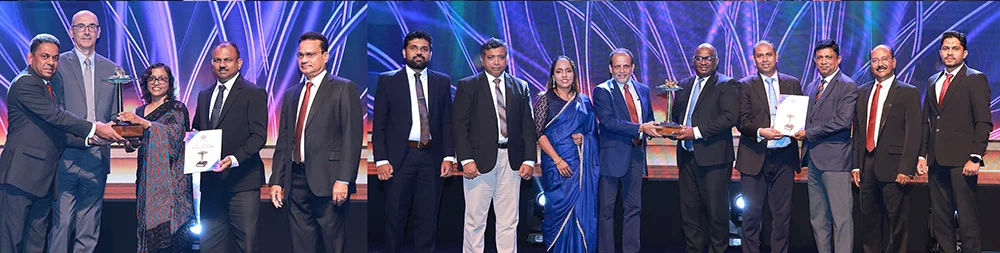
Corporate accolades underscore the alignment between its operational excellence and national development
In an era where national competitiveness is intrinsically tied to digital connectivity, strengthening the country’s digital backbone has become an urgent priority. Within this context, the evolving role of Sri Lanka’s leading telecommunications provider, SLT-MOBITEL, offers valuable insight into how technological infrastructure can underpin broader economic resilience.
Telecommunications and digital networks are foundational to economic transformation. By expanding high-speed broadband access, upgrading enterprise cloud capabilities, and bridging the urban-rural connectivity divide, SLT-MOBITEL helps reduce business transaction costs, streamline supply chains, and enable micro, small, and medium enterprises to reach global markets.
Recent corporate accolades further underscore this alignment between operational excellence and national development. SLT-MOBITEL’s triple triumph at the National Business Excellence Awards 2026 – winning in the Infrastructure and Utilities sector, Performance Management, and ICT Services categories – highlights its growing impact. Notably, the recognition of eChannelling’s contributions to digital healthcare reflects a broader strategic pivot toward integrated technology solutions.
“Institutional efficiency of this nature is critical for attracting foreign direct investment, as global partners increasingly assess a country’s digital maturity and systemic stability before committing capital,” noted industry observers.
Moreover, the company’s transition from a conventional telecom utility to a comprehensive digital solutions provider aligns seamlessly with Sri Lanka’s national digitalisation agenda. As the country pursues public sector modernisation, enhanced e-governance, and a competitive knowledge economy, the private sector must step up to deliver secure, scalable, and future-ready networks. Investments in data centres, cybersecurity frameworks, and advanced ICT infrastructure act as strategic buffers, ensuring that Sri Lanka’s economic apparatus remains agile and resilient amid future global uncertainties.
However, industry experts caution that while these achievements are commendable, SLT-MOBITEL still has a considerable distance to cover in fully enabling a truly digital economy.
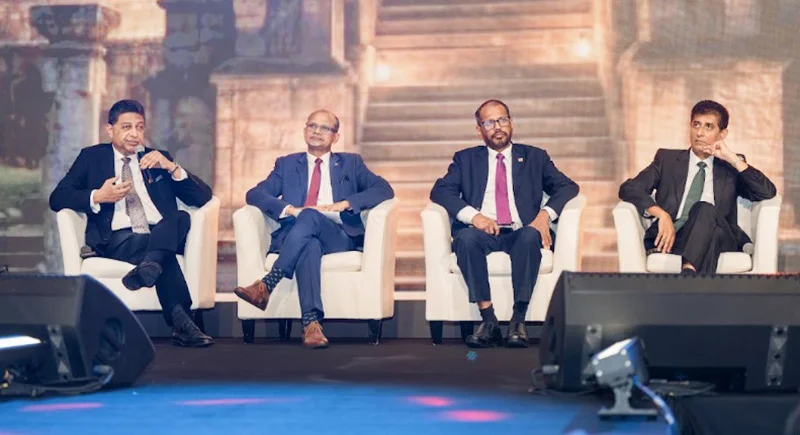
Port City Colombo (PCC) took a prominent role as Platinum Sponsor at the second edition of Sri Lanka Beyond Your Dreams, a high-level diplomatic and investment engagement hosted by the Consulate General of Sri Lanka in Dubai and the Northern Emirates. The event, held on 2nd September 2026 at the Hilton Dubai Al Habtoor City, brought together over 400 senior UAE-based business leaders, investors, diplomats, and institutional stakeholders, alongside Sri Lanka’s most senior government representatives.
The gathering was graced by Dr. Thani bin Ahmed Al Zeyoudi, UAE Minister of Foreign Trade, as Guest of Honour, and Vijitha Herath, Sri Lanka’s Minister of Foreign Affairs, Foreign Employment and Tourism. A high-level Sri Lankan delegation – including the Secretary to the Prime Minister, the Chairman of the Board of Investment, the Chairman of the Export Development Board, and the Director General of Commerce – underscored the government’s strong commitment to deepening economic diplomacy with the UAE.
In his keynote address, Minister Herath reaffirmed the centuries-old ties between Sri Lanka and the Arab region, emphasising the UAE’s vital role as a key economic partner. He stressed the urgency of finalising a Comprehensive Economic Partnership Agreement (CEPA) with the UAE, which would establish a robust framework to elevate trade, investment, and bilateral cooperation. Declaring Sri Lanka “open and ready for business,” he positioned Port City Colombo as the physical embodiment of this economic mission – a modern Special Economic Zone (SEZ) with a dedicated legal framework and competitive incentives, offering UAE investors a natural gateway to South Asia while maintaining strong Gulf connectivity.
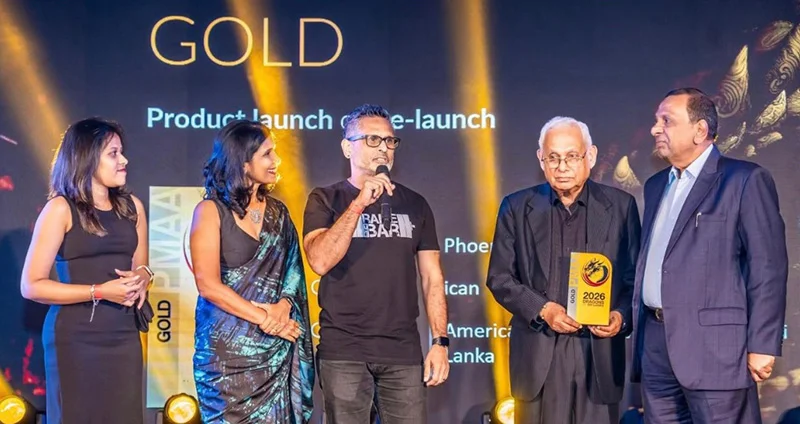
American Premium Water has secured four wins at Dragons of Sri Lanka Awards 2026, including three Gold Dragons and one Black Dragon, marking a significant milestone for the brand following its relaunch last year.
Part of the prestigious Dragons of Asia awards, Dragons of Sri Lanka brings the program’s regional platform to the local market, celebrating creative and effective marketing communications, with entries evaluated on strategic thinking, creativity, execution and impact. Established in 2000, Dragons of Asia is one of Asia’s premier results-driven marketing awards programs.
For American Premium Water, the achievements are particularly significant given that the company’s debut at the Dragons awards has resulted in four Dragons across four categories. In the distinction of Gold Dragons, American Premium Water was recognized across three categories including Product Launch or Re Launch, Cause, Environment or Sustainability and Creative Excellence while the Black Dragon was awarded in recognition of Small Budget.
Competing alongside leading brands and agencies in Sri Lanka, American Premium Water’s four wins demonstrate the strength and effectiveness of its recent work. Winning three Gold Dragons across three distinct categories highlights the breadth of the brand’s achievements, while the Black Dragon for Small Budget further emphasizes its ability to create meaningful impact through focused and efficient investment.

Trump says every adult American will get $5,000 if Republicans win midterms

Protesters mistake Pakistan’s U-19 team for asylum seekers in Portsmouth

Steps are being taken to provide accommodation facilities for 16,000 university students – Prime Minister

Showers will occur in the Western and Sabaragamuwa provinces and in Kandy, Nuwara-Eliya, Galle and Matara districts.


Sri Lanka reiterates its territory won’t be used against India

‘Dates have the highest sugar content to fight Coronavirus’

Sunday Island 27 December – Headlines

#SundayIsland 17th December – Headlines

Sunday Island – 28th March

Sunday Island Headlines – 21 March

Sunday Island – 21st February – Headlines
-

 News5 days ago
Namal remanded until Sept. 18 over Airbus deal investigation
-

 Latest News4 days ago
Tharanga creates history with Diamond League crown in Brussels
-

 News4 days ago
Dispute which triggered listed company director being detained at BIA resolved
-

 Features4 days ago
After the parade: What a traffic OIC’s walk-out tells us
-
 Opinion7 days ago
In Memory of Dr Upatissa Pethiyagoda
-

 Editorial6 days ago
Power vs Equality
-

 Latest News6 days ago
SLPP MP Namal Rajapaksa arrested by CIABOC
-
Editorial4 days ago
Arrests as theatre