
Business
Hemas Partners with WNPS PLANT to Restore Critical Hill Country Forest Corridors

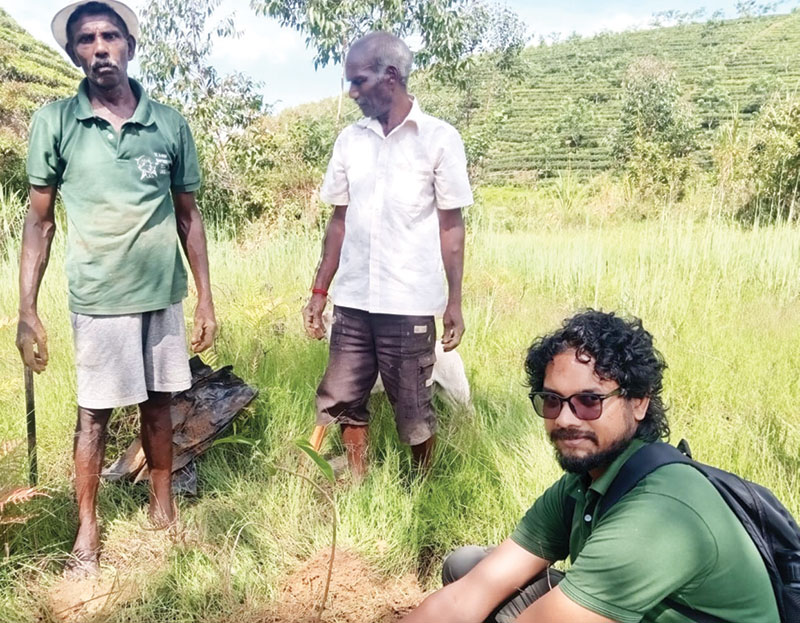
Protecting headwaters of the Kelani and Mahaweli
Hemas Holdings PLC is leading one of the largest private-sector-supported forest corridor restoration efforts in Sri Lanka’s hill country, strengthening ecological connectivity across some of the nation’s most fragile landscapes. Through its partnership with WNPS PLANT- Preserving Land and Nature (Guarantee) Limited, Hemas is supporting restoration at the headwaters of both the Kelani and Mahaweli rivers, marking a decisive expansion of corridor-based conservation in the central highlands.
The new collaboration focuses on the Hatton Oya landscape, managed by Hatton Plantations PLC, who joined hands with PLANT as the crucial land partner for this restoration journey. In this landscape, degraded riparian forests intersect with urgent reforestation needs and national water security priorities. By restoring native forest buffers along streams and reconnecting fragmented habitats across plantation-managed terrain, the initiative targets the active rebuilding of forest structure and function- restoring canopy, soil health, and waterway integrity, for the benefit of millions who depend on these river systems downstream.
Why Headwater Corridors Matter
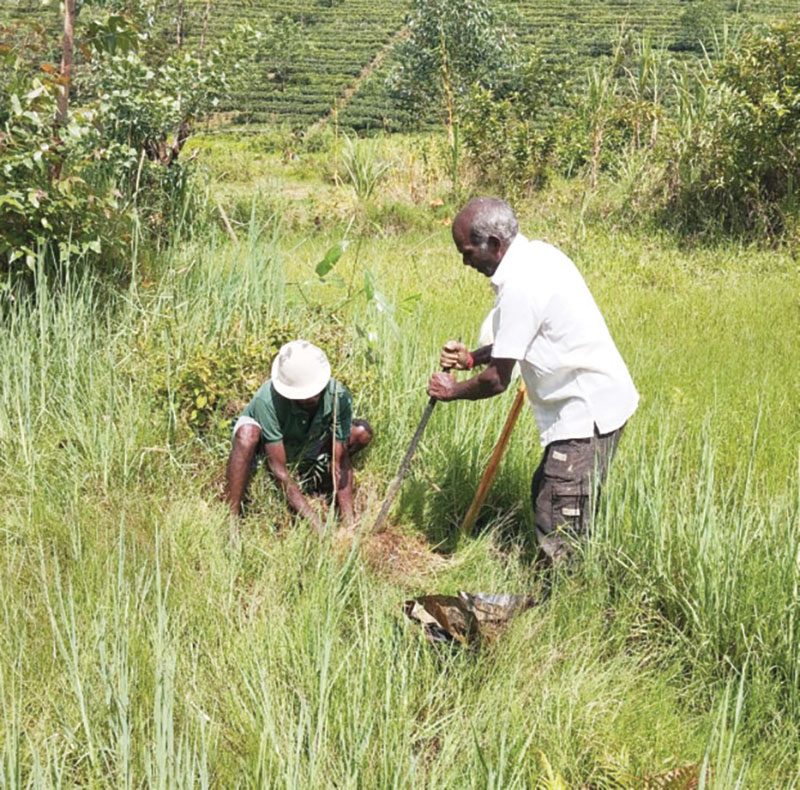
Community members during the planting activities
In Sri Lanka’s hill country, forest loss does not stop at degradation; it fragments landscapes, exposes rivers, and destabilizes slopes, putting downstream communities at risk. PLANT’s Rapid Biodiversity Assessments across the central highlands show a clear pattern: where riparian cover is intact, waterways stay buffered and forests regenerate naturally; where it is lost, streams warm, banks erode, and recovery stalls. Hatton is especially critical, sitting at the headwaters of two of Sri Lanka’s most vital rivers- Mahaweli and Kelani, meaning forest loss here threatens thousands of livelihoods far beyond estate boundaries. By restoring along watercourses and natural recovery gradients, corridor restoration protects entire downstream ecosystems from erosion, flash floods, and further forest loss.
Scaling What Works
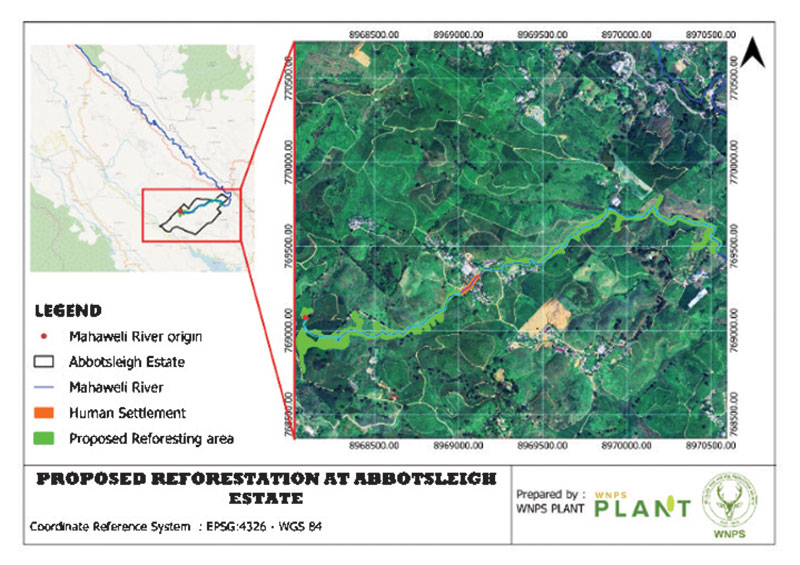
Abbotsleigh Corridor
The Hatton initiative builds on a foundation of corridor restoration already underway by PLANT in Maskeliya and Talawakelle. Hemas has already supported key restoration segments, including on Dessford in Talawakelle and on Alton along the Maskeliya Oya, and now extends its commitment through restoration at Abbotsleigh in the Hatton Oya corridor. Hatton represents a strategic escalation, to restoring forests where national river systems are born. Over 12,500 native plants will help line over five kilometers of waterway, with around 15 acres of entirely new forest being created. With this expansion, Hemas is now supporting corridor restoration across three major hill-country landscapes, covering critical headwater systems that feed some of Sri Lanka’s most important rivers.
Envisioning and Acting Before Collapse
WNPS PLANT created a totally new thinking by engaging private sector partners and pioneering the building of new forest corridors in a scalable manner in the hill country. Already working on the largest network of corridor development through a range of partners and nurseries, its corridor creation approach was conceived well before the recent climate-related crises in the hills. The Ditwah flood and landslide impacts served as a stark national reminder of what happens when headwater riparian systems are stripped of forest cover. Had these habitats remained intact, the severity of damage would have been significantly lower.
“Hill-country forests are resilient, but only where the conditions for recovery exist,” notes, Sriyan de Silva Wijeyeratne, Chairman of WNPS PLANT. “When riparian shade and forest connections are broken, regeneration stops. Creating entirely new forest corridors from scratch- replanting native species, restoring canopy, and reconnecting fragmented landscapes, is how we rebuild those conditions within working landscapes, without compromising productive land use.”
A LandscapeScale Commitment
Through its partnership with PLANT, Hemas is advancing its commitment to landscape-scale forest restoration and reforestation. The work aligns with PLANT’s Emerald Trails vision, which focuses on reconnecting fragmented privately owned spaces across Sri Lanka’s biodiversity-rich southwestern and central regions.
“Meaningful restoration means looking beyond isolated planting sites,” Ishani Ranasinghe Head of Sustainability and Corporate Communications from Hemas Holdings PLC said. “By supporting forest corridors at the origins of major river systems, we are contributing to forest recovery, water security, and climate resilience. We also believe lasting environmental impact can only be achieved when local communities are actively engaged, which is why community participation and shared stewardship are integral to this initiative.”
In Sri Lanka’s hill country, restoration is no longer just about protection. It is about active rebuilding. By replanting native forests at the sources of the nation’s major rivers, Hemas and WNPS PLANT, with the support of Hatton Plantations, are ensuring that degraded landscapes are not left to further decline, but are given the native forest cover, canopy structure, and ecological connectivity they need to recover and regenerate. In landscapes where Sri Lanka’s rivers are born, these reforestation corridors are no longer optional interventions. They are living lifelines, rebuilding forest cover, sustaining water systems, and strengthening the resilience of the hill country for generations to come. As a nation, Sri Lanka cannot remain exposed to more Ditwah-scale impacts. Proactive reforestation initiatives will be critical in future against these changing climatic conditions. Time is not on our side.


The Asian Development Bank (ADB) has approved a $100 million results-based loan to help Sri Lanka transform its technical and vocational education and training (TVET) system, equip more young people with industry-relevant skills, and strengthen the country’s competitiveness and inclusive growth.
The Skills Development System Transformation Program will support the Government of Sri Lanka’s efforts in improving the quality and relevance of skills training, strengthening links between training providers and industries, and expanding employment opportunities for youth. The program will increase women’s employment opportunities in nontraditional jobs in fields including automotive technology, engineering, information and communications technology, construction, and renewable energy.
“A skilled workforce is essential to Sri Lanka’s long-term economic transformation and competitiveness,” said ADB Country Director for Sri Lanka Shannon Cowlin. “This program will help create stronger pathways from education to employment by making training more responsive to industry needs, expanding opportunities for young people and women, and ensuring that graduates have the skills required by a modern and evolving economy.”
Though Sri Lanka’s economy is recovering, it faces skills shortages in priority sectors, high youth unemployment, and low female labor force participation. Many employers report difficulty finding workers with the skills needed in a changing economy.
Aligned with the Government of Sri Lanka’s Technical and Vocational Education and Training Sector Strategic Framework 2026–2035, the nationwide program will be implemented from 2027 to 2031 and is expected to directly benefit more than 100,000 young people through improved access to quality, employment-oriented training.
By Ifham Nizam
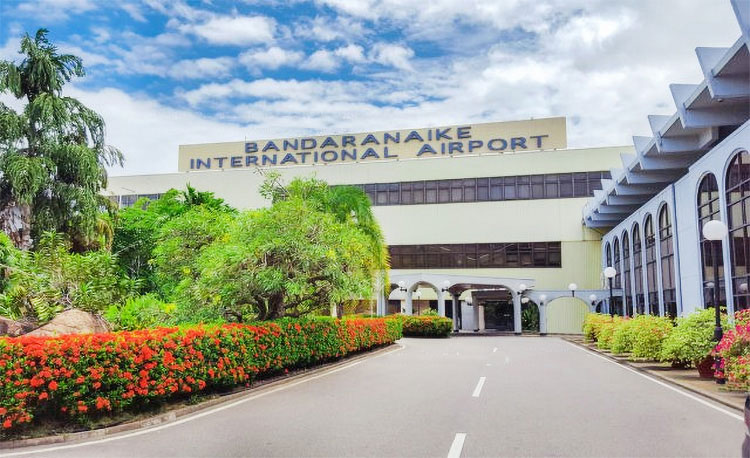
The government has cleared a USD 40.84 million and Rs. 8,548.75 million contract to build a dedicated aviation fuel pipeline from Muthurajawela to Bandaranaike International Airport (BIA), alongside a massive new fuel storage facility with a capacity of 92,000 cubic metres.
Energy Minister Anura Karunatilaka said the project represented a major investment in strengthening the infrastructure underpinning Sri Lanka’s aviation fuel supply and ensuring more reliable fuel availability at the country’s main international airport.
‘This project will provide the infrastructure required to strengthen the reliability and continuity of aviation fuel supplies to Bandaranaike International Airport, Karunatilaka said.
The contract has been awarded to China Petroleum Pipeline Engineering Company Limited, following an international competitive procurement process in which three bids were received.
The project will see a new aviation fuel storage tank complex constructed at Muthurajawela, together with the associated infrastructure required for handling and transferring aviation fuel.

By Hiran H Senewiratne
Trading activity on the Colombo Stock Exchange (CSE) gathered pace yesterday as global fuel prices began to show signs of easing, according to market analysts.In this context, both indices moved upwards. All Share Price Index up by 67.97 points while S and P SL20 up by 8.30 points.
Turnover stood at Rs 1.4 billion with seven crossings. Those crossings were reported in Sampath Bank 1.7 million shares crossed to the tune of Rs 238 million and its share price traded at Rs 140, Access Engineering two million shares crossed to the tune of Rs 159 million and its share price traded at Rs 79.50, LOLC one million shares crossed to the tune of Rs 129 million and its share price traded at Rs 129, HNB 100,000 shares crossed to the tune of Rs 38.4 million and its share price traded at Rs 384, JKH 1.9 million shares crossed to the tune of Rs 35 million and its share price traded at Rs 18.60, Hayleys 100,000 shares crossed to the tune of Rs 22.50 million and its share price traded at Rs 225 and Richard Pieris 847,000 shares crossed to the tune of Rs 22 million and its share price traded at Rs 25.50.
In the retail market top seven companies that have mainly contributed to the turnover were Sampath Bank Rs 114 million (813,000 shares traded), JKH Rs 100 million (5.3 million shares traded) LB Finance Rs 49 million (325,000 shares traded), HNB Finance Rs 30 million (27 million shares traded), HNB Rs 27 million (70000 shares traded), NTB Rs 25 million (82000 shares traded ) and Lanka IOC Rs 21 million (666,000 shares traded). During the day 65 million shares volumes changed hands in 10433 transactions.
The Banking and manufacturing sector counters performed well. In the banking sector Sampath Bank let the market while manufacturing sector especially JKH also significantly performed well. With the fuel revision Land IOC also a significant stock at the floor.
Meanwhile, First Capital Treasuries said that Ramesh Schaffter resigned as a Non-Independent Non-Executive Director with effect from October 1, to facilitate the restructuring of the company’s board.
Yesterday the Central Bank announced the US Dollar rate as against rupee. The rupee was quoted flat at Rs 330.65/80 to the US dollar in the spot market , while bond yields dropped, dealers said.

Prime Minister joins Gandhi Jayanti Commemoration

Showers or thundershowers will occur in most parts of the island after 1.00 p.m.

Unions resist tripartite EPF management plan

Two arrest warrants issued for Gnanasara thera

CA dismisses GR’s writ petition against arrest

ADB-backed virtual net metering project faces policy contradiction

‘Dates have the highest sugar content to fight Coronavirus’

Sunday Island 27 December – Headlines

#SundayIsland 17th December – Headlines

Sunday Island – 28th March

Sunday Island Headlines – 21 March

Sunday Island – 21st February – Headlines
-

 Editorial6 days ago
Birth of a bad law
-

 News4 days ago
Police remove Thileepan statue in Jaffna
-

 News6 days ago
TIN mandatory for key transactions from Nov. 1
-

 Features4 days ago
The 22nd Amendment, constitutional recovery and illiberal slippage
-

 Features4 days ago
Of foreigners as CEOs of Lankan ventures
-

 Latest News2 days ago
Gold winner Tharanga gets brand-new Honda Vezel from SLAAJ
-

 News4 days ago
Sajith rejects Jt. Opp. protest sabotage claim; SJB TU chief demands remedial action
-

 Features3 days ago
Thailand’s biggest new global star …