
News
Prez vows to reform loss-making state enterprises, implement new tax regime


Reforms to be introduced to end ‘media abuses’
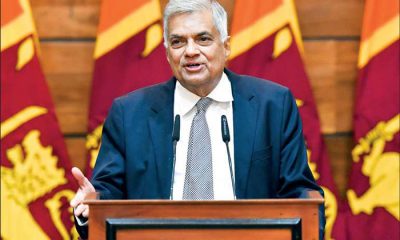
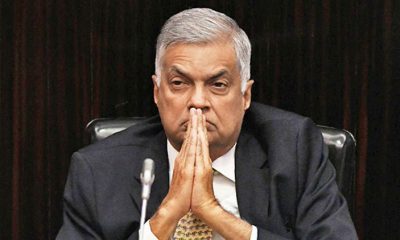
President Ranil Wickremesinghe yesterday said that the government was not in a position to lower the taxes.
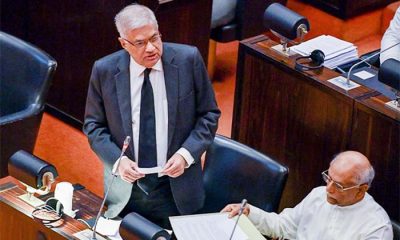
Delivering his second government policy statement to inaugurate the Fourth session of the Ninth Parliament, the President said: “Some people say that the primary taxable income should be raised from 100,000 to 200,000 rupees. Others say that the PAYE tax method should be abolished. We did not impose these taxes, willingly. However, just doing what we like will not build the nation. Even, reluctantly, the right policy should be implemented.
“If PAYE tax is abolished, the country will lose 100 billion rupees. If the tax limit is raised to 200,000 Rupees, the economy will lose 63 billion rupees. The total amount that will be lost is 163 billion rupees. We are presently not in a position to lose this income.”
President Wickremesinghe said that a question arises whether the role of the media has been properly fulfilled. “Therefore, our country needs media reforms. We have to consider both traditional media and social media. That is the reason for preparing a national policy on mass media. I’m of the view that it is important for the government, and the media industry, to take care of a collective self-regulation system. In cyberspace, we are experiencing not only fake news, hate speech, misinformation, child and women harassment, fraud and corruption. We believe that a transparent regulatory system, that includes social media network companies, is required in this regard.”
Full text of the
President’s speech:
The moment the schoolchildren sang the National Anthem, and Jayamangala Gatha, during the last Independence Day Celebration, I was convinced of the need to secure their future. Are these children confident of their future?
Commonwealth Secretary General, Patricia Scotland, who visited Sri Lanka for the Independence Day Celebration, had discussions with groups of youth in our country. They had pointed out that their confidence in the future has been eroded due to the developments over a long period of time. Do they have full confidence in their future?
The day after Independence Day, a special supplementary was published in the Sunday Times newspaper, where some youth had expressed their opinions, regarding the present situation in our country.
Mathisha Udawatta says…
While leaving the country is a constant resonating thought, there is still a smallest spark inside me that’s holding me close to home. I intend not to let it die. I have not given up on my Sri Lanka yet.
Clifford Fernando has
the idea that…
I won’t migrate, but I sincerely hope there will be a change in the situation in Sri Lanka. All our attitudes need to change, better discipline is needed, people need to obey rules and show more empathy towards each other.
Cilani Wijesinghe says…
I don’t want to leave my country. I wish to help it come out of the situation it is in, currently. I also don’t want the people leaving at a time the country needs them the most, only to come back when things are better.
While reading these comments, I was reminded of the twins who came to meet me, recently, in Anuradhapura. These girls met me at the end of the ceremony of awarding credentials to Atamasthanadhipathi, Ven. Pallegama Hemarathana Thera. Namadi and Chenuti Perera are studying in Year 5, at Maliyadeva Balaka Vidyalaya, Kurunegala. The rendition of their song ‘I will not leave the country’ was presented to me in a CD. I request the television channels to broadcast that song after my speech today.
These children, and youth, are the future generation of our country, who wish to rebuild the nation, without leaving. It is our responsibility to create a country where they can live freely. Therefore, this is your responsibility, the Honourable Members of the House. This is also the responsibility of every Sri Lankan.
I believe everyone remembers the situation the country was in when I addressed the opening of the previous Session of the Parliament. You may recall the country’s situation when the last Budget was presented and also seven to eight months ago.
Schools closed. Examinations could not be held. Agriculture and plantation industries collapsed without fertiliser. Farmers were helpless. The tourism industry declined. Power cuts of 10 to 12 hours imposed. Gas almost over. Residents of urban houses lost being unable to cook. People had to waste days in queues for kerosene, petrol and diesel. Lives were sacrificed by citizens who were exhausted staying in queues. Unable to bear this pressure, people took to the streets in protest.
However, the situation is different at present. Due to the measures taken, we have been successful in reducing this burden gradually. Now there is stability in the economy. People are comfortable. We have been able to safely guide Mother Sri Lanka a long way across a challenging course. It was not an easy journey. However, it is not yet over.
We committed to securing the financial system that was on the verge of collapse. Government expenditure was controlled. Measures were taken to increase tax revenue.
We know that tax revenues decreased due to decisions taken in the past. As at 31st December 2019, 1.6 million businesses, companies and individuals paid taxes. However, by December 2021, the number of tax payers decreased to 500,000. Government tax revenues fell to an all-time low.
Realizing the destruction this caused to the economy of the country, many institutions and organisations requested to revert to the tax system which existed in 2019. In April 2022, the Sri Lanka Administrative Service Association (SASA) presented short-term proposals for economic and social revival.
Section 3.3 of said proposal states,
• Re-introduction of PAYE (pay-as-you-earn) tax system
• All officers of state enterprises should personally pay taxes from their salary and not through the relevant institutions and employers
• Re-introduction of Withholding Tax
• Suspension of all tax exemptions
• Revision of the income slabs for taxation and the level of turnover subject to Value-Added Tax
The SASA presented this proposal even before the negotiations with the International Monetary Fund were initiated. Presently these are the suggestions we have implemented.
However, it is the same people who requested such tax policies, who are criticizing the present tax regime. Introducing new tax policies is a politically unpopular decision. Remember, I’m not here to be popular. I want to rebuild this nation from the crisis situation it has fallen. Yes, I’m ready to make unpopular decisions for the sake of the nation. People will realize the importance of those decisions in two to three years.
Some people say that the primary taxable income should be raised from 100,000 to 200,000 rupees. Others say that the PAYE tax method should be abolished. We did not impose these taxes willingly. However, just doing what we like will not build the nation. Even reluctantly, the right policy should be implemented.
If PAYE tax is abolished, the country will lose 100 billion rupees. If the tax limit is raised to 200,000 rupees, the economy will lose 63 billion rupees. The total amount that will be lost is 163 billion rupees. We are presently not in a position to lose this income.
Due to the present economic crisis, the tax burden is more strongly felt. There is an important fact to be considered. At present, most of the taxes are paid by the general public. Since taxes from individuals and institutions directly liable for taxes are not being properly collected, all Sri Lankans pay huge sums of money as indirect taxes. A large number of people who are not liable to pay taxes, pays it by default. These taxes are called indirect taxes.
In other countries, most of the taxes are collected from a higher income bracket. In 2021, in India – 50% direct tax, and indirect 50%. Bangladesh – direct tax 32%, and indirect 68%. Nepal – direct 31% and indirect tax, 69%. Indonesia – direct tax 40%, and indirect 60%. Vietnam – direct tax 31% with indirect being 69%. Thailand, direct taxes 37%, and indirect 63%. Malaysia, direct tax 66% and indirect 34%.
However, the situation in our country is different. In 2021, our direct tax was 21% while indirect was 79%.
Therefore, we should take action to rectify this tax divergence. Then the tax burden on the general public will be reduced.
Inflation rises during an economic crisis. The price of goods increase. Employment is at risk. Businesses collapse. Taxes increase. It is difficult for all sections of the society to survive. However, if we endure this hardship for another five to six months, we can reach a solution. If we continue in this manner, we will be able to give an additional allowance to public servants in the third and fourth quarters of the year, and give concessions to the private sector. The public would become prosperous, with income sources being increased. The interest rate can be reduced. In another three years, the present income can be increased by 75 percent.
Despite difficulties, we have taken measures to protect the vulnerable groups suffering due to the economic crisis. This has been fully supported by the World Bank.
However, the welfare system in our country is distorted. Even those with higher incomes are subsidized. We are taking measures to change this situation. Those in absolute poverty are identified. A programme is being prepared to finance them directly through a welfare bank account.
However, some groups are trying to disrupt this process. They uphold the reduction of taxes, raise wages, etc., if they come to power, and attempting to organize various activities to sabotage the present process.
I never promise what cannot be delivered, and never lie in seeking power. I am currently implementing all the pledges in the Budget speech and the last opening session of the Parliament. Through this, we have been able to create some stability in the economy. It is clear to many that the future cannot be built on falsehood.
We are now moving from a negative economy towards a positive one. By the end of 2023, we can achieve economic growth.
When I first addressed this Parliament, as the President, the inflation of the country was 70 percent. Due to the measures we have implemented, it was reduced to 54 percent in January, 2023. We will strive to make it a single digit by the end of 2023.
By the end of 2022, we were able to increase the export income to USD 13 billion. Local entrepreneurs worked hard towards making this possible. Also, we were able to limit the cost of imports to a level of USD 18 billion. Migrant workers have been extremely supportive to the motherland at this critical juncture. By the end of 2022, their remittance reached USD 4 billion in foreign exchange.
Our entrepreneurs and migrant workers made this commitment in the context of political parties and groups influencing them on diverse fronts. They have proven that they increase export revenues and remit money to Sri Lanka not according to the political party in power, but for the sake of the country. All of them deserve our respect.
We have now been able to increase the foreign reserves which had fallen to zero up to USD 500 million.
We were able to revive the tourism sector. Tourists visited Sri Lanka, even in the midst of political street protests. Sri Lanka was designated among the top 10 tourist destinations in the world. The number of tourists, who visited Sri Lanka in the month of January, is over 100,000, which is a record.
We are making progress in all sectors, in this manner.
Some time ago, Greece was in a serious economic crisis ,similar to that of Sri Lanka, and declared bankruptcy. To overcome this crisis, the salaries of public servants were reduced by 50 percent. It took them 13 years to emerge from bankruptcy and repay their debts. During that period, they received aid from the IMF, three times.
However, if we continue according to this plan, we can rise out of bankruptcy by 2026. As I have been continuously appealing, if all the parties, in this Parliament, join the process to build the country, we would be able to extricate from this crisis, even earlier.
We left the IMF in 2020. That short-sighted decision has also affected the current situation. Bangladesh was able to obtain IMF assistance early, as they had continued to be in that process. We had to initiate the process, from the beginning. However, amidst all the difficulties, we started this journey.
Now we are negotiating debt restructuring with our creditors. The only other way is to get support from the International Monetary Fund, which could be progressed, based on negotiations. We have no other way but this process. I request the political parties, criticizing our course of action, to please present their alternative solution to this House.
We have now reached the final stage of negotiations with the International Monetary Fund. We were able to reach a basic agreement, last September, and now there is the debt sustainability programme.
In this context, we also discussed with the Paris Club. We have continued negotiations with India and China, which are not members of the Paris Club. India has agreed to debt restructuring and has extended financial assurance. On the one hand, the Paris Club and India are continuing discussions. We are in direct discussions with China. We have received positive responses from all parties. We are now working towards unifying the approaches of other countries and that of China. I express our gratitude to all the countries that support us in this effort.
The Paris Club announced yesterday that they will extend unstinted support for the Agreement with the IMF and debt restructuring. With that announcement, we receive the Paris Club endorsement. They took this decision, after a round of discussions with their member countries, and in addition India, as well as the World Bank, and the IMF.
This decision, for us is a great strength and courage, for which I am grateful.
The international support demonstrates that we are on the right path. This is reconfirmed by the pressure on the public becoming less than before.
The tourism sector is reviving. The collapsed agriculture and plantation sector is recovering. It is predicted that the harvest will increase in the Maha Season. Financial provisions have been allocated to purchase these crops. A plan has been implemented to process paddy to rice, worth 20 billion rupees, with its distribution free of charge to low-income families, with 10 kilos of rice being given twice a month. Power cuts have now reduced. School activities are returning to normal. Children have commenced undertaking educational trips. Exams are being conducted. Continue on this path and build the country, or destroy this path and ruin the country with sloganeering politics? The decision is before us.
We know that the decision of the majority of people who love the country and do not have narrow political agendas, is to continue in this manner.
Sri Lanka’s economy today is severely damaged. Its malaise needs to be immediately diagnosed and treated accordingly. However, people are pointing to the mistakes made by those in-charge and are urging them to be punished first.
However, I try to cure the malady first, after which we can take further measures. We should prioritize curing the ailment, which is what I am doing.
However, as soon as this critical condition is addressed, we will take another step to eliminate the recurrence of such a crisis. For this purpose, we are introducing an Anti-Corruption Bill. We are taking steps to include the “Stolen Assets Recovery Initiative (StAR)” into this Bill, together with the World Bank and the United Nations.
By obtaining the agreement of the IMF, we will be able to stabilize the economy. However, we have more steps to take in moving forward.
With the certification by the IMF, we would be able to receive loan assistance from other international financial institutions, such as the World Bank, Asian Development Bank etc. Accordingly, the confidence of investors will also be established. Therefore, there will be a tendency for foreign exchange to flow into the country. We should use such financial aid for the development of the country through efficient management.
Together with this, we can get a significant growth in the tourism industry. A number of development projects that have been halted can also be resumed.
Also, the economic reforms required for our country should be implemented. We neglected economic reforms for the sake of narrow political agendas. The burden of loss-making government institutions was borne by the people. Last year, the loss of state-owned enterprises was approximately 800 billion rupees. The people have been bearing all that loss for many years. However, they do not realize this situation. They bear the burden of these loss-making government institutions. Even the most destitute have to bear the cost of maintaining these institutions.
Therefore, we should immediately carry out economic reforms. Countries like Thailand and Vietnam that have taken such steps are moving forward day by day. Otherwise it would retard our economic development.
We need to accurately identify the role of the government in these reforms. The strategy of the government should be to guide the private sector in business activities, while being in the background. Government should intervene only in areas such as monitoring functions, public facilities and maintenance of law and order. The private sector should be used as the driving force of the economy. Also, private entrepreneurship should be utilized to strengthen foreign economic relations.
There are many instances where state sector land and buildings are wasted without being used for any productive purpose. We expect to use them productively. There are a number of fertile lands owned by government institutions, which have become forest land. There are thousands of acres of abandoned paddy lands. We are working towards utilizing all that effectively for agriculture.
Also, projects based on credit will be implemented in the future only based on an evaluation process. It is imperative to stop the practice of directing public investment for political reasons.
In the past, the banking system has been weakened since these institutions have given grace periods for the recovery of loans. Now that the grace period is over, the banks are re-vitalizing.
At the same time, our attention has been focused on businesses that have collapsed due to difficulties. With the growth of the economy, we are taking measures to provide them with the necessary facilities to rebuild.
We expect to use technology to the maximum for increasing production, providing goods and services, industrial and agricultural modernization etc.
Currently, the revenue of the country is 8.15 percent of the GDP. It is our expectation to increase this to 15 percent.
An international organization with experience in solving financial crises made the following statement about our country.
“Sri Lanka has a reputation for ‘kicking the can down the road’ – this leads to problems avoided, rather than solved in the long term.”








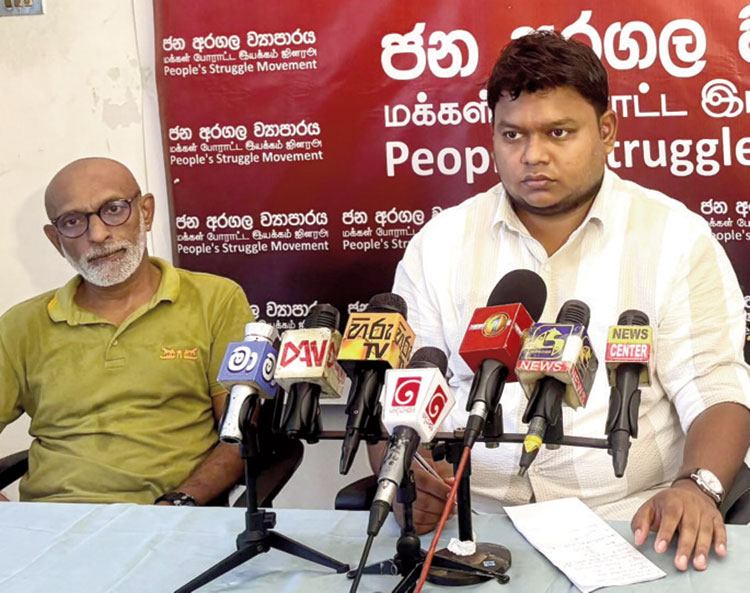
The Frontline Socialist Party-backed People’s Struggle Movement is set to stage a protest march in Colombo today (03) against what it describes as the growing tax burden on the public and the rising cost of living.
The organisers are due to commence the “Colombo March Against Unjust Taxes” at noon from Campbell Park, Borella. The FSP has also been mobilising support for the protest in Colombo and its suburbs in the run-up to the event.
People’s Struggle Movement National Executive Council member Wasantha Mudalige, speaking at a media briefing in Nugegoda yesterday (02), called on the public to join the protest, saying the movement intended to bring the tax burden faced by ordinary people to the forefront.
Mudalige alleged that successive tax measures had placed an excessive burden on households, particularly through taxes on food and educational items. He also criticised the Government over what he described as the high cost of basic food items and the difficulties faced by parents in meeting their children’s educational expenses.
He accused the Opposition of failing to adequately address the issue, claiming that opposition parties raised such concerns, mainly during election periods.
Mudalige also criticised the Government for what he described as a departure from promises made before the 2024 presidential election regarding taxes on educational equipment.
He questioned the tax burden on food items, citing figures of Rs. 100 per kilogramme on dried sprats, Rs. 310 per kilogramme on chicken and Rs. 11 per egg.
He further alleged that while ordinary people were bearing a heavy tax burden, wealthy groups were receiving tax concessions. He also criticised the Government’s economic programme and its implementation of measures associated with the International Monetary Fund (IMF).
The movement has framed today’s protest as part of a broader campaign over the cost of living and taxation. The People’s Struggle Alliance has separately announced that the Campbell Park demonstration will be the first in a series of public actions, with further protests planned in November.
Mudalige said the movement would continue to take the issue to the streets and urged the public to participate in today’s demonstration.
People’s Struggle Movement National Executive Council member Jayantha Amarasinghe also addressed the press.
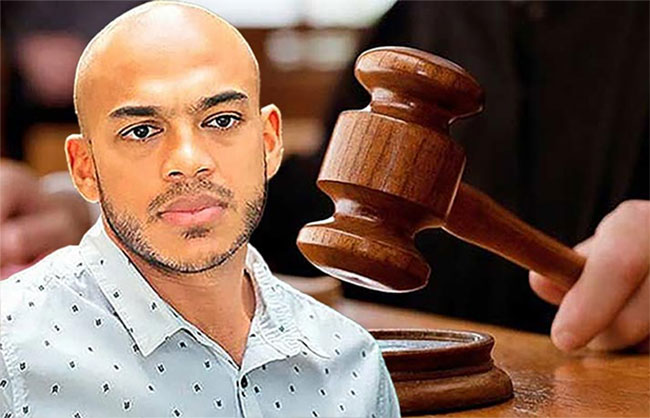
The Colombo High Court yesterday postponed the trial in the case filed under the Prevention of Money Laundering Act against Yoshitha Rajapaksa, son of former President Mahinda Rajapaksa.
The case was taken up before Colombo High Court Judge Udesh Ranatunga, with Yoshitha Rajapaksa, who is currently out on bail, appearing in court.
The trial was postponed as the President’s Counsel appearing for the defence was indisposed.
The Attorney General has filed the case against Rajapaksa, alleging that he committed an offence under the Prevention of Money Laundering Act by purchasing five plots of land in Dehiwala and Ratmalana, worth more than Rs. 73 million.
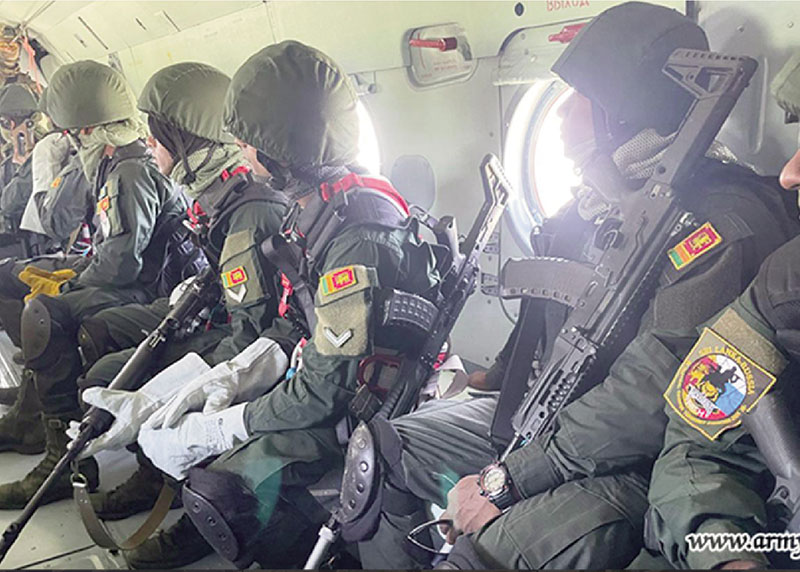
A contingent of the Sri Lanka Army, comprising 20 officers and 55 other ranks, participated in the combined military exercise ‘Wolverine Path II–2026’, conducted with the Armed Forces of the Russian Federation in Vladivostok, Russia, from September 18 to 25.
According to the Ministry of Defence, the exercise primarily focused on counter-terrorism operations and provided participating troops with training in a challenging combined operational environment.
The exercise included a range of tactical activities, including heli-rappelling, close-quarters battle (CQB), ambush operations, sniper firing, drone operations, buggy training and combat medical support.
The Ministry said the training enabled Sri Lankan troops to further develop their combat skills, tactical coordination and operational readiness.
It also provided an opportunity for the two militaries to exchange professional knowledge, operational experience and tactical expertise. Sri Lankan personnel gained exposure to training methodologies, tactical approaches and operational practices adopted by the Russian Armed Forces, the Ministry said.
The participation also enabled the Sri Lankan contingent to identify lessons from the joint training and share its own experiences with the Russian military.
The Sri Lankan contingent returned to the country following the exercise and arrived at Mattala Rajapaksa International Airport on September 28.
The Ministry said participation in the exercise contributed to enhancing the professional knowledge, tactical awareness and operational preparedness of Army personnel while promoting military-to-military cooperation, mutual understanding and professional relations between Sri Lanka and Russia.

Turkish court detains football refereeing chief pending corruption trial

Ten injured after car crashes into rugby supporters in Australia

Polls open in Latvia against backdrop of perceived Russia threat

Abhishek, Tilak and spinners secure gold for India at Asian Games again

Tharindu Rathnayake, bowlers secure Asian Games Bronze for Sri Lanka

G7 to release 100 million barrels of oil and diesel after Trump export ban threat

‘Dates have the highest sugar content to fight Coronavirus’

Sunday Island 27 December – Headlines

#SundayIsland 17th December – Headlines

Sunday Island – 28th March

Sunday Island Headlines – 21 March

Sunday Island – 21st February – Headlines
-

 News6 days ago
Police remove Thileepan statue in Jaffna
-

 Features6 days ago
The 22nd Amendment, constitutional recovery and illiberal slippage
-

 Features6 days ago
Of foreigners as CEOs of Lankan ventures
-

 Latest News4 days ago
Gold winner Tharanga gets brand-new Honda Vezel from SLAAJ
-

 News6 days ago
Sajith rejects Jt. Opp. protest sabotage claim; SJB TU chief demands remedial action
-

 Features4 days ago
Why Sri Lanka needs an Inclusive Civic Nationalism – urgently
-

 Features5 days ago
Thailand’s biggest new global star …
-

 News3 days ago
US-assisted ‘Ice’ detection: NPC to examine IGP’s move to transfer drug-busting team