
Features
Presidential manifestos promise Sri Lanka poised to be Paradise Regained


 All four major contenders (no need to mention them) for the presidency come September 21, have released their manifestos: magnificently made castles in the air with a magnum of imagination; irresponsibly airy fairy; frankly tall tales. The latest released was by Namal Rajapaksa, with his father close at hand and four paternal uncles planting kisses on his cheek which translates for those watching – elders’ approval. The moot point as pointed out by a TV news reader was his promise to eliminate corruption. We presume it’s not of the ordinary people, you and me, but from those who govern us. So rich his saying this.
It will be a herculean task since corruption is rife in this country. It was not always present. We oldies remember MPs, Ministers, top government administrators who possessed the Four Absolutes: honesty, purity, unselfishness and love of country; they truly did from DS and his Ministers down to the 1960s or thereabouts after which corruption stealthily stole in. We had a government-to-government complaint, Cass believes from Japan, reporting that a Cabinet Minister solicited a commission from a foreign company. In-house enquiry followed the complaint, and absolution to the corrupt minister. Result: the cold shoulder from this once biggest benefactor to SL.
In conclusion, we congratulate Namal Rajapaksa on mentioning so forcibly his primary task as Prez of SL: wiping out corruption. He might have to change his surname, first.
A perfect, dignified, modern and proud life
This kind of life is promised in a comfortable, safe, rich, and steadfast country. Yes, that is what the NPP manifesto promises us, the citizens of Sri Lanka who are burdened far too heavily, suffer far too much and are denied even the bare basics of life due to high prices and poverty increasing among us. These burdens were heaped on us by corrupt and ineffective governments.
Her first reaction was to laugh – a bitter laugh, her mind going back to 1971 and 1989 and remembering that the country as a whole was made to suffer the very opposites of what AKD promises to do if he becomes Prez of Sri Lanka.
A comfortable country is promised. When the JVP rose up twice with arms to capture power, life for most in SL became totally uncomfortable and many were robbed and tortured and killed. The country was far from safe, rather it was mired in turmoil. Infrastructure being destroyed particularly in the late 1980s, impoverished the country and it became far from steadfast.
But let’s accept the fact the JVP within the NPP is entirely changed now. Its manifesto with their policy statement of 230 pages, after promising the four blissful states mentioned above, assures “a new constitution, an efficient health service aimed at disease prevention in order to create healthy and fit citizens, removal of duty free vehicle permits for Members of Parliament (MPs), changes in the tax system, a pensions for all, limitation of ministerial positions to 25, optimum use of mass media and a free media industry.
” The manifesto also focuses on “methods to recover stolen state assets; sustainable bio world providing a green life for all; a big change in the salary of the Police and to make the Police service people-friendly; making the judicial process smoother and more efficient by taking steps to introduce modern technology and providing proper training to the judges and staff; establishment of a new relief bank to restore the economic activities of micro, small and medium enterprises and provide relief for outstanding loans; establishing a new National Development Bank to provide long-term financing to entrepreneurs, start-ups and business expansion; digital governance; renegotiating with the IMF on how to contain and implement a more robust and accurate programme to alleviate the hardship of the poor; an efficient workforce and a dignified career; a meaningful and fulfilling life for persons with disabilities and a monthly allowance of Rs 5,000 to senior citizens in need of subsidy.”
Jaundice-free comments
After heaving a huge sigh of relief going through all those promises, but considering each offer with no prejudice, Cassandra expresses thoughts that arose in her. Her opinions are worthwhile as she is old, experienced, still optimistic about the country’s future, is unbiased politically and may be expressing other thinking women’s opinion.
First remark: Utopian in many of the promises. Unlikely implementation of such as the recovery of stolen state assets. Promised by all parties; never even attempted so far. Maybe NPP will succeed. Blatant corruption may cease.
However, praiseworthy in many others and to be endorsed fully by us citizens. Approved particularly is the curtailment of number of the Cabinet Ministers and freebies and concessions to MPs like tax free import of luxury vehicles. Added to this should be pensions for MPs after five years and assurance of the stopping of govt spending on luxury living for past Presidents and their spouses.
We women are suspicious and disapproving of interference with the judiciary. “Proper training of judges” – whatever does that mean? “Making the judicial process smoother and more efficient …” the manifesto says by introducing technology. But a JVP member very clearly stated that village level courts would be appointed. An Editor termed them kangaroo courts and that sent shivers down our spines.
We have read about the atrocities committed by Pol Pot in Cambodia, where intellectuals were made to work in paddy fields or cut trees in forests and their kangaroo courts. The JVP of long ago expressed the idea of uprooting tea from estates and growing manioc. Fears linger.
We are skeptical about opening up new banks. We have more than enough of banks, some dedicated to helping the farmer and minor entrepreneur. Improve them not overload the banking sector. We were shocked to learn that debts to the People’s Bank by many rich businessmen were written off recently. Also, the idea of re-negotiating with the IMF. Rather the government should make every Sri Lankan to work hard to improve the economy of the country.
“An efficient workforce and a dignified career” are promised in the manifesto. A huge yes to the first promise. Improving the work in all government offices is imperative, and we believe it is the NPP that can achieve it best and most successfully. There is no work done in offices with the election in close view. At other times too its laissez faire – do minimum but strike work for salary increases. Even schoolteachers behave thus. Next to the elimination of corruption is the need to make efficient the public service. The promise of “a dignified career” is a promise hanging meaningless.
We are, as of now, free of protests and strikes that were daily disturbances to the running of the country and our lives. Every sort of worker from labourers, farmers, teachers and university staff struck work, including doctors. Who were behind these strikes; who the instigators and facilitators? Is it that strikes are banned once date of an election is announced or is it that the instigators are occupied and busy electioneering? There is a warning issued by Ordinaries that strikes may occur drastically if the manifesto Cass comments on does not win its leader the presidency. Anything is possible in this Land like no other!

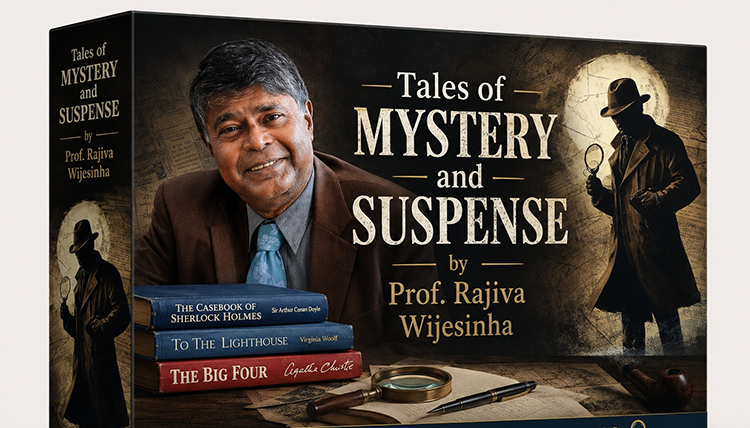
Tales of Mystery and Suspense 3
The murder, in a private dining room in the house, is of a financier with whom the government was negotiating a loan. When this seemed difficult the Minister of Home Affairs agreed to lead discussions, since he had known Mr Oissel the financier when they were young. Hence the private dinner, but when the Minister stepped out for a vote, Oissel was shot just as the Division Bell rang.
The Brahms and Simon detective novels, the first of which I wrote about last week, were amongst several books by the pair that Robert Scoble gave me when I was in Australia towards the end of last year. Amongst them was another thriller of a very different sort, though that too was written and set between the wars.
Called The Division Bell Mystery, it was set in the House of Commons, the first such book I believe, and was by Ellen Wilkinson, a Labour MP who became Minister of Education in Attlee’s government after the war, having served previously as Parliamentary Private Secretary to several ministers. Her hero Robert West is also a PPS, but a conservative, and his Minister, of Home Affairs, is an old style aristocrat, not much loved by the less orthodox Prime Minister, who nevertheless needs his support on many occasions.
The murder, in a private dining room in the house, is of a financier with whom the government was negotiating a loan. When this seemed difficult the Minister of Home Affairs agreed to lead discussions, since he had known Mr Oissel the financier when they were young. Hence the private dinner, but when the Minister stepped out for a vote, Oissel was shot just as the Division Bell rang.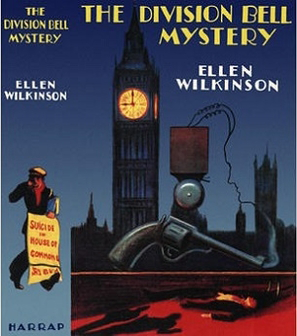
West was just outside the door when the shot was heard, and when he opened it saw only the dead body with a revolver beside it. The assumption that this was suicide was however challenged by Oissel’s grand-daughter Annette, who was his heir, on the grounds that he would never have killed himself. But her view was given greater credence by the Inspector put in charge of the case who said there were no burn marks on the body which would have been the case had Oissel fired the pistol himself.
Matters are complicated by the fact that Oissel’s flat had been burgled while he was at dinner, and Jenks the policeman allocated to him, who had served the Home Secretary and seemed more acceptable to Oissel than someone from the Security Service, had been killed. Matters get even more complicated when Annette says her grand-father’s notebook in which he wrote his secrets in cipher was missing.
That was found in Jenks’ pocket, and then a photographer came to West to say he had been asked by Jenks to photograph this. More worryingly for West, he finds in the Home Secretary’s drawer a few pages from the notebook with what appears to be an interpretation of the cipher.
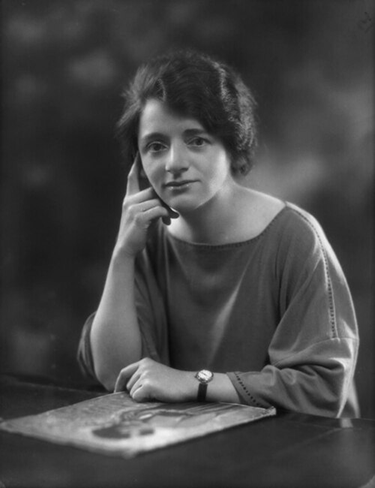
Ellen
Overwhelmed by all this he confides in a recently created peer who knows all about the business world, who insists that they leave the house party at which they had met over dinner and discuss the matter with the Prime Minister who promptly summons the Home Secretary.
But the Home Secretary had gone to Scotland to launch a ship over the weekend, so the meeting could take place only on the morning of the Monday, when difficult questions were expected on the adjournment motion. He admits at the meeting that he had got Jenks to take the notebook, and also that he knew the code since it had been created by him and Oissel when they were young.
He thought he should resign, and even contemplated suicide, but the Prime Minister told him that that would be even worse for the government, and that he should go home to bed. The Prime Minister said that he himself would handle the question, which he did with aplomb, insisting that confidentiality was needed until the inquest. What had happened would be made clear then, he declared, leaving West and Inspector Blackit and Lord Dalbeattie what seemed the impossible task of solving the murder.
Dalbeattie had suggested that West ask a female Labour MP who was very fond of him to get what information she could from the staff. That there was some involvement there had become clear when West, going back late one night to collect a briefcase he had left in a dining room, found someone lurking in the dark in the corridor outside the private rooms. Room J, where the murder had happened, was meant to be guarded throughout by a policeman, but he had left the room having felt dizzy, and it seemed that his coffee had been drugged. West’s sudden appearance however had prevented anyone else getting into the room.
Dalbeattie decides to recreate the scene of the murder and has a dinner party in Room J on the Tuesday night, inviting West and Annette and the society hostess at whose house he had met, and also Patrick Kinnaird, an MP who was engaged to Annette, as well as the Permanent Secretary to the Home Ministry.
After coffee Inspector Blackit comes in with Grace, the Labour MP who had got the confidence of the staff, and a journalist who had also been helpful, and just as they say they think they are on the track the division bell rings. Grace jumps up and tells the Inspector that that provides the solution and they get a ladder, and sure enough find the revolver in the space where the bell is. Directed at the place where Oissel had sat, it had been primed to go off with the ringing of the bell. The waiter who had helped to set things up made clear who the murderer had been.
The reason for the murder and the confused motives of all those involved made for a fascinatingly intricate mix. But also impressive in the book were the descriptions of the isolation possible in the crowded premises of the house, the forceful characterization of the members – Grace based on the writer, the society hostess based on Nancy Astor, the first female MP – and the laid back nature of senior politicians which West realized had to change in the brave new world of high finance.

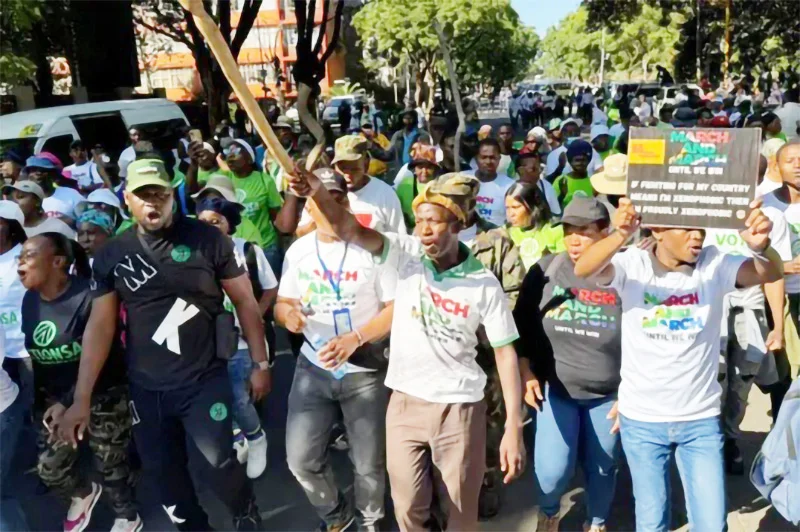
 The current outbreak of anti-immigrant protests in Durban, South Africa is bound to have taken many a subscriber to value-based politics or political idealism quite by surprise. After all, this is evidence that despite the historic accomplishments of nation-builders of the stature of the late President Nelson Mandela it cannot be taken for granted that identity politics, including racism in its worst forms, is no more in South Africa.
At the time of this writing details are scarce on the substantive root causes of the protests but it could very well be that economic grievances, particularly on the part of the majority community in South Africa, are contributing considerably to the disaffection. Shrinking employment and material prospects are likely to figure majorly among the factors igniting the unrest.
Fortunately, the local authorities in Durban are losing no time in calling for peaceful co-existence among the relevant communities and are pointing to the vital importance of stepping-up national integration processes. Apparently, immigrants in sizable numbers from neighbouring countries are present in Durban. However, international TV footage of the protests quoted some local authorities as saying that the majority of the immigrants in some centres that housed them were not illegal migrants and had the documents that entitle them to be in Durban.
In the Durban protests the world has fresh proof of the socially divisive consequences of the gathering globe-wide economic disaffection, touched off particularly by the continuing crisis in West Asia. Going ahead, the world would need to brace for increasing identity-based unrest of the kind it is just witnessing in South Africa.
Considering that the material lot of ordinary people everywhere could only aggravate progressively, with the US and Iran showing no signs of negotiating an end to their confrontation any time soon, it will be left to the more democratic and progressive sections of the world community to initiate positive measures collectively to bring a measure of relief to the discontented.
The swiftness with which such relief will be provided would depend crucially on the importance those sections taking up these undertakings attach to value-based politics as opposed to Realpolitik of power politics.
Going by these yardsticks, Italy could be considered to be moving in the right direction. Recently Italy came to the fore in initiating the collective named, ‘Rome Coalition for Food Security and Access to Fertilizer’, which has as one of its aims the swift provision of fertilizer to economically weak African countries.
In a recent statement Italian Minister of Foreign Affairs and International Cooperation, Antonio Tajani, said that a principal aim of the project was to ensure that the farmers of Africa gained easy access to fertilizer, considering that food security is a growing concern among some of Africa’s economically vulnerable countries.
The statement went on to mention that some 30 countries hailing from the Mediterranean region, the Middle East, the Balkans as well as the FAO had been invited to join the coalition. The venture is far-seeing in that food security is main among the reasons for social discontent which in turn could degenerate into endemic political turmoil and bloodshed. Separatist violence and geographical fragmentation of countries wouldn’t be too far behind these developments, as Africa itself has often proved.
It is hoped that more G7 countries would take the cue from Italy and do what they could to ease the hardships of economically distressed countries, particularly of the global South. In these efforts they would need to break rank with the US, which is today brutally indifferent to the consequences of its policy of making ‘America First’, come what may.
Going by current developments, the Trump administration seems to be blithely oblivious to the wider, deleterious effects of its policy course in West Asia. Besides rendering Iran militarily and otherwise impotent nothing else seems to matter to Washington, as regards West Asia. This is policy short-sightedness of an extreme kind. After all, right now West Asia could be said to be sitting on the proverbial powder keg.
On the other hand, Iran is not giving the world the impression that it is doing anything constructive to get out of the policy straitjacket that it wove for itself decades ago. Rather than enter into a policy of ‘live and let live’ in relation to Israel in particular and initiate a process of reconciliation with the latter, it has chosen to operate within policy parameters that continue to damn Israel. This has put Israel always on the ‘defensive’ so to speak and prevented the opening up of space for meaningful dialogue.
That said, Israel is obliged to explore the possibilities of entering into a negotiatory process with the Arab-Islamic world that could lead to a de-escalation of tensions and bloodshed. It cannot continue to look at its neighbours through lenses that distort them as archetypal enemies who should be ‘wiped off completely from the face of the earth.’
In other words, the need is urgent for Realpolitik to give way to value-based politicks. Italy is beginning to prove that the latter approach could be pursued with some success. May be the EU and the UK could throw their weight behind these initiatives as well and establish that international politics could be refashioned on the basis of humane, civilized norms. The UN would need to be fully supportive of these moves and prove an organizational nucleus of the operations that follow.
In fact the time is ripe for people of conscience to collectively stand up on the side of peace and say ‘No’ to war and violence. Organizations such as the ICRC, the WHO and Medicines Sans Frontiers have already taken up this call. Referring to the widespread destruction of health facilities and their dehumanizing results these organizations have said, among other things, that ‘This is not a failure of the law. It is a failure of political will.’
True, ‘failure of political will’ among those powers that matter accounts for the runaway, uncontrollable nature of war and destruction in contemporary times, but more fundamentally it is a failure of the human conscience. It could very well be that the phenomenal levels to which violence and war have been unleashed today have had the effect of deadening consciences. This is a matter for urgent study and wide discussion.

 I would describe Indunil Kaushalya Dissanayaka as innovative and creative, and she operates under the name of Cuteefly.
Indunil always comes up with something novel to celebrate special occasions, and she does it with candles … and that’s her profession.
She was in the spotlight when she created a happening scene, with candles, for Christmas, Sinhala and Tamil New Year, and Valentine’s Day.
As lanterns light up Sri Lanka for Vesak, the Colombo-based candle maker is quietly turning wax and wick into little pieces of the festival.
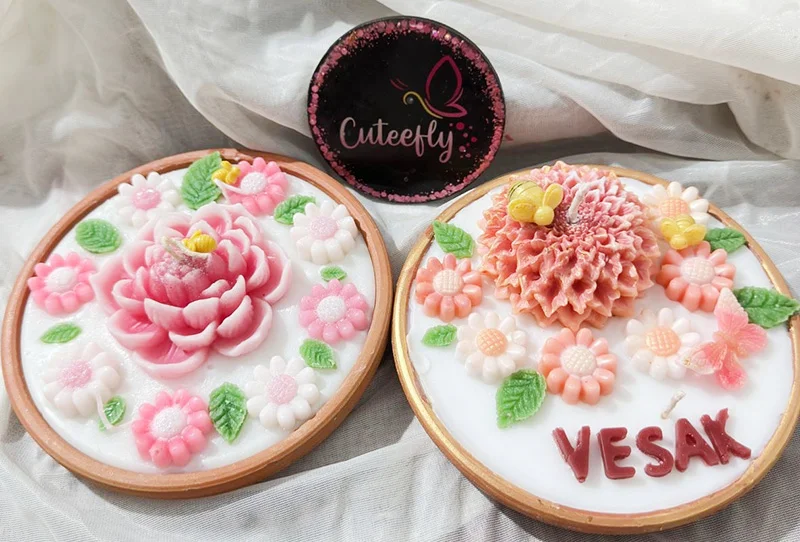
Candles reflecting Vesak themes
Her candles reflect Vesak themes – light, peace, remembrance, giving, etc., to enable you to fill your Vesak celebration with devotion and beauty.
Among her Vesak creations is a lotus-shaped soy candle, scented with sandalwood, lavender, etc., meant to burn during this Vesak Poya Day.

Indunil Kaushalya Dissanayaka: Customers
praise her for her creativity
These handcrafted Vesak candles are perfect for offering at the temple, she says.
What makes her creations so novel is that they come in different shapes, scents, themes, and all are handmade.
What’s more, her customers have heaped praise on her for her creativity.
According to Indunil, her creations are perfect as a thoughtful gift … to bring beauty, unity, and light into every moment.
Says Indunil: “Our beautifully handcrafted Unity candles are designed with premium detail and love, making them perfect for celebrations, gifts, and meaningful occasions.”
Cuteefly, says Indunil, is available online.
Readers could contact Indunil on 0778506066 for more details.
He Facebook Page is: Cuteefly.

Handmade with love

Tickner five-for wraps up innings win for New Zealand

Ambidextrous spinner Shashini Gimhani in Sri Lanka’s T20 World Cup squad

Pakistan’s famous cheerleader ‘Chacha Cricket’ to retire this year

South Africa Women’s maiden tour to Zimbabwe to feature five T20Is

Navy renders assistance to bring injured fisherman ashore

Applications called to recruit 400 public officers as Digital Champions for the Public Impact Champions Network

‘Dates have the highest sugar content to fight Coronavirus’

Sunday Island 27 December – Headlines

#SundayIsland 17th December – Headlines

Sunday Island – 28th March

Sunday Island Headlines – 21 March

Sunday Island – 21st February – Headlines
-

 News6 days ago
All-New GRAVITE launches at LKR 6.99 Mn
-
 Features6 days ago
The NPP’s pivot to the past
-
 News5 days ago
Police probe underway to ascertain links between criminals deported from UAE and local politicians
-
 News4 days ago
Easter Sunday carnage: Court told Maulana’s statement cannot be accepted without cross-examination
-
 Features6 days ago
End of Peacekeeping
-
 Opinion4 days ago
Undermining the democratic political framework
-

 News4 days ago
UK passport holder hiding here wants to have deportation order rescinded to leave without blemish
-
 News5 days ago
Dickoya double murder suspect arrested