
Editorial
Presidential blusters and legislators’ ire


Wednesday 26th March, 2025
The Opposition has taken umbrage at President Anura Kumara Dissanayake’s talkathon, as it were, in Parliament last Friday, when the final vote on Budget 2025 was held. Some SJB MPs have claimed that the Chair had their microphones switched off so that the President could hold forth uninterrupted, and he used the budget as an excuse for haranguing the House. The government MPs have sought to counter this argument. They insist that President Dissanayake, as the Minister of Finance, only exercised his constitutional right to address the House on the final day of the budget, and there was nothing wrong with it whatsoever.
There have been numerous instances where the legislature became a captive audience for the Executive Presidents—and even loquacious Prime Ministers and Opposition Leaders. Sri Lankan politicians have a propensity to talk nineteen to the dozen just to hear their own voice. However, there is more to the recurrent argy-bargy over presidential grandstanding in Parliament than the Opposition’s aversion thereto; the tendency of the Executive Presidents to subject the legislature to their loquacity can also be seen as symptomatic of the erosion of the separation of powers.
What has fuelled the ongoing campaign for the abolition of the executive presidency is that the Presidents tend to act like harum-scarum private bus drivers when they have control over Parliament. They tend to bulldoze their way through. The situation becomes even worse when the Presidents’ parties happen to have supermajorities in Parliament.
The Executive Presidents are compelled to act with some restraint when parties other than their own gain control over the legislature, as evidenced by the experiences of President D. B. Wijetunga from August to November 1994, President Chandrika Bandaranaike Kumaratunga from 2001 to 2004, and President Maithripala Sirisena from October 2018 to November 2019. Presidents J. R. Jayewardene, Mahinda Rajapaksa and Gotabaya Rajapaksa, by virtue of being the leaders of the ruling parties with supermajorities, reduced the Legislature to a mere appendage of the Executive. President Ranasinghe Premadasa also did likewise although his party did not have a two-thirds majority in Parliament. This unwholesome practice has continued over the years without a hiatus.
The constitutional requirement that the Executive Presidents attend Parliament once every three months, along with their power to address the legislature and hold Cabinet portfolios, has enabled them to dominate—if not undermine—the legislature. Some Presidents have leveraged their power to address Parliament to project their authority and overshadow legislators. One may recall that the last Parliament had the then President Ranil Wickremesinghe walking in, making speeches, and even asking some Opposition MPs to shut up.
The JVP, a bitter critic of the executive presidency, has pledged to abolish it. Its leaders made their support for Mahinda Rajapaksa in the 2004 presidential race conditional to his pledge to scrap the executive presidency. He, true to form, reneged on his promise. The JVP was also instrumental in having the 17th Amendment and the 19th Amendment to the Constitution introduced to curtail the powers of the Executive President. The 21st Amendment, which did away with some of the presidential powers, restored by the 20th Amendment, was also introduced partly due to JVP’s pressure exerted through Aragalaya (2022). Unfortunately, the Constitutional Council, which was created to fetter the excessive executive powers of the President, has become a rubber stamp for the Executive.
Today, the JVP has a two-thirds majority in Parliament and boasts of having expanded its support base across the country. Curiously, not much is heard about its pledge to abolish the executive presidency.
During an interview with the government-controlled ITN, on 04 Dec., 2024, in answer to a question about the JVP’s promise to scrap the executive presidency, JVP Central Committee member, legal advisor and Deputy Minister Sunil Watagala, said that the JVP/NPP leaders would not be able to conduct another presidential election campaign ‘with their clothes on’ as they had pledged to abolish the executive presidency on a priority basis.
Whether the JVP/NPP leaders will care to carry out their promise to abolish the executive presidency expeditiously or make another Machiavellian about-turn and conduct their party’s next presidential election campaign—with or without their clothes on—remains to be seen. What they should do urgently is to ensure that the President not only respects the doctrine of the separation of powers but also is seen to do so by refraining from subjecting Parliament to boastful bluster and snide remarks. They laid into the previous Presidents for haranguing Parliament, didn’t they?

Tuesday 26th May, 2026
The Opposition derived perverse pleasure from the rupee’s tumble, which they apparently thought signalled the beginning of the end of the JVP-NPP rule. Its leaders gave ball-by-ball commentaries of the rupee depreciation in Parliament, apparently expecting the US dollar to rally to 370 rupees, the level associated with the peak of the currency crisis that preceded the ouster of President Gotabaya Rajapaksa (GR). These politicians have been labouring under the misconception that if the rupee weakens to 370 against the dollar, the incumbent government will collapse, and they will be able to return to power. They should check their math.
Exchange rate cannot be considered the sole economic health indicator. Foreign currency reserves dropped to USD 50 million during the GR government, which also faced a crippling rupee crisis. The situation is vastly different today although it is not as rosy as the government makes it out to be.
JVP/NPP politicians are on cloud nine as the battered rupee has recently staged a countertrend rally. Why they are over the moon is understandable, but it ain’t over until the fat lady sings, as they say. It is too early for the government to jubilate. If US President Donald Trump gets out of bed on the wrong side tomorrow, pulls out of peace negotiations and orders fresh military attacks on Iran—perish the thought—the whole world will be plunged into chaos again; the rupee will tumble, much to the glee of the Opposition politicians who are desperate to make a comeback and savour power.
There are some daunting challenges the JVP-NPP government has to overcome to keep the economy on track amidst external shocks. Foreign currency reserves must be shored up urgently, and the way to boost them in a sustainable manner is to curtail the forex outflow and increase the forex inflow, as is obvious. What needs to be done immediately is to reduce the national import bill. Fuel and vehicle imports have been draining foreign currency reserves, and huge increases in the global oil prices due to the West Asia conflict have worsened the situation. Operating oil-fired power plants to compensate for the generation loss at Norochcholai, caused by fraudulently procured low-grade coal has also caused a huge increase in the national oil bill.
The government has imposed a 50% customs duty surcharge on vehicle imports, and the Central Bank has limited Loan-to-Value ratios for motor vehicles. Necessary as these measures may be, much more needs to be done to curtail the forex outflow caused by vehicle imports. When the government lifted the ban on vehicle imports, we stressed the need to strike a balance between increasing tax revenue and the forex outflow lest there should be a lot of new vehicles but not enough dollars to buy fuel.
Fiscal consolidation measures are necessary to overcome economic difficulties. Even India has opted for them despite its economic resilience. It has learnt from the crippling economic crisis it faced in 1991, when it was on the verge of defaulting on its external debt. Its foreign exchange reserves fell so low that they could barely cover about two weeks of imports. What enabled it to survive the crisis was IMF support among other things, and far-reaching economic reforms helped reshape its economy structurally to regain vitality.
Measures that Indian Prime Minister Narendra Modi has adopted to overcome the current crisis are worthy of emulation. They include curbing fuel imports through conservation, efficiency improvements, pricing adjustments, diversification of energy sources, reducing official travel and shifting more meetings online. He has also taken steps to reduce non-essential imports, discourage spending on gold and overseas travel, tighten capital outflows and promote import substitution and domestic production.
It is imperative that Sri Lankan political parties and their leaders stop playing politics with the economy. The Opposition is amplifying domestic economic issues in a way that could lead investors to consider this country an extremely high-risk investment destination. The investors who are already here might consider voting with their feet, and others will be wary of setting foot here. The JVP/NPP did likewise during the previous governments, with their leaders gloating over economic setbacks the country faced. It went so far as to aggravate the economic crisis by urging expatriate Sri Lankans to stop sending remittances.
It behoves both the government and the Opposition to keep the economy out of their political battles.


Monday 25th May, 2026
Governments never postpone elections they are confident of winning. They devise ways and means of postponing elections and concoct various excuses for such shameful action only when they realise that their luck has run out and they cannot muster enough popular support to secure victory. The Yahapalana government postponed the Provincial Council (PC) elections in 2017 for fear of losing them, but badly lost the Local Government (LG) polls it had to conduct the following year. Its constituents have not yet recovered fully from that electoral debacle. The SLPP government also postponed the LG polls in 2022 and 2023. Now, the JPV-NPP government with a two-thirds majority in Parliament is doing everything possible to avoid the PC polls.
JVP General Secretary Tilvin Silva has said it will not be possible to hold the PC elections this year. He is reported to have claimed, at the opening of an NPP coordination office in Jaffna, over the weekend that budgetary allocations were made for conducting the PC elections, but due to Cyclone Ditwah, the government was compelled to allocate Rs. 500 billion for disaster relief, and therefore it will not be possible to hold the PC elections this year. Electoral reform has also stood in the way of the PC polls, he has said.
The JVP-NPP government has reneged on another election promise. The NPP’s election manifesto, Thriving Nation: A Beautiful Life, makes a solemn pledge to hold the PC polls within one year of the formation of an NPP government. “Provincial Council and local government elections, which are currently postponed indefinitely, will be held within a year to provide an opportunity for the people to join the government” (p. 127).
The government boasts that the state coffers are overflowing, unlike in the past. If so, allocating funds for the PC polls should be child’s play. The government’s claim that it cannot allocate funds for the PC polls due the ongoing disaster relief programme is similar to the SLPP-UNP government’s absurd excuse for postponing the LG polls in 2023. The Election Commission was ready to hold elections, and the Supreme Court ordered the UNP-SLPP government not to withhold funds allocated from Budget 2023 for the LG elections, but the then President Ranil Wickremesinghe claimed that financial difficulties had compelled his government to prioritise expenditure on essential supplies required to meet the basic needs of the population over conducting elections. The JVP/NPP leaders seem to have taken a leaf out of Wickremesinghe’s book.
The JVP finds itself in a situation replete with irony. It went on a spree of violence to sabotage the first PC polls in 1988, but without success, and vowed to scuttle the PC system. But today a JVP-led government has undertaken to hold the PC polls albeit with some delay. The JVP vehemently opposed the postponement of the LG polls in 2023. But it has done exactly what it opposed tooth and nail about three years ago.
All political parties represented in the current Parliament, save a few, are responsible for the indefinite postponement of the PC polls. They either backed or refrained from opposing an amendment to the Provincial Council Elections Act, presented by the Yahapalana government in 2017 to put off the PC elections. They included the SLFP, the UNP, the JVP, the SLMC, the TNA and the current SLPP leaders, who were in the Joint Opposition at that time. The bill was stuffed with new sections, at the committee stage, to pave the way for postponing the PC elections; most of those additions were widely considered inconsistent with the underlying principles of the original bill, which was passed.
Electoral reform has necessitated the delimitation of electorates in view of the new mixed proportional system, and the process of redrawing the boundaries of constituencies is expected to take about one year. Parliament could have resolved this issue a long time ago. The JVP-NPP government has also dragged its feet on it for obvious reasons. Parliament can decide to hold the PC elections under the Proportional Representation system, pending the completion of the delimitation process. The Opposition is reportedly planning to push for this option. Hence, the government has come out with another excuse—funding constraints caused by disaster relief needs. It has unwittingly revealed its fear of elections.

Republicans on Thursday postponed a vote on a Democratic-sponsored war powers resolution to rein in President Donald Trump’s military campaign in what could be seen as a missed opportunity to pave the way for a negotiated settlement of the Iran conflict. They did so as it became clear that the GOP would not be able to muster a majority to defeat the resolution which, if passed, would have compelled Trump to stop the Iran war. Republicans hold slender majorities in both chambers of Congress. They are doing everything in their power to scuttle the war powers resolution. However, they cannot go on postponing the vote on it indefinitely.
Some of the US legislators who voted to scuttle a previous war powers resolution have changed their position and expressed willingness to put Trump in a straitjacket to save lives, funds and America’s international image. This is believed to be the main reason for Trump’s decision to postpone US withdrawal from the current ceasefire and resume strikes on Iran. Three Republicans voted for the previous war powers resolution which was almost passed.
Trump’s decision to postpone military operations has also been attributed to the depletion of a substantial portion of America’s advanced missile defence inventory during the conflict with Iran, according to a report published by The Washington Post. This revelation is reported to have caused serious concerns in Washington over its capacity to sustain military commitments vis-a-vis multiple theatres simultaneously, particularly in the Indo-Pacific, where allies such as Taiwan, Japan and South Korea remain heavily dependent on the American security umbrella. Military inventories take years to replenish. US arms sales to Taiwan have already been paused to ensure that the Pentagon has enough munitions for the Iran war, according to media reports. Ukraine is likely to face a similar fate.
Congress members are becoming increasingly disillusioned with Trump’s war, which has driven domestic fuel prices up. Even the patience of Republicans who wholeheartedly backed Trump’s military campaign have had a change of heart due to the prolongation of the war and the unexpected consequences of it, such as Iran using the Hormuz Strait as a strategic lever to shift the war to the economic front. Besides, Iran has demonstrated remarkable resilience and a mindset that it is unconcerned about the consequences of its counterattacks. It has warned Washington that the Gulf of Oman could become a ‘graveyard’ for US Navy ships deployed in the region if it continues its military aggression. Tehran has so far sprung several surprises for the US and Israel, and its aforesaid warning cannot be dismissed as mere rhetoric.
It will be in the interest of global peace for Congress itself to step in to curb Trump’s war powers and de-escalate the West Asia conflict, without letting it spiral out of control.
An early end to the Iran conflict will benefit the entire world tremendously. Besides the colossal loss of lives and the destruction of assets, including oil infrastructure, the war has taken a heavy toll on almost all countries, and the developing nations are the worst hit. Economies around the world are reeling from massive oil price increases.
The war powers resolution is based on a law passed during the Vietnam war to enable Congress to regain power over external conflicts, but Trump has publicly called it unconstitutional. He has undermined vital US systems and institutions. When he failed to secure a consecutive second term, he claimed the election had been stolen by his political opponents and allegedly provoked the Capitol attacks in 2021. Now, he is trying to arrogate to himself some congressional powers related to war.
If the GOP continues to support Trump’s military campaigns, it will do so at the risk of losing its hold on Congress, for Trump’s popularity ratings are trending downward, with midterm elections drawing near. Even when the President is popular, his party tends to lose seats in midterm elections. Trump’s approval rating has plummeted to 35%, according to Forbes. Several polls have also found that 64% of US voters think it was wrong for Trump to go to war with Iran. Both the US and the rest of the world will gain if the war powers resolution is passed and Trump made to act with restraint.

Patidar leads the way as Royal Challengers Bengaluru storm into second straight final

Kandy Royals sign Vijay Shankar for LPL 2026

Cabinet approves sale of Paddy stocks held by the Paddy Marketing Board
Amendment to the Promotion of Export Agriculture Act, No. 46 of 1992 to be gazatted
Ms. M.K.D.N. Madampe, appointed as Director General of the Department of Management Services

Cabinet approves collaboration agreement between Sri Lanka and Brazil for the implementation of the “Sugarcane Project in Sri Lanka”

‘Dates have the highest sugar content to fight Coronavirus’

Sunday Island 27 December – Headlines

#SundayIsland 17th December – Headlines

Sunday Island – 28th March

Sunday Island Headlines – 21 March

Sunday Island – 21st February – Headlines
-
 Features7 days ago
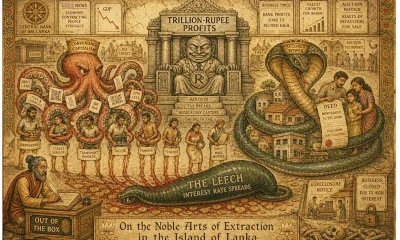
Octopus, Leech, and Snake: How Sri Lanka’s banks feast while the nation starves
-
 Sports7 days ago
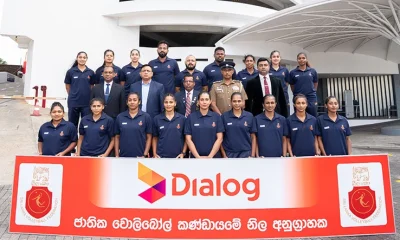
Sri Lanka women’s volleyball team ready for Central Asian challenge
-
 Opinion6 days ago
Murder of Ehelepola family, Bogambara Wewa and Sightings of Wangediya
-

 Business5 days ago
Historic launch of CCWE Fashion Week & International Summit 2026
-
 News6 days ago
Steps underway to safeguard Sri Lanka’s maritime heritage
-
 News2 days ago
Police probe underway to ascertain links between criminals deported from UAE and local politicians
-
 Features3 days ago
The NPP’s pivot to the past
-

 News3 days ago
All-New GRAVITE launches at LKR 6.99 Mn