
News
President, Tamil MPs discuss Sri Lanka refugees in India


By Nethmi Rajawasam
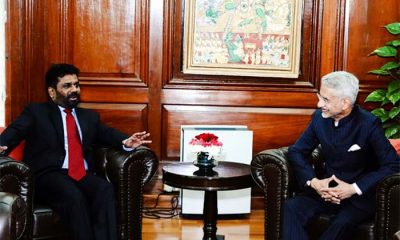
ECONOMYNEXT –The plight of Sri Lankans in Indian refugee camps was discussed during a meeting between the president and leaders of the North and East, at the Presidential Secretariat on Thursday (21).
Members of Parliament R Sampanthan, S Rasamanickam, G Karunakaran, T Kalaiarasan and Kulasingham Dileepan were present at the discussion which focused on the provision of land rights for the people in the Northern and Eastern Provinces, the implementation of laws related to resettlement and reconciliation, and issues concerning district development, in addition to the challenges faced by Sri Lankans in refugee camps in India.
Though Sri Lankan politicians have pledged to address the larger concerns pertaining to Tamil populations, such as reconciliation, resettlement, and rehabilitation in the past, the matter of Sri Lankan Tamil refugees in Indian camps has yet to be addressed by a Sri Lankan head of state.
Successive Sri Lankan administrations have had differing repatriation and reintegration plans. Direct concerns over safety, lands, housing, livelihood, and reconciliation have been reported as reasons why refugees refuse to return to Sri Lanka.
Protests, political declarations, and calls for the Indian central government to be more aggressive in safeguarding the safety and well-being of Sri Lankan Tamils in India and Sri Lanka have occurred in the past.
However, interventions and actions taken by the Tamil Nadu government regarding Sri Lankan refugees have been sporadic and influenced by political dynamics, with changes in leadership, and the evolving relationships between India and Sri Lanka.
Since 2022, Sri Lanka has experienced its worst economic crisis as a result of a number of issues including the COVID-19 pandemic, dwindling tourism, the fuel crisis, a shortage of basic commodities, and soaring debt.
This has led to a rise in migration with illegal methods including ferries being used by migrants to get to Dhanushkodi in Tamil Nadu, which has become a viable destination.
The federal government has given Sri Lanka financial assistance totaling 3.5 billion dollars since the crisis and has allotted financial aid of 80 crore in 2021 and 2022 for welfare of Sri Lankan Tamils in refugee camps, along with cash assistance, subsidised rice and free clothes.









Parliament:
… sexual harassment claims dismissed
Recommendations made by retired High Court Judge Ms. Sujatha Alahapperuma, following an inquiry into claims by a female employee of the Department of Information Systems and Management of Parliament, regarding sexual harassment, denial of due salary increments and other forms of harassment, were yet to be implemented, sources familiar with the investigation said.
The retired HC Judge handed over the report to Speaker Dr. Jagath Wickramaratne on 24 November, 2025. Secretary General of Parliament Kushani Rohanadeera was also present on that occasion.
The retired judge has recommended that administrative decisions be taken expeditiously to grant her salary increments due for 2024 and 2025, reevaluation of all employees attached to the Department of Information Systems and Management and keep them under close scrutiny and strengthening of the ‘Helpdesk’ to meet the requirements.
Sources said that none of the recommendations have been implemented and the concerned employee in spite of still being the Senior Helpdesk coordinator remained attached to the Supplies and Services Office. She had been ordered to report to the Supplies and Services Office in January 2025 following a continuing dispute with the top management of the Department of Information Systems and Management.
Parliamentary Staff Advisory Committee on 25.07.2025 decided to conduct an external investigation into the issue after the employee refused to accept the outcome of the internal inquiry conducted in the wake of SJB lawmaker Mujibur Rahman raising the issue in Parliament.
The retired judge has emphasised the urgent need to take tangible measures to address administrative issues with a view to enhance discipline and human resources management among other issues.
However, the retired judge has declared that the complainant or any other female employee attached to the of Department of Information Systems and Management hadn’t been subjected to any form of sexual harassment as alleged.
The retired judge further asserted that the complainant had been prejudicially treated by two interview boards when she appeared before them seeking posts of Database Administrator and Parliament Officer.
The retired judge has also asserted that the Supplies and Services Office where the complaint continued to serve even now was not suitable and not in line with her qualifications. Some of those who had appeared before the retired judge during the inquiry claimed that was a temporary transfer. However, the report dismissed that claim declaring that transfer appeared to have been done outside acceptable procedure and her increments stopped without giving any justifiable reason.
The retired judge has stated that for want of proper procedures and systems, the administration seems to be in turmoil.
By Shamindra Ferdinando
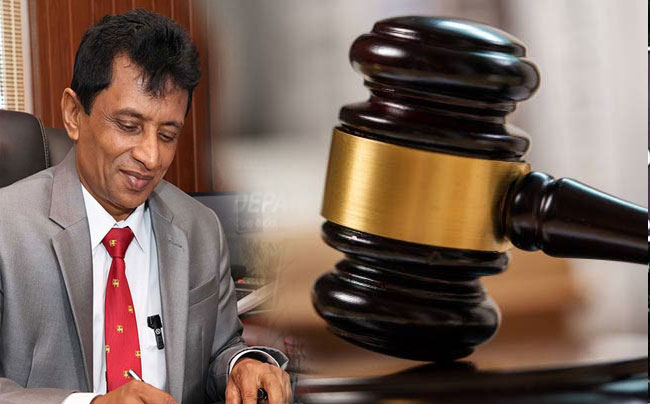
Motor Traffic Commissioner General Kamal Amarasinghe, taken into custody by the CID, was remanded until today (30) following his production before the Kurunegala Magistrate’s Court.
The investigation was launched after the Central Anti-Corruption Task Force received information regarding an illegally assembled taxi, which was later handed over to the CID for further inquiries.
Preliminary findings revealed that the vehicle’s registered chassis number had been altered and documents submitted to obtain a “weight certificate.” These documents were then used to assign a registration number to the taxi, while the chassis modification files were concealed. False declarations were allegedly made to facilitate the fraudulent assembly, with Commissioner General Amarasinghe accused of aiding and abetting the operation.
The suspect was taken into custody on the afternoon of Friday (27) by a CID team at the Hector Kobbekaduwa Road, Colombo 7.
In parallel, the Bribery and Corruption Commission has launched a separate probe into the matter.
The initial investigation was conducted under the direction of SSP Indika Weerasinghe, Head of the Central Anti-Corruption Task Force, along with DIG Rohan Olugala and Senior DIG of CID Kamal Ariyawansa.
BY Norman Palihawadane

A public petition demanding the resignation of Kumara Jayakody, Minister of Power and Energy, over alleged irregularities in coal imports was launched yesterday (29) in Maharagama.
The initiative was organised by the Electricity Consumers’ Association.
Addressing the gathering, the Association’s secretary, Sanjeewa Dhammika, said the Minister was facing allegations related to coal imports, while concerns have also been raised over the poor performance of both the Minister and the Ministry Secretary. He said the petition’s primary demand is the immediate removal of the Minister from office.
Dhammika added that signatures for the petition will also be collected in front of the Colombo Fort Railway Station.
by Anuradha Hiripitiyage

Inquiry into female employee’s complaint: Retired HC Judge’s recommendations ignored

Motor Traffic CG remanded

Petition launched seeking resignation of Energy Minister Jayakody

SC e-filing portal operational

New arithmetic of conflict: How the drone revolution is inverting economics of war

SLT-MOBITEL turnaround signals new era for SOEs, says deputy minister

‘Dates have the highest sugar content to fight Coronavirus’

Sunday Island 27 December – Headlines

#SundayIsland 17th December – Headlines

Sunday Island – 28th March

Sunday Island Headlines – 21 March

Sunday Island – 21st February – Headlines
-

 News5 days ago
Senior citizens above 70 years to receive March allowances on Thursday (26)
-

 Features2 days ago
A World Order in Crisis: War, Power, and Resistance
-

 News3 days ago
Energy Minister indicted on corruption charges ahead of no-faith motion against him
-

 News4 days ago
US dodges question on AKD’s claim SL denied permission for military aircraft to land
-

 Business4 days ago
Dialog Unveils Dialog Play Mini with Netflix and Apple TV
-

 Sports3 days ago
SLC to hold EGM in April
-

 News5 days ago
CEB Engineers warn public to be prepared for power cuts after New Year
-
 Business6 days ago
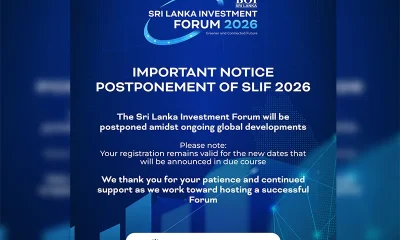
Postponement of Sri Lanka Investment Forum 2026