
Latest News
President Ranil Wickremesinghe’s address at the UNGA: ‘Sri Lanka’s journey to rebuild trust and global solidarity’

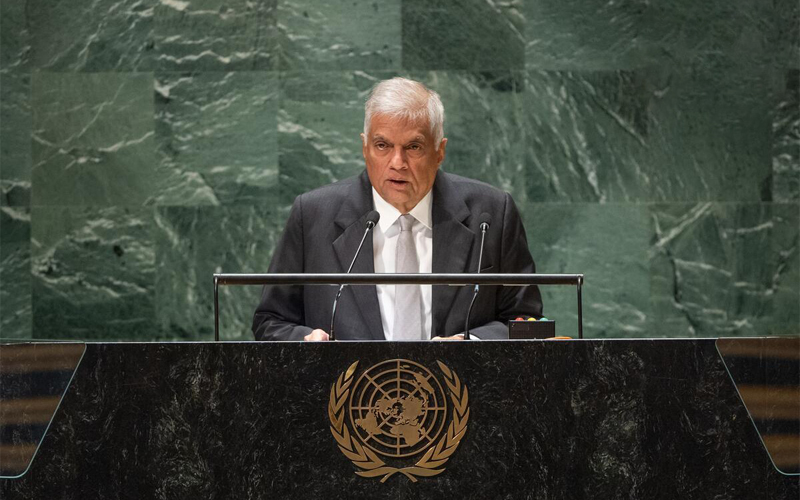
President Ranil Wickremesinghe addressed the UN General Assembly in New York on Thursday (21) on the theme “Rebuilding trust and reigniting solidarity” and its relevance to Sri Lanka’s recent challenges.
He mentioned how Sri Lanka faced significant social, economic and political challenges in the past year, including threats to democratic traditions but has managed to achieve a democratic transition.
He highlighted efforts made to stabilize the economy, including economic reforms and foreign assistance and said that his intention is to lead Sri Lanka towards sustainable recovery and growth, benefiting all segments of society and ensuring peace, prosperity and reconciliation.
The President also discusses the global geopolitical landscape, emphasizing the inter-connectedness of various challenges, such as climate change, debt and sustainable development. He stresses the need for international solidarity and climate finance, particularly for smaller, climate-vulnerable and debt-ridden countries.
President Wickremesinghe mentioned Sri Lanka’s commitment to climate action, including renewable energy goals, forest conservation and emissions reduction while expressing concern about the impact of climate change on food security, clean energy and livelihoods, emphasizing the urgency of mobilizing climate finance.
The President called on developed countries to fulfill their commitments, provide assistance and assume their share of responsibility, while underscoring the importance of restructuring the international financial system to address climate change and sustainable development.
Additionally, the President emphasized the need for reform in multilateral institutions like the UN, particularly the expansion of the Security Council’s composition and the importance of disarmament and the impact of global military expenditures.
Overall, the President’s speech highlighted the challenges faced both by Sri Lanka and the world, and emphasized the importance of solidarity, climate action, disarmament and multilateral cooperation in addressing these issues.
Following is the full speech delivered by President Ranil Wickremesinghe at the 78th session of the United Nations General Assembly;
“Rebuilding trust and reigniting solidarity“ is an appropriate point of departure not only for reflecting on the challenges before the multilateral today, but also for reviewing developments in my own country, Sri Lanka, over the past year.
At this time last year, amidst multiple global crises, Sri Lanka was experiencing its most challenging period in recent times socially, economically and politically, which had a devastating impact on people’s lives.
Even our Democratic traditions were threatened by attempts to occupy our Parliament and bring it to a halt. Nevertheless, we succeeded in bringing about a democratic political transition, due to our deeply entrenched and resilient democratic traditions.
Resorting to the re-graduation of Sri Lanka’s economy, coupled with the gift of fertilizer from the United States’ Government which led to a bumper harvest, has assisted us in ensuring stability during that period.
The reforms I have since initiated in the economic, financial, institutional and reconciliation fronts have been directed on the one hand towards rebuilding trust and confidence between the people and the government; and on the other, towards laying the foundation for economic stabilization and recovery. Sri Lankans are already witnessing the positive outcomes of these measures in their daily lives and the revival of confidence internally and externally in the progress of the country.
It is my intention to lead the country towards sustainable and stable recovery and growth which will benefit all segments of Sri Lankan society in all parts of the country, ensuring a future of peace, prosperity and reconciliation for the present and future generations of women and men. In reaching this goal, we will be accompanied by the support, trust, and solidarity of our own people and of the international community.
As we turn the corner towards the 80th anniversary of the UN and prepare for the Summit of the Future in 2024, we see the fragmented geopolitical landscape of a multi-polar world where new centers of global power have emerged.
Accompanying this systemic change, are, on one hand, great expectations of development and human progress with millions of people rising out of poverty to prosperity.
On the other hand, we see a world where former big power rivalries and geopolitical tensions have reignited in open war, overlapping with new theaters of conflict and tension on land and in the oceans. Security Alliances have expanded and recent arrangements have been formed to deal with strategic threat perceptions in old and new theaters of conflict. North-South divisions are widening with the digital divide, the financial and debt crisis and the energy transition. Contrary to the promise of 2030, today we are seeing levels of poverty and hunger not witnessed since decades.
Neutral, nonaligned countries of the global South such as Sri Lanka are once again constrained in-between new global power configurations facing those who not respect the sovereignty of our nations.
In numerous recent Declarations in the UN and beyond including at the G20 in Delhi, the BRICS in Praetoria and G7 in Hiroshima, we have agreed that our challenges are interconnected, across borders and all other divides. We must grasp the opportunity to unite in order to build an inclusive future.
It is an appropriate reflection of this current global predicament, that the theme of this year’s general debate is “Rebuilding trust and reigniting global solidarity”.
This year, in parallel with the UNGA, we have participated in three interrelated summits dealing with accelerating the SDGs, Financing for Development and Climate Ambition where we agreed that international solidarity and collective action is needed to address these simultaneously.
Cross-border financial impacts of crises such as climate change and the pandemic are impeding the ability of smaller indebted countries such as mine, to make progress on SDG’s and climate adaptation and mitigation. Conflicts and tensions among big powers are complicating the policy environment for the rest by adding uncertainty to economic and macro-financial stability, disrupting supply chains and causing inflation as well as food and energy insecurity.
Long before the SDGs, Sri Lanka had achieved high human and social development indicators which ranked us in a category well above other middle-income countries. Neither has Sri Lanka shirked its responsibility to the planet. Last year at COP27 we outlined our Climate Ambition Plan. We said that by 2030 we will have 70% renewable energy in electricity generation, increase forest cover by 32% and reduce greenhouse emissions by 14.5%. We will phase out coal by 2040, and reach net zero by 2050.
Our low carbon development trajectory gave us one of the lowest per capita carbon emission rates for a lower MIC country.
This year as a result of exogenous shocks and debt, the incremental progress we were proud to have reached has been reversed. Food inflation reached putting significant pressure on food security amongst vulnerable communities. At the same time children’s education and nutrition have suffered due to the pandemic and the economic crisis.
In parallel, last month in Sri Lanka we were grappling with the driest weather spell seen in recent years followed by torrential rainfalls.
Adverse climate outcomes spilling over onto our tight fiscal space just as we begin to stabilize from last year’s economic crisis. As a climate vulnerable developing country in debt crisis, the urgency to mobilize climate finance is greater today than it was ever before. However, despite promises made to which we were all witness, rich countries are not delivering to expectation.
Developed countries must do their part and fulfill what they agreed – assume their share of the common but differentiated responsibility, provide assistance for mitigation and adaptation and compensation for loss and damage.
National efforts alone will not suffice to ensure the success of the SDGs and reverse climate change. The need for global solidarity to restructure the international financial architecture is paramount. This is articulated loud and clear in multiple global fora including in G20, and the BRICS. The Secretary General’s SDG stimulus highlights the interconnections between the achievements of the SDGs, combatting climate change and the concrete interventions required by creditors sovereign and private, as well as by IFIs including to mitigate the debt crisis.
It is estimate that the 2008 financial crisis has cost the U.S. economy $4 trillion. Recent studies in the U.S. have stated that the impact of the pandemic on the U.S. economy from 2020 to 2024 would reach $14 trillion. These numbers would more than double if the rest of the global economy is added. We have not faced an economic crisis of this magnitude any time before in our modern history. The cost of World War 2 in today’s USD would amount to $4 trillion, and the Marshall Plan would be $ 150 billion.
This is the magnitude of the challenge before us. Therefore if we are unable to restructure the global fiscal order, then certainly we will fail in the struggle to reverse climate change and achieve the SDG goals.
There is still time for course correction as the crisis has not reached its peak. At the same time, the Paris Summit for a New Global Financing Pact will come up with the funding requirements.
Therefore, the Summit of the Future should not be crafting new programs, but re-structuring the present financial architecture to suit the needs of climate change and sustainable development.
This must be the priority of this General Assembly; we cannot afford to allow divisions to drive focus away from this crisis.
While key issues such as the Bridgetown Initiative and the necessity to address the debt of low-income countries are being discussed in this assembly, it is not commanding the attention it deserves. Unfortunately, the Security Council has failed to give priority to these connected issues of climate change, debt relief and sustainable development. This impacts the future of mankind. The survival of the planet must be our priority, we cannot afford to go into this war with a divided high command. The future of all species on the globe is dependent on our ability to put aside our rivalries until this crisis is solved.
Multilateral machinery which reflects the world of the past century needs to be reformed to meet the challenges of the present and the future, a machinery which has failed to find a solution to the longstanding Palestine question. The composition of the Security Council must be expanded to be representative of current global diversity and decision-making. In parallel, the role of the UNGA must be strengthened.
We are asking that the permanent members engage in a credible dialogue which will lead to a unified approach to combat these threats ahead of the next sessions.
While we seek solidarity and financing to alleviate poverty and climate challenges, global military expenditures have risen today to record levels reaching $2.24 trillion. This reflects the strategic trust deficit among the powerful, key arms control frameworks which were instrumental in maintaining system stability in the past have collapsed and nuclear conflict is once again under open discussion, potentially and apocalyptically triggered by autonomous control. We urge restraint in the increase of military expenditure which leads to escalation of conflict.
Developing countries have been the voice of sanity and reason in this regard for decades. In keeping with Sri Lanka’s longstanding position supportive of disarmament of WMD and nuclear weapons, this year Sri Lanka ratified the Comprehensive Test Ban Treaty. Yesterday, we acceded to the Treaty on the Prohibition of Nuclear Weapons.
The war in Ukraine has far-reaching and severe financial and humanitarian repercussions on food, hunger and debt in all parts of the world including Sri Lanka. It is recalled that the UN Charter vests on powerful states in the Security Council the responsibility to maintain international peace and security and to deescalate rather than ignite conflict.
We need to halt the momentum where this and other big power tensions are spilling over into established areas of international rules-based cooperation forged over decades of multilateral negotiation, ranging from international trade to ocean governance.
This international system is today undergoing vast changes. At the same time, it is being confronted with unprecedented challenges. We come to the United Nations to demonstrate solidarity in arriving at common solutions. What is at stake is not the future of the United Nations, but of our planet as a whole. Member States will need to find new ways of working together despite the increasing mistrust that has permeated international relations.
We who have not been able to find a solution to the Palestinian question must now be able at least to find a solution to the questions which threaten the existence of the present global community.
This can be achieved through the willingness of the permanent members to work together in solidarity with the developing world. They must show the way”
President Wickremesinghe also extended his sincere condolences to the victims and families of the natural disasters that hit Morocco and Libya in recent days and pledged solidarity with Moroccan and Libyan friends during this difficult time.
(PMD)




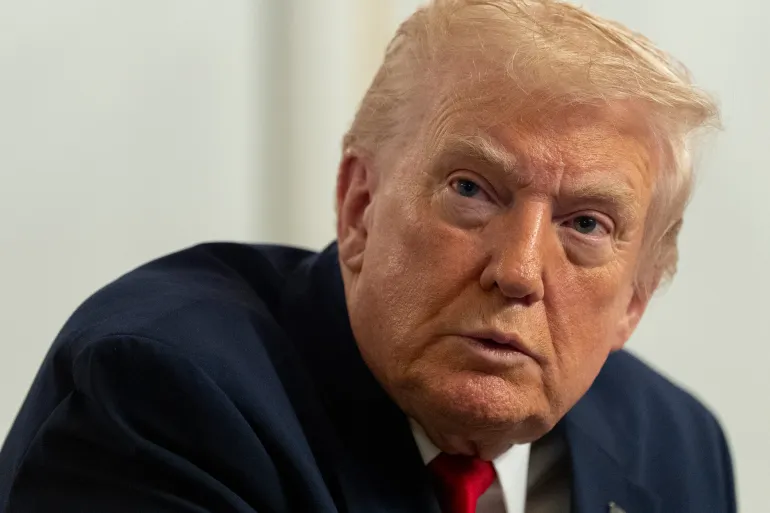
The United States has seized an oil tanker off the coast of Venezuela, where President Donald Trump has been threatening military action for the last several months.
Members of the Trump administration confirmed reports that the US coastguard led an operation to commandeer the vessel on Wednesday afternoon.
But few details have been released about the circumstances of the seizure.
“We’ve just seized a tanker off the coast of Venezuela – large tanker, very large, largest one ever seized, actually,” Trump said during an event at the White House. “And other things are happening. So you’ll be seeing that later, and you’ll be talking about that later with some other people.”
When faced with questions about the tanker at a round table with business leaders, Trump encouraged reporters to “follow the tanker” to find out more.
He also declined to identify the vessel’s owner. But, he added, “I assume we’re going to keep the oil.”
The Venezuelan government responded to the seizure, accusing the US of carrying out a “blatant theft”, which it described as an “act of international piracy, publicly announced by the President of the United States”.
Venezuela would “defend its sovereignty, natural resources, and national dignity with absolute determination”, the Foreign Ministry said in a statement, adding that it would also denounce the US before international bodies.
US Attorney General Pam Bondi posted on social media that the tanker had been seized for transporting “sanctioned oil from Venezuela and Iran”.
“For multiple years, the oil tanker has been sanctioned by the United States due to its involvement in an illicit oil shipping network supporting foreign terrorist organizations,” she wrote.
Her post was accompanied by a video that showed US soldiers rappelling onto the tanker from military helicopters. Bondi explained that the Department of Defense, the Federal Bureau of Investigation (FBI) and the Department of Homeland Security cooperated with the coastguard on the operation.
The takeover of the oil tanker is likely to further inflame tensions with Venezuela, as Trump continues with his campaign of “maximum pressure” against the South American country.
[Aljazeera]
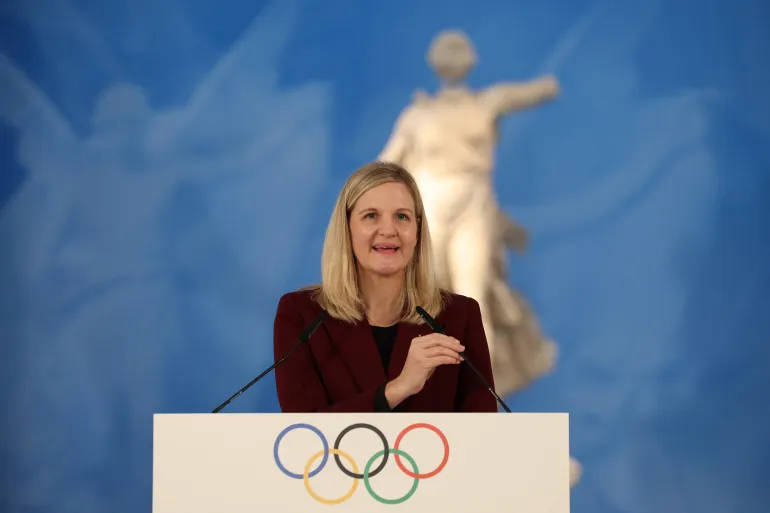
The International Olympic Committee says it will announce eligibility criteria for transgender athletes early next year, after months of deliberation as it seeks to find a consensus on how to protect the female category.
The issue has been a source of controversy, with no universal rule in place for the participation of transgender athletes at the Olympic Games.
The IOC, under its new President Kirsty Coventry, did a U-turn in June, deciding to take the lead in setting eligibility criteria for Olympic participation, having previously handed responsibility to the individual sports federations, leading to a confusing patchwork of different approaches.
In September, Coventry set up the “Protection of the Female Category” working group, made up of experts as well as representatives of international federations, to look into how best to protect the female category in sports.
“We will find ways to find a consensus that has all aspects covered,” Coventry told a press conference on Wednesday following an IOC executive board meeting. “Maybe it is not the easiest thing to do, but we will try our best, so when we talk about the female category, we are protecting the female category.”
Coventry said a decision would come in the first months of 2026.
“We want to make sure we have spoken to all stakeholders, taken adequate time to cross the Ts and dot the Is,” she said.
“The group is working extremely well. I don’t want to try to constrain the working group by saying they need to have a specific deadline, but I am hopeful in the next couple of months and definitely within the first quarter of next year we will have a clear decision and way forward, which I think we are all looking forward to,” said Coventry, a former Olympic swimming champion.
Before Coventry’s decision in June, the IOC had long refused to apply any universal rule on transgender participation for the Games, instructing international federations in 2021 to come up with their own guidelines. Under current rules, still in force, transgender athletes are eligible to take part in the Olympics.
Only a handful of openly transgender athletes have taken part in the Games. New Zealand’s Laurel Hubbard became the first openly transgender athlete to compete in a different gender category to that assigned at birth when the weightlifter took part in the Tokyo Olympics in 2021.
Currently, some international federations have rules in place, but others have not yet reached that stage.
US President Donald Trump has banned transgender athletes from competing in sports in schools in the United States, which civil society groups say infringes on the rights of trans people, as Los Angeles prepares to host the 2028 Summer Olympics.
Trump, who signed the “Keeping Men Out of Women’s Sports” order in February, has said he would not allow transgender athletes to compete at the LA Games.
[Aljazeera]
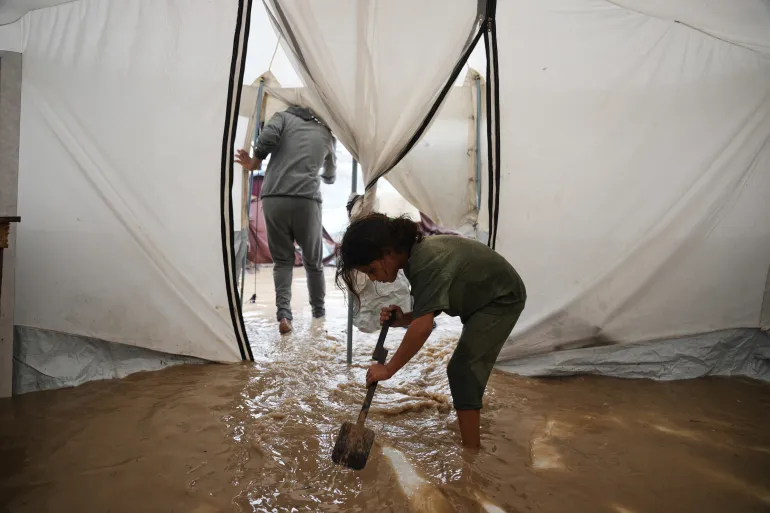
Storm Byron is threatening to heap new miseries on Palestinians in Gaza, with families making distress calls from flooded tents and hundreds of others fleeing their shelters in search of dry ground as the fierce winter storm lashes heavy rains on the besieged territory.
Officials warned Wednesday that the storm was forecast to bring flash floods, strong winds and hail until Friday, conditions expected to wreak havoc in a territory in the grip of a humanitarian crisis, where hundreds of thousands of displaced people live in tents, temporary structures, or damaged buildings after two years of Israel’s genocidal war against the Palestinian people in Gaza.
Humanitarian workers said Israeli restrictions on the entry of tents, tools to repair water and sewage systems have left Gaza poorly equipped to respond to the storm, and called on the international community to pressure the Netanyahu government to urgently allow in supplies.
In the southern city of Rafah, the Palestinian Civil Defence said its teams had already received distress calls from displacement camps, with families reporting “flooded tents and families trapped inside by heavy rains”.
“Despite limited resources and a lack of necessary equipment, our teams are working tirelessly to reach those in need and provide assistance,” the rescue agency said on Telegram.
Footage posted on social media and verified by Al Jazeera showed Palestinians shovelling a ditch around tents in a desperate attempt to create barriers that would prevent them from flooding.
Nearly 850,000 people sheltering in 761 displacement sites face the highest risk of flooding, according to the UN Office for the Coordination of Humanitarian Affairs (OCHA).
Flooding has previously been recorded at more than 200 of the highest-risk sites, affecting more than 140,000 people, the office said.
Previous storms had contaminated displacement sites with sewage and solid waste, swept away families’ tents and driven them out of makeshift shelters.
Reporting from Gaza City, Al Jazeera’s Tareq Abu Azzoum said that UN agencies and local authorities were warning that any significant rainfall could have devastating consequences for Gaza’s population, with the displacement camps built on barren, open terrain that would be highly susceptible to flooding.
The tents available to people were typically flimsy, unreinforced and often torn, he said, offering negligible protection from heavy rains, which were likely to seriously damage whatever possessions families had left.
Amjad Shawa, director of the Palestinian NGOs network, said Israeli restrictions on the entry of aid and equipment had left Gaza ill-equipped to deal with the storm.
He said only 40,000 tents, out of a needed 300,000, had been allowed in, while tools that would likely be needed to repair sewage systems and water networks were also restricted.
Flooding would bring a serious risk of sewage and solid waste contaminating drinking water or food supplies, raising the risk of diseases in the densely populated Strip, where 2.2 million people are crammed into just 43 percent of the territory, while the remaining 57 percent remains under Israeli military control.
“If Israel were to allow the entrance of supplies, things would be different. But for now, it has done all it can to make life more complicated for Palestinians,” Shawa said.
Oxfam humanitarian response adviser Chris McIntosh agreed, telling Al Jazeera that the people of Gaza were bracing for a “very tragic situation”.
“Persistent bureaucracy prevented us from bringing in adequate dwellings for people in Gaza,” McIntosh said. “The Israelis have not permitted tents to enter Gaza for many months. The only thing they’re allowing at this point is some tarpaulin, which isn’t going to do much for people who need proper shelter.”
He said Palestinians were being forced to live in “deplorable conditions”, with well more than 50 percent of the population living in tents.
He anticipated many would attempt to find dry ground inside bombed-out buildings that were at heightened risk of collapse amid the forecast heavy rains and winds.
[Aljazeera]

Trump administration says it seized oil tanker off Venezuela coast

Olympics decision on gender eligibility to come in early 2026

Tents flood, families seek shelter as Storm Byron bears down on Gaza

Showers will occur at times in the Northern, North-Central, Eastern, Central, and Uva provinces

Regulatory rollback tailored for “politically backed megaprojects”— Environmentalists

UK pledges £1 mn in aid for Ditwah victims

‘Dates have the highest sugar content to fight Coronavirus’

Sunday Island 27 December – Headlines

#SundayIsland 17th December – Headlines

Sunday Island – 28th March

Sunday Island Headlines – 21 March

Sunday Island – 21st February – Headlines
-

 News3 days ago
Over 35,000 drug offenders nabbed in 36 days
-
 Business5 days ago
LOLC Finance Factoring powers business growth
-
 News2 days ago
Cyclone Ditwah leaves Sri Lanka’s biodiversity in ruins: Top scientist warns of unseen ecological disaster
-
 Features1 day ago
Finally, Mahinda Yapa sets the record straight
-

 News5 days ago
CPC delegation meets JVP for talks on disaster response
-
 News5 days ago
A 6th Year Accolade: The Eternal Opulence of My Fair Lady
-

 News3 days ago
Rising water level in Malwathu Oya triggers alert in Thanthirimale
-
 Features4 days ago
The Catastrophic Impact of Tropical Cyclone Ditwah on Sri Lanka: