
News
President promises Rs 1 bn for research on Buddha’s teachings and Artificial Intelligence


President Ranil Wickremesinghe has assured that one billion rupees would be allocated next year for research on the Buddha’s teachings and Artificial Intelligence.The President disclosed that the project was previously scheduled to commence this year but had to be postponed due to the absence of required legislation for the regulation of AI. The President said that the project could get underway once the parliament adopted the new laws.
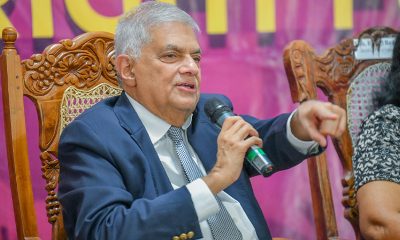
President Wickremesinghe said so at the 100th anniversary celebration of the Sri Lanka Buddhist Society Moratuwa, held Saturday (11) at the Moratuwa Buddhist Society Hall.
The Moratuwa Buddhist Society Hall, initiated under the Sri Lanka Buddhist Society Moratuwa, had its foundation stone laid in 1925. This society was established on May 11, 1924, under the leadership of Mr. Arthur V. Dias. The building was inaugurated as the Buddhist Headquarters for Buddhist population in Moratuwa on June 24, 1929, by the then Governor of British Ceylon Sir Herbert J. Stanley with officiating the opening ceremony. Additionally, on that same day, the foundation stone for Moratuwa College was also laid.
The President said that the government would finance the restoration of the Moratuwa Buddhist Society Hall, which is approaching its centenary.
The Vice President of Moratuwa Buddhist Society Dhammika Chandranath Fernando presented the centenary commemorative souvenir to President Wickremesinghe.
President Wickremesinghe, speaking at the event, added:
“Today, the world is confronted with a significant threat posed by climate change. The unprecedented intensity of sunlight we’re experiencing is unlike anything we’ve encountered before. We find ourselves in a challenging situation that requires focused efforts to mitigate climate warming. Additionally, we’re grappling with a substantial water scarcity issue. It’s essential to approach these challenges in alignment with the teachings of Buddha.
In the next two or three decades, climate change will emerge as one of the primary global challenges. According to Buddha’s teachings, this issue stems from civilization’s greed for rapid progress. The widespread desire for advancement has led to increased vehicle usage, resulting in significant environmental damage. Consequently, human society has inflicted considerable harm on the environment. Hence, it’s crucial to prioritize efforts to control climate change.
Today, the world is witnessing rapid technological advancements.
Despite initial beliefs after the atomic bomb explosion in 1945 that technological progress might cease, there has been significant advancement across all sectors. Particularly, the IT sector has seen remarkable progress. During our school days, computers and mobile phones were non-existent, but with modern technological advancements, we now have access to Artificial Intelligence.
We are currently at the dawn of Artificial Intelligence, prompting questions about its trajectory over the next two decades. It’s
essential to explore the relationship between artificial intelligence and Buddhism.
Buddha’s teachings emphasize the power of our minds in shaping our lives. By mastering our minds, we pave the way for progress; failure to do so leaves us with no future. This message was specifically intended for humanity, highlighting the importance of controlling our minds to overcome desires.
Now, artificial intelligence (AI) mirrors the capabilities of the
human mind. AI can process vast amounts of information and operate accordingly. Therefore, it’s pertinent to explore the connection between Buddha’s teachings and AI, considering their shared focus on the mind’s control and its implications for our actions.
If artificial intelligence promotes a different religion, it could pose a threat to Buddhism, so it’s crucial to consider this possibility. Throughout history, Buddhism in Sri Lanka has been influenced by Hinduism, Mahayana and political influences. With the emergence of artificial intelligence, it adds another layer of influence. Therefore, we must contemplate whether AI might propagate alternative doctrines.
It’s essential for people to contemplate the implications of integrating Dhamma with the mobile devices they use. This issue extends beyond Buddhism to other religions as well.
Hence, we are implementing new regulations to oversee artificial intelligence. The Ministry of Technology has drafted legislation for technology development, including plans to establish an artificial intelligence centre. Countries like the United Kingdom and the European Union have already enacted laws to govern artificial intelligence, and we must follow suit.”




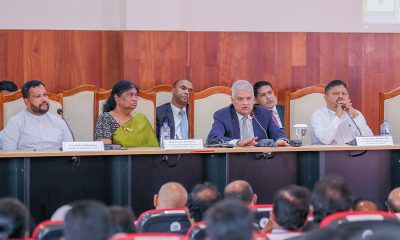



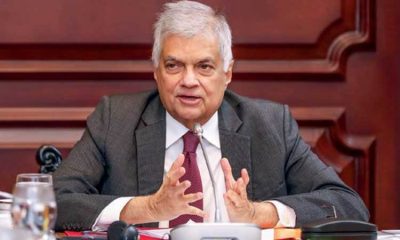




Approval has been granted at the Cabinet meeting held on 22.07.2024 to publish the draft bill of State Assets Management Act in the government gazette notification and thereby present it to the Parliament for its concurrence.
However, the draft bill couldn’t be passed in Parliament as a result of the Parliament being dissolved in the month of October 2024.
Thereafter, the draft bill was subject to further inspection by a
committee appointed which comprised of officials and authorities on the subject.
The said Committee has recognized the amendments to be made and a fundamental draft has been prepared including the proposed amendments.
Accordingly, the Cabinet of Ministers approved the resolution furnished by the President in his capacity as the Minister of Finance, Planning and Economic Development to suspend further activities regarding the draft bill of State Assets Management Act published in the extraordinary gazette of 02.08.2024, and to direct the Legal Draftsman to prepare a draft bill based on the fundamental draft prepared by the subject specialists’ committee.
Considering the compliance of the Cooperative Societies’ operations with the concurrent socio – economic circumstances as well as the changes in the common law, the requirement of amending the Cooperative Employees Commission Act No. 12 of 1972 has been recognized.
A fundamental draft including proposed amendments based on the experience gained by that Commission as well as the opinions and proposals of Cooperative societies, their director board members, cooperative employees and other interested parties has been prepared.
Accordingly, the Cabinet of Ministers granted approval to the resolution furnished by the Minister of Trade, Commerce, Food Security and Cooperative development to provide instructions to the Legal draftsman to prepare a draft bill to amend the Cooperative Employees Commission Act No. 12 0f 1972, based on the said fundamental draft.
Latest News
Dilki Wathsala Marambage appointed as Director General of the Department of Technical Education and Training

The Cabinet of Ministers granted approval to the proposal forwarded by the Prime Minister in her capacity as the Minister of Education, Higher Education and Vocational Education to appoint Mrs. Dilki Wathsala Marambage to the post of Director General of the Department of Technical Education and Training.

Kusal Mendis’ unbeaten 87 hands Sri Lanka consolation win

Cabinet approves redrafting of State Assets Management Act
Cooperative Employees Commission Act No. 12 of 1972 to be amended
Dilki Wathsala Marambage appointed as Director General of the Department of Technical Education and Training
Declaration of Naakolagane Sanctuary under the Fauna and Flora Protection Ordinance
Cabinet approves transfer and maintenance of selected roads presently under PC’s and Local Authorities to the RDA

‘Dates have the highest sugar content to fight Coronavirus’

Sunday Island 27 December – Headlines

#SundayIsland 17th December – Headlines

Sunday Island – 28th March

Sunday Island Headlines – 21 March

Sunday Island – 21st February – Headlines
-

 Features6 days ago
The Sri Lankan who made Scottish history
-

 Sports6 days ago
Nissanka absence opens door for Sri Lanka’s young guns
-

 News5 days ago
NDB fraud Rs 60mn more than reported
-

 News7 days ago
Gnansara Thera to be assigned to prison printing section: Officials
-

 News5 days ago
Removing monk’s robes matter for Sangha to decide: Mahanayake Theras
-
 News7 days ago
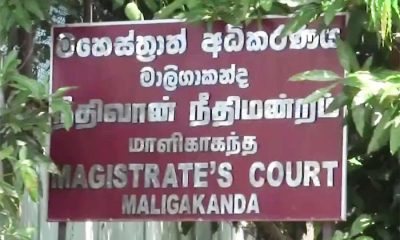
OIC of FCID summoned before Maligakanda Magistrate
-

 News6 days ago
Shiranthi R remanded until 13 Oct.
-

 Features6 days ago
Future of Sri Lanka’s state university system: Should it be shut down and reopened?