Connect with us

News

‘Post-war accountability: ISTRM urged to consider civil society concerns’

Published

on

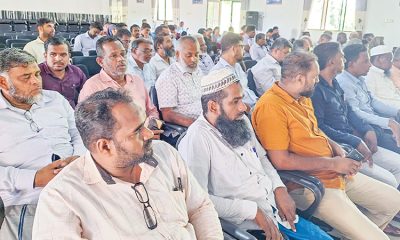
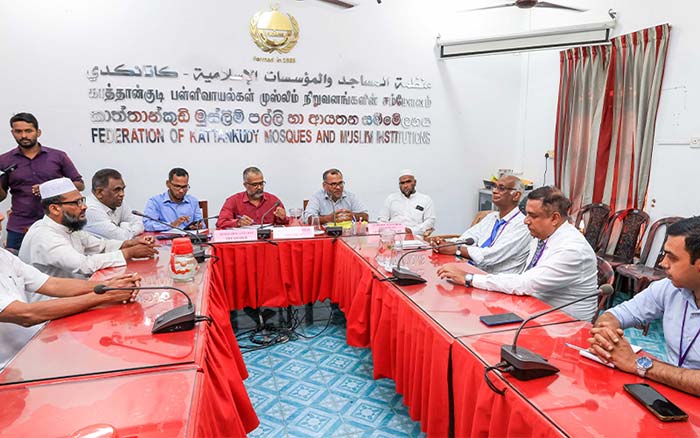
The Interim Committee during a meeting at Kattankudi

A group of civil society organisations and activists have expressed their concerns over the way the government is trying to address grievances of the Tamil speaking community.

The following is the text of letter, dated March 07, they wrote to Dr. Asanga Gunawansa, PC, Director-General Interim Secretariat for Truth and Reconciliation Mechanism (ISTRM): We, activists, and civil society organisations from, as well as working in the North and the East with war affected communities, write to you regarding the proposed Commission for Truth, Unity and Reconciliation (hereinafter the Commission). Some of us have engaged with the Interim Secretariat for Truth and Reconciliation Mechanisms (ISTRM), including attending the meetings organized by the Secretariat on 9 and/or 26 February 2024 to discuss the proposed Commission.

We draw your attention once again to the attached four statements issued by civil society organisations in the North and East in 2023 setting out their concerns about the proposed Commission as well as their demands to the government. These demands consist mainly of measures to build trust and repair the severely damaged social contract between Tamil citizens and the state. To date, the government has not taken action to implement even a single demand set out in these statements, thereby validating our concern about the lack of political will to provide substantive solutions to the Tamil people where truth, justice and reparations are concerned.

Our skepticism was further affirmed by the failure of the ISTRM to conduct wide ranging consultations with the war affected communities in the North and the East during their consultation process. Only a handful of organisations and activists from the North and East were invited to the meetings held in Colombo on 9 and 26 February despite concerted advocacy for greater inclusion. For instance, the ISTRM did not even attempt to meet the families of the disappeared in the North and East, a critical stakeholder in the transitional justice process.

Given that the Commission for Truth, Unity and Reconciliation Bill states its focus is “the conflict which took place in the Northern and Eastern Provinces during the period 1983 to 2009, or its aftermath”, the lack of consultations with the very community that is purportedly the focus of the law beggars belief. Even those predisposed to view the proposed Commission as a good faith act to address decades long violations to which the communities in the North and East were subjected, government disregard for, and dismissal of the concerns of the communities regarding the proposed Commission, will surely question the government’s intention.

The concerns we express are evidenced by the government’s repeated declarations that it is determined to ensure the UN Human Rights Council Resolution is not renewed nor a new Resolution passed. Hence, we believe the proposed Commission is one of the means through which the government intends to convince the international community there is no need for another Human Rights Council resolution. If the government’s intent is to resolve decades long grievances of the Tamil community and address grave violations committed against the community, instead of railroading legislation the community does not want, the government would implement at least a few demands set out in the aforementioned four statements to build trust.

While civil society, journalists, activists, families of the disappeared and former combatants amongst others in the North and East continue to be subject to surveillance, intimidation and harassment by the security agencies, while their land is being acquired and occupied and while their places of worship are being destroyed, the enactment of a law and the establishment of a Commission will do little to prevent or mitigate these actions which are in contravention of the Constitution of Sri Lanka and Sri Lanka’s international obligations. They only serve to increase people’s mistrust of the state.

In this regard, we highlight the findings of the public opinion survey conducted by the Sri Lanka Barometre in 2023, which illustrates that “confidence towards the political leadership decreased as a consequence of the crisis for almost half of Sri Lankans, showing a significant effect of the crisis on political confidence”. The Barometre also states that the “decrease in confidence indicates a sense of disappointment and disillusionment among many Sri Lankans in the current political leadership”. It should be noted the lack of trust and confidence in the political leadership is not restricted to the Tamil community as the Barometre reveals that “almost three quarters of people in the Southern Province experienced a drop in confidence”. Hence, in a climate in which the current government does not have public confidence, to establish yet another institution will in no way enable reconciliation in the absence of substantive measures to restore the faith of the people in those that govern them.

The imperative to listen to the voices from the North and East is reiterated by another finding of the Barometre, which states that the “fact that the highest proportion of people showing no change in confidence can be located in the Northern Province could indicate disillusionment with any majoritarian government that is perceived to have ignored the needs and grievances of the Tamil community that make up a majority of the residents in the Northern province”.

In this context, we urge the government to heed the voices of the people of the North and East and implement the demands set out in the four statements issued by civil society groups from the North and East to build trust and show good faith prior to enacting laws or establishing Commissions. The path to positive peace and reconciliation is through building trust and demonstrating good faith through substantive and meaningful actions, not rhetoric, nor establishing Commissions whose recommendations are not implemented.



Continue Reading
Advertisement
Click to comment

Leave a Reply

Your email address will not be published. Required fields are marked *

News

Patali alleges NPP conspiring to put off elections indefinitely

Published

on

* Govt. lacks plan to meet IMF targets


By Shamindra Ferdinando

United Republican Front (URF) leader Patali Champika Ranawaka has alleged that the 22nd Amendment is aimed at enabling the National People’s Power (NPP) to perpetuate its rule without conducting elections.

The former Minister was addressing the media at the Flower Road Office of UNP leader Ranil Wickremesinghe on Tuesday (25). Alleging that the Pelawatte-based ‘red junta’ spearheaded the operation to enact the controversial 22nd Amendment, the ex-parliamentarian pointed out that neither President Anura Kumara Dissanayake nor Health and Media Minister Dr. Nalinda Jayathissa, who is also the Cabinet spokesman, never denied declarations made by various members of the NPP parliamentary group that elections wouldn’t be conducted for 10, 20 years.

The President and the Cabinet spokesman never clarified that such declarations were not the position of the government, Ranawaka said. The URF leader pointed out that some NPP/JVP members told those receiving appointments that they would also retire under the same administration.

Addressing the media after former External Affairs Minister Prof. G. L. Peiris, convenor of the Joint Opposition, said that the government recognised them as the real opposition. Referring to Dr. Jayathissa’s recent claim that they conspired at the residence of Prof. Peiris and challenged them to come on to the streets, ex-lawmaker Ranawaka thanked the Minister for the recognition at the expense of the Samagi Jana Balawegaya (SJB). The government accepted the challenge posed by them in spite of the main Opposition party, in Parliament, having 40 MPs, the URF Chief said, urging the government to reveal the identities of those who clandestinely led the ruling party.

The former MP said that the country was now aware of their conspiracies during the past six decades. Blaming the government for its inordinate delay in conducting the Provincial Council polls, and the failure to take tangible measures to do away with the executive presidency, as repeatedly promised in the run-up to the national elections in 2024, Ranawaka alleged that the government was busy conspiring to roll back the electoral map. He also alleged that President Dissanayake was leading the operation.

According to Ranawaka the government was keen to postpone elections indefinitely as its members feared to face the law under a different government.

Commenting on the economic situation, Ranawaka explained how under President Wickremesinghe tough measures were taken during the 2022 to 2024 period to stabilise the country with the backing of the International Monetary Fund (IMF). “However, the country cannot go on beyond 2027 under the current setup. In terms of the agreement with the IMF, the debt repayment was stopped. However, the country will have to start repayment in 2028,” the ex-MP said, pointing out the country’s reserves were down to USD 6.4 bn.

The ex-MP said the IMF expected Sri Lanka to maintain foreign reserves at USD 6.8 bn and to increase the reserves to USD 12 bn next year. In terms of the IMF’s recommendations, the foreign reserves have to be increased to USD 15 bn by 2028, Ranawaka said, recollecting how former President Ranil Wickremesinghe, at a recent book launch, explained the daunting challenges faced by the country on the economic front.

Ranawaka was referring to Wickremesinghe’s speech at the launch of former Minister Ranjith Siyambalapitiya’s book launch at the BMICH, where the former President warned of dire consequences if the government failed to adhere to the IMF formula.

The former Minister disputed the government’s much touted claim that corruption was dealt with. The person who caused an unprecedented gas crisis, in 2021, by promising to supply gas at a much lower price than what was paid by the then government at that time and ended up causing countrywide panic due to “accidental” blasts of domestic gas cylinders, received protection from this government.

The government conveniently refrained from initiating action against that person, Ranawaka said. Referring to the developments leading to President Gotabaya Rajapaksa’s government declaration of bankruptcy in April 2022, the ex-Minister claimed that the IMF, in a letter dated 7 March, 2022, alerted the Secretary to the President, the Finance Ministry and the Central Bank, of the impending economic collapse. The NPP government failed to take action against those responsible for creating the 2022 crisis, Ranawaka said.

Continue Reading

News

August 15 Super Dvora tragedy: Search continues for missing officer’s body

Published

on

Super Dvora Mark III Fast Attack Craft

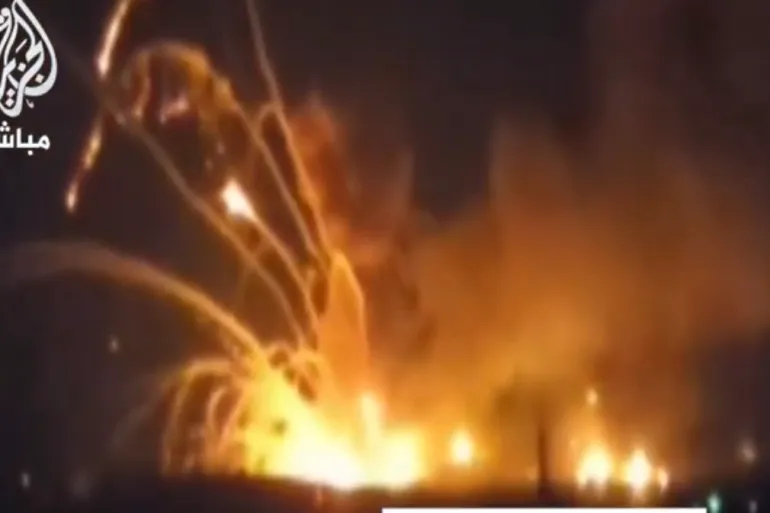
Navy headquarters yesterday said it was continuing the search for Lt. Thilina Udayapriya, second-in-command of the Super Dvora Mark III Fast Attack Craft (FAC), which sank in the seas off Angulana, on 15 August, 2026. Of the 12-member crew, 11 were rescued but so far SLN efforts to locate the missing officer’s body had failed, sources said.

They said that the salvage operation of the sunken craft, taken delivery from Israel after the end of the war, is continuing amidst gruelling weather and rough sea conditions, and the sunken vessel is now off Bambalapitiya.

Sources said that the vessel collided with a sunken ship MV Thermopylae Sierra that sank in August 2012, during a monsoon storm. The ill-fated Super Dvora Mk III has gone over the ship wreck in spite of it being clearly demarcated in the nautical chart, aka hydrographic chart available to the ill-fated vessel’s crew. But authorities had failed to mark the site with a buoy to warn maritime traffic, in spite of public appeals. (SF)

Continue Reading

News

Tripartite MoU to expand free cardiothoracic surgeries at KDU Hospital

Published

on

The Ministry of Defence, Ministry of Health and Mass Media, and the General Sir John Kotelawala Defence University (KDU), have signed a tripartite Memorandum of Understanding (MoU) to facilitate the expansion of free cardiothoracic surgery services by utilising the facilities of the General Sir John Kotelawala Defence University (KDU) Teaching Hospital.

The Defence Secretary Air Vice Marshal Sampath Thuyacontha (Retd), Secretary to the Ministry of Health and Mass Media Dr Anil Jasinghe, and Vice Chancellor of General Sir John Kotelawala Defence University Rear Admiral H. G. U. Dhammika Kumara, signed the agreement on behalf of their respective institutions.

The Defence MInistry said that the initiative, implemented in accordance with a Cabinet proposal submitted by the Minister of Health and Mass Media Dr Nalinda Jayatissa would reduce congestion and address the lengthy waiting list for cardiothoracic surgeries at the National Hospital of Sri Lanka (NHSL).

The Ministry stated: “Under the arrangement, specialist doctors and clinical staff of the Cardiothoracic Unit of the National Hospital will conduct free heart and thoracic surgeries and provide specialised treatment for patients at the KDU Teaching Hospital. KDU will provide the necessary infrastructure, medical facilities and specialised equipment, while the Ministry of Health and Mass Media will provide the required medicines, medical supplies and specialised medical care.”

Continue Reading

Trending