
News
Polls monitors fear quasi dictatorship with present rulers postponing polls


By Rathindra Kuruwita
Sri Lanka is fast becoming a semi-fascist state, Executive Director of the Institute for Democratic Reforms and Electoral Studies (IRES) Manjula Gajanayake says. Commenting on the government’s attempts to postpone elections, Gajanayake said the 2023 local council election would be known as the one where a few state officials backed by the government managed to postpone an election, and undermine representative democracy.
“President Ranil Wickremesinghe recently said he would handle the economy while the Supreme Court determined whether elections should be held. This is not what the Constitution says. Article 4 (b) of the Constitution, on the exercise of Sovereignty, says ‘the executive power of the People including the defence of Sri Lanka shall be exercised by the President of the Republic elected by the People.’ Therefore, the President must hold the elections so that we can exercise our sovereignty,” Gajanayake said.
“If elections are not held by March 19, the local councils will be administered by the Governors, who are appointed by the President. Provincial Councils are already run by Governors.
“Parliament has become a rubber stamp of the President. Now, if elections are not held, local and provincial councils as well as the Parliament will be under Ranil’s thumb. Ranil will soon hold more power than the elected Presidents. We are next door to a semi-fascist state now.”
Sri Lankan independent commissions have become nursing homes for senior government officials who want a comfortable life after retirement, Gajanayake said, commenting on the role played by some Election Commissioners.
“Why can’t we appoint younger people with energy and drive? For example, those who retired from the Department of Elections are trying to get into the Elections Commission,” he said.
A member of the elections commission, P. S. M Charles had resigned from the commission, he said. Charles earlier held the post of Governor.
There is chaos in interdependent commissions when those who do not have the capacity to handle pressure are appointed as their members.
“This is why some people question if the concept of independent commissions is suitable for Sri Lanka,” he said.
Gajanayake said that according to the law state officials who obstructed elections could be fined Rs 100,000 and/or sentenced to jail for three years. “The Election Commission has done nothing about those who obstruct elections. I would warn that soon even some of the politically-motivated lowest government servants will start challenging the EC,” he said.
Commissioner General of Elections, Saman Sri Ratnayake said that the Government Printer had not said that there was inadequate security at the Department of Government Printing until 14 February.
“We received nominations from various political parties and independent groups. 87, 720 candidates are contesting elections. Each returning officer sent the political parties that contest for each area and after checking the list, we sent the model ballot papers to the government printer. The Government Printer sent us a draft of the ballot paper, we proofread it and asked the government printer to print the ballot papers,” he said.
The EC had sent the proofread model ballot papers for all local council areas to the Government Printer by 23 January, he said.
“The Government Printer promised us to give ballot papers needed for postal voting by 10 February. Things went on routinely and there was continuous communication with all involved. Since we were told that ballot papers needed for postal voting will be given by 10 February, we had planned to send ballot papers to returning officers by 15 February. There are 676,000 postal voters. We were ready and the government printer kept on telling us that the printing process was going on smoothly,” he said.
Ratnayake said the Government Printer had asked for an extension till 13 February and then another one until 15 February.
“We were ready to dispatch the ballot paper by 15th and therefore we asked the Government Printer to finish printing by 14 noon. Then, we were suddenly told the printing had not been completed and then we had to tell the Postal Department that we would not be able to dispatch the ballot papers on the 15th,” he said.
Ratnayake said because of the delay by the Government Printer, postal voting could not be held as scheduled on 22 to 24 February.
“Holding elections is not a responsibility that we bear alone. There are many institutions involved and everyone must do their duty. Printing ballot papers is in the mission statement of the government printer. The Government Printer must print ballot papers, as per their own mission statement and the constitution of the country. We are in this mess because they have not done their duty,” he said.
Executive Director of People’s Action for Free and Fair Elections (PAFFREL), Rohana Hettiarachchi said postponing an election allegedly due to a shortage of funds set a bad precedent and that every Sri Lankan must work together to pressure the government to hold local council elections.
“If you look at our electoral history, some governments have delayed elections. Some have held them earlier or have held elections on a staggered basis. They have played around with election dates to get an advantage. However, all this was done within the legal framework. For example, the line minister can delay an election. The president can call an early election. This time the government has used illegal ways to postpone elections. It has manipulated various actors to ensure that the local council election can’t be held,” he said.
Hettiarachchi said that if the government succeeded in delaying the election, it would set a bad precedent. The main argument against an election by the government was that there was no money in the Treasury to hold an election, he said.
“However, it is obvious that the government has money for other things. Yes, we agree that there is a crisis and that the Minister of Finance should carefully manage the economy. But elections should be a priority for him because people’s sovereignty is above all. A government gets a mandate to carry out their economic, social, or other programs through elections,” he said.
Hettiarachchi said if the government succeeded in postponing the election, future rulers will use any pretext to postpone elections. “Someone can deliberately destroy our economy and claim that elections can’t be held because there is no money. What will we do then? We have to stop this attempt at postponing the election now,” he said.


ECONOMYNEXT –International assistance for forensic analysis of the remains unearthed at the Chemmani mass grave will be sought when the need arises, Sri Lanka’s Minister of has Justice said after opposition legislators urged the government to seek help.
“We have spoken to embassies, we have made all the local finances necessary for excavation. But when it comes to DNA analysis, depending on the type and nature we will definitely have to go for internationally recognised places,” Harshana Nanayakkara said in response to a query in Parliament.
Nanayakkara said that request for international expertise is dependant on the direction the courts give on what needs to be done, after which they will decide which agency best suits the proceedings.
The minister also recognised that local expertise is lacking in the forensic department, and the need to train local staff with the help of international experts.
Opposition MPs argued that the present need is direct help in forensics from international entities, rather than the longer term need to train the staff on analysis.
Currently, the investigation is in the excavation and exhumation stage, conducted by archaeologist Raj Somadeva and his team.
The existence of the Chemmani mass grave was first brought to light in 1998, during the trial of the rape and murder of schoolgirl Krishanti Kumaraswamy.
In February 2025, construction workers found remains near the Sinthupathy Cemetery, and following investigations ordered by the Learned Magistrate, the mass grave was discovered.
412 bodies have been discovered, with 409 bodies recovered as of 23 June 2026. According to the Office on Missing Persons, this is the 17th recorded mass grave in Sri Lanka.
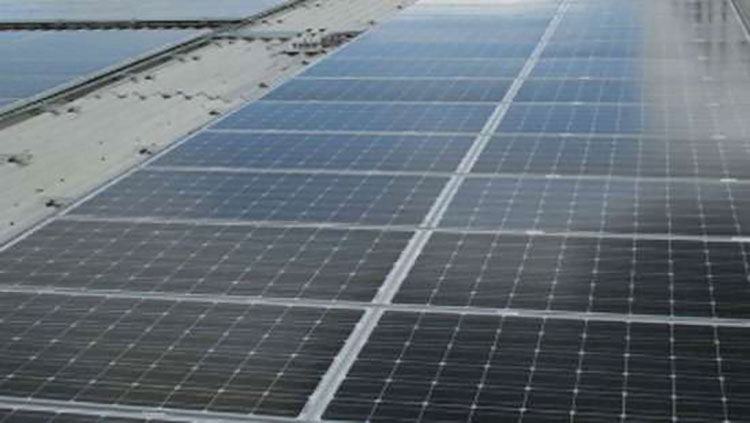
The Asian Development Bank (ADB) has approved a $57.4 million financing package to help Sri Lanka expand access to affordable clean energy and reduce greenhouse gas emissions through a large-scale rooftop solar aggregation and virtual net metering programme.
The financing comprises a $35 million concessional loan, $16.9 million in grants from the European Union and $5.5 million from the Japan Fund for the Joint Crediting Mechanism. With additional contributions from implementing agencies, the total estimated cost of the project is $80.5 million.
Under the Rooftop Solar Aggregation and Virtual Net Metering Project, two state-owned utilities — Electricity Distribution Lanka (Private) Limited and Lanka Electricity Company (Private) Limited — will introduce a scalable model to collect electricity generated from large rooftop solar installations and allocate the benefits virtually among eligible consumers.
The initiative will allow consumers to access solar power benefits without having to install individual rooftop solar systems.
ADB Country Director for Sri Lanka Shannon Cowlin said the project would broaden access to affordable renewable energy while strengthening the resilience and inclusiveness of the country’s power sector.
She said the initiative would also support grid modernisation and digital transformation, while creating employment opportunities and encouraging greater participation of women and youth in the clean energy sector.
The project is expected to benefit micro, small and medium enterprises and community organisations that face financial or space constraints in installing their own rooftop solar systems. Through a social compensation mechanism, eligible groups will receive reductions in electricity costs under the virtual net metering system.
The programme will support around 25 megawatt-peak of rooftop solar capacity while strengthening distribution networks, improving digital capabilities and preparing the national grid to accommodate higher levels of distributed renewable energy.
A dedicated training facility will also be established under the project to develop green skills, enhance women’s participation in the sector and build technical expertise in advanced low-carbon technologies.
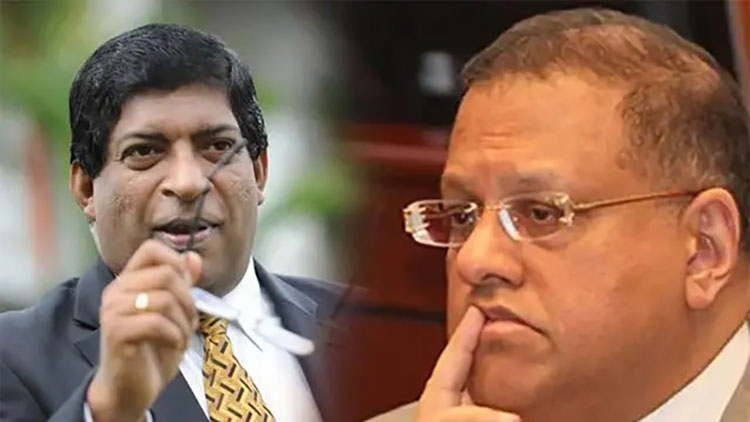
The Colombo High Court on Friday ordered that proceedings in the case filed against 11 defendants, including former Central Bank Governor Arjuna Mahendran and former Finance Minister Ravi Karunanayake, over alleged irregularities in the Central Bank bond auction be taken up again on July 22.
The case was called before Colombo High Court Judge Manjula Thilakaratne, who informed court that the Trial-at-Bar bench appointed to hear the matter had not been properly constituted.
Accordingly, the judge directed that the case be recalled on July 22 for further proceedings.
The Attorney General has filed indictments under the Public Property Act against 11 accused, including Mahendran, Karunanayake, Perpetual Treasuries Limited and its directors Arjun Aloysius and Geoffrey Aloysius.
The accused have been charged over alleged irregularities connected to a Treasury bond auction conducted by the Central Bank in March 2016.

Showers will occur at times in the Western, Sabaragamuwa and North-western provinces and in Galle, Matara, Kandy and Nuwara-Eliya districts

Venezuelans dig for earthquake survivors as death toll rises to 1,430

Chemmani mass graves: Govt to seek international forensic help

ADB approves $57.4 million package to boost Lanka’s rooftop solar drive

Bond scam case against Mahendran, Ravi K fixed for July 22

Lanka is world’s top trending wellness destination for 2026

‘Dates have the highest sugar content to fight Coronavirus’

Sunday Island 27 December – Headlines

#SundayIsland 17th December – Headlines

Sunday Island – 28th March

Sunday Island Headlines – 21 March

Sunday Island – 21st February – Headlines
-

 Features6 days ago
Sri Lanka developing independent hydrographic capabilities
-
 Opinion5 days ago
Ranasinghe Premadasa: The man who would not take ‘No’ for an answer
-
 News17 hours ago
Another 1,132 Sri Lankan Personnel to be deployed for United Nations Peacekeeping Missions
-

 Latest News6 days ago
Sooryavanshi thumps fastest List A fifty as India A win tri-series
-

 News5 days ago
US Assistant Secretary of State for South and Central Asian Affairs meets President
-

 Opinion4 days ago
Sri Lanka’s national security: Justice, reconciliation, and forward-looking vigilance
-

 Business6 days ago
University of West London opens Sri Lanka’s first full UK university branch campus
-
 Opinion3 days ago
A triumph for Pakistan’s skilled diplomacy at Iran-US talks