
News
Police link majority of shootings to underworld and organised crime


A vast majority of shooting incidents reported across the country this year have been linked to underworld and organised crime groups, according to data released by the Police Headquarters.
Police Spokesman ASP F.U. Wootler said that between January and July 2025, a total of 68 shooting incidents had been reported countrywide, resulting in 37 deaths and 39 injuries.
Of the 68 shootings, 50 — or over 78 percent — were confirmed to be directly tied to organised crime networks. The remaining 18 were connected to personal disputes and land-related conflicts.
Notably, 34 of the 37 individuals killed — amounting to more than 91 percent — were identified as members of underworld gangs. The remaining three deaths were due to unrelated incidents, ASP Wootler said.
Ongoing police investigations have led to the arrest of 24 suspected gunmen and 15 motorcyclists believed to have facilitated the attacks. A further 150 individuals suspected of providing logistical or operational support have also been taken into custody.
Police recovered a cache of 1,165 weapons — both foreign-made and locally manufactured or improvised — during operations carried out between January 1 and June 10. Among the haul were 23 T-56 assault rifles, 46 pistols, and 30 revolvers, officials said.
The most recent shooting took place on July 11 in Ganemulla, where unknown gunmen fired five rounds at a private residence. Investigations have revealed that the homeowner — a Sri Lankan employed as a visa officer in Dubai — may have been targeted due to ongoing rivalries among organised crime figures. Multiple police teams are continuing investigations.
Meanwhile, ASP Wootler also underscored the ongoing success of the nationwide anti-narcotics campaign jointly conducted by the Police, Tri-Forces, and the Special Task Force.
From January 1 to July 11, a staggering 106,000 individuals were arrested on drug-related charges. Seized narcotics during this period include: 922 kilos of heroin, 1,386 kilos of crystal methamphetamine (ICE), 10,895 kilos of cannabis, 22 kilos of cocaine and 329 kilos of hashish.
In a separate three-month crackdown initiated on April 13, security forces seized an additional 302 kilos of heroin, 104 kilos of ICE, and 2,641 kilos of cannabis. A total of 35,442 legal cases were filed during this special operation so far.
By Hemantha Randunu and Norman Palihawadane



The World Bank Board of Executive Directors has approved a US$50 million project to support Sri Lanka’s digital transformation.
The project will promote innovation and investment in Sri Lanka’s digital sector, modernise government services, and make them easier to access and more responsive to the needs of people and businesses, the World Bank Group said in a statement.
The Sri Lanka Digital Transformation Project will support practical, people-centric digital solutions, including an integrated online citizen service portal for government services, a secure system for sharing data across government agencies to improve efficiency and transparency, a digital locker for storing digital documents, and a government cloud platform that can be scaled as demand increases.
These investments in Sri Lanka’s digital public infrastructure will be complemented by training programmes to help citizens and public servants use these new digital services with confidence.
“Digital transformation is a powerful driver of inclusive growth and better services,” said Gevorg Sargsyan, World Bank Group Country Manager for Sri Lanka and the Maldives. “By investing in core digital platforms and skills, this project will improve how services are delivered to people and businesses and create new opportunities for private sector-led innovation.”
Beyond improving public services, the project will also help strengthen Sri Lanka’s technology and start-up sector. Through a digital start-up accelerator, the project will foster innovation, strengthen the local start-up ecosystem, and encourage female entrepreneurship.
Mid-sized technology firms will also benefit from targeted programmes to help them reach customers and investors in international markets. These efforts are expected to attract around US$10 million in private investment over time, supporting job creation and higher IT export earnings, it said.
“Better digital government and a stronger IT sector go hand in hand,” said Anna Metz, World Bank Senior Digital Specialist and Task Team Leader. “As public services go digital, demand grows for local technology solutions. At the same time, a more competitive IT sector strengthens Sri Lanka’s ability to develop and maintain modern digital systems.”
The project builds on the work done by the International Finance Corporation (IFC), the private sector arm of the World Bank Group, which has supported Sri Lanka’s start-up and innovation ecosystem through investment and advisory services.
In addition, the project will strengthen Sri Lanka’s ability to prepare for and respond to emergencies. As the country faces increasingly frequent cyclones and climate-related disasters, robust digital systems can support data-driven decision-making, real-time information sharing across government agencies, and better coordination of emergency services and relief. Digital service delivery will also ensure that essential government services can continue during crises and allow authorities to quickly identify affected communities, share critical information, and deliver assistance electronically.
The project will be implemented by GovTech Sri Lanka (Pvt) Limited, in close collaboration with the Ministry of Digital Economy, it added.
Aligned with Sri Lanka’s national development goals and the World Bank Group’s Country Partnership Framework, the project reflects a shared commitment to leveraging digital technologies to improve public services, strengthen public sector efficiency and governance, and build an inclusive digital future for Sri Lanka.

Video footage of a wild elephant being shot and set on fire caused outrage and renewed scrutiny
(UCAN) Buddhist monks and environmentalists have urged the Sri Lankan government to adopt a nationwide programme to prevent human-elephant conflict, after video footage of a wild elephant being shot and set on fire went viral on social media.
Police arrested three men, on 18 December, in the north-central district of Anuradhapura on charges of cruelty to animals, according to media reports.
Wildlife officials said the elephant sustained more than a hundred bullet injuries before it was set alight. Veterinary surgeons’ attempts to save its life failed, they added.
The arrests were made after the video drew widespread outrage and increased concerns over escalating human-animal conflict.
Buddhist monks and environmentalists demanded that the government take immediate measures to prevent such inhuman acts in the future.
Ven. Pahiyangala Ananda Sagara Thera, a Buddhist monk and environmental activist, condemned the act as “shameful.”
“The innocent animal came to fulfil its hunger but was shot and burned alive,” he told reporters.
Opposition Leader Sajith Premadasa urged “an emergency national response to the crisis, calling attention to the necessity of collaboration between the government, the Department of Wildlife, and civil society to mitigate human-wildlife conflicts.”
He also called for a nationwide education programme, beginning with schools in areas where such conflicts exist.
Shanilaka Nayanajith, head of the We for Environment group, stressed the need to establish elephant corridors, implement early warning systems, and install additional electric fencing to prevent such incidents.
He also called for community awareness programmes, the use of deterrents to prevent crop damage by animals, and the relocation of problem elephants to safer locations, among other measures.
“There is a need for greater collaboration between the government and the communities to reduce human-elephant conflicts,” Nayanajith told UCA News.
Priyadarsani Saduni, an environmental activist based in Colombo, said existing laws in the country are inadequate to address the perpetrators and called for stronger laws to protect wildlife.
Ven. Walawahengunawawe Dhammaratana Thera, chief monk of Mihintale Rajamaha Temple, urged the government to take immediate action, enforce strict penalties, and protect elephants.
Sri Lanka is home to an estimated 7,000 elephants. It is illegal to kill them in this Buddhist-majority nation, with the animal having religious significance.
However, more than 2,000 elephants have died in the last five years, including 130 this year.
Sri Lanka lost 433 elephants in 2022, 488 in 2023, and 386 in 2024, according to official data. The deaths are mainly a result of shooting, poisoning, and electrocution.
Wildlife experts report that elephant habitats are shrinking due to increased human activity and development. Villagers chase away elephants when they stray, torturing them and driving them into wildlife reserves.
Opposition leader Premadasa demanded swift legal action against those responsible for such actions.
President Anura Kumara Dissanayake told Parliament in November that it was proposed to allocate Sri Lankan rupees 1,000 million (US$3.23 million) to accelerate the construction of electric fences and 10 million rupees to research long-term solutions to mitigate human–elephant conflict.
Latest News
Steps are being taken to abolish the Executive Presidency and establish a Parliamentary System of Government – Prime Minister

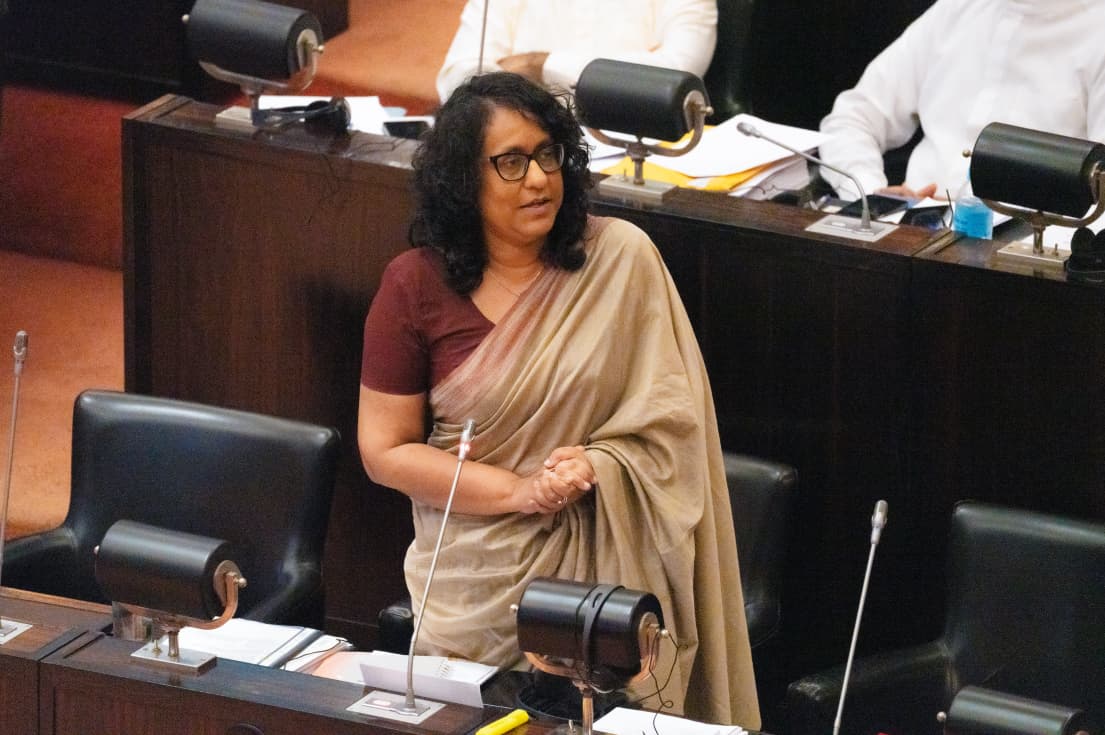
Prime Minister Dr. Harini Amarasuriya stated that steps are being taken to abolish the Executive Presidency and establish a parliamentary system of government, including the appointment of a President without executive powers. The Prime Minister further stated that measures are currently underway to hold the Provincial Council elections, which have been stalled due to provisions in the Provincial Councils Elections (Amendment) Act No. 17 dated 2017.
The Prime Minister made these remarks on Friday the 19th of December at Parliament while responding to a question raised by the Leader of the Opposition, Sajith Premadasa, under Standing Order 27(2).
The Prime Minister further stated,
“As stated on page 194 of the policy statement “A Thriving Nation – A Beautiful Life”, the government intends to draft a new Constitution. This draft will be presented to the public, followed by dialogue and discussion, after which necessary amendments will be made. The Constitution is then expected to be approved through a referendum. At present, reports of committees previously appointed to draft a new Constitution, along with other constitutional reform proposals, are being considered. Thereafter, a basic concept paper will be submitted to the Cabinet of Ministers.
The necessary steps are taken to abolish the Executive Presidency, and establish a parliamentary system of government, and appoint a President without executive powers will be undertaken in the process of drafting the new Constitution. It is not possible to abolish the Executive Presidential system without introducing a new Constitution. A study is currently underway on the abolition of the Executive Presidency and the possible methods of the process. While giving due attention to resolving the country’s pressing issues, focus has also been placed on abolishing the Executive Presidency. Relevant timelines will be announced in due course.
Steps are currently being taken to hold the Provincial Council elections at the earliest possible time. Under Section 3(b) of the Provincial Councils Elections (Amendment) Act No. 17 dated 2017, a Delimitation Commission appointed by the President must submit a report determining the demarcation of electoral divisions and the number of electoral districts. Once this report receives parliamentary approval, it will be possible to hold the Provincial Council elections.
The inability to hold Provincial Council elections thus far is due to the fact that the delimitation process required under the provisions of the Provincial Councils Elections (Amendment) Act No. 17 dated 2017 has not yet been completed. Accordingly, a study is currently being conducted to determine whether the elections should be held after completing the delimitation process, or whether amendments should be introduced to the provisions of Act No. 17 dated 2017 in order to proceed with the elections. A decision on holding the Provincial Council elections will be taken following the completion of this study. Nevertheless, provisions have been allocated in the 2026 Budget to conduct the elections once these processes are concluded.
The Prime Minister further stated that studies are currently underway regarding the introduction of new legislation and necessary legal amendments required to establish a Government Prosecutor’s Office.
(Prime Minister’s Media Division)

Lanka gets US$50 Mn World Bank push for digital government

Lankan monks, activists demand an end to human-elephant conflict

ComBank and Prime Lands join forces to offer full financing on homes

Mahogany Masterpieces celebrates grain’s beauty

KIU University gains national and global recognition

HNB Assurance marks major milestones in its technological transformation journey

‘Dates have the highest sugar content to fight Coronavirus’

Sunday Island 27 December – Headlines

#SundayIsland 17th December – Headlines

Sunday Island – 28th March

Sunday Island Headlines – 21 March

Sunday Island – 21st February – Headlines
-

 Midweek Review5 days ago
How massive Akuregoda defence complex was built with proceeds from sale of Galle Face land to Shangri-La
-
 News4 days ago
Pope fires broadside: ‘The Holy See won’t be a silent bystander to the grave disparities, injustices, and fundamental human rights violations’
-

 News4 days ago
Pakistan hands over 200 tonnes of humanitarian aid to Lanka
-
 News5 days ago
Burnt elephant dies after delayed rescue; activists demand arrests
-

 Business3 days ago
Unlocking Sri Lanka’s hidden wealth: A $2 billion mineral opportunity awaits
-

 Editorial5 days ago
Colombo Port facing strategic neglect
-

 News3 days ago
Army engineers set up new Nayaru emergency bridge
-

 News5 days ago
Sri Lanka, Romania discuss illegal recruitment, etc.