
News
Place names say who we are: Nallur triumphs Nellore

by S. Ratnajeevan H. Hoole
The Perahera in Kandy was permitted even with artistes catching Covid. The Nallur Thiruvilla was banned. Our terrorizing police had parades at the temple for TV but shut down streets and diverted traffic although no one was worshiping. When robbers came two doors away (21.08.2021) during curfew, the police emergency number did not answer, and the normal number was hung up when I called. The police do not protect us. My Nellore is being robbed of its name and history.
Rick Grannis of UC Irvine found American racial populations being organized according to “who is down the street.” I address here the subtle fight over place names to suggest the dwellers’ caste. Nellore is the name of Nallur in early church records; streets correlate to caste and land price.
We see street segregation in the Tamil Hindu Epic Chilappathikaram Canto 5. Streets are reserved by caste having their “respective localities.” Jewellers, copper/iron mongers, cobblers, grain-sellers, et al., had their reservations – even mutton vendors, fishmongers, and prostitutes. These places in the city went by the name of Maruvurppakkam (the Other Village Side). In Pattinappakkam (Town Side) dwelt highly renowned great men.
Nellore was the seat of the Jaffna Kingdom of the Aryachakaravarthies. Chekarajacekaramalai says their lineage was Brahmin (I doubt it). Our royals naturally upheld agamic Hindu culture; particularly caste.
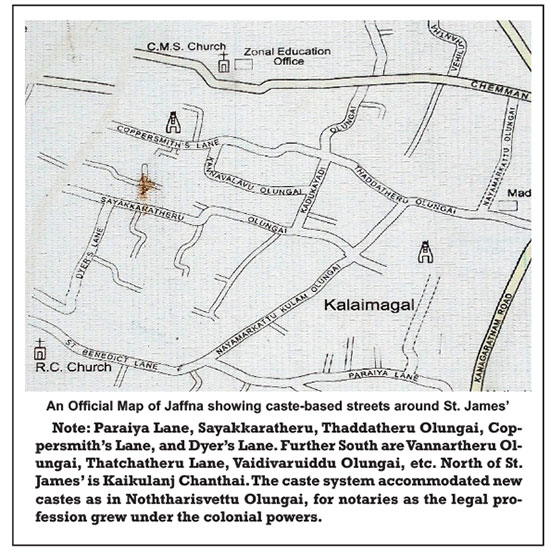
 Madurai’s practice was upheld in Nellore – see the street map from the Jaffna Public Library. The CMS St. James’ stands where the principal Hindu Temple stood at Nallur Centre. Guardian-temples stood in agamic fashion, namely Chattanaathar Kovil (North), a destroyed untraceable temple (West), Moothavinayagar Kovil (South) and Veyyilviluntha Pillaiyar Kovil (East). The map says what caste lived where. People who want a high-status buy into Vellala areas.
There is push back. For example, North of Chattanaathar Kovil is where the Kaikular of middling caste live (palace guards). It was called Kaikulanj Chanthai, now renamed Kalviankadu. This area North of the Palace was occupied by the Portuguese garrison. Many Kaikular show admixture: physical stature (like TELO’s Sri Sabaratnam), pink skin, and grey eyes which are now ascribed to Brahmin admixture and used by Kaikulas to make claims to Brahmin-ritual, like shorter periods of mourning.
The upper castes lived on the main roads within the circle of the guardian temples centred on CMS St. James’, called Changili Thoppu (King Changili’s Garden). People in the by-lanes were of lower castes – typically workers from the trades and musicians, whom the royals needed, and untouchables.
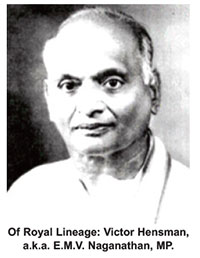
The Rev. John Hensman was the first Anglican priest from Jaffna. It is a shame that Dr. Victor Hensman (later Naganathan) of that family whose life we celebrated only on 15 Aug. 2021 through an international Zoom conference, abandoned that proud heritage and took on the name E.M.V. Naganathan, MP, SJV Chelvanayakam’s righthand.
The high-caste Circle stopped East of Veyyil Viluntha Pilllaiyar Kovil where Chemmany Road (leading to Chemmany) ends on the map. East of that is Nayanmaarkattu where field workers lived. The unnamed road at the top-right of the map was Nayanmaarkattu Veethi (becoming Aadiyapaatham Road) going to Thirunelveli Market. The short stretch of road from Kachcheri-Nallur Road towards the temple as Point Perdro curves toward Muththirai Chanthai was exclusively for Musicians, who could be heard practising their sweet music up to the mid-1960s. They have sold their lands to those seeking caste-upgrade by coming closer to the Nallur Temple.
Many new families have moved in buying land especially as the Christians left Nellore. Changili Thoppu where CMS St. James’ stands and the Palace stood, contains Muthirai Chanthai (Stamp Market, where stood a market to my times, and named so because the King’s tax collectors stamped in indication that taxes had been paid). That market is gone now so new-comers give away their late-coming status by calling it Muththirai Chanthi (Stamp Junction), although Church deeds refer to “Muththirai Chanthai.”
Chemmany Road
Chemmany Road, running by the old palace and central temple with the stretch of Point Pedro Road in front of the Palace entrance, was one of the most important roads. Fr. V. Perniola (The Catholic Church in Sri Lanka) makes occasional reference to the early church in Jaffna in Portuguese times. The early missionaries were Franciscans. King Changili martyred the first Franciscans and many Tamil saints, including his own son. The name Chemmany Road is commonly thought to have its etymology in chem (red) mani (stone, jewel). That, however, is far-fetched because there are no red stones or gems in the area. The likely etymology is chem (holy-red) munn (sand)-ee (the place that has red sand). Chemmany is the place where martyrs’ blood was spilt. As such, the church precincts and the Teachers’ Training College, with its associated Practising School, are hallowed grounds for Christians, RC and non-RC.
The Rev. Elijah Hoole married a girl from Nallur and the Hooles have lived on Chemmany Road for generations. Church deeds testify that our land belonged to my great-great grandmother “Mrs. E. Hoole.”
Nellore Temple History
St. James’s Church is built on the original Central Temple razed to the ground presumably in June 1619 when the Portuguese launched an expedition against Changili II. He took baptism in Goa before his beheading for his crimes, testifying “I would rather die a Christian Coolie than a Heathen King” and “uttering the sweet name of Jesus” (Queyroz, 690-1). His two Queens were preached to by Friar Antonio de Santa Maria (Queyroz 686ff); involving long debates about religious choices with the Queens showing appreciation for Christianity but not enough to convert – until one Queen is moved to ecstatic tears and gets baptised and preaches to the other who too converts. She donated the land where the central temple stood to the Church. On that spot was built a Roman Catholic chapel occupying the St. James’ altar and vestry, and a schoolhouse. Thus St. James’ turned 557 years old in June 2019 when it had Mary as part of its name (citing Roman Catholic historian Rev. Dr. Fr. J. E. Jeyaceelan), although the 200th anniversary recently celebrated was only of the Anglican Church.
Following replacement of the Central Temple by a Roman Chapel, historic documents refer to the Nellore Temple having been built by Chembaha Perumal. There is deliberate spinning between the razed temple and the new. The Wikipedia says, “According to the Yalpana Vaipava Malai, the temple was developed at the site in the 13th century by Buwaneka Bahu, a minister to the King of Kotte. Chembaha Perumal is credited with building the third Nallur Kandaswamy temple”. Where were the first and second? Other so-called encyclopedic sources say, “the Temple’s foundation was laid in 948 AD. … Due to invasion of foreigners, the temple had to be relocated several times in different places within [the] Nallur area.” Nonsense.
After 948 AD it was the time of the ardently Saivite Cholas, who never would have destroyed a Murugan Temple, and then of the Aryachakaravarthies who too promoted Saivism. So why did the temple have to be relocated several times within Nallur whereas those escaping invaders would have fled Nellore?
However, many writers blame Phillippe de Olivero – a Portuguese army commander – for destroying all Hindu temples in Jaffna in 1620. His expedition against Changili II was in 1618. So where was the Nallur temple he destroyed? Which? When? That account is doubtful. The actual destruction would have been in 1619 under de Olivero by when a Christian Chapel was already standing. That would have been where the original temple was. Stories of its relocation need clear proof of when and to where it was relocated.
The present-day Nellore Temple was really built (as a new temple, not rebuilt) when the Dutch allowed it. According to what I was taught in primary school and to India’s Jaffna Consul General’s web site, “It is believed that there was a shrine dedicated to an Islamic Sufi saint in the temple complex from 1734 to 1749 which was relocated in 1749 when the temple structure was built.”
Clearly the present temple stands on “The Other Village Side” in the Muslim quarter with bad connotations for caste. The original Nellore (Paddy Village, Chemmany to this day having paddy fields cultivated by Palla field workers) had to be rescued and made Nallur, the place of good people. The Muslims were pushed further West into Chonaka Theru.
What was done to the Sufis was exactly what the Portuguese did to the Hindus, and the LTTE did to the Muslims in Oct. 1990.
So the Nallur temple cannot be older than late Dutch rule – late in the Eighteenth Cent. when the Dutch began giving permission to build temples. (They never attacked Mosques because they contained no idols).
We see a lot of self-enhancing expansionist heritage history concerning Nallur. Wikipedia even claims, “Part of the original Shivalingam of the Nallur Kandaswamy Temple was located in the Vicarage [of St. James’] till 1995 when it was destroyed during the recapture of Jaffna by Sri Lanka armed forces. Nonsense. I lived in the vicarage from 1956 to 1967. There was no Sivalingam.
Battle for Nellore
St. James’ is the centre of Nellore made into Nallur to claim high caste status, although according to the map, several lower castes also live in Nellore outside the circle round St. James’.
The new temple stands where Muslims and traders ejected from there lived; technically on low-caste soil. It was Maruvurppakkam rather than central Nallur. Reclaiming Pattinapakkam is a long-term project in progress. For that, the temple area must expand East and Nayanmaarkattu expand West, thereby eliminating the real Nallur.
I have begun receiving letters addressed to Nayanmaarkattu Road rather than Chemmany Road. St. James’ up to 1975 or so was dominated by Vellalas, but now only about 3 families remain. The other castes to the east (Nayanmaarkattu) and south (Ariyalai) outside the circle around St. James’ dominate the church, even though the Hindus among them have stone-throwing and fisticuffs when there is Paraya-Palla love. With all Wardens today non-Vellalas, they have lumped our family with Nayamaarkattu for administrative purposes arguing that Changilithoppu is now part of Nayanmaarkattu. Likewise, Paraya Street now has disappeared into St. Benerdict’s Street. The North-South Nayanmaarkattu Olungai leading to Nayanmaarkattu is removed and now runs East-West to Kanaharatnam Road leading to Ariyalai. However, since the Provincial Department of Education has illegally encroached on the CMS Teachers’ Training College and Vellalas (or aspiring Vellalas) there will not use the Nayanmaarkattu Road as address in preference to Chemmany Road, obliterating that Chemmany Road address is uphill.
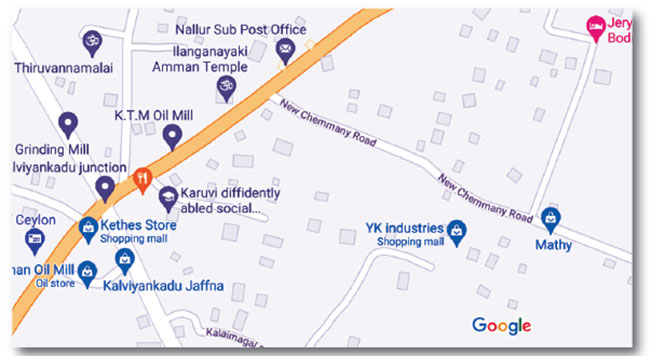
The attempt to replace “Chemmany Road” with the name “New Chemmany Road” elsewhere is ongoing. A road by this name is seen as having been started from Kaikulanj Chanthai. It does not even reach Chemmany. The Nallur sub-Post Office was within the circle by Chattanaathar Kovil. That has been moved to Kaikulanj Chanthai diminishing the claims of the original Nallur.
When I returned to Sri Lanka and was looking for land close to St. James’, my Hindu relations told me my Hindu cousin in new Nallur was selling his land. When I inquired, he denied it. My relations said he was untruthful. Three months later he had sold it to a Hindu. There is an ongoing attempt to call the temple area Siva Boomi. So meat-eating Christians are not welcome (although I am vegetarian when most Hindus re not). Even the strict king of Kannaki’s, Pandiyan Nedunj Chelian, permitted mutton-vendors and fishmongers; but not the Velllalas of Nallur Temple. Eating-houses are vegetarian. A meat-eating German Shepherd on Siva Boomi has been switched to vegetarian.
The real Nellore is vanishing. The usurper Nallur stands on sufi soil and is in bad hands.

…Urges President not to undermine public confidence in independence of judiciary
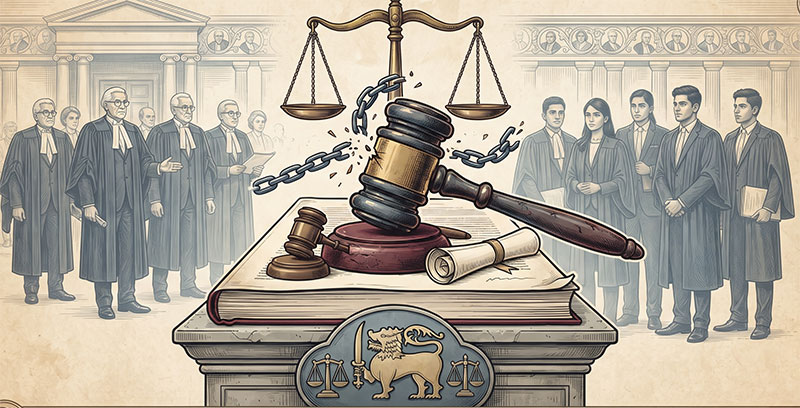
The Colombo Law Society has urged President Anura Kumara Dissanayake not to proceed with any constitutional amendment to extend the retirement age of Supreme Court and Court of Appeal judges, warning that such a move could undermine public confidence in the independence of the judiciary.
In a letter dated July 2, 2026, the Society said its Executive Committee had unanimously resolved to convey its concerns following reports of a proposal to increase the retirement age of judges of the superior courts.
The Society said any amendment affecting the tenure of sitting judges should be approached with caution, adding that public confidence in the independence of the judiciary must be safeguarded.
Full text of the letter: The Executive Committee of the Colombo Law Society, at its duly convened meeting held on 25 June 2026, deliberated extensively on the reported proposal to increase the retirement age of Judges of the Court of Appeal and the Supreme Court.
Having carefully considered the matter, the Executive Committee unanimously resolved to convey its concerns to Your Excellency and to express its support for the position taken by the Bar Association of Sri Lanka in its letter addressed to Your Excellency, dated 25 May, 2026.
The Colombo Law Society recognizes and appreciates the invaluable contribution made by members of the higher judiciary to the administration of justice in Sri Lanka. However, we respectfully take the view that any alteration to the constitutionally established retirement age of Superior Court Judges must be approached with the utmost caution and only after broad consultation with all relevant stakeholders.
The existing retirement ages of Judges of the Court of Appeal and the Supreme Court have remained unchanged since the promulgation of the 1978 Constitution. Any departure from this long-standing constitutional framework, particularly where it affects serving judges, may give rise to public concern and perceptions that could undermine confidence in the independence and impartiality of the judiciary.
The independence of the judiciary is one of the cornerstones of the Rule of Law and democratic governance. Equally important is the public perception of such independence. The judiciary must not only be independent in fact but must also be seen to be independent and free from any appearance of influence or accommodation.
The Colombo Law Society further notes that the number of Judges of both the Court of Appeal and the Supreme Court was increased through constitutional reform in 2020. In those circumstances, questions naturally arise as to whether there exists a compelling institutional necessity to alter the retirement age of Superior Court Judges at this juncture.
We respectfully submit that constitutional amendments relating to the judiciary should be undertaken only after careful consideration of their long-term impact on judicial independence, public confidence, and the constitutional framework of the Republic.
Accordingly, the Colombo Law Society respectfully urges Your Excellency to give the fullest consideration to the concerns expressed by the legal profession and to refrain from proceeding with any constitutional amendment seeking to extend the retirement age of Judges of the Court of Appeal and the Supreme Court.
We remain confident that Your Excellency will continue to uphold and safeguard the independence, integrity, dignity, and public confidence in the judiciary, which remain essential to the preservation of the Rule of Law and democratic governance in Sri Lanka.
News
Freedom 250: US Embassy celebrates America’s 250th Independence Day through magic of American cinema

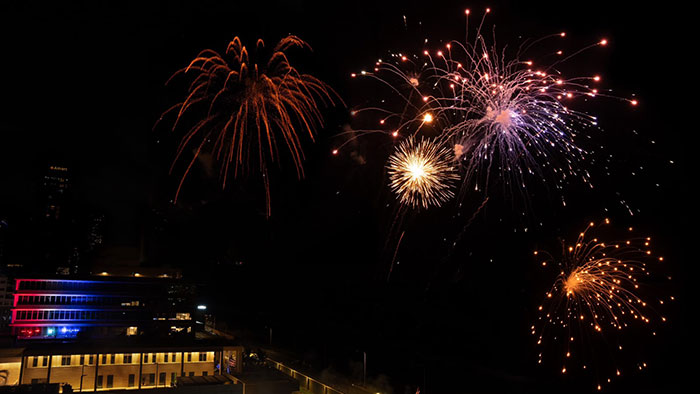
The US Embassy in Sri Lanka commemorated America’s semiquincentennial—250 years of independence—with Chief Guest, Minister of Health and Mass Media Nalinda Jayatissa, and hundreds of Sri Lankan partners, government officials, business leaders, diplomats and friends of the United States, at a Freedom 250 celebration honouring the enduring power of freedom through the lens of American cinema. The July 2 celebration highlighted the ideals that have shaped the United States for two and a half centuries—individual liberty, self-government, freedom of expression, and the belief that free people can dream, create, and shape their own future. The Embassy grounds were transformed into an immersive cinematic experience, celebrating how American films have reflected those freedoms while inspiring audiences across generations and around the world, including in Sri Lanka.
Welcoming guests to the celebration, Chargé d’Affaires Jayne Howell reflected on the profound connection between American freedom and cinematic storytelling. “Tonight, we celebrate 250 years of American independence by honouring one of our nation’s greatest gifts to the world—the art of cinema,” she said.
“For more than a century, American filmmakers have used their creative freedom to craft stories that resonate across every border and culture. From the opening of the world’s first dedicated movie theater in New Orleans, in 1896, to the groundbreaking animation of Snow White, from the sweeping epics like The Godfather to the technological marvels of Avatar, Star Wars and Jurassic Park, and classics like The Bridge on the River Kwai—filmed in Sri Lanka and forever linking the island to Hollywood history—our films reflect the very freedoms we celebrate today—the freedom to dream boldly, to question deeply, and to imagine new possibilities.”
CDA Howell continued, “As we share this cinematic journey with our Sri Lankan friends—fellow champions of democracy and freedom—we’re reminded that the best American stories are universal stories. They speak to the courage we see in The Wizard of Oz, the unity we witness in The Avengers, the wonder we experience through E.T., the spirit of exploration and achievement captured in films like Apollo 11, and the resilience we admire in Forrest Gump. Tonight, we celebrate not just American cinema, but the freedom that makes it possible—the freedom to tell any story, to show America at its best and its most complex, and to believe that movies can change how we see ourselves and each other. That freedom is what we honour on this 250th anniversary and the enduring values that will guide us forward.”
The evening opened with a stunning visual spectacle: rooftop screens displayed on the Embassy building celebrating 250 years of American independence and commemorating the signing of the Declaration of Independence on July 4, 1776. The centerpiece was an open-air screening, under the stars, featuring carefully curated clips that traced American cinema’s evolution—from silent films that established visual storytelling techniques still used today, through Disney’s Snow White and the Seven Dwarfs (the first full-length animated feature), The Matrix’s groundbreaking “bullet time” effects, to Christopher Nolan’s The Dark Knight, which redefined superhero cinema as a vehicle for exploring complex questions about justice and society.
The celebration concluded with fireworks illuminating the Colombo sky as the III Marine Expeditionary Force Band, the US Marine Corps’ forward-deployed band in the Indo-Pacific region, based in Okinawa, Japan, performed a montage of American songs that have inspired generations. Guests enjoyed a menu featuring high-quality US beef and other American food and beverages, showcasing the global reputation of American agricultural exports.
As the United States marks 250 years of independence, Freedom 250 celebrates the enduring idea that has defined America since 1776—that freedom unlocks human potential, fuels creativity and innovation, and empowers individuals to shape a better future. Through education, trade, investment, security cooperation, and the enduring ties between our people, the United States and Sri Lanka continue to strengthen a partnership built on opportunity and shared democratic values.
The US Embassy extends its sincere gratitude to the generous sponsors whose support made this year’s Independence Day celebration possible, including Diamond Sponsors Brandix, Hayleys, Hirdaramani, MAS Holdings, Mastercard, RM Parks, and Visa, along with our other valued partners.
News
CA dismisses application filed by Yoshitha seeking to quash conspiracy charge in money laundering case
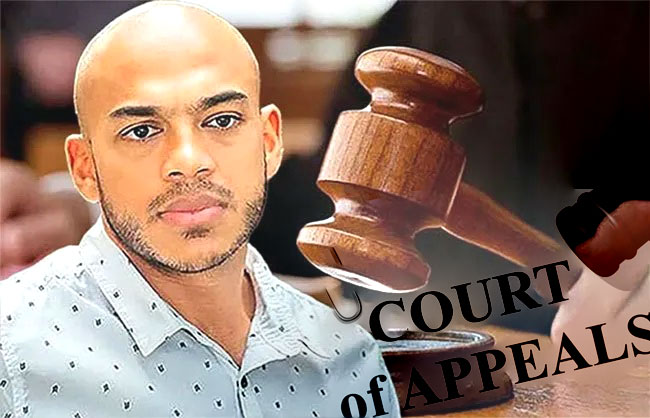
The Court of Appeal yesterday dismissed a revision application filed by Yoshitha Rajapaksa seeking to quash a conspiracy charge in the money laundering case, pending before the Colombo High Court.
Rajapaksa had challenged the conspiracy count in the indictment filed by the Attorney General, under the Prevention of Money Laundering Act, contending that the charge was not legally maintainable.
A Court of Appeal Bench, comprising Justices Amal Ranaraja and Dr. Sumudu Premachandra, rejected the application, ruling that the conspiracy charge could proceed before the Colombo High Court.
The ruling clears the way for the High Court to continue hearing the money laundering case, filed by the Attorney General against Rajapaksa.

Brutal heat cancels Fourth of July events, from DC to Philadelphia

Arias sends Colombia into World Cup last-16 with 1-0 win over Ghana

Messi scores again but Argentina given World Cup upset fright by Cape Verde

Anguished families left to identify Venezuela quake victims at makeshift morgue

Ukrainian suspect hunted by police after Monaco bomb attack was ‘disguised as a man’

Showers in the Western, Sabaragamuwa and North-western provinces and in Galle, Matara, Kandy, Nuwara-Eliya, Anuradhapura and Mannar districts.

‘Dates have the highest sugar content to fight Coronavirus’

Sunday Island 27 December – Headlines

#SundayIsland 17th December – Headlines

Sunday Island – 28th March

Sunday Island Headlines – 21 March

Sunday Island – 21st February – Headlines
-
 News5 days ago
LAWASIA warns against ad hoc initiative to increase judges’ retirement ages
-
 Features4 days ago
Climate action to bring South Asia together
-
 News4 days ago
Chamuditha to seek removal of injunction on Youtube programme
-
 Features7 days ago
People’s Bank expands digital banking network with 125th cheque deposit kiosk
-
 News1 day ago
SLAF conducts successful rescue mission under UN command in Central African Republic
-
 News1 day ago
CIABOC to question Harak Kata on Rs. 200 mn bribery allegation
-
 News4 days ago
CPRP alleges another death in custody, seeks protection for witness
-
 Midweek Review3 days ago
H’tota port’s strategic status remains focal point of geopolitical scrutiny