
Business
PGC’s turnover and PAT improve


Piramal Glass Ceylon PLC (the “Company”) reported its nine-month results as at December 31, 2020, with a turnover of Rs. 5,961 Million & PAT of 694 Million as against Rs. 5,832 Million & Rs. 330 Million in the previous year during the similar period. The company reported a growth of 2% in revenue with 110% growth in PAT. The domestic sales during the period market grew by 6% from Rs. 3,982 Million to 4,176 Million while a marginal drop was seen in the export market from Rs. 1,850 Million in F20 to Rs. 1,785 Million in F21.
During the quarter (Q3) under review, a revenue of Rs. 2,401 Million was achieved as against Rs. 2,305 Million of the corresponding period during the previous year. The company reported a profit after tax of Rs 378 Million for the quarter as against Rs 236 Million of the corresponding quarter in the previous year reflecting a growth of 60%.
The sales to the domestic market grew by 12% from Rs. 1,502 Million to Rs.1, 679 Million. In the export segment the sales declined by 10% with Rs.722 Million as against Rs. 803 Million in the corresponding period last year, mainly due to restricted vessel options to countries like Australia, USA & India. However, the company is optimistic of recovering the deferred export sales in Q4 once the situation is normalized.
Explaining the company’s export strategy, Executive Director & COO Sanjay Jain said that as a part of their strategy, the company continues to make inroads to new international markets with product launches. This quarter witnessed new launches in Australia, India, Angola, U.K and Rwanda. The strategy to expand and innovate in new product development & increased global foot print has helped the company to mitigate demand fluctuations in its existing markets due to the pandemic situation.


As geopolitical tensions in the Middle East continue to unsettle global energy and trade flows, Sri Lanka appears to be finding a degree of resilience by deepening economic engagement with partners such as Russia and the United Kingdom.
Recent diplomatic and trade developments suggest Colombo is positioning itself to benefit from both energy cooperation with Moscow and expanded export opportunities in the British market, potentially softening the impact of external shocks on its fragile economy.
During talks in Colombo last week, Foreign Minister Vijitha Herath met visiting Russian Deputy Foreign Minister Andrey Rudenko, with both sides reaffirming their commitment to strengthening bilateral ties.
Rudenko has described the island as a long-standing friend of Russia and pledged support in several key areas, including oil supplies, investment promotion, and tourism cooperation.
The assurance of energy support comes at a time when global oil markets remain volatile due to geopolitical tensions and shifting sanctions regimes. Russia indicated it was prepared to assist Sri Lanka with oil supplies if needed, though Rudenko earlier clarified at a policy discussion that Moscow prefers long-term contractual supply arrangements rather than short-term spot deals arising from temporary market disruptions.
For Sri Lanka, which has faced severe fuel shortages in the recent past, such arrangements could offer greater stability in energy procurement during periods of global uncertainty.
Russia also signalled interest in encouraging its investors to explore opportunities in Sri Lanka and increasing tourist arrivals, while expressing readiness to provide compensation for Sri Lankan war veterans who lost their lives while serving in Russia’s war against Ukraine.
Colombo, in turn, emphasized the historic nature of the relationship. Herath noted that the two countries share nearly seven decades of diplomatic ties, adding that the current moment presents an opportunity to expand cooperation through longer-term trade and economic agreements.
While Russia offers potential relief on the energy front, Sri Lanka is simultaneously gaining a competitive edge in exports through new trade arrangements with Britain.
Under the revised Developing Countries Trading Scheme (DCTS) introduced by the United Kingdom in January 2026, Sri Lanka’s apparel sector – the country’s largest export industry – stands to benefit significantly.
The scheme eases rules of origin requirements, allowing exporters greater flexibility in sourcing raw materials while still maintaining preferential access to the UK market. For Sri Lankan manufacturers, particularly small and medium-sized enterprises, this change addresses a longstanding constraint that had limited their ability to compete with larger regional producers.
Industry participants say the reform could improve pricing competitiveness, shorten production lead times, and allow exporters to respond more effectively to the fast-moving demands of global apparel buyers.
Apparel exporter Joe Jayawardena noted that while the scheme provides duty concessions for developing economies, its most valuable feature is the commercial flexibility it offers producers. With more freedom in sourcing fabrics and inputs, Sri Lankan exporters can negotiate more effectively on price, delivery schedules and product specifications – factors that often determine whether orders are secured in the global fashion supply chain.
For Sri Lanka’s economy, the convergence of these developments could provide a modest but important buffer against global turbulence.
Energy cooperation with Russia may help stabilise supply during volatile periods, while enhanced access to the British market could strengthen export momentum in one of Sri Lanka’s most important trading sectors.
An independent economic analyst told this reporter that the offers coming from both countries would be widely welcomed in Sri Lanka, as they are driven primarily by mutual trade interests rather than by deeper strategic or political considerations.
By Sanath Nanayakkare
Business
John Keells Foundation marks its 21st anniversary with a redesigned website and new Volunteer App


John Keells Foundation (JKF), the Corporate Social Responsibility (CSR) entity of the John Keells Group, announced the unveiling of its redesigned website and plans to launch a new Volunteer App as it marked its 21st anniversary of incorporation on 28th March 2026.
The redesigned website was symbolically launched by Krishan Balendra, Chairperson of the John Keells Group, in the presence of the JKF’s Management Committee comprising the Group Head of CSR, JKF Project Champions, Sector CSR Coordinators, the JKF team and associated Centre functions personnel.
Speaking at the website launch, Krishan Balendra said, “I am happy to note features in the redesigned website which amplify the voices of beneficiaries and partners and ease overall navigation, strengthening how JKF connects with our multiple stakeholders. Meanwhile, the new Volunteer App has potential to reach our 15,000+ employees through a dynamic and personalised interface and critically enhance Group-wide data collation and reporting on volunteerism. Both these innovations are meaningful ways of marking JKF’s 21st year, demonstrating how JKF continues to evolve strategically.”
Established in 2005 as a pioneer CSR entity in Sri Lanka, JKF has over the past 21 years, evolved as a dominant force in corporate responsibility, demonstrating how corporates can play a pivotal role in social development through a multi-stakeholder approach. JKF’s dedicated website has since its launch in 2016 served as a vital platform to communicate its wide‑ranging initiatives implemented under the John Keells CSR vision of `Empowering the Nation for Tomorrow’.

IBH Real Estate marks six years in business this year, having grown from a modest venture founded in 2020 by Romesh Abeysekera into a trusted name in Sri Lanka’s property sector.
The company has built a reputation for serving high-net-worth individuals and investors, particularly in the luxury segment, while offering advisory and legal support beyond standard brokerage.
Abeysekera said the firm’s progress has been driven by trust and long-term client relationships. IBH has also attracted growing international interest in Sri Lanka’s real estate market, bridging local expertise with global investor expectations. The company aims to further strengthen its industry position moving forward.

Sun directly overhead Beruwala, Gurulubadda, Rakwana, Godakawela, Udawalawe and Thanamalwila at about 12:13 noon today (06)

Heat Index at Caution Level in the Western, Sabaragamuwa, Southern, Eastern, North-western, Northern and North-central provinces and in Monaragala district

West Asian conflict benefits China-managed H’tota Port

Minister’s Norochcholai visit sparks concern over acting plant head appointment

Most Ven. Assaji Thera honoured with Lifetime Achievement Award by Canterbury Christ Church University

Strike: Doctors yet to make a final decision

‘Dates have the highest sugar content to fight Coronavirus’

Sunday Island 27 December – Headlines

#SundayIsland 17th December – Headlines

Sunday Island – 28th March

Sunday Island Headlines – 21 March

Sunday Island – 21st February – Headlines
-

 News4 days ago
2025 GCE AL: 62% qualify for Uni entrance; results of 111 suspended
-

 News6 days ago
Tariff shock from 01 April as power costs climb across the board
-

 Business5 days ago
Hour of reckoning comes for SL’s power sector
-

 Editorial4 days ago
Search for Easter Sunday terror mastermind
-

 Features6 days ago
Seychelles … here we come
-

 Opinion6 days ago
Sri Lanka has policy, but where is the data?
-
 Opinion3 days ago
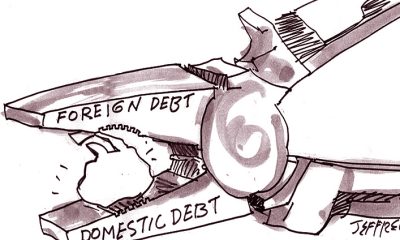
Hidden truth of Sri Lanka’s debt story: The untold narrative behind the report
-
Editorial5 days ago
Ideological confusion and identity crisis