
News
‘People left with two choices — either to die or collectively urge the govt. to fight Covid-19’ says FLSP

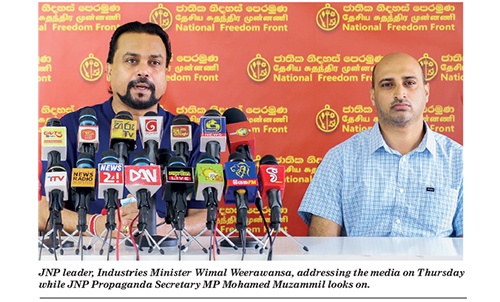
by Saman Indrajith
The fast spreading Covid-19 virus and the increase in the number of deaths have left people with two choices — either to die or to organize to collectively urge the government to get its act together to fight the pandemic, says the Frontline Socialist Party (FLSP).
Education Secretary of the FLSP, Pubudu Jagoda addressing a media conference on Thursday at its headquarters in Battaramulla said: COVID-19 pandemic showed us where we are as a society. Social injustice is amply displayed. The police would nab a person who goes to a boutique to buy a kilo of rice to feed his children for the offence of violating quarantine curfew while doing nothing against the rich and powerful company owners who blatantly violated the regulations. These company owners ordered their employees who showed symptoms of fever to take paracetamol and continue to work to ensure their profits over the lives of the workers.
These laws are not applicable to hotel owners who let their employees go home without quarantine after knowing that there was a customer infected with COVID-19. Whenever these are questioned, the government authorities have a ready-made answer – that “they are conducting investigations”. There are many thousands of families without food because of the curfew, he claimed.
The government should provide relief not only to those living in the areas where curfew was declared, but also thousands of daily wage earners who have no means to support their families because they have no work. The self-employed, businessmen, small and medium scale industrialists need several months to settle their dues on lease commitements. The government should grant relief to them, he added.
“How is the government behaving in the face of crisis? It could have contained the virus spreading from Minuwangoda if it had acted swiftly when the first infected case was detected. But it succumbed to the pressure from the company owners and did not shut down the area. When there were reports of infected cases in a single factory, the government did not close the free trade zone. As a result, it spread to many other workers, Jagoda asserted.
The government would not look at the issue from a workers’ perspective. This situation cannot be permanently solved without change of the system. But at least now, the government should expand the public health service by providing it with necessary facilities. We have before us the Appropriation Bill 2021 that was gazetted recently. Its allocation for the health ministry is only Rs. 158 billion. In 2019 the allocation was Rs 178 billion. Even in the face of a pandemic, Rs. 20 billion had been reduced from the health ministry allocation, he further said.
“There is no meaning of waiting with the thought the rulers will save our lives. We must unite to urge the government to take action to ensure our safety, while maintaining health guidelines to the maximum. People have to choose the path of struggle to get a bigger allocation for public healthcare and social welfare. But they should keep in mind that these are only short term strategies. Without changing the entire system which nurtures only the capitalist rich, there would be no permanent solution,” Jagoda said.


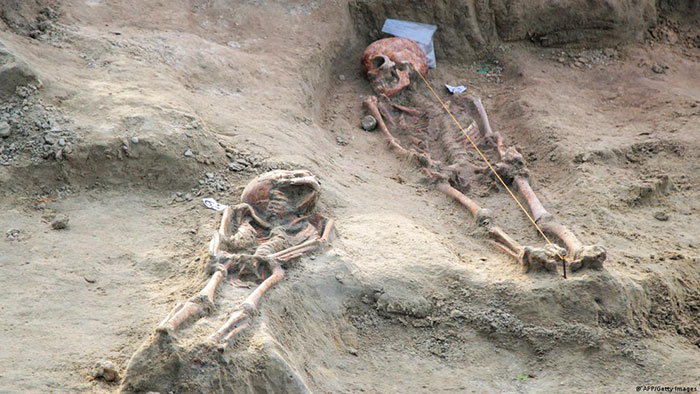
ECONOMYNEXT –International assistance for forensic analysis of the remains unearthed at the Chemmani mass grave will be sought when the need arises, Sri Lanka’s Minister of has Justice said after opposition legislators urged the government to seek help.
“We have spoken to embassies, we have made all the local finances necessary for excavation. But when it comes to DNA analysis, depending on the type and nature we will definitely have to go for internationally recognised places,” Harshana Nanayakkara said in response to a query in Parliament.
Nanayakkara said that request for international expertise is dependant on the direction the courts give on what needs to be done, after which they will decide which agency best suits the proceedings.
The minister also recognised that local expertise is lacking in the forensic department, and the need to train local staff with the help of international experts.
Opposition MPs argued that the present need is direct help in forensics from international entities, rather than the longer term need to train the staff on analysis.
Currently, the investigation is in the excavation and exhumation stage, conducted by archaeologist Raj Somadeva and his team.
The existence of the Chemmani mass grave was first brought to light in 1998, during the trial of the rape and murder of schoolgirl Krishanti Kumaraswamy.
In February 2025, construction workers found remains near the Sinthupathy Cemetery, and following investigations ordered by the Learned Magistrate, the mass grave was discovered.
412 bodies have been discovered, with 409 bodies recovered as of 23 June 2026. According to the Office on Missing Persons, this is the 17th recorded mass grave in Sri Lanka.

The Asian Development Bank (ADB) has approved a $57.4 million financing package to help Sri Lanka expand access to affordable clean energy and reduce greenhouse gas emissions through a large-scale rooftop solar aggregation and virtual net metering programme.
The financing comprises a $35 million concessional loan, $16.9 million in grants from the European Union and $5.5 million from the Japan Fund for the Joint Crediting Mechanism. With additional contributions from implementing agencies, the total estimated cost of the project is $80.5 million.
Under the Rooftop Solar Aggregation and Virtual Net Metering Project, two state-owned utilities — Electricity Distribution Lanka (Private) Limited and Lanka Electricity Company (Private) Limited — will introduce a scalable model to collect electricity generated from large rooftop solar installations and allocate the benefits virtually among eligible consumers.
The initiative will allow consumers to access solar power benefits without having to install individual rooftop solar systems.
ADB Country Director for Sri Lanka Shannon Cowlin said the project would broaden access to affordable renewable energy while strengthening the resilience and inclusiveness of the country’s power sector.
She said the initiative would also support grid modernisation and digital transformation, while creating employment opportunities and encouraging greater participation of women and youth in the clean energy sector.
The project is expected to benefit micro, small and medium enterprises and community organisations that face financial or space constraints in installing their own rooftop solar systems. Through a social compensation mechanism, eligible groups will receive reductions in electricity costs under the virtual net metering system.
The programme will support around 25 megawatt-peak of rooftop solar capacity while strengthening distribution networks, improving digital capabilities and preparing the national grid to accommodate higher levels of distributed renewable energy.
A dedicated training facility will also be established under the project to develop green skills, enhance women’s participation in the sector and build technical expertise in advanced low-carbon technologies.
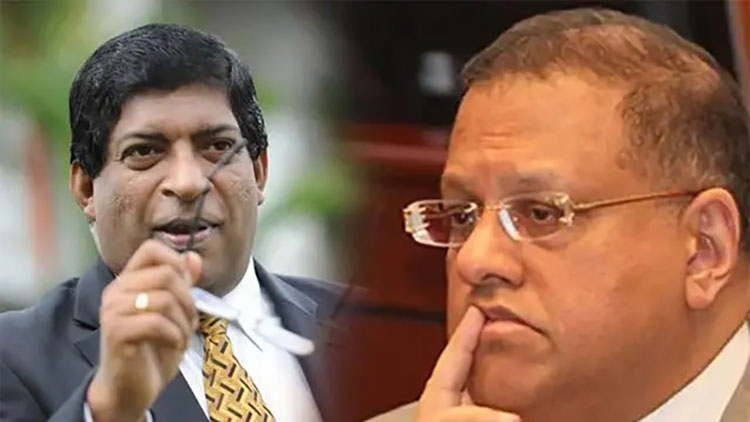
The Colombo High Court on Friday ordered that proceedings in the case filed against 11 defendants, including former Central Bank Governor Arjuna Mahendran and former Finance Minister Ravi Karunanayake, over alleged irregularities in the Central Bank bond auction be taken up again on July 22.
The case was called before Colombo High Court Judge Manjula Thilakaratne, who informed court that the Trial-at-Bar bench appointed to hear the matter had not been properly constituted.
Accordingly, the judge directed that the case be recalled on July 22 for further proceedings.
The Attorney General has filed indictments under the Public Property Act against 11 accused, including Mahendran, Karunanayake, Perpetual Treasuries Limited and its directors Arjun Aloysius and Geoffrey Aloysius.
The accused have been charged over alleged irregularities connected to a Treasury bond auction conducted by the Central Bank in March 2016.

Zafar, Feroza lead Pakistan to consolation win

Jangoo 233, Chase 194 put West Indies in commanding position

Showers will occur at times in the Western, Sabaragamuwa and North-western provinces and in Galle, Matara, Kandy and Nuwara-Eliya districts

Venezuelans dig for earthquake survivors as death toll rises to 1,430

Chemmani mass graves: Govt to seek international forensic help

ADB approves $57.4 million package to boost Lanka’s rooftop solar drive

‘Dates have the highest sugar content to fight Coronavirus’

Sunday Island 27 December – Headlines

#SundayIsland 17th December – Headlines

Sunday Island – 28th March

Sunday Island Headlines – 21 March

Sunday Island – 21st February – Headlines
-

 Features7 days ago
Sri Lanka developing independent hydrographic capabilities
-
 Opinion6 days ago
Ranasinghe Premadasa: The man who would not take ‘No’ for an answer
-
 News1 day ago
Another 1,132 Sri Lankan Personnel to be deployed for United Nations Peacekeeping Missions
-

 Opinion5 days ago
Sri Lanka’s national security: Justice, reconciliation, and forward-looking vigilance
-

 News5 days ago
US Assistant Secretary of State for South and Central Asian Affairs meets President
-

 News3 days ago
Kelaniya emerges as highest ranked Lankan uni in Times Higher Education Sustainability Impact Ratings
-
 Opinion4 days ago
A triumph for Pakistan’s skilled diplomacy at Iran-US talks
-

 Business7 days ago
University of West London opens Sri Lanka’s first full UK university branch campus