
News
‘People left with two choices — either to die or collectively urge the govt. to fight Covid-19’ says FLSP

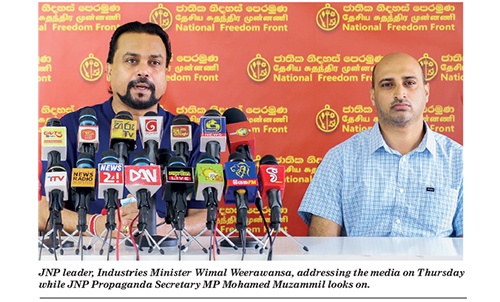
by Saman Indrajith
The fast spreading Covid-19 virus and the increase in the number of deaths have left people with two choices — either to die or to organize to collectively urge the government to get its act together to fight the pandemic, says the Frontline Socialist Party (FLSP).
Education Secretary of the FLSP, Pubudu Jagoda addressing a media conference on Thursday at its headquarters in Battaramulla said: COVID-19 pandemic showed us where we are as a society. Social injustice is amply displayed. The police would nab a person who goes to a boutique to buy a kilo of rice to feed his children for the offence of violating quarantine curfew while doing nothing against the rich and powerful company owners who blatantly violated the regulations. These company owners ordered their employees who showed symptoms of fever to take paracetamol and continue to work to ensure their profits over the lives of the workers.
These laws are not applicable to hotel owners who let their employees go home without quarantine after knowing that there was a customer infected with COVID-19. Whenever these are questioned, the government authorities have a ready-made answer – that “they are conducting investigations”. There are many thousands of families without food because of the curfew, he claimed.
The government should provide relief not only to those living in the areas where curfew was declared, but also thousands of daily wage earners who have no means to support their families because they have no work. The self-employed, businessmen, small and medium scale industrialists need several months to settle their dues on lease commitements. The government should grant relief to them, he added.
“How is the government behaving in the face of crisis? It could have contained the virus spreading from Minuwangoda if it had acted swiftly when the first infected case was detected. But it succumbed to the pressure from the company owners and did not shut down the area. When there were reports of infected cases in a single factory, the government did not close the free trade zone. As a result, it spread to many other workers, Jagoda asserted.
The government would not look at the issue from a workers’ perspective. This situation cannot be permanently solved without change of the system. But at least now, the government should expand the public health service by providing it with necessary facilities. We have before us the Appropriation Bill 2021 that was gazetted recently. Its allocation for the health ministry is only Rs. 158 billion. In 2019 the allocation was Rs 178 billion. Even in the face of a pandemic, Rs. 20 billion had been reduced from the health ministry allocation, he further said.
“There is no meaning of waiting with the thought the rulers will save our lives. We must unite to urge the government to take action to ensure our safety, while maintaining health guidelines to the maximum. People have to choose the path of struggle to get a bigger allocation for public healthcare and social welfare. But they should keep in mind that these are only short term strategies. Without changing the entire system which nurtures only the capitalist rich, there would be no permanent solution,” Jagoda said.


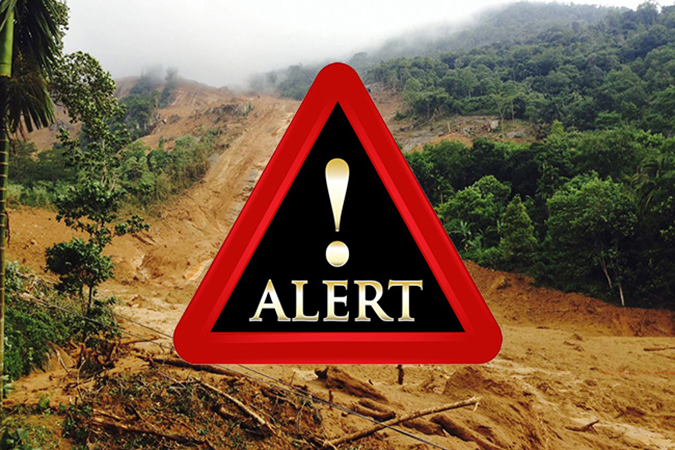
The landslide early warnings issued to the Districts of Kandy and Nuwara Eliya by the Landslide Early Warning Center of the National Building Research Organisation [NBRO] have been extended until 0600 hrs on the 14th of February 2026.
Accordingly,
The Level II [AMBER] landslide early warnings issued to the Divisional Secretaries Divisions and surrounding areas of Walapane and Nildandahinna in the Nuwara Eliya district and
the Level I [YELLOW] landslide early warnings issued to the Divisional Secretaries Division and surrounding areas of Pathahewaheta in the Kandy district have been extended till 0600AM on Saturday [14]
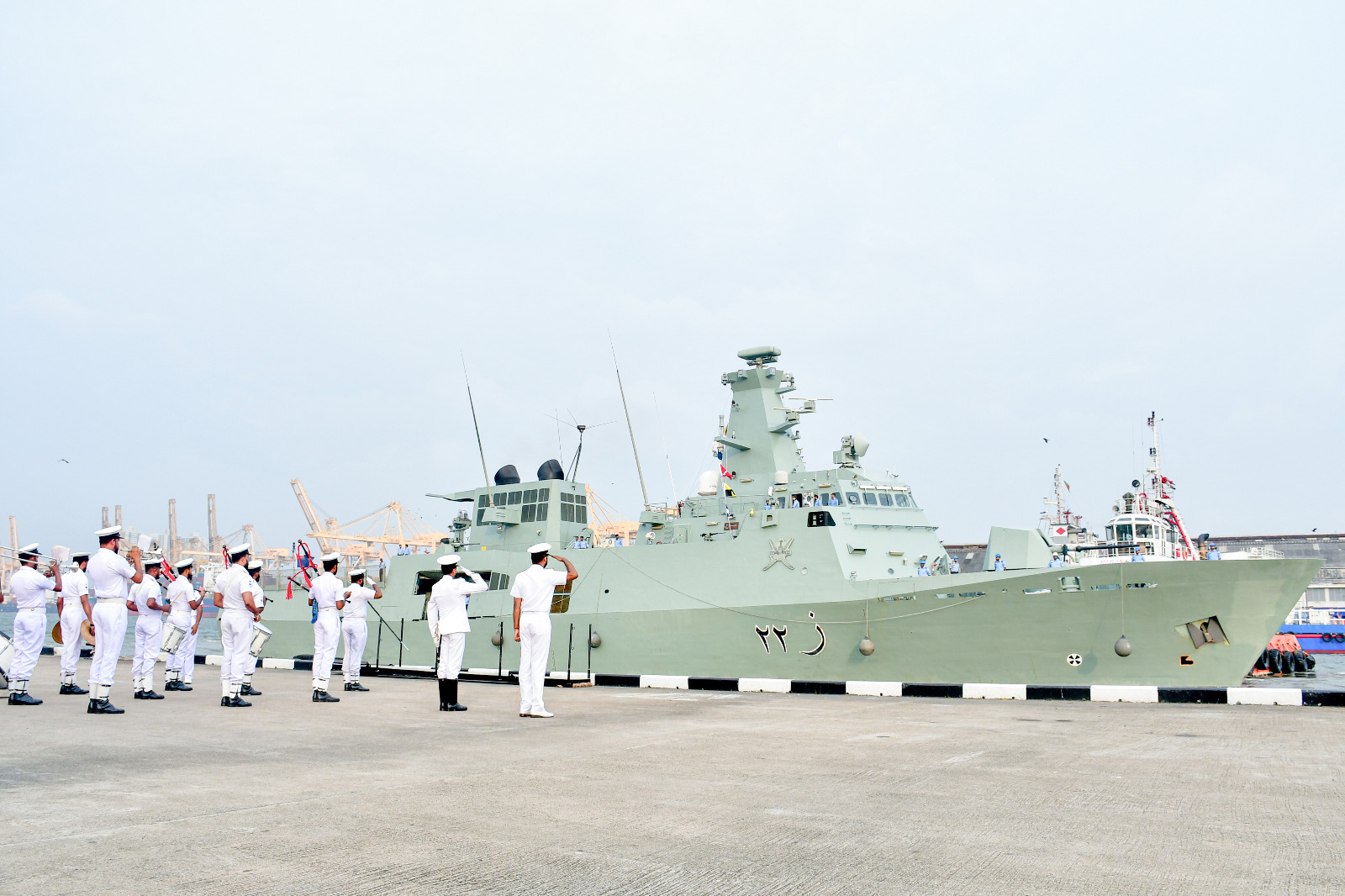
The Royal Navy of Oman Vessel “SADH” which arrived in Sri Lanka for replenishment purpose, departed the island on 12 Feb 26.
In accordance with naval tradition, the Sri Lanka Navy extended a customary farewell to the departing ship.

The Minister of Education, Higher Education and Vocational Education Prime Minister Dr. Harini Amarasuriya stated that aligning with the development activities carried out under the new education reforms, decisions at the rural level will not be taken from Colombo and plans should be sent based on the requirements of the rural level through the District Coordination Committees by structural committees. She further noted that all officials, from the Ministry of Education down to the school level, must commit to working efficiently and with a human-centered approach.
The Prime Minister made these remarks while addressing a discussion held with education authorities of the Hambantota District on Thursday [February 12] at the auditorium of the Hambantota District Secretariat regarding the new education reforms and prevailing issues in the education sector.
During the meeting, the Prime Minister provided an opportunity for education authorities including chief prelates of pirivenas, zonal education directors, teacher advisors, and principals to present the challenges they face and officials raised concerns including salary disparities among principals, developing school infrastructure, issues arising from the division between national and provincial schools, and uplifting pirivena education.
Further elaborating, Prime Minister stated:
“The new education reforms were initiated from 2025 through dialogue, consultations, and the collection of necessary data. As officials, you have extended your support to us during this process. We have embarked on a difficult and long journey, and we look forward to your continued cooperation.
We initiated these reforms in response to a strong social demand. Many have attempted such reforms at different times. Within our political vision, we understood clearly that if this country is to be rebuilt, an educational transformation is essential. The human resource is the most valuable resource of this country and it should be nurtured properly.
Solutions to many of the crises our country faces lie within the education system. Addressing the issues in economic challenges, social issues, drug abuse, violence, the breakdown of political culture, corruption, waste, and even the deterioration of human relationships all lie within the education.
In order to achieve the transformation we envision as a government, that an education transformation is necessary.
This education system should focus on reducing the pressures within the system, minimize school dropouts, increase employability, and instill confidence in children about their future.
There are disparities within the school system, between rural and urban schools, national and provincial schools, and difficult schools. This should not happen. All children must have equal opportunities.
Decisions regarding the establishment of schools or expansion of classes should not be political decisions. They must be decisions taken through Structural Committees. Those representatives understand their divisions, village economies, and population dynamics. Based on your decisions and assessments of needs, prepare the plans, discuss them with the District Coordination Committees, and submit them to us. We will then take steps to provide the necessary allocations and other support. We will not make decisions for the rural level while sitting in Colombo.
We are taking steps to minimize salary disparities. A Cabinet paper regarding the salary anomalies of principals has already been prepared for submission. Steps are also being taken to introduce new reforms in pirivena education through the Pirivena Committee of the Ministry of Education. We require the support of the chief prelates in this regard.
A significant number of teachers turn to human rights due to delays caused by inefficiency. Therefore, all officials from the Ministry of Education down to the schools must commit to working efficiently and in a humane manner”
The discussion was attended by Chief prelates of pirivenas, deputy ministers, Members of Parliament, zonal directors, principals, and other education sector officials.


[Prime Minister’s Media Division]

Landslide Early Warnings issued to the Districts of Kandy and Nuwara Eliya extended

Aryansh Sharma, Sohaib Khan power UAE to thrilling win over Canada

Royal Navy of Oman Vessel “SADH” departs island

Muzarabani, Bennett orchestrate famous Zimbabwe win

“We will not make decisions for rural level schools while sitting in Colombo” – PM

USA need to overturn history to beat Netherlands and stay alive

‘Dates have the highest sugar content to fight Coronavirus’

Sunday Island 27 December – Headlines

#SundayIsland 17th December – Headlines

Sunday Island – 28th March

Sunday Island Headlines – 21 March

Sunday Island – 21st February – Headlines
-
 Features6 days ago
My experience in turning around the Merchant Bank of Sri Lanka (MBSL) – Episode 3
-

 Business7 days ago
Zone24x7 enters 2026 with strong momentum, reinforcing its role as an enterprise AI and automation partner
-
 Business6 days ago
Remotely conducted Business Forum in Paris attracts reputed French companies
-
 Business6 days ago
Four runs, a thousand dreams: How a small-town school bowled its way into the record books
-

 Business6 days ago
ComBank and Hayleys Mobility redefine sustainable mobility with flexible leasing solutions
-
 Business3 days ago
Autodoc 360 relocates to reinforce commitment to premium auto care
-
 Midweek Review3 days ago
A question of national pride
-
 Business7 days ago
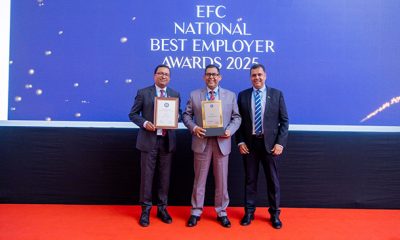
HNB recognized among Top 10 Best Employers of 2025 at the EFC National Best Employer Awards