As the pandemic will continue for considerable time
In the context of the global economic recession and the Covid-19 pandemic, everyone is looking forward to an economic, social and political revival that would usher in an era of peace, unity and equity with the dawn of the New Year.
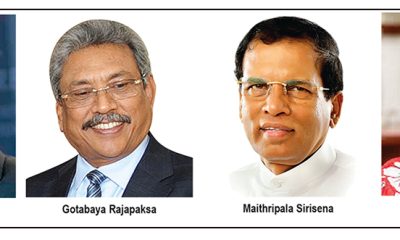
A new SLPP-led Government was swept into power with a near two-thirds majority in the August 2020 general election. This was to support President Gotabaya Rajapaksa who was elected in 2019 with a commitment to restore stability and with it a period of clean efficient governance. This should enable the country to emerge from the crisis. It will pave the way to put an end to poverty, hunger and malnutrition, unemployment and underemployment, and the uncontrolled rise of prices.
It would also put an end to the disruption and fear generated by the Covid-19 pandemic. But most of all to prevent the biggest danger of Sri Lanka’s economy being taken over through the MCC agreement.
With the closing of the MCC office in Colombo and the departure of the US staff, it would appear that the USA has given up its objectives, at least temporarily. This is a great victory for the people of Sri Lanka. The move by the Government to stop the import of what can be produced here, including luxury and non-essential items, is most welcome. It will help to reduce the loss of foreign exchange which has led to the depletion of our foreign reserves leading to massive borrowing and debt.
The long-term foreign debt crisis reached its peak during the 2015–2019 UNP Government period, and in 2019, the debt repayment amounted to US$ 4,500 million. This ate into our foreign reserves, which was only US$7,000 million. It also increased the pressure to borrow through the IMF and also look to the MCC grant, with unacceptable conditions.
While congratulating the Government for overcoming these problems without giving into these pressures, it would appear that this achievement is being undermined by various dodges and tricks being used to bring in banned imports with the connivance of some crooked officials and some others. This must be stopped as it will lead to further borrowing and Sri Lanka getting deeper into the debt trap.
It violates the Government statement that it will not borrow from abroad, and only accept foreign investment (FDI). For the latter to succeed a proper planning and investment environment has to be created, and in the plan FDI should complement our total development plan only where necessary.
For the development of the national economy, stress is correctly being placed on agriculture and food self-sufficiency. But this also requires industrial development, specially with value addition to local raw material. Unfortunately the foundation that I laid when I was Minister of Science and Technology from 2005 to 2015 is now in poor shape.
By getting back on the correct path of developing a national economy in the real interest of our country and the people, and resisting foreign imperialist pressures, the Government has paved the way to overcome some of our major problems. But sadly, some sectors that have an economic impact like the Covid-19 pandemic are being mishandled or even causing problems.
I am sorry the Minister of Health did not accept my proposals at the Health Advisory Committee Meeting in Parliament. Among others they were (a) the setting up of an All Party Leaders Committee to rally the whole country into a national movement to overcome the Covid-19 pandemic and, (b) that as the Covid-19 virus had gone beyond the “cluster” stage and was spreading within the community, it was necessary to establish a community- based approach with the emphasis on intensive health education, so that everyone is protected by observing the three health rules.
As the virus cannot multiply on its own, and soon dies out unless it gets into the live cells in the human respiratory tract, if this can be effectively prevented by everyone observing the three health rules with a proper understanding, the virus would even eventually die out in Sri Lanka, unless introduced again from abroad. I hope that the rapidly spreading new variants which have appeared abroad are not allowed to enter Sri Lanka on the basis of correct policy decisions.(c) A new lifestyle based on understanding and community action, supported by digital technology, can overcome the Covid-19 problem, provided all policy decisions are science based.(d) The Government must give the lead in organizing society to operate so that crowd gathering is avoided.
The Centre/Left Governments in Sri Lanka have by and large respected democracy. Constitutionally the sovereignty rests with the people and between elections it is expressed through chosen representatives in Parliament, in the Provincial Councils and in Local Government institutions. The LSSP would like to see this extended to real empowerment of the people through Village Councils with provisions for Constitutional protection (like the Panchayats in India), and through legally empowered Workers Advisory Councils and Village Committees (chosen by secret ballot).
It is sad to see that efforts are being made to delay the Provincial Council elections on one pretext or another. Some even want to do away with them. Neither Covid-19 nor allegations of lack of funds has any validity. The officials are profiting at the expense of the people who are being deprived of their right to elect their representatives and are being oppressed, without any representatives to act on their behalf at the provincial level. The Provincial Council elections should be held as soon as possible, as the Covid pandemic will continue for considerable time.
Tamil-speaking people, after the defeat of the LTTE, see the Provincial Councils as an adequate sharing of power, given some minor modifications that were acceptable to them at the APRC, within a single unitary state. More and more of them are learning Sinhala of their own free will. Despite efforts by some politicians to rouse a sense of grievance among Tamil speaking-people, it is losing ground. Unfortunately, Sinhala Buddhist majoritarianist tendencies are providing the sense of fear that can be exploited by extremists in the Tamil-speaking society. These must stop. Let wisdom prevail.
Prof. Tissa Vitarana