
News
Partnership with donors help to strengthen Sri Lanka’s COVID-19 Vaccination Rollout through COVAX Facility


COLOMBO, 18 March 2021 – In one of the most remarkable collective efforts in history – the COVAX Facility, a partnership between CEPI, Gavi, UNICEF and WHO on one hand and multiple donors on the other, is helping to make the COVID-19 vaccine available to protect vulnerable groups against the pandemic.
The first batch of 264,000 doses of the Oxford AstraZeneca ‘Covishield’ vaccines recently arrived in Sri Lanka for the most vulnerable elderly population above 60 years of age in high-risk areas impacted by COVID-19 in line with the National Vaccine Deployment Plan of the Ministry of Health (MOH).
According to the Plan, there are approximately 2.65 million elderly people (above 60 years of age) in the country.
The partner Governments including various bilateral, multilateral as well as some major foundations and corporations are providing significant support and funding, in order to ensure the equitable distribution of COVID-19 vaccines globally, including to Sri Lanka.
Speaking on behalf of the UN in Sri Lanka, the Resident Coordinator, Hanaa Singer-Hamdy, said, “Global solidarity is more important than ever, and donors are playing a fundamental role in making the provision of vaccines to the most high-risk groups in Sri Lanka and across the world possible”.
Development partners and international financial institutions across the world are providing substantial financial resources to the COVAX facility to help countries through the pandemic recovery period to ensure that no one is left behind.
“We are all grateful for this partnership. Together we can defeat this pandemic and charter a course to social and economic recovery by ensuring a safer and healthier future for everyone in Sri Lanka,” the Resident Coordinator said.
“The COVID-19 pandemic has shown us that no one is safe, until everyone is safe and the fair and equitable access to the vaccine is the only way we can defeat the virus” Ms. Singer-Hamdy said.
As part of the agreement between the MOH and the COVAX Facility, vaccines are being allocated for 20 per cent of the population which will cover 4.4 million people in the country. The first round of allocations from the COVAX facility of 1.44 million vaccines will be provided in stages through to May 2021. The vaccines will be procured by UNICEF, subject to the availability from manufacturers and authorization by WHO Emergency Use Listing (EUL).



President Anura Kumara Dissanayake today (20) paid his last respects to the remains of Most Venerable Kappetiyagoda Siri Wimala Thera, Anunayake of the Sri Lanka Ramanna Maha Nikaya and Chief Incumbent of the Rajopawanaramaya Temple in Gatambe, Kandy, who passed away.
The President visited the Rajopawanaramaya Temple in Gatambe, Kandy, where the remains of the Thera are lying, and paid his last respects. He subsequently expressed his deepest condolences to the Maha Sangha and the temple’s Dayaka Sabha, who are mourning the passing of the Thera.
Central Province Governor and Consultant Physician Dr Harsha Suranga Fernando, Kandy District Secretary Indika Udawatta and several others were present.
President’s Media Division (PMD)
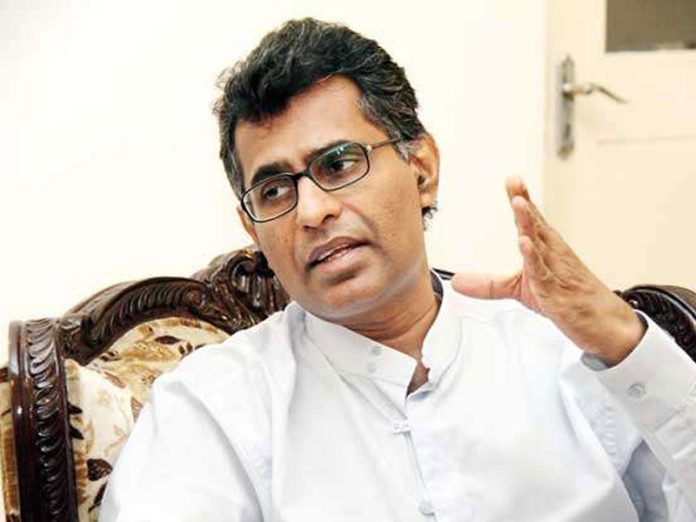
… reminds AKD led over 560 protests during Yahapalanaya
Former Yahapalana Minister and United Republican Front (URF) leader Patali Champika Ranawaka yesterday (19) alleged that the JVP, which carried out over 560 protests during the 2015-2019 period, was now bent on preventing the Opposition from exercising its democratic right to protest.
Recalling the declaration made by the JVP at the height of the violent protest campaign in July 2022 that it would set the Parliament ablaze, the former parliamentarian lashed out at the JVP-led administration for using the police excessively to curb political opposition. Ranawaka said this while addressing the media at the former President Ranil Wickremesinghe’s Flower Road Office .
Commenting on the protest campaign launched by the Maha Sangha, demanding presidential pardon for General Secretary of the Bodu Bala Sena (BBS) Ven. Galagotaatte Gnanasara, the ex-Colombo District lawmaker alleged that President Anura Kumara Dissanayake used a combination of police, investigative units and JVP cadres to break up the monks’ protest. The government went to the extent of compelling the JVP/NPP-run Colombo Municipal Council (CMC) to deprive the peaceful protesters of basic toilet facilities, he alleged.
The government’s actions proved that only those with prior approval from JVP Pelawatte headquarters could launch protests in Colombo, its suburbs or in the provinces. The police have become a political tool in the hands of the JVP, the ex-Minister said. (SF)

By SK Samaranayake
Six people were killed and seven others injured when a speeding bulker lorry carrying cement and concrete ploughed into several vehicles and a shop on the Kandy-Jaffna A9 road at Kurugoda, Akurana, yesterday (19).
Four of the victims, two women and two men, died on the spot in the accident which occurred around 10.30 am, according to Alawathugoda Police.
Police said the bulker, travelling at high speed from the Matale direction, collided with three three-wheelers, two motorcycles and two lorries before veering off the road and crashing into a commercial establishment.
Five of the injured were rushed to the National Hospital of Kandy, where hospital sources said two remained in critical condition.
The bodies of the four victims were placed at the Akurana Hospital, where two others, who suffered minor injuries, were also receiving treatment.
The driver of the bulker was arrested by the Alawathugoda Police Traffic Division and is to be produced before court.
Investigations are being conducted under the supervision of Central Province Senior DIG Lalith Pathinayake.

President pays last respects to Most Venerable Kappetiyagoda Siri Wimala Thera

Shafali receives demerit point for breaching Level 1 of ICC code of conduct

Heavy showers about 100 mm are likely at some places in the Northern, North-central, Central, Eastern, North-western and Uva provinces

Molineux, Dunkley enter WPL 2027 auction with top base price of INR 50 lakh

Ranawaka accuses govt. of using JVP cadres and police to suppress political opponents

Six killed as speeding bulker crashes into vehicles, shop in Akurana

‘Dates have the highest sugar content to fight Coronavirus’

Sunday Island 27 December – Headlines

#SundayIsland 17th December – Headlines

Sunday Island – 28th March

Sunday Island Headlines – 21 March

Sunday Island – 21st February – Headlines
-

 Features2 days ago
Kotahena:A Small Enclave, An Extraordinary Legacy
-

 News6 days ago
Sri Lanka, India caught in US-Iran ship crisis
-

 News3 days ago
Asgiri Mahanayake calls for immediate release of Gnanasara Thera
-

 Latest News7 days ago
Missiles intercepted near Riyadh after Saudi coalition hits Yemen fuel depot
-
 Latest News7 days ago
Kusal Mendis’ unbeaten 87 hands Sri Lanka consolation win
-

 News2 days ago
Record 1,600 students take Russian Classical Ballet examination in Sri Lanka
-
 News5 days ago
AC President recuses himself from hearing prison attire case pertaining to Gnanasara Thera
-

 Latest News6 days ago
Heavy showers above 100 mm are likely at some places in the Western, Sabaragamuwa, Southern, Central, and North-western provinces and in Anuradhapura district.