
Business
Parliament must decidedly act as biggest enabler of country’s progressive policies: Opposition MP

by Sanath Nanayakkare
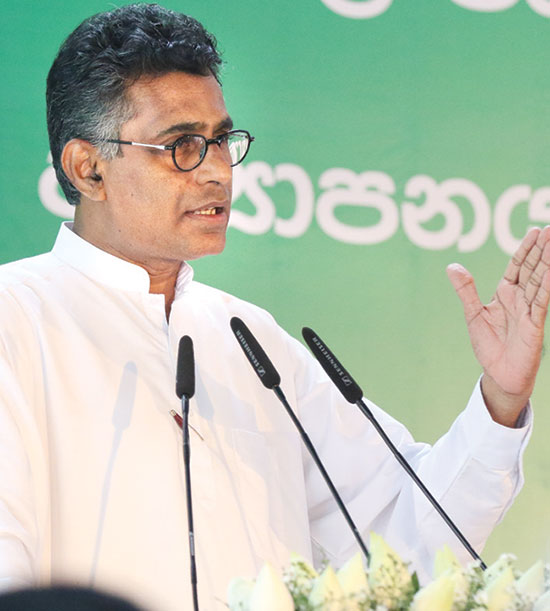
All political parties in parliament must work together to approve progressive political reforms within a month in order to swiftly pave the way for economic stability, Opposition MP Patali Champika Ranawaka said last week.”Political stability will be a collaborative effort based on the belief in the independence of the Police, the Judiciary, the Public Service, the Elections Commission etc. We have to find a realistic solution to the current economic crisis by properly utilising the limited foreign exchange earnings we get from our commodity exports, service exports, workers’ remittances and also by restricting our imports to bare essentials. Thus we should be able to trudge back to economic stability in the next 10 years and enable ourselves to repay our loans and restore the international confidence in Sri Lanka. However, the country requires political stability as a prior condition for that to happen. Although we won’t accept Cabinet portfolios, we will support such progressive transformation, and such laws need to be approved and enforced within a month. In case of any attempts to sabotage such democratic moves through unsavoury acts of politics behind the scenes, we will have to act decidedly to defeat those forces because it’s vital to respect public opinion and not to generate resentment among the general public.”
“The foreign media has widely published about Sri Lanka defaulting on its debt for the first time in its history post-independence. A 30-day grace period to come up with $78m of unpaid debt interest payments on two of its sovereign bonds expired. And we can’t meet the dollar bonds maturing in July 2022. Accordingly, it’s going to be difficult for us to borrow from the international capital market for another 10 years or so.”
“Further, the Central Bank has now proposed to repay Sri Lanka Development Bonds (SLDBs) in LKR or defer payments. Litro Gas Plc., invested USD 50 million in SLDBs via the Bank of Ceylon. If they had that money, Litro would have paid not for just one shipload of LP gas, but six or seven shiploads. We can see that Litro Plc’s money won’t be repaid. This goes to show that many key sectors of the economy has been brought to a state of bankruptcy because of the economic mismanagement over the last couple of years. There’s some hope in the society about Prime Minister Ranil Wickremasinghe handling the economy. They hope that he would get the support of foreign countries; especially the West and Japan. We have to realistically look at it. If he can obtain funding from Japan or the West without political conditions, it is going to be very valuable given the situation. There’s no issue about it. But Sri Lanka has announced that it won’t repay its bilateral loans until its debt is restructured. We have told Japan that we won’t repay loans of more than USD 3 billion. We have told China that we won’t repay loans of more than USD 7 billion. We have told India that we won’t repay loans of more than USD 4 billion. So, it would be immensely difficult to get new loans without settling existing loans. China has already expressed their strong opposition about our non-commitment to repay their loans. We have to pay USD 920 million to China this year. We might get some more support from India in addition to the credit line it has given to Sri Lanka. We can see that there are some political and economic conditions along with them. So, it’s far from reality to think that foreign funds would flow in amid the bankruptcy to end long queues for fuel, LP gas and shortages of drugs and food items. We can pin some realistic hope on the development loans already given to Sri Lanka by the World Bank and the Asian Development Bank. There is a balance of USD 1,900 million received in this manner for development projects which have not been used as these projects have come to a halt. If we can negotiate a loan re-purposing process, then we should be able to get through this year amid the difficulties. The World Bank has already pledged to re-purpose about USD 400 million to utilise for drugs, infants’ milk food and a small portion of it for fuel and LP gas. However, this won’t be sufficient and there will be a bigger crisis by June. The current circumstances have affected all sectors of the economy and we can see a gradual weakening of the economy in general.”
“There is no point in accusing the IGP or the Army Commander. People in the police and the forces are also people of this country who are exhausted by the ensuing events. So are the people of this country and the business community. In the next three months, hundreds of thousands of people may face layoffs. The shortage of infants’ food could lead to their malnutrition. We are entering a frightful future where the old and the kids are at the risk of death owing to the burgeoning nutrition and health crisis.”
“What’s the solution? We can’t find a solution by obtaining bridge financing from some country or another and prolong the crisis through short term measures. If we want to have sustainable economic stability, it has to be founded on political stability. For that an all-party representation is needed. But the Rajapaksa family is still manoeuvering their operations through their majority stake in parliament. We thought they would learn their lessons from the incidents that happened on May 9. But it doesn’t appear to be so. We can see that the prime minister is not in a position to get state affairs conducted as he pledged. That was clear at the election of the deputy speaker of parliament. In such a context, the window of opportunity for far reaching democratic reforms getting approved by parliament is very small.”
“So, if they don’t give up, the government has to make them give up or otherwise the country will stagnate. There is no difference in their influence or their representatives’ influence in government. If friendly countries won’t help us and aid won’t flow from an international aid forum, and if we don’t receive bridge financing either, then there’s one thing for us to do. We will have to forget growth and contract our economic needs and wants by 25%. We need to tell that to the public honestly and openly.”
“According to reports, 28%-30% households in the country completely depend on LP gas for cooking, mainly in Colombo, Gampaha and urban areas. 7%-10% depends on firewood. The balance uses a mix of furnace oil, firewood and LP gas for the purpose. So we have to have a mechanism to provide them with LP gas without keeping them in queues for days. There are 4 million empty gas cylinders in the country. There is no point in distributing 50,000 cylinders per day; that stock will just disappear. So we must devise a proper plan to distribute without inconveniencing the people.”
“It is the same with fuel. The problem won’t fix itself as a shipload of diesel or petrol comes in. On the front of coal too, a crisis is looming as coal stocks will finish after June because the rough seas will impede the unloading operations of coal. So priority has to be given to providing electricity and fuel where they are critically needed. Public transport is one such key area. Train services consume 1% of the fuel supply and 5% of commuters travel on it. Buses consume 19% of fuel and transport 47% commuters. Agriculture related vehicles, machines, equipment should also be given priority. The limited USD resources need to be used to buy drugs required for infants and children as well as essential life-saving drugs. Another key concern is allocating funds for fertilizer and resurrecting the ailing agriculture as soon as possible.”
“The next rebellion will be caused by famine and hunger crisis. It will be an insurrection not only against the politicians but against any individual or family seen to be resilient against the crisis. If we don’t take collective action now to resolve these crises, it won’t be a one-day incident like on May 9. Instead, a series of incidents will unfold before us over the next 10 years or so. That will become the ‘new normal’ of the country. So we must act to create the opportunity to create two million home gardens where possible to grow fresh produce.”
“It was manifest that security forces and the police can’t quell rebellions. Security forces and police consist of people of this country. So we must move beyond finding bridge financing from various sources. An agreement is needed to have a sustainable solution. Some politicians talked about ending queues in 48 hours. Some said problems could be resolved in 100 days. There are some who say that they can get fuel from friendly countries when they come to power. These comments are detached from the realities on the ground.”
“There is an Aragalaya out there and we must pay close attention to it. They also need to be actively involved in the governance of the country. After that we can hold elections. Lebanon became bankrupt in 2019. By 2022, the traditional political parties lost their power in parliament. When they hold the next election, completely new members will come to Lebanese parliament. It happened in Greece, Argentina, in some African countries, Italy and France. So we must bear in mind that Sri Lanka critically needs political transformation in order to be inclusive of representation at all levels for decision making.”


The Asian Development Bank (ADB) has approved a $100 million results-based loan to help Sri Lanka transform its technical and vocational education and training (TVET) system, equip more young people with industry-relevant skills, and strengthen the country’s competitiveness and inclusive growth.
The Skills Development System Transformation Program will support the Government of Sri Lanka’s efforts in improving the quality and relevance of skills training, strengthening links between training providers and industries, and expanding employment opportunities for youth. The program will increase women’s employment opportunities in nontraditional jobs in fields including automotive technology, engineering, information and communications technology, construction, and renewable energy.
“A skilled workforce is essential to Sri Lanka’s long-term economic transformation and competitiveness,” said ADB Country Director for Sri Lanka Shannon Cowlin. “This program will help create stronger pathways from education to employment by making training more responsive to industry needs, expanding opportunities for young people and women, and ensuring that graduates have the skills required by a modern and evolving economy.”
Though Sri Lanka’s economy is recovering, it faces skills shortages in priority sectors, high youth unemployment, and low female labor force participation. Many employers report difficulty finding workers with the skills needed in a changing economy.
Aligned with the Government of Sri Lanka’s Technical and Vocational Education and Training Sector Strategic Framework 2026–2035, the nationwide program will be implemented from 2027 to 2031 and is expected to directly benefit more than 100,000 young people through improved access to quality, employment-oriented training.
By Ifham Nizam
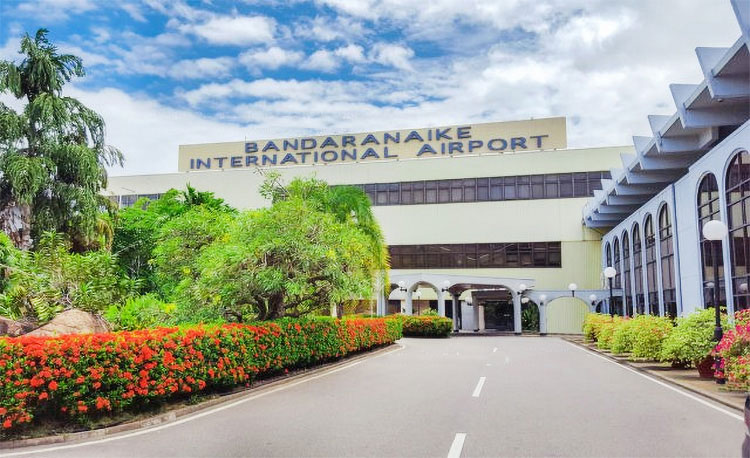
The government has cleared a USD 40.84 million and Rs. 8,548.75 million contract to build a dedicated aviation fuel pipeline from Muthurajawela to Bandaranaike International Airport (BIA), alongside a massive new fuel storage facility with a capacity of 92,000 cubic metres.
Energy Minister Anura Karunatilaka said the project represented a major investment in strengthening the infrastructure underpinning Sri Lanka’s aviation fuel supply and ensuring more reliable fuel availability at the country’s main international airport.
‘This project will provide the infrastructure required to strengthen the reliability and continuity of aviation fuel supplies to Bandaranaike International Airport, Karunatilaka said.
The contract has been awarded to China Petroleum Pipeline Engineering Company Limited, following an international competitive procurement process in which three bids were received.
The project will see a new aviation fuel storage tank complex constructed at Muthurajawela, together with the associated infrastructure required for handling and transferring aviation fuel.

By Hiran H Senewiratne
Trading activity on the Colombo Stock Exchange (CSE) gathered pace yesterday as global fuel prices began to show signs of easing, according to market analysts.In this context, both indices moved upwards. All Share Price Index up by 67.97 points while S and P SL20 up by 8.30 points.
Turnover stood at Rs 1.4 billion with seven crossings. Those crossings were reported in Sampath Bank 1.7 million shares crossed to the tune of Rs 238 million and its share price traded at Rs 140, Access Engineering two million shares crossed to the tune of Rs 159 million and its share price traded at Rs 79.50, LOLC one million shares crossed to the tune of Rs 129 million and its share price traded at Rs 129, HNB 100,000 shares crossed to the tune of Rs 38.4 million and its share price traded at Rs 384, JKH 1.9 million shares crossed to the tune of Rs 35 million and its share price traded at Rs 18.60, Hayleys 100,000 shares crossed to the tune of Rs 22.50 million and its share price traded at Rs 225 and Richard Pieris 847,000 shares crossed to the tune of Rs 22 million and its share price traded at Rs 25.50.
In the retail market top seven companies that have mainly contributed to the turnover were Sampath Bank Rs 114 million (813,000 shares traded), JKH Rs 100 million (5.3 million shares traded) LB Finance Rs 49 million (325,000 shares traded), HNB Finance Rs 30 million (27 million shares traded), HNB Rs 27 million (70000 shares traded), NTB Rs 25 million (82000 shares traded ) and Lanka IOC Rs 21 million (666,000 shares traded). During the day 65 million shares volumes changed hands in 10433 transactions.
The Banking and manufacturing sector counters performed well. In the banking sector Sampath Bank let the market while manufacturing sector especially JKH also significantly performed well. With the fuel revision Land IOC also a significant stock at the floor.
Meanwhile, First Capital Treasuries said that Ramesh Schaffter resigned as a Non-Independent Non-Executive Director with effect from October 1, to facilitate the restructuring of the company’s board.
Yesterday the Central Bank announced the US Dollar rate as against rupee. The rupee was quoted flat at Rs 330.65/80 to the US dollar in the spot market , while bond yields dropped, dealers said.

Showers or thundershowers will occur in most parts of the island after 1.00 p.m.

Unions resist tripartite EPF management plan

Two arrest warrants issued for Gnanasara thera

CA dismisses GR’s writ petition against arrest

ADB-backed virtual net metering project faces policy contradiction

Media action group flays NPP over new anti-terrorism law

‘Dates have the highest sugar content to fight Coronavirus’

Sunday Island 27 December – Headlines

#SundayIsland 17th December – Headlines

Sunday Island – 28th March

Sunday Island Headlines – 21 March

Sunday Island – 21st February – Headlines
-

 Editorial6 days ago
Birth of a bad law
-

 News4 days ago
Police remove Thileepan statue in Jaffna
-

 News6 days ago
TIN mandatory for key transactions from Nov. 1
-

 Features4 days ago
The 22nd Amendment, constitutional recovery and illiberal slippage
-

 Features4 days ago
Of foreigners as CEOs of Lankan ventures
-

 News4 days ago
Sajith rejects Jt. Opp. protest sabotage claim; SJB TU chief demands remedial action
-

 Latest News2 days ago
Gold winner Tharanga gets brand-new Honda Vezel from SLAAJ
-

 Features3 days ago
Thailand’s biggest new global star …