
Foreign News
Pakistan’s ex-president, Pervez Musharraf dies aged 79


BBC reported that Pakistan’s former president General Pervez Musharraf, who seized power in a coup in 1999, has died aged 79.
The former leader – who was president between 2001 and 2008 – died after a long illness, a statement from the country’s army said.
He had survived numerous assassination attempts, and found himself on the front line of the struggle between militant Islamists and the West.
He supported the US “war on terror” after 9/11 despite domestic opposition.
In 2008 he suffered defeat in the polls and left the country six months later.
When he returned in 2013 to try to contest the election, he was arrested and barred from standing. He was charged with high treason and was sentenced to death in absentia only for the decision to be overturned less than a month later.
He left Pakistan for Dubai in 2016 to seek medical treatment and had been living in exile in the country ever since.





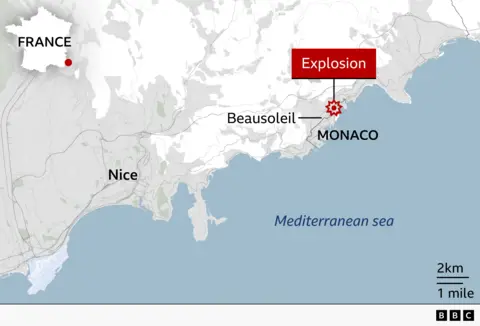
The woman suspected of carrying out a parcel bombing in Monaco which injured a sanctioned Ukrainian multi-millionaire and his family has been found dead, Ukraine’s security service (SBU) has said.
A cross-border manhunt had been launched for Anastasiia Berezovska, a Ukrainian woman who officials believed had fled the wealthy city-state after planting the bomb in the entrance hall of an apartment building on 29 June.
The 39-year-old’s body was found with gunshot wounds to the head, according to the SBU.
Two people including a current officer within Ukraine’s Ministry of Defence (MoD) have been detained on suspicion of murder.
Berezovska arrived in Ukraine two days after the attack on 1 July, the SBU said in its statement, citing law enforcement sources.
There, she communicated with her family and two men – a former law enforcement officer and a current officer in the MoD’s main intelligence directorate.
The two men were investigated as possible accomplices in the Monaco attack based on information that they “repeatedly transferred funds” to Berezovska’s “crypto and bank accounts”.
The intelligence officer subsequently confessed to Berezovska’s murder and said he had done so with “another suspect”, the agency said.
It continued: “During the search of the former law enforcement officer’s home, a basement room resembling a torture chamber was found.
“Both suspects were detained on suspicion of committing murder with premeditation by a group of individuals.”
An investigation is ongoing with the “personal assistance” of the head of the intelligence directorate Oleg Ivashchenko.
Monaco’s deputy prosecutor Morgan Raymond said Berezovska had spent days casing out the residence and was “disguised as a man” during the attack last Monday.
Three people were injured, two of them seriously, when a package exploded just as they entered the building shortly after 21:00 local time (19:00 GMT).
Berezovska was believed to have fled in a hire car to Italy and onwards to Germany – where special forces searched an apartment rented by a 39-year-old Ukrainian woman “currently on the run” in the central state of Hesse on Thursday, police said.
The SBU said Ukrainian authorities had shared all available information with officials in Monaco, with who its prosecutor general was in “close co-operation”.
Law enforcement authorities were working to identify “other suspects” in the attack, it added.

Authorities in Monaco have not confirmed the victims’ identities, but local media reported Vadym Yermolaiev, his partner and his 13-year-old son had been targeted.
Yermolaiev, a real estate developer, was named the 39th richest Ukrainian by Forbes magazine in 2020 with a reported fortune of $230m (£173.8m).
He has major interests are in wine and alcohol in Crimea, which Russia illegally annexed in 2014, and has been the subject of sanctions imposed by the government in Kyiv since 2023.
He is a Cypriot citizen, having renounced his Ukrainian citizenship in 2019, and has been living in Monaco.
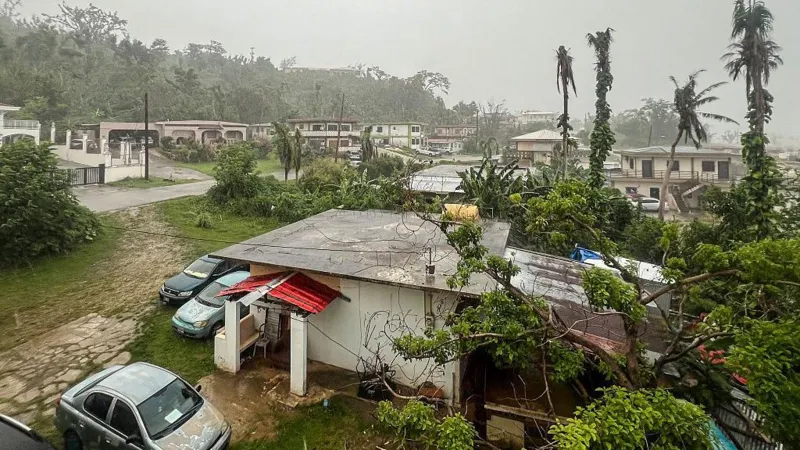
Emergency evacuations are taking place in Guam and the Northern Mariana Islands as a super typhoon bears down on the US Pacific territories.
Bavi is forecast to make landfall early on Monday morning, with winds of up to 257km/h (160mph), according to the US National Weather Service (NWS).
It warned the “very dangerous” storm could cause “catastrophic” damage, with “significant flooding from torrential rains” possible and waves potentially nearly 11m (35ft) high on Monday.
The western Pacific region is particularly prone to tropical cyclones. While storms of this strength are unusual for the US islands, scientists say climate change is making powerful typhoons more common.
Bavi is expected to pass directly over Guam and the Northern Mariana Islands by Monday afternoon, but the NWS warned that destructive conditions could be expected for eight to 10 hours prior to or after the arrival of the storm’s centre.
“The window is rapidly closing to evacuate if directed to do so by local officials, or if your home is vulnerable to high winds or flooding,” the agency said, adding that winds “will pose a deadly threat to those venturing outside”.
Guam, usually a sun-soaked tourist destination with a population of about 170,000, has opened five evacuation centres in its schools. These sites have a maximum capacity of around 1,700 and are primarily intended for vulnerable people.
The island’s civil defence office said at 13:00 local time (03:00 GMT) on Sunday that one of the evacuation sites had already reached maximum capacity and that people were being redirected to another site.
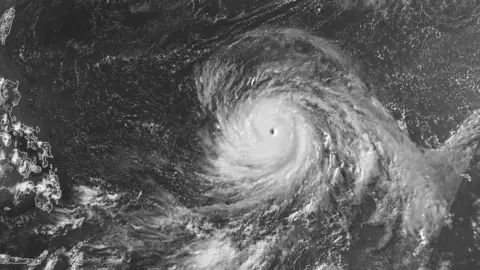
Bavi has been classified as a super typhoon by the Joint Typhoon Warning Center (JTWC), a part of the US Navy responsible for monitoring tropical storms in the western Pacific.
A super typhoon has winds in excess of 130 knots (150mph). JTWC predicts that Bavi will have winds of 150 knots (173mph) when it arrives over the islands, with gusts reaching as high as 180 knots (207mph).
The NWS considers super typhoons to have the equivalent destructive potential as a category four or five hurricane.
Pinky Cubacub, 55, told news agency AFP that she had been boarding up the windows of her eatery in Guam with $500 (£373) worth of plywood.
“I cannot afford to lose so many days. It hurts,” she said. “Because I just started, whatever we’re making right now is just for rent, utilities, and my people, and supplies. I don’t even pay myself yet.”

Japanese tourist Miku Sakurai, 25, told AFP that her return flight to Tokyo on Sunday had been cancelled. “We will stay in the hotel when the storm comes. I am scared,” she said.
Bavi will be the 11th category four or five tropical cyclone to hit US territory in the past decade – one more than the total recorded in the prior 57 years.
A strong El Niño event – a periodic warming of an area of surface water in the Pacific that contributes to weather patterns – is expected to push more tropical storms into these higher intensities.
Guam and the Northern Mariana Islands have already experienced one super typhoon this year – Sinlaku in April, which killed 17 people and caused about $1.5bn (£1.1bn) in damage.
Warmer sea surface temperatures drive more moisture into the atmosphere, supercharging storms.
[BBC]
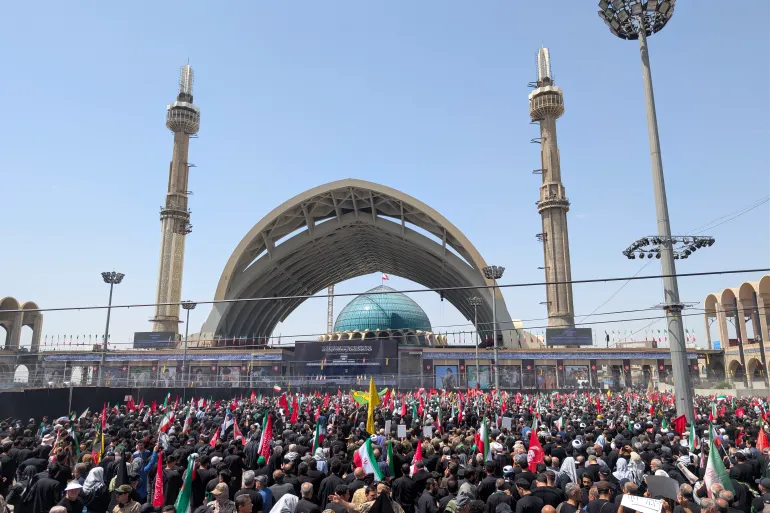
Large-scale public commemorations for former Iranian Supreme Leader Ayatollah Ali Khamenei have commenced in the capital, with authorities promoting a message of continuity for the Islamic Republic and vengeance for his killing.
Khamenei, 86, was targeted in an airstrike at the start of the war with the United States and Israel on February 28, after ruling Iran with absolute power for nearly 37 years
Red flags, commonly associated with martyrdom but also viewed as a symbol of revenge in Shia Islam, were seen throughout the Grand Mosalla commemoration site in Tehran and other mass gatherings.
“We must rise,” was the official slogan used for the ceremonies, accompanied by an image of Khamenei’s clenched fist on a red and black background.
Thousands gathered inside the huge religious complex used for the funeral from the early hours of Saturday morning to pay their respects to the assassinated supreme leader.
Khamenei’s coffin, carried to the funeral site by a lorry, was displayed at the centre of the stage and draped in flags. Positioned on an elevated platform in the central court, surrounded by glass and guarded by Islamic Revolutionary Guard Corps (IRGC) personnel, authorities were ready to deal with crowds attempting to reach his coffin.
Visiting men and women were separated by a large barrier to observe Islamic values. Religious chanting and slogans blasted from loudspeakers around the complex.
Videos circulated by state media showed crowds chanting “Death to America” and “Death to Israel” at a number of metro stations.
“We are all here to seek blood vengeance for our leader,” Fatemeh, a 55-year-old woman travelling in a group of women clad in black chadors, told Al Jazeera while waiting to enter through a northern gate of the complex.
“We will all listen to his son. He will guide the revolution forward,” she said, in reference to Mojtaba Khameni, who was quickly selected as supreme leader by a clerical body in March following his father’s killing.
![The commemoration has attracted thousands of people from across Tehran to mourn Khamenei [Maziar Motamedi/Al Jazeera]](https://www.aljazeera.com/wp-content/uploads/2026/07/9-1783177414.jpg?w=770&resize=770%2C580&quality=80)
A heavy security presence continues in the capital, with armoured vehicles, heavy machine guns and snipers visible throughout the areas surrounding the farewell ceremonies.
Men were body searched as they entered the Mosalla, while electronic devices – such as power banks, earphones and lighters – were confiscated from the mourners by security.
Mojtaba Khamenei, who has not been seen publicly since he took office, will not attend the funeral due to security concerns.
State-affiliated newspapers and television reported that the supreme leader’s killing had rallied supporters of the Islamic Republic government, which has been in power since the 1979 revolution overthrew Iran’s last shah, Mohammad Reza Shah Pahlavi.
Authorities are expecting similar huge numbers as attended the 1989 funeral of Ruhollah Khomeini, the founder of the Islamic Republic. At least eight mourners died in the crowds, forcing the military to evacuate his body by helicopter.
Thousands of “mokebs”, or temporary religious service stations, were set up across Tehran, blasting out Islamic Shia chants and rhythmic eulogies to Khamenei.
![Government messages and images of Khamenei were plastered across Tehran during the commemoration [Maziar Motamedi/Al Jazeera]](https://www.aljazeera.com/wp-content/uploads/2026/07/3-1783178247.jpg?w=770&resize=770%2C580&quality=80)
Some volunteers handed out flags, banners and images to the crowd. As temperatures rose to 36 degrees Celsius (97 degrees Fahrenheit), other mokebs were equipped with giant cooling fans and volunteers distributed free drinks to the thousands of mourners.
Emergency services were stationed across the area to assist with any health problems due to the crowds or the heat, but so far authorities have reported no security incidents or medical emergencies.
Large parts of Tehran have been cordoned off with barriers and non-official vehicles are barred from entering or exiting.
The whole of Iran has been effectively shut down until the end of Monday, in an apparent effort to encourage public participation, with 10 million Iranians expected to take part in the proceedings across the country.
Khamenei’s remains are expected to be moved through Tehran during the funeral procession on Monday. It is then expected to pass through some of Shia’s holiest sites, including Qom, Najaf and Karbala, before burial in his hometown of Mashhad in northeastern Iran on Thursday.
Some Iranians have used the public holiday to escape the crowds and the heat of Tehran for the cooler northern provinces by the Caspian Sea, as they regularly do on multi-day public events in the capital. Long lines of traffic were seen on the Tehran-Shomal Freeway leading to the provinces, with travellers stuck for hours in jams.
IRGC commander-in-chief Ahmad Vahidi, who made his first appearance since the start of the war, told state TV during an event on Friday to grieve Khamenei so that “enemies will take their wish for our surrender to the grave”.
“The enemies must know that the pure blood of our martyred imam was another turning point in the victories of dear Islam against the global infidel front,” he said.
![Red flags, associated with martyrdom in Shia Islam and carrying religious messages, were carried by mourners [Maziar Motamedi/Al Jazeera]](https://www.aljazeera.com/wp-content/uploads/2026/07/1-1783178093.jpg?w=770&resize=770%2C580&quality=80)
IRGC aerospace chief Majid Mousavi, responsible for launching ballistic missiles and drones across the region during the war, also made a public appearance.
The central headquarters of armed forces issued a statement to warn against any military action during the ceremonies, after Israel’s Defence Minister, Israel Katz, said Mojtaba Khamenet was marked for dearh.
Representatives from dozens of countries were in Tehran on Friday to pay their respects to Khamenei and speak with Iranian officials during televised state ceremonies.
Pakistan’s Prime Minister, Shehbaz Sharif, who helped mediate talks between Iran and the US, was among the most senior officials present. Other countries sent lower-level dignitaries, while European countries were reportedly not invited.
Among the most prominent attendees on Friday were members of the IRGC-backed “Axis of Resistance”, including members of Hamas, the Houthis in Yemen and Hezbollah in Lebanon.
The Hezbollah delegation included members of Hassan Nasrallah’s family, the long-time head of the armed group killed by Israel in 2024, and relatives of Imad Mughniyeh, the commander killed by a car bomb in Syria in 2008.
(ALJAZEERA)

Ms. U. L. Mathisha Jinanjalie Jayathilake, appointedto the post of Commissioner, Department of Probation and Child Protection Services

Argentina stage stunning late comeback to beat Egypt in World Cup last 16

Commander of the Navy pays courtesy call on Speaker of the Parliament

Woman suspected of Monaco bomb attack found dead in Ukraine

Balogun reprieve in vain as Belgium beat USA to set up Spain quarterfinal

Trump confirms he asked Fifa to review Balogun ban

‘Dates have the highest sugar content to fight Coronavirus’

Sunday Island 27 December – Headlines

#SundayIsland 17th December – Headlines

Sunday Island – 28th March

Sunday Island Headlines – 21 March

Sunday Island – 21st February – Headlines
-

 News3 days ago
Singapore-based Buddhist monk marks nearly four decades of humanitarian service
-

 News4 days ago
Freedom 250: US Embassy celebrates America’s 250th Independence Day through magic of American cinema
-
 News5 days ago
CIABOC to question Harak Kata on Rs. 200 mn bribery allegation
-
 News5 days ago
SLAF conducts successful rescue mission under UN command in Central African Republic
-

 Midweek Review7 days ago
H’tota port’s strategic status remains focal point of geopolitical scrutiny
-

 News2 days ago
AI concerned over proposed SL military deployment in Haiti
-

 News5 days ago
UNEP support pledged to strengthen Sri Lanka’s Environmental Priorities
-

 Business5 days ago
‘Dialog Air Fibre powers a new era of Ultra Fast Home WiFi’