Connect with us

Latest News

“Our ultimate goal is to restore national sovereignty through economic stability and self-reliance” -President

Published

on

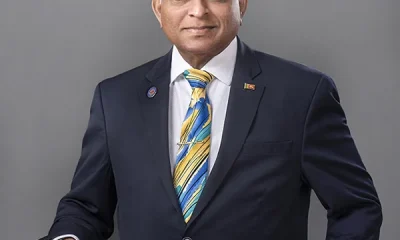
President Anura Kumara Disanayake, delivering the keynote address at the international conference “Sri Lanka’s Road to Recovery: Debt and Governance” in Colombo today (16), declared that by 2028 Sri Lanka will have laid the foundation for a stable and self-reliant economy, one capable of independently meeting its external debt obligations. Emphasizing that true sovereignty cannot exist amidst economic collapse, he asserted, “Our ultimate goal is to restore national sovereignty through economic stability and self-reliance.” He urged public officials and citizens alike to contribute to this national endeavour, stressing that the ongoing reform process demands a collective and sustained effort.

The conference, a landmark event jointly hosted by the Ministry of Finance, the Central Bank of Sri Lanka and the International Monetary Fund (IMF), drew global attention as it examined the country’s recovery from economic crisis, the progress of debt restructuring and future challenges under the IMF’s Extended Fund Facility (EFF) programme.
The President acknowledged that while a degree of macroeconomic stability has been restored, Sri Lanka must not be lulled into complacency. “Surface-level stability is not enough,” he stated. “We must deepen this stability through structural reforms that reshape the foundations of our economy.” He also noted several achievements of the current administration within a relatively short timeframe, expressing confidence in continuing this trajectory towards lasting political, economic and social stability.
This conference was held to reflect on Sri Lanka’s experiences, lessons learned and progress made during the debt restructuring process, as well as to discuss the progress and upcoming challenges related to the Extended Fund Facility programme with the International Monetary Fund.
Central Bank Governor Dr. Nandalal Weerasinghe echoed these sentiments, crediting the IMF and international partners for their support in Sri Lanka’s turnaround from a historic crisis that culminated in a sovereign default in 2022. Recalling the severity of the crisis, marked by hyperinflation, shortages and institutional erosion, Dr. Weerasinghe attributed the collapse to years of fiscal mismanagement and unchecked vulnerabilities.
“Stabilization was just the first step,” he noted. “The real test lies in sustaining growth through structural change.”
He highlighted the progress made under the EFF programme, including: Taming inflation – now back to single digits; Rebuilding external balances – including rare current account surpluses and reserve growth; Improving fiscal discipline – with narrowing deficits and emerging primary surpluses.
Dr. Weerasinghe further underlined the importance of governance reforms, pointing to new legislation such as the Central Bank Act, the Public Financial Management Act and the Anti-Corruption Act as pillars of long-term institutional credibility.
Urging stakeholders to maintain policy consistency, empower the private sector and protect the vulnerable, he emphasized: “Sri Lanka’s transformation must be domestically driven, with strong institutions and united public commitment.”
Delivering a pivotal message, IMF First Deputy Managing Director Dr. Gita Gopinath commended Sri Lanka’s hard-won gains but reminded attendees of the cost borne by the people, particularly the most vulnerable.
 “The key lesson from this crisis is that it must never happen again,” she said, stressing the need for continued reforms targeting structural weaknesses such as unsustainable subsidies and inefficient pricing mechanisms. Though socially painful, she insisted such changes are essential for resilience.
She also cautioned against “reform fatigue,” highlighting that half of Sri Lanka’s 16 past IMF programmes faltered due to reversals. “This time must be different,” Dr. Gopinath urged. “Success should be measured not just by numbers but by whether this becomes Sri Lanka’s last IMF programme.” She called for inclusive governance, civil society engagement and equitable policymaking that reaches beyond Colombo, reaffirming the IMF’s commitment while urging national ownership of the recovery path.
Following is the full speech delivered by President Anura Kumara Disanayake;
“A few years ago, our country faced the consequences of the most severe economic crisis in its history. At that juncture, we were confronted with two possible paths: either to continue along the same failed and destructive route, or to choose a new path that would enable us to rebuild and uplift our nation.
Today, we can proudly state that the path we chose has brought significant victories to our country. That success required responsibility and commitment from the political leadership. Moreover, critical responsibilities were borne by state institutions such as the Central Bank and the Ministry of Finance. However, the greatest contribution came from the public, who bore the brunt of these reforms. They made immense sacrifices and endured hardships to help rescue the nation from this crisis.
At present, our country has achieved a level of economic stability. We have reached the stage where debt restructuring is nearing completion and for a notable period, we have been able to maintain stability in the value of the dollar. Furthermore, we have been able to generate expected state revenue and build up foreign reserves. These indicators reflect strong macroeconomic stability. Nevertheless, the deep wounds of the crisis have not yet healed. We must understand that the crisis is not yet resolved in its entirety.
Therefore, while surface-level stability has been established, it is imperative to further solidify this stability and to elevate the economy to a higher level. This requires the implementation of new reforms and transformations within the economic system. I would like to draw attention to a few critical factors in this regard.
To ensure economic stability and recovery, we need a strong public service. However, the expenditure we currently incur to maintain the public service is excessive and unsustainable. Our goal must be to provide an efficient public service at minimal cost to the citizen. We have already decided that certain state institutions should be closed.
 These institutions were established in response to socio-economic needs of a bygone era, which are no longer relevant. Some institutions are now obsolete and therefore, must be restructured or dissolved.
Additionally, we have multiple institutions performing overlapping functions. These must be consolidated. Some state institutions also require a redefinition of their objectives and goals.
Hence, we are committed to implementing a robust transformation of the state apparatus. For this to be successful, inefficiency and more importantly, corruption and bribery must be eradicated from the public sector.
Recent news reports highlight the depth of the current crisis: the Inspector General of Police is in hiding; the Commissioner General of Prisons has been imprisoned; officers from the Department of Motor Traffic and the Department of Immigration and Emigration have been arrested. This raises serious concerns about the state of our institutions. Inefficiency, bribery and corruption significantly contributed to this crisis. Corruption is not merely about immediate transactions, it resulted in vital projects being neglected and unnecessary ones being implemented, which continue to burden us today.
Thus, to overcome this crisis, enhancing institutional efficiency and decisively combating corruption are essential. We are committed, as a government, to this cause.
We believe that the state should retain a certain degree of involvement in sectors that are sensitive to the economy. Sri Lanka’s energy and financial markets are relatively small, which poses the risk of monopolies forming. To counter this, the state must maintain a presence in key sectors.
However, such state institutions must not become burdens on the public. For instance, entities like the Ceylon Electricity Board and the Ceylon Petroleum Corporation are closely tied to both the economy and people’s daily lives. While we believe the government must retain oversight over these entities, they must not impose excessive costs on the public.
Prices must reflect actual production costs. The price of a unit of electricity must correspond to the cost of its generation. We are committed to upholding this principle.
At the same time, we are prepared to strengthen the necessary mechanisms to reduce production costs. Services should be provided to citizens at a cost equivalent to their actual expense.
However, we are aware that there are low-income groups who cannot afford even these costs. While we implement economic reforms and await the benefits to reach the people, we cannot simply ask them to endure the hardship in silence. The state must provide relief to these groups during this transitional period. This is the responsibility of a just government.
In every society, there are segments of the population that are disconnected from economic activity, be they the elderly, the disabled, or individuals whose circumstances prevent them from participating in the economy. It is the duty of the state to protect such groups. Talking about economic development while abandoning these communities is futile. This is a question of humanity, justice and fairness.
We therefore support a policy of providing well-targeted assistance to vulnerable communities. This assistance is not to be politicised. We view it as a matter of social justice and social protection. Based on our past experiences, welfare programmes have often been politicised. But I assure you, we will never use social protection schemes for political gain.
On another note, while we have achieved stability in several sectors, there are others where progress must be expedited. Firstly, we must attract direct foreign investment (FDI). Looking back over the past several decades, we have failed to attract sufficient FDI due to the prevailing global and local economic conditions. This must change.
However, the challenge of attracting investment does not come from a place of economic strength, but from rebuilding after collapse. Our financial market lost credibility and we experienced a situation where people could not afford daily necessities. Foreign reserves hit rock bottom. We are now in the process of recovery.
Yet, is this recovery sufficient to attract investment? I believe we must offer certain incentives to investors. Given the current context, we must focus on creating a more attractive environment for investment, which may include offering strategic relief. We are in discussions with the International Monetary Fund in this regard.
In addition, we face the question: how do we revitalise our national economy and production? Many small and medium enterprises (SMEs) collapsed during the economic downturn. Over 90% of them failed not due to internal mismanagement, but due to the broader economic collapse. Therefore, we must provide targeted relief to help them recover.
Thirdly, while economic growth is important, economic expansion is equally critical. Rural communities have become marginalised and excluded from the mainstream economy. While urban economic indicators may appear positive, they do not reflect the realities of those left behind.
For economic growth to deliver real benefits to the people, economic expansion must be pursued. I believe we must launch initiatives to integrate citizens from remote areas into the economic system. Therefore, to maintain the current stability and to transition to a stronger state, we have a tremendous task ahead of us.
We must be deeply grateful for the support extended by the International Monetary Fund in implementing this programme, as well as for the patience and endurance shown by our citizens, especially if they felt unfairly affected during this process. As I have previously stated, it is our aim to make this the final programme undertaken with the IMF’s Extended Fund Facility. We are hopeful of achieving this goal. By the year 2028, we aspire to build a stable economy with sufficient growth to service our debt independently.
A state cannot maintain sovereignty where the economy has collapsed. A nation cannot retain independence when its economy is in ruin. Whether we like it or not, we have already lost a degree of our sovereignty and independence. Therefore, the ultimate outcome must be the restoration of our national sovereignty and self-reliance. This requires a strenuous and unwavering effort.
It is not a task we can abandon. There is a clear mission to accomplish, and in pursuing that, I expect the commitment of the political leadership, the responsibility of public officials and the cooperation of the people.”


Continue Reading
Click to comment

Leave a Reply

Your email address will not be published. Required fields are marked *

Latest News

Iran names Khamenei’s son as new supreme leader after father’s killing

Published

on

By

The son of slain Iranian Supreme Leader Ayatollah Ali Khamenei, Mojtaba Khamenei, attends a demonstration to mark Jerusalem Day in Tehran (File pic: Aljazeera)

Iran has named Mojtaba Khamenei as its new supreme leader, just over a week after the assassination of his father, Ayatollah Ali Khamenei , in joint United States-Israeli strikes that have.plunged the entire region into a sprawling war.

The 56-year-old, who will now be charged with leading the Islamic Republic through the biggest crisis in its 47-year history, was named by clerics as his father’s successor on Sunday.

Key leaders, Iran’s powerful Islamic Revolutionary Guard Corps (IRGC), and the armed forces were quick to pledge their backing to the new leader.

Ali Larijani, secretary of the Supreme National Security Council, who has been tasked with steering Iran’s security strategy since the US and Israel launched their all-out offensive, called for unity around the new supreme leader.

Parliament Speaker Mohammad Bagher Ghalibaf welcomed the choice, saying that following the new supreme leader was a “religious and national duty”.

Mojtaba Khamenei has never run for office or been subjected to a public vote, but has for decades been a highly influential figure in the inner circle of the supreme leader, cultivating deep ties to the IRGC.

In recent years, Khamenei has increasingly been touted as a top potential replacement for his father. His selection could be a sign that more hardline factions in Iran’s establishment retain power, and could indicate that the government has little desire to agree to a deal or negotiations in the short term as the war enters its second week.

Al Jazeera’s Ali Hashem described Khamenei as his “father’s gatekeeper”.

“He adopts the positions of his father with respect to the United States, with respect to Israel. So we are expecting a confrontational leader. We’re not expecting any moderation,” he said.

“However, if this war comes to an end and he is still alive, and he is able to continue running the country, there is going to be big potential… to find new routes for Iran,” Hashem said.

(Aljazeera)

Continue Reading

Business

Oil prices jump above $100 for first time in four years

Published

on

By

Oil facilities in Tehran were hit by airstrikes at the weekend

Global oil prices have jumped above $100 (£75.11) a barrel for the first time since 2022 as the escalating US-Israeli war with Iran has fuelled fears of prolonged disruption to shipments through the Strait of Hormuz.

Iran on Sunday named Mojtaba Khamenei to succeed his father Ali Khamenei as Supreme Leader, signalling that a week into the conflict hardliners remain in charge of the country.

The US and Israel launched fresh waves of airstrikes across Iran over the weekend, hitting multiple targets including oil depots.

Major disruption to energy supplies from the region threatens to push up prices for consumers and businesses around the world.

Early on Monday in Asia, Brent crude was around 15.5% higher at $107.16, while Nymex light sweet was up by more than 17% at $106.77.

Stock markets in the Asia-Pacific region fell sharply in early trading on Monday, with Japan’s Nikkei 225 index down by more than 5% and the ASX 200 in Australia more than 3.5% lower.

Many in the markets predicted that oil would hit the $100 a barrel mark this week.

In the event it took about a minute to jump 10%, and then another 15 minutes to rise a further 10% in early Asian trading.

Last week the markets had been relatively relaxed about the seeming nightmare scenario for millions of barrels of crude and liquefied natural gas trapped in the Gulf, unable or unwilling to transit the Strait of Hormuz.

But the escalations over the weekend, alongside scenes of destruction of energy infrastructure both in Iran and across the Gulf, saw the markets take rapid fright.

The question now is where does this go? Some analysts argue that if the shutdown in the strait lasts until the end of March, we could see record oil prices above $150 a barrel.

The existing rise is likely to further increase petrol prices, and those of important derivative products such as jet fuel and vital precursors for fertilisers.

The physical supplies from the Gulf are mainly consumed in Asia.

Already however there are signs that Asian consumers are bidding up prices for US gas, with some tankers originally heading for Europe turning around in the mid-Atlantic.

US President Donald Trump responded to the jump in prices by saying that short term rises were a “small price to pay” for removing Iran’s nuclear threat.

His energy secretary told US broadcasters on Sunday that Israel, not the US, was targeting Iran’s energy infrastructure, amid some concern about rising domestic pump prices caused by the war.

(BBC)

Continue Reading

Latest News

India hammer New Zealand to retain T20 World Cup crown

Published

on

By

Defending champions India retained the T20 World Cup with a clinical performance over New Zealand in the final in Ahmedabad.
Rex Clementine in Ahmedabad
India produced a ruthless, near-flawless performance to retain the T20 World Cup title they won in the Caribbean two years ago, steamrolling New Zealand by 96 runs in Sunday’s final in Ahmedabad.
The Kiwis, who had marched into the final after ending South Africa’s unbeaten run in the Calcutta semi-final, ran into a blue wall. India piled up a daunting 255 for five after being asked to bat and then bundled New Zealand out for 159 with an over to spare, sealing one of the most emphatic wins in a World Cup final.
India had been given a wake-up call earlier in the tournament when South Africa handed them a heavy defeat in the Super Eight stage, leaving them needing four straight wins to lift the trophy. From that point on, Surya Kumar Yadav’s men put their foot on the accelerator and never looked back, playing like a side on a mission and delivering the knockout punch when it mattered most.
It was a triumph built not just on star power but on depth and system. India’s conveyor belt of talent keeps churning out match-winners, and their bench strength is the envy of the cricketing world. You may grumble about their strong-arm tactics in the corridors of power, but there is no denying the machine they have built. The result is domination across formats – men’s, women’s and Under-19 – echoing the era of Australian supremacy. At the moment, India are the team everyone else is chasing.
The victory was India’s biggest in T20 World Cup history and made them the first team to win the title three times. Former captains Rohit Sharma, who led the side to the 2024 crown and M.S. Dhoni, the architect of the inaugural triumph in 2007, were present at the venue to witness another chapter of Indian cricketing glory.
New Zealand, however, got their sums wrong. Their seamers stuck to predictable pace and failed to mix things up, allowing India’s openers to cash in during the powerplay.
Abhishek Sharma and Sanju Samson came out all guns blazing, racing to 98 for the first wicket in just 7.1 overs and putting the Kiwis immediately on the back foot. Abhishek set the tone with a blistering 52 off 22 balls, while Samson anchored the charge with a sparkling 89 off 46 deliveries, peppered with five fours and eight towering sixes.
Samson had been India’s banker throughout the tournament, striking three consecutive half-centuries during the campaign and walking away with the Player of the Series award.
The fireworks did not stop there. Ishan Kishan chipped in with a breezy 54 off 25 balls at number three as India threatened to push past the 270 mark. New Zealand managed to drag things back slightly at the death, but chasing 256 in a World Cup final was always going to be a bridge too far.
India’s bowlers then applied the squeeze. Jasprit Bumrah led the charge with a masterclass in fast bowling, finishing with figures of four for 15 and walking away with the Man of the Match award as New Zealand’s chase fizzled out quickly.
Continue Reading

Trending