
Features
Our Common Heritage One country – one land – one people


By Ashley de Vos
(Continued from yesterday’s Midweek Review)
It was King Senerath the Sinhala King, in the 16th C, who transported 4,000 followers of Islam from the west coast and settled them on the east coast to save them from being routed, eliminated and even annihilated by the aggressive Portuguese. The east coast Muslims share this common ancestry. The assimilation into the general cultural matrix has been stifled by a ghetto mentality that grew out of a mindset where the women felt more secure in a ghetto, while the men were out trading. This is clearly seen in Katankudi and other such areas in the coastal zone.
Five Portuguese who wished to settle in the island free from Dutch discrimination, approached the Sinhala King and requested protection from the Dutch. There were Catholic priests in the Kandy court, who helped the King to correspond with the King of Portugal in the Portuguese language, and hence access was easy. The benevolent King invited these ex- soldiers and gave them a presumably disused Buddhist monastery to settle in. Their offspring who settled in the surrounding lands are proud of this ancestry. The Siripathula votive slab from the earliest Anuradhapura period that belonged to this early monastery, was still there at the site, when it was visited in late 2005. This area referred to as Wahakotte is today a major pilgrim destination for the Catholic community.
During the British colonial occupation of the island and into independence, those inhabiting the coastal areas of the country, who had already cohabited closely with the Portuguese, the Dutch and the British, had favoured access to the ownership of lands. They felt superior on learnt caste lines, and were soon encouraged to participate in new professions. Their children had easy access to an English education, facilitated by a group of committed Christian Missionaries. This helped them to gain ready admission to the prestigious British universities and professions and in turn, to corner all the prized jobs offered by the British administration.
Those who benefitted from a missionary education, even from the north of the island moved to the metropolis Colombo in search of their fortunes. They built palatial dwellings, many from the north even married Sinhala women and relegated Jaffna that far off place, as a resting place to keep their older relations. The journey to Jaffna became less frequent.
If this is one country, every citizen has the right to live and work wherever they wish, and this has been amply demonstrated in the past. Sri Lankans should be afforded the privilege to live, work and purchase property wherever they decide even if it means enacting special legislation to facilitate this process. Why the special privilege only for some?
J.T Ratnam states that “some of the wealthiest Tamils came from Manipay. Most of them left their palatial buildings untenanted or in charge of some poor relation in order to reside and work in the metropolis. They returned home finally only in their old age, this was the rule.” (Jane Russell). Most professionals from the north, totally neglected Jaffna and instead concentrated all personal development on Colombo and other centres that were conducive to their chosen line of work. Prompting R.W. Crossette-Thambiah to record that “it was the Tamils living in Colombo who had the money and the prestige to become leaders in Jaffna” (Jane Russell). Many were reinforced by dowry wealth infused by the Malaysian pensioners.
These professionals who left the north to settle in the south should take some responsibility for all that happened in the north in the past 70 years. In fact, the later youth uprising was against the severe communal caste based hierarchy, disorientation and governed by an acquired strong caste difference that was forcibly perpetrated in the north. According to Jaffna Superintendent of Police, R. Sundaralingam, it was controlled by a neo-colonial Vellahla elite. In the Maviddapuram Temple dispute it included, even at times, beating of the lower castes with heavy Palmyra walking sticks, on any attempt to enter the controlled temple premises.
One always believed that the Gods had a widespread benevolence to encompass all groups of people, irrespective of status in life, but it seems that man has changed the paradigm to suit his own narrow desires.
Having enjoyed the benefits that an English education offered them, the English educated population remained silent when the larger Sinhala population was kept down for centuries by the three colonial powers, even castigated by the newly elevated caste groups in the south, who owned lands. They enjoyed all the perks that fell off the colonial table. As many of these people were far removed from their roots, they joined in the protest, when this large silent population was given a voice.
Those who criticised the new voice were mostly those who had enjoyed a privileged English education. Another marginalised group who may or may not have enjoyed the interlude, felt cheated; they left for greener pastures to Australia, the UK and Canada. Unfortunately, this generation continues to live in a time warp centred on the 1960s, craving for the good times and feeding on the special food types they had grown up with.
The same criticism is still flaunted as the reason for the plight Sri Lanka finds itself in today although many fingers could point in many directions. Many successful countries who had and still have a pride in their own heritage and culture have survived; they learned their mother tongue well and learned the colonial tongue later in life to become world leaders in their chosen fields.
What happened in Sri Lanka? The “Kaduwa” is nothing but the affluent English speakers laughing at the down trodden majority if they were to make a mistake in the use of the colonial foreign language.
Tourism has created a new generation that is able to converse in many foreign languages; they learnt the language with the help of the tourists who corrected them if they made mistakes, and they were never ridiculed or laughed at. Whether to sing alternate verses of the national anthem, or the whole in two languages, is not a great debate.
Sri Lanka has a flag, the only one in the world that celebrates pronounced ethnic division, a precise notification with a late beginning. Should we not change and go back to the flag originally hoisted at independence, this especially, as we all share a common heritage.
Much is discussed about the persons who have disappeared during the war, this recurrent issue, this wound, is kept ever festered, by generous NGO funding and is used as a clarion call to win sympathy especially when foreign dignitaries surreptitiously or otherwise visit the North of the island. Except for this controlled group, nothing is heard of the many more Tamil politicians, civil officers, lecturers, teachers, ordinary citizens and the hundreds of Tamil youth who were eliminated by the LTTE in the north, where is the regress for them? They have mothers as well?
Less is heard of the 800 or 900 policemen who were forced by the leadership of the day to surrender to the LTTE. They all vanished into thin air, a trick Houdini would have given an arm and a leg to learn. The 1,000 odd IPKF soldiers who were killed; where are their bodies? An IPKF battalion that went astray and never came back; the 5,000 odd Sri Lankan soldiers are still missing. The hundreds who were eliminated in the “border” villages, in the North Central Province, on roads, in buses, in the numerous bomb blasts. My friend, the charismatic Cedric Martinstyne, where is he, who was responsible?
The thousands of young men and women went missing in 1971 and the thousands of young men and women tortured and burnt on the roadside in 1988 – 89. They were all human; they had families, mothers and fathers, sisters and brothers, and some even had children. Why is no one talking about them? Is it only fashionable to follow the International NGO gravy train?
The solution for facilitating and encouraging the sustainable development of a common heritage as a single country is simply to legislate and ban, and remove politicians or parties that survive on highlighting ethnicity, hatred and religious bias from the equation and instead introduce a new breed of specially identified benevolent technocrats chosen for their capability. Certainly not chosen from a group that has volunteered on the basis that they think, yes, they arrogantly think, they have the solutions to all the problems the country is faced with.
This will only lead to disaster, for a benevolent leadership.
The technocrats should be chosen after a careful and diligent head hunt to identify the most suitable and proven individual who is not only capable but also cares for and has a commitment to this country first. With a willingness to give all up to deliberate and run the engines of this country as patriots. But beware the arrogance of these espiocrats. They may need further education and training at a staff college on a holistic vision on where Sri Lanka would like to be in fifty years in the future.
Those representing Sri Lanka at the world stage should be focussed, well briefed, brave enough to stand tall and committed to the wellbeing of the country only, first, and should not be made up of the agenda driven dealers who are willing to compromise to be in the good books of foreigners with devious plans or to satisfy their personal ends: there are many such individuals around. These chosen technocrats with special abilities should be carefully nurtured. Running Sri Lanka, a country of twenty million, is not an insurmountable task; it requires honesty, discipline and commitment only. Across the pond, Mumbai is a city state of eighteen million run by a mayor and a council.
Unfortunately, in Sri Lanka, there are too many incongruous layers of superfluous repetition and astronomical cost escalation to satisfy mediocracy with their never ending assiduous demands and perks. It has now become a livelihood worth killing for. Much of it forced on us by the 13th Amendment, purposely introduced by India. The cunning “Big Brother Gift”, knowing full well that if implemented, Sri Lanka would never ever recover. This would always remain to the advantage of the hegemony of the subcontinent. We have witnessed the repercussions. This is where most of the support for the corruption stems from.
In the historical period, the kings did not administer the people; the village heads did and their word was respected and obeyed. No one from outside decided for the village. The responsibility of the king lay with ensuring that the unique irrigation system was protected and enhanced, secondly, there was protection for Buddhism, respect for other people and their beliefs, the continuation of the natural Sinhalisation process and most importantly, it was to ensure, the security of the people and the country from foreign invasions.
Kings who had an interest in Ayurveda planted the Aralu, Bulu, Nelli forests in the hope that someone, someday, may benefit from them. Our new guardians and extended families instead enjoy cutting the forests for personal gains, thereby, threatening the future water security of the whole nation and the biodiversity in the forests.
The holistic security of a country should always be decided only by the local security experts concerned, not by selfish emotional considerations by a group in a district, or by foreign “experts”. The security of a nation requires careful study and strategic understanding of the possible threats and with major contributions by the three forces charged with securing the country from illegal immigration and any other internal or external threats.
While there may be an argument that war technology has changed and that it calls for restricting the location of camps. The locations of the camps, even if it meant acquiring land, should be done according to a carefully studied, but strict pattern that suits the country concerned and not to suit “External War Consultants”. There are examples of a thousand bases placed by waring nations around the world in locations far removed from the countries concerned. Some through invitation, some located by way of war booty. All of them follow a single pattern.
Sri Lanka should avoid falling into providing a ready gateway to such a pattern. It should also stay away from agreeing to draconian treaties and agreements like the MCC and other related documents on the cheap, at totally discounted rates, only $90 Million a year for five years, permitting unlimited access to the use of the country under their own terms and rules. Sri Lanka is not for sale. What is implied in these documents are detrimental to the generations to come and would be regarded by them as acts of treason against an innocent people.
We the people need guidance by example; we don’t require a supercilious individual to tell us what to do, especially to interfere with the natural action of reconciliation and interaction, of coming together again, a progression that is usually built on mutual trust, an activity that the self-centred politician wilfully and constantly interfere with. From earliest times Buddhists and Hindus shared a common understanding,; this was to concretise in the 14th C after King Bhuvanakabahu introduced the shrine of God Vishnu as the protector of Buddhism into the temple complex.
Today, every Buddhist temple has a Vishnu shrine incorporated at the entrance, in a mutual respect for all. Unfortunately, fundamental Hinduism is raising its head for the first time on the island in the guise of the “Ramayana Trails” that was commenced by a desperate and irresponsible tourism industry. Will it lead to the building of a myriad of new shrines to Hindu Gods and Goddesses to commemorate events in fictitious locations is to be seen. A development that will host fundamental Hinduism, a progression this island could do without.
The people of this island, as a group of intelligent, enlightened humans, are capable of eliminating the years of induced suspicion that has been created by these self-centred politicians. The people can and will sort it out. These politicians should be kept away as they are more of an irritant, a hindrance to real reconciliation and a selfish, destructive element in nation building.
The unnatural rush, corona or no corona, to submit nominations for a future election, shows the unusual zeal in the rush to collect the spoils. Thereafter most applicants went into hibernation, to hell with the constituents. This is sensed, suffered and remarked on by the long suffering farming community who commented that they saw the people’s representatives only just before an election. These farmers should be trusted and looked after. Instead they are forced to sit on heaps of rotting vegetables and face the unscrupulous money lenders, head on.
Eventually, it is a scientific approach to agriculture that will save this country, not urbanisation and its proliferation of partner industry. If you don’t have markets, you cannot eat the products your industry will roll off the production line. But as proved by “Coronavirus” vegetables and fruit, you can.
Let reconciliation happen the way it should, a slow but sure natural process. As Sri Lanka moves forward, she deserves to be free of worthless heavy shackles. Let’s relegate them to the trash heap of history.


THE GREAT DIGITAL RETHINK : PART III OF V
The Teenage Battleground
Secondary school has always been a battlefield of sorts, competing loyalties, volatile friendships, the daily theatre of adolescent identity. But in the past decade it acquired a new and uniquely modern dimension: the smartphone in the pocket, the social media feed refreshing every few minutes, the group chat that never sleeps.
The numbers, when they arrived, were not subtle. PISA 2022 data, drawn from students in over 80 countries, found that around 65 percent of students reported being distracted by their own digital devices in mathematics lessons, and 59 percent said a classmate’s device had pulled their attention away. Students who reported being distracted by peers’ phones scored, on average, 15 points lower in mathematics than those who said it never happened. Fifteen points is not a rounding error. It is a meaningful, measurable, recurring gap that appears consistently across countries with very different education systems.
Governments took notice of the situation. In a pattern that will be familiar to readers of this series, a number of them reached for the most visible, most politically satisfying tool available – the ban in Finland, Sweden, Australia, and France. The UK, in a characteristically chaotic way, involving years of guidance, and pilots, eventually legalised. One by one, secondary schools across the wealthy world have begun confiscating phones at the gate, storing them in pouches, locking them up in boxes, and discovering, somewhat to their own surprise, that this works.
When the Ban Actually Works
A 2025 survey of nearly a thousand principals in New South Wales found that 87 percent reported students were less distracted after the ban was introduced, and 81 percent said learning had improved. South Australia recorded a 63 percent decline in critical incidents involving social media and a 54 percent reduction in behavioural issues. These are striking figures, and they align with what common sense would predict: if you remove the distraction, concentration improves.
What is also emerging from Australian, Finnish and Swedish schools is something less expected and more interesting: the character of break times has changed. Teachers and principals report that when phones disappear from pockets, something older reappears in their place. Students talk to each other. They play. They argue, resolve disputes, make and lose friendships in the ancient, messy, face-to-face way that adolescence has always demanded but that the smartphone had been quietly crowding out. The playground, it turns out, was not broken. It was just occupied.
Sweden’s nationwide policy, coming into effect in autumn 2026, will require schools to collect phones for the full day, not just during lessons. This is the more ambitious intervention, and the one that addresses what the Australian experience has already demonstrated: that the damage done by constant connectivity is not confined to the classroom. It happens at lunch. It happens between periods. It happens in the 10 minutes before the bell when a group of 14-year-olds are supposedly in the building but are actually, in every meaningful sense, somewhere else entirely.
87% of Australian principals said students were less distracted after the ban. The other 13% presumably hadn’t tried it yet.
But Here Is What Nobody Wants to Talk About
Here is the part that the ministers’ press releases do not mention. While the smartphone, the device the student owns, controls and carries, has been banned from the secondary classroom, the institution’s own digital apparatus has been expanding at an impressive pace throughout the same period. Learning management systems now mediate most of secondary school life in high-income countries. Assignments are distributed digitally. Work is submitted digitally. Attendance is recorded digitally. Grades are published on portals that students, parents and administrators can access in real time. The school that bans your personal phone may simultaneously be recording precisely how long you spent on each page of the online reading assignment last Tuesday.
Learning analytics, the practice of harvesting data from student interactions with digital platforms to inform teaching and school management, has moved from a niche research curiosity to a mainstream tool. PISA 2022 data show that virtually all 15-year-olds in OECD countries attend schools with some form of digital infrastructure. Behind that infrastructure sits a layer of data collection that most students and many parents are only dimly aware of: log-in times, click patterns, quiz scores, time-on-task measures, platform engagement metrics. These are assembled into dashboards, fed into algorithms, and used, with genuinely good intentions, in most cases, to identify struggling students early.
The genuinely good intentions do not resolve the underlying problem. Research on learning analytics raises serious concerns about privacy, about the opacity of algorithmic decision-making, and about what happens when a teenager is quietly flagged as ‘at risk’ by a system they never knew was watching. The irony of secondary de-digitalisation is not lost on those paying attention: we have removed the device the student controls, while expanding the systems that observe and score them.
The AI Proctor in the Room
 During the pandemic, when exams moved online, a number of education authorities adopted software that monitored students through their webcams, flagging unusual eye movements, background sounds, or the presence of other people in the room as potential signs of cheating. The systems were sold as efficient, scalable and objective. They were, in practice, frequently absurd.
The software flagged students who looked away from the screen to think. It penalised students whose rooms were small, shared or noisy, disproportionately those from less privileged backgrounds. It struggled with students of colour, whose features were less well-represented in the training data. It was contested, appealed, gamed, and eventually abandoned by a significant number of institutions that had initially adopted it with enthusiasm. By 2024 and 2025, the rollback was visible. Universities and some school systems were returning, with minimal fanfare, to supervised in-person examinations, handwritten, on paper, in a room with a human invigilator, partly to solve the AI cheating problem, partly to solve the AI proctoring problem. The wheel had, somewhat dizzingly, turned full circle.
We banned the student’s phone. We kept the webcam that monitors their eye movements during exams. Progress.
The Equity Problem That Bans Cannot Solve
Beneath the headline politics of phone bans lies a more uncomfortable question about who, exactly, benefits from secondary school de-digitalisation, and who pays a cost that is rarely acknowledged. The argument for phone bans on equity grounds is real: unrestricted phone use in schools amplifies social hierarchies. The student with the latest device, the most followers, the most compelling social media presence occupies a different social universe from the student without. Removing phones during the school day levels that particular playing field.
But the equity argument runs the other way, too, once you look beyond school hours. Secondary schools in high-income systems have steadily increased their dependence on digital platforms for homework, assessment preparation and communication. If a school bans phones during the day and then sends students home to complete digitally-mediated assignments, the burden of that homework falls unequally.
There is also the growing phenomenon of what researchers are beginning to call ‘shadow digital education’: the private online tutoring platforms, AI-powered study tools and exam preparation services that affluent families use to supplement and extend what school provides. While secondary schools debate whether students should be allowed to use AI for essay drafts, some of those students’ wealthier peers are already using it, skillfully, privately and with considerable academic advantage. The phone ban, whatever its merits in the classroom, does not touch this market. It may even quietly accelerate it.
Two Worlds, Still Diverging
In Finland, Sweden and Australia, the policy conversation is about how to manage the excesses of a generation that grew up digitally saturated, how to restore concentration, how to protect wellbeing, how to ensure that institutional platforms serve learning rather than merely monitor it.
Elsewhere, across much of Southeast Asia, Sub-Saharan Africa, Latin America and parts of the Middle East, the secondary school conversation remains anchored to a different set of concerns: how to get enough devices into enough classrooms, how to train enough teachers to use them, how to ensure that the smartboard contract does not expire before the teachers learn to turn it on. Vendors are present, helpful and commercially motivated. Development banks are funding rollouts. Government ministers are visiting showrooms. The playbook being followed is the one that Finland and Sweden wrote in 2010 and are now revising.
SERIES ROADMAP:
Part I: From Ed-Tech Enthusiasm to De-Digitalisation | Part II: Phones, Pens & Early Literacy | Part III: Attention, Algorithms & Adolescents (this article) | Part IV: Universities, AI & the Handwritten Exam | Part V: A Critical Theory of Educational De-Digitalisation
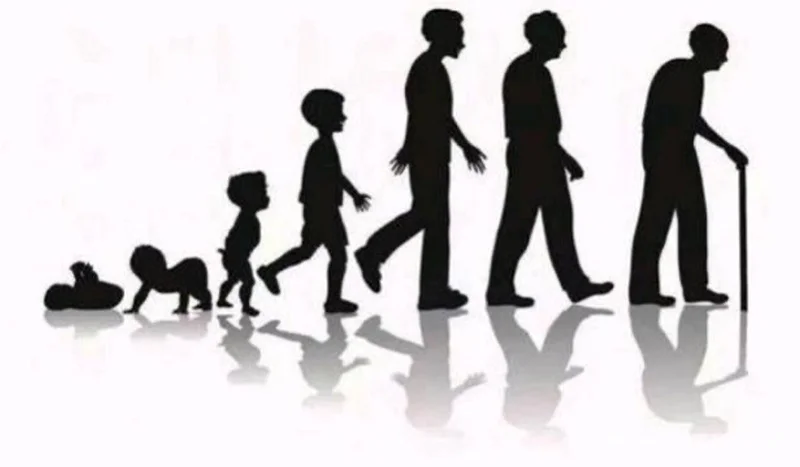
Buddhism is renowned for its profound insights into ageing and decay, known as jara in Pali. Through its teachings and practices, Buddhism cultivates the wisdom and mental clarity necessary to accept and prepare for the inevitability of ageing. The formula jati paccayaā jaraāmaranaṃ translates to “dependent on birth arise ageing and death,” clearly illustrating that birth inevitably leads to ageing and death, accompanied by sorrow, lamentation, pain, grief, and despair. Without birth, there would be no ageing and death. Therefore, ageing is a fundamental aspect of suffering as outlined in the Four Noble Truths.
Buddhism encourages us to confront the realities of ageing, illness, and mortality head-on. Old age is recognised as an unavoidable aspect of dukkha (suffering). Old age is fundamentally and inextricably entwined with the concept of impermanence(annicca), serving as the most visible, undeniable evidence that all conditioned things are in a state of flux and decay. Ageing, illness and death create in us an awareness not only of dukkha but also impermanence. The Buddha taught, “I teach suffering and the way out of suffering.” Here, “suffering” encompasses not only physical pain but also the profound discomfort that arises when our attempts to escape or remedy pain stemming from old age are thwarted. Instead of fearing old age, Buddhists are encouraged to embrace it, release attachments to youth, and cultivate wisdom, gratitude, and inner peace.
Ageing is a complex process shaped by both genetic and environmental factors. From a Buddhist viewpoint, we should perceive the body realistically. Fundamentally, the human body can be seen as a vessel of impurities, subject to old age, disease, decay, and death. The natural process of ageing is gradual, irreversible, and inevitable. Every individual must ultimately come to terms with the reality of growing old, as change is an essential fact of life.
In Buddhism, impermanence (anicca) holds a central position. Everything that exists is unstable and transient; nothing endures forever—including our bodies and all conditioned phenomena. Thus, anicca, dukkha, and anattaā (non-self or selflessness) are the three characteristics common to all conditioned existence. The reality of impermanence can often evoke pain, yet a wise Buddhist fully understands and appreciates this simple yet profound truth.
The Greek philosopher Heraclitus encapsulated this notion when he stated, “No man ever steps in the same river twice, for it is not the same river, and he is not the same man.” Old age was one of the four sights that prompted Prince Siddhartha Gautama to seek enlightenment, alongside sickness, death, and the wandering ascetic. Coming to terms with these aspects of existence was pivotal in his transformation into the Buddha.
At Sāvatthi, King Pasenadi of Kosala once asked the Buddha, “Venerable sir, is there anyone who is born who is free from old age and death?” The Buddha replied, “Great King, no one who is born is free from ageing and death. Even those affluent khattiyas—rich in wealth and property, with abundant gold and silver—are not exempt from ageing and death simply because they have been born.” This interaction underscores the universal challenge of ageing, transcending societal divisions of wealth or status.
Ageing presents one of the greatest challenges in human experience. Physically, the body begins to deteriorate; socially, we may find ourselves marginalised or discounted, sometimes subtly and sometimes explicitly. Some may encounter dismissal or condescension. Ageism remains one of the most persistent forms of discrimination. The physical and social difficulties associated with ageism can undermine our self-image and sense of self-worth. Common perceptions often portray old age as a stage where the best years are behind us, reducing the remaining years to a form of “bonus years” frequently presented in sentimental or patronising ways.
The suffering associated with ageing can serve as a powerful motivation to engage in practices that directly address this suffering, allowing us to gradually transform it or, at the very least, make it more bearable and manageable. We must recognise that this principle applies equally to our own bodies. The human body undergoes countless subtle changes every moment from the time you are born, never remaining the same even for two consecutive moments, as it is subject to the universal law of impermanence.
Whatever your age. However young-looking you try to remain through external means, the truth is that you are getting older every minute. Every minute, every second, our lives are getting shorter and closer to death. Since you were conceived in your mother’s womb, your life is getting shorter. We see external things going by rapidly, but never reflect on our own lives. No matter what we do, we cannot fully control what happens in our lives or to our bodies. With time, we all develop lines and wrinkles. We become frail, and our skin becomes thinner and drier. We lose teeth. Our physical strength and sometimes our mental faculties decline. In old age, we are subject to multiple diseases.
Many people live under the illusion that the body remains constant and is inherently attractive and desirable. Modern society, in particular, has become increasingly obsessed with the quest for eternal youth and the reversal of the ageing process. Many women feel inadequate about their physical appearance and constantly think about how to look younger and more attractive. Enormous sums of money are spent on cosmetic procedures, skincare, and grooming products to remain presentable and desirable. The global beauty and cosmetics industries thrive on this ideal, often promoting unrealistic standards of beauty and youthfulness. But no amount of products available in the world can truly restore lost youth, as time inevitably leaves its mark.
Therefore, in Buddhism, mindful reflection on ageing and the human body is considered essential for overall well-being. This contemplation provides insight into impermanence as we navigate life. Reflecting on the nature of the body—its true condition and its delicate, changing state—is a fundamental aspect of the Buddha’s teachings. By understanding the body accurately, we support both wisdom and peace of mind.
Buddhism recognises forty subjects of meditation which can differ according to the temperaments of persons. Contemplation of the human body is one of them. Of all the subjects of meditation, reflection on the human body as a subject is not popular among certain people particularly in the western world as they think such contemplation would lead to a melancholic morbid and pessimistic outlook on life. They regard it as a subject that may be somewhat unpleasant and not conducive to human wellbeing. Normally, people who are infatuated and intoxicated with sensual pleasures develop an aversion towards this subject of meditation. In Buddhism this mode of contemplation is called asuba bhavana or mindfulness of the impurities of the body. It is all about our physiology and individual body parts and organs internal as well as external. This subject of meditation is unique to the Buddhist teachings.
To appreciate the body as it truly is, we must set aside preconceived notions and engage in a calm and honest inquiry: Is this body genuinely attractive or not? What is it composed of? Is it lasting or subject to decay?
In embracing the teachings of Buddhism, we find the wisdom to navigate the journey of ageing with grace, transforming our understanding of this natural process into an opportunity for growth and acceptance.
When our fears centre on ageing, decay, and disease, we cannot overcome them by pretending they do not exist. True relief comes only from facing these realities directly.
Reflecting on the body’s unattractive and impermanent nature can help us gain a realistic perspective. In an age when the mass media constantly bombards people with sensual images, stimulating lust, greed, and attachment, contemplation of the body’s true nature can bring calm and clarity.
All beings that are born must eventually die. Every creature on earth, regardless of status, shares this common fate. After death, the body undergoes a series of biological changes and decomposes, returning to the earth as organic matter. It is part of the earth and ultimately dissolves back into it.

Understanding this, we can meet ageing, decay, and death with greater wisdom, less fear, and a deeper sense of peace.
by Dr. Justice Chandradasa Nanayakkara
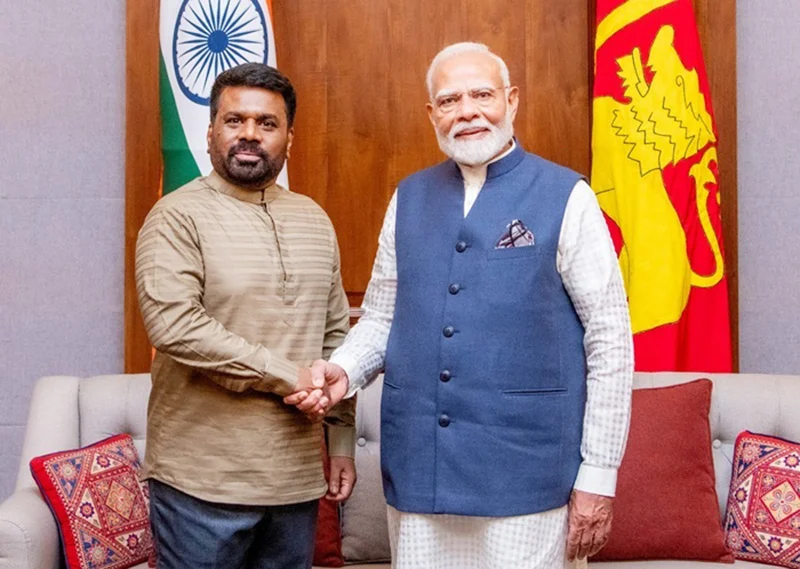
Indian Prime Minister Narendra Modi once again signaled the priority India places on Sri Lanka by swiftly dispatching a shipload of petrol following a telephone conversation with President Anura Kumara Dissanayake. The Indian Prime Minister’s gesture came at a cost to India, where there have been periodic supply constraints and regional imbalances in fuel distribution, even if not a countrywide shortage. Under Prime Minister Modi, India has demonstrated to Sri Lanka an abundance of goodwill, whether it be the USD 4 billion it extended in assistance to Sri Lanka when it faced international bankruptcy in 2022 or its support in the aftermath of the Ditwah cyclone disaster that affected large parts of the country four months ago. India’s assistance in 2022 was widely acknowledged as critical in stabilising Sri Lanka at a moment of acute crisis.
This record of assistance suggests that India sees Sri Lanka not merely as a neighbour but as a partner whose stability is in its own interest. In contrast to Sri Lanka’s roughly USD 90 billion economy, India’s USD 4,500 billion economy, growing at over 6 percent, underlines the vast asymmetry in economic scale and the importance of Sri Lanka engaging India. A study by the Germany-based Kiel Institute for the World Economy identifies Sri Lanka as the second most vulnerable country in the world to severe food price surges due to its heavy reliance on imported energy and fertilisers. Income per capita remains around the 2018 level after the economic collapse of 2022. The poverty level has risen sharply and includes a quarter of the population. These indicators underline the urgency of sustained economic recovery and the importance of external partnerships, including with India.
It is, however, important for Sri Lanka not to abdicate its own responsibilities for improving the lives of its people or become dependent and take this Indian assistance for granted. A long unresolved issue that Sri Lanka has been content to leave the burden to India concerns the approximately 90,000 Sri Lankan refugees who continue to live in India, many of them for over three decades. Only recently has a government leader, Minister Bimal Rathnayake, publicly acknowledged their existence and called on them to return. This is a reminder that even as Sri Lanka receives support, it must also take ownership of its own unfinished responsibilities.
Missing Investment
A missing factor in Sri Lanka’s economic development has long been the paucity of foreign investment. In the past this was due to political instability caused by internal conflict, weaknesses in the rule of law, and high levels of corruption. There are now significant improvements in this regard. There is now a window to attract investment from development partners, including India. In his discussions with President Dissanayake, Prime Minister Modi is reported to have referred to the British era oil storage tanks in Trincomalee. These were originally constructed to service the British naval fleet in the Indian Ocean. In 1987, under the Indo Lanka Peace Accord, Sri Lanka agreed to develop these tanks in partnership with India. A further agreement was signed in 2022 involving the Ceylon Petroleum Corporation and the Lanka Indian Oil Corporation to jointly develop the facility.
However, progress has been slow and the project remains only partially implemented. The value of these oil storage tanks has become clearer in the context of global energy uncertainty and tensions in the Middle East. Energy analysts have pointed out that strategic storage facilities can provide countries with greater resilience in times of supply disruption. The Trincomalee tanks could become a significant strategic asset not only for Sri Lanka but also for regional energy security. However, historical baggage continues to stand in the way of Sri Lanka’s deeper economic linkage with India. Both ancient and modern history shape perceptions on both sides.
The asymmetry in size and power between the two countries is a persistent concern within Sri Lanka. India is a regional power, while Sri Lanka is a small country. This imbalance creates both opportunities for partnership and anxieties about overdependence. The present government too has entered into economic and infrastructure agreements with India, but many of these have yet to move beyond initial stages. This has caused frustration to the Indian government, which sees its efforts to support Sri Lanka’s development as not being sufficiently appreciated or effectively utilised. From India’s perspective, delays and hesitation can appear as a lack of commitment. From Sri Lanka’s perspective, caution is often driven by domestic political sensitivities and concerns about sovereignty.
Power Imbalance
At the same time, global developments offer a cautionary lesson. The behaviour of major powers in the contemporary international system shows that states often act in their own interests, sometimes at the expense of smaller partners. What is being seen in the world today is that past friendships and commitments can be abandoned if a bigger and more powerful country can see an opportunity for itself. The plight of Denmark (Greenland) and Canada (51st state) give disturbing messages. Analysts in the field of International Relations frequently point out that power asymmetries shape outcomes in bilateral relations. As one widely cited observation by Lord Parlmeston, a 19th century prime minister of Great Britain is that “nations have no permanent friends or allies, they only have permanent interests.” While this may be an overly stark formulation, it captures an underlying reality that small states must navigate carefully.
For Sri Lanka, this means maintaining a balance. It needs to clearly acknowledge the partnership that India is offering in the area of economic development, as well as in education, connectivity, and technological advancement. India has extended scholarships, supported digital infrastructure, and promoted cross border links that can contribute to Sri Lanka’s long term growth. These are tangible benefits that should not be undervalued. At the same time, Sri Lanka needs to ensure that it does not become overly dependent on Indian largesse or drift into a position where it functions as an appendage of its much larger neighbour. Economic dependence can translate into political vulnerability if not carefully managed. The appropriate response is not to distance itself from India, but to broaden its partnerships. Engaging with a diverse range of countries and institutions can provide Sri Lanka with greater autonomy and resilience.
A hard headed assessment would recognise that India’s support is both genuine and interest driven. India has a clear stake in ensuring that Sri Lanka remains stable, prosperous, and aligned with its broader regional outlook. Sri Lanka needs to move forward with agreed projects such as the Trincomalee oil tanks, improve implementation capacity, and demonstrate reliability as a partner. This does not preclude it from actively seeking investment and cooperation from other partners in Asia and beyond. The path ahead is therefore one of balanced engagement. Sri Lanka can and should welcome India’s partnership while strengthening its own institutions, fulfilling its domestic responsibilities, and diversifying its external relations. This approach can transform a relationship shaped by asymmetry into one defined by mutual benefit and confidence.
by Jehan Perera

Amelia Kerr hits 139-ball 179* as New Zealand pull off record chase to level series

Punjab Kings fined for slow over-rate

Ice-cool Connolly leads nervy Punjab Kings home on IPL debut

Showers expected in the Western, Sabaragamuwa and Southern provinces in the evening or night

Heat Index at Caution Level in the Western, Sabaragamuwa, Southern, Eastern, North-western, Northern and North-central provinces and in Monaragala district

Urea shortage threatens Yala harvest: Experts

‘Dates have the highest sugar content to fight Coronavirus’

Sunday Island 27 December – Headlines

#SundayIsland 17th December – Headlines

Sunday Island – 28th March

Sunday Island Headlines – 21 March

Sunday Island – 21st February – Headlines
-
 Features5 days ago
A World Order in Crisis: War, Power, and Resistance
-

 News6 days ago
Energy Minister indicted on corruption charges ahead of no-faith motion against him
-

 News7 days ago
US dodges question on AKD’s claim SL denied permission for military aircraft to land
-

 Business7 days ago
Dialog Unveils Dialog Play Mini with Netflix and Apple TV
-

 Sports6 days ago
SLC to hold EGM in April
-

 Opinion6 days ago
When elephants fight, it is the grass that suffers
-
 Latest News6 days ago
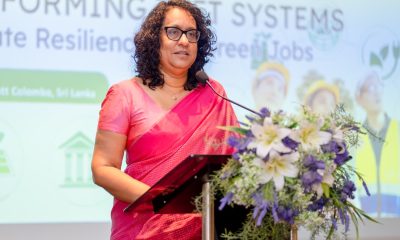
A strong Technical and Vocational Education and Training (TVET) system equips individuals with practical, relevant, and future-oriented skills helping to innovate responsibly towards a greener and sustainable future – PM
-

 Features6 days ago
Lest we forget