
Latest News
Non-aligned nations, once perceived as weak states, have evolved beyond that characterization -President

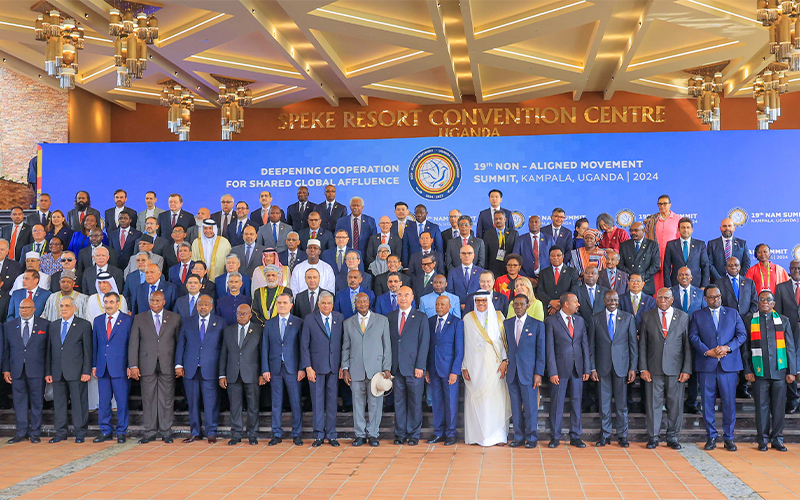
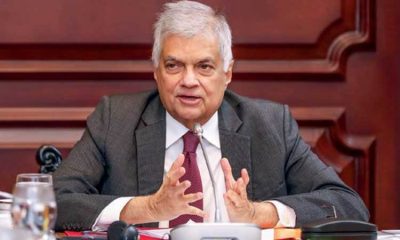
President Ranil Wickremesinghe addressing the 19th Non-Aligned Movement (NAM) Summit in Kampala, Uganda said that Non-aligned nations, once perceived as weak states, have evolved beyond that characterization.
He also expressed gratitude to President Museveni and Uganda for hosting the summit.
Following is the full speech delivered by President Ranil Wickremesinghe;
“Let me begin by congratulating you President Yoweri Museveni of Uganda for taking over the helm of the Non Aligned Movement at this 19th Summit. Your leadership is even more timely as Uganda assumes this role at a critical moment of collective awareness among countries of the global South. This is the first NAM Summit following the onset of the pandemic, the debt crisis, climate catastrophe, new global competition, and the ensuing multiple implications for the world, in particular, for the Global South.
As we meet today, a humanitarian crisis is unfolding in the Gaza Strip and beyond. For over 3 months immense suffering and losses have been endured by the Palestinian civilian population, endangering regional security and stability. Until now, the NAM was largely silent. How can we remain silent when the Gaza is destroyed? People denied humanitarian aid and a vast majority of the dead are innocent civilians. Silence implies consent. It is encouraging that this 19th Summit has given the highest priority to this crisis in Gaza and the inalienable rights of the people of Palestine to self- determination and the realisation of an independent and sovereign state of Palestine. We must congratulate South Africa for the bold stand it has taken in regard to Gaza. The international community has already called for an immediate humanitarian ceasefire and a release of hostages.
There cannot be a two state solution based on one state – Israel. No resolution is possible without a state of Palestine. Therefore, in line with multiple UN Resolutions, and the Declaration of this Summit, the international community must recognise the West Bank, Gaza and East Jerusalem as territories coming within the State of Palestine and in addition there should be no change in the ethnic composition of Gaza. Sri Lanka also proposes that the State of Palestine be established within 5 years and no more.
We are now witnessing the end of the post cold war order and the coming into being of the evolving multipolar world. On the geopolitical front, we are witnessing a resurgence of latent and open conflicts involving former and aspiring major powers. In Europe the transatlantic military alliance has been strengthened, past arms control agreements have collapsed, military expenditure has reached historically unprecedented levels and nuclear weapons are once again the subject of apparently serious policy discussion. Outer space and the oceans have become potential theatres of conflict and geo-strategic competition including in our vicinity in the Indian and Pacific Oceans.
Free trade and economic integration is being reversed by policy driven rise of trade protectionism due to strategic competition among major powers. Furthermore, this being extended further with the concepts of de-coupling and de-risking. A unilateral declaration of a new trade order and the setting aside of multilateralism by the West of the WTO. The weaponising of the Dollar. New challenges of economic and the debt crisis, climate justice, food and energy security. Digital and technological divides and advanced WMD arsenals have aggravated existing inequalities between the developing states of the NAM and the developed world.
The theme of this Summit ‘Deepening Cooperation for Shared Global Affluence” reflects the need to address the inequities between our two worlds. Furthermore, experience shows us that, to succeed we need a strong and a united NAM that contributes to a better world for all. To do so, we have to reinvent ourselves.
Our membership today is no longer a grouping of weak states. We must recognise that as a result of the rapid progress and economic advancement of some of Asian, African and Latin American states. A majority of the 10 leading economies of 2050 will belong to this movement. We see among us, rising aspirants for leadership status in global affairs. They must be prepared to give leadership. Furthermore, there is a vital role we must play as geostrategic rivalries in political, economic, technological and military terms becomes more pronounced among former and new contenders for Major Power status.
Therefore, the NAM must reinvent itself under your Chairmanship. Assume a new role in a multipolar world – to transform itself as the largest bloc representing the Global South. We must also recast our objectives. While upholding the Bandung Principles in the evolving multipolar world we need to,
- oppose the spread of big power rivalry including the coercion of uncommitted states,
- build a multipolar world which incorporates the political, economic, social and climate change mitigation aspirations of the Global South.
Let us transform ourselves from this loose movement to become a dynamic bloc of the Global South and its friends. Let us establish an effective permanent operational structure which is equipped to address the contemporary challenges facing the Global South. An organisation which is capable of shaping the new order.
Our future lies in our hands.
We can make it or break it. Let us make it work.
Let me conclude by thanking you Mr President and the Government of Uganda for the excellent arrangements for hosting this important 19th Summit of the Non Aligned Movement.”
(PMD)








The Rose Bowl, which has been awarded to the winner of ODI series between the women’s teams of Australia and New Zealand since 1985, has now been expanded to include T20Is as well.
New Zealand’s three match T20I tour of Australia, which begins on Sunday at the North Sydney Oval, will be the first T20I edition of the Rose Bowl. The teams will get to face off again for the trophy in March 2027 when they meet again for three ODIs, also in Australia.
For Rose Bowl series that include matches in both white-ball formats, the trophy will go to the team with the most wins overall. In case of a drawn series, the current holder will retain the trophy.
“The Rose Bowl is a prestigious trophy that holds a lot of meaning to current and past players, and it’s a series we’ve always taken a lot of pride in competing in,”Catherine Campbell, NZC’s chief cricket operations officer and a former New Zealand player, said. “With so much T20I cricket now being played, this is a brilliant opportunity to keep the Rose Bowl relevant and to build on the history between us and our Australian rivals.”
New Zealand captain Melie Kerr was excited by the broadening of opportunities to compete for the Rose Bowl.
“We’re all aware of what the Rose Bowl represents and the importance it holds in the White Ferns whakapapa [genealogy],” said Kerr. “Great players and teams have fought for it over the years and we’d love the opportunity to claim our own piece of that history.”
Australia have held the Rose Bowl continuously since wresting it back from New Zealand in 2000. Since that 3-0 win, Australia have won 18 times with one series – in 2008-09 – shared 2-2. Overall, Australia have won 26 of the 31 ODI series played for the Rose Bowl, with New Zealand winning three times and three series drawn.
North Sydney will host all three T20Is of the upcoming Rose Bowl series, on October 18, 20 and 22.
[Cricinfo]
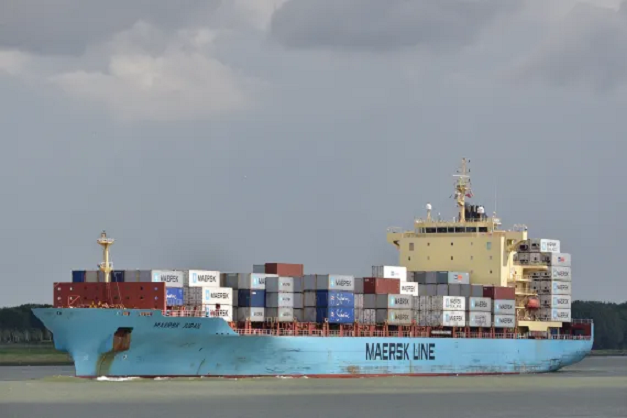
US President Donald Trump claims the US Navy’s “effective” blockade has stopped all Iranian ships from crossing the Strait of Hormuz.
Iran’s Islamic Revolutionary Guard Corps (IRGC) navy says a supertanker carrying more than two million barrels of crude oil has struck a sea mine while attempting to cross the Strait of Hormuz through an “unauthorised” route.
The collision caused a huge explosion and a major fire on board the vessel, the IRGC said in a statement reported by semi-official Tasnim news agency.
It alleged that the tanker had turned off all tracking and radar systems, attempting to pass through the strait using deception and with US military support.
‘The Strait of Hormuz is closed’, the IRGC navy warned, adding that vessels violating Iranian regulations would face severe consequences for relying on US backing.
[Aljazeera]
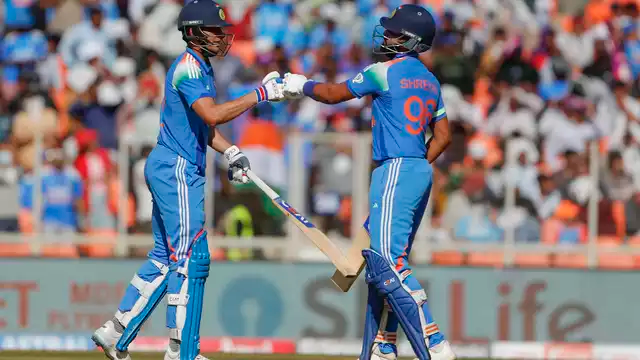
Squad for the first three ODIs: Shubman Gill [C], Rohit Sharma, Virat Kohli, Shreyas Iyer [VC], KL Rahul [WK], Nitish Kumar Reddy, Axar Patel, Naman Dhir, Anshul Kamboj, Gurnoor Brar, Ruturaj Gaikwad, Arshdeep Singh, Ishan Kishan [WK], Mohammed Siraj, Prasidh Krishna*, Kuldeep Yadav
Squad for fourth and fifth ODIs: Shreyas Iyer [C], Rohit Sharma, Virat Kohli, Tilak Varma, Ishan Kishan [WK, VC], Nitish Kumar Reddy, Axar Patel, Naman Dhir, Auqib Nabi, Gurnoor Brar, Ruturaj Gaikwad, Arshdeep Singh, Kumar Kushagra [WK], Mohammed Siraj, Yash Thakur, Kuldeep Yadav
[Cricbuzz]

Review of progress in reforms and modernisation of key state revenue-collecting institutions

Rose Bowl expanded to include Australia vs New Zealand T20Is

Trump claims US Navy blockade stops Iranian ships in Hormuz

Showers above 75 mm are likely at some places in the Western, Sabaragamuwa, Central and North-central provinces and in Trincomalee and Mullaitivu districts

Cut power bills by 3-5%, don’t hike them, consumers demand

Asgiri Mahanayake calls for immediate release of Gnanasara Thera

‘Dates have the highest sugar content to fight Coronavirus’

Sunday Island 27 December – Headlines

#SundayIsland 17th December – Headlines

Sunday Island – 28th March

Sunday Island Headlines – 21 March

Sunday Island – 21st February – Headlines
-

 News6 days ago
Sri Lanka escalates anti-graft drive with Shiranthi’s jailing
-

 Latest News6 days ago
Farhan and Sadaqat help Pakistan seal series in style
-

 News6 days ago
Iranian ships stranded, Lanka fears US sanctions
-

 Latest News4 days ago
Nissanka’s return headlines Sri Lanka’s Test squad against Pakistan
-
 Features5 days ago
Intake 16: 45 years of duty and honour
-
 News5 days ago
Malwathu Chapter issues statement on talks with President over Gnanasara Thera’s robes
-
 News6 days ago
Navi Pillay’s Lankan affairs in focus as she wins 2026 Nobel Peace Prize
-
 News5 days ago
CP alleges NPP has taken the blame for illegal US sanctions on Iranian vessels