
Latest News
Non-aligned nations, once perceived as weak states, have evolved beyond that characterization -President

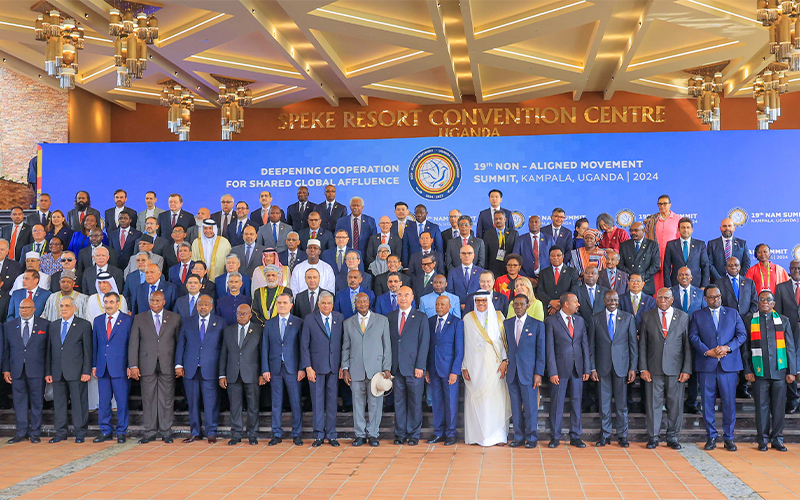
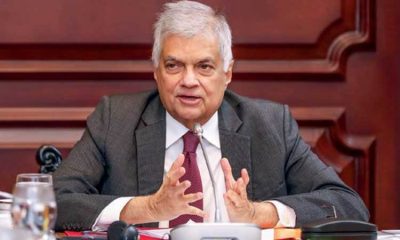
President Ranil Wickremesinghe addressing the 19th Non-Aligned Movement (NAM) Summit in Kampala, Uganda said that Non-aligned nations, once perceived as weak states, have evolved beyond that characterization.
He also expressed gratitude to President Museveni and Uganda for hosting the summit.
Following is the full speech delivered by President Ranil Wickremesinghe;
“Let me begin by congratulating you President Yoweri Museveni of Uganda for taking over the helm of the Non Aligned Movement at this 19th Summit. Your leadership is even more timely as Uganda assumes this role at a critical moment of collective awareness among countries of the global South. This is the first NAM Summit following the onset of the pandemic, the debt crisis, climate catastrophe, new global competition, and the ensuing multiple implications for the world, in particular, for the Global South.
As we meet today, a humanitarian crisis is unfolding in the Gaza Strip and beyond. For over 3 months immense suffering and losses have been endured by the Palestinian civilian population, endangering regional security and stability. Until now, the NAM was largely silent. How can we remain silent when the Gaza is destroyed? People denied humanitarian aid and a vast majority of the dead are innocent civilians. Silence implies consent. It is encouraging that this 19th Summit has given the highest priority to this crisis in Gaza and the inalienable rights of the people of Palestine to self- determination and the realisation of an independent and sovereign state of Palestine. We must congratulate South Africa for the bold stand it has taken in regard to Gaza. The international community has already called for an immediate humanitarian ceasefire and a release of hostages.
There cannot be a two state solution based on one state – Israel. No resolution is possible without a state of Palestine. Therefore, in line with multiple UN Resolutions, and the Declaration of this Summit, the international community must recognise the West Bank, Gaza and East Jerusalem as territories coming within the State of Palestine and in addition there should be no change in the ethnic composition of Gaza. Sri Lanka also proposes that the State of Palestine be established within 5 years and no more.
We are now witnessing the end of the post cold war order and the coming into being of the evolving multipolar world. On the geopolitical front, we are witnessing a resurgence of latent and open conflicts involving former and aspiring major powers. In Europe the transatlantic military alliance has been strengthened, past arms control agreements have collapsed, military expenditure has reached historically unprecedented levels and nuclear weapons are once again the subject of apparently serious policy discussion. Outer space and the oceans have become potential theatres of conflict and geo-strategic competition including in our vicinity in the Indian and Pacific Oceans.
Free trade and economic integration is being reversed by policy driven rise of trade protectionism due to strategic competition among major powers. Furthermore, this being extended further with the concepts of de-coupling and de-risking. A unilateral declaration of a new trade order and the setting aside of multilateralism by the West of the WTO. The weaponising of the Dollar. New challenges of economic and the debt crisis, climate justice, food and energy security. Digital and technological divides and advanced WMD arsenals have aggravated existing inequalities between the developing states of the NAM and the developed world.
The theme of this Summit ‘Deepening Cooperation for Shared Global Affluence” reflects the need to address the inequities between our two worlds. Furthermore, experience shows us that, to succeed we need a strong and a united NAM that contributes to a better world for all. To do so, we have to reinvent ourselves.
Our membership today is no longer a grouping of weak states. We must recognise that as a result of the rapid progress and economic advancement of some of Asian, African and Latin American states. A majority of the 10 leading economies of 2050 will belong to this movement. We see among us, rising aspirants for leadership status in global affairs. They must be prepared to give leadership. Furthermore, there is a vital role we must play as geostrategic rivalries in political, economic, technological and military terms becomes more pronounced among former and new contenders for Major Power status.
Therefore, the NAM must reinvent itself under your Chairmanship. Assume a new role in a multipolar world – to transform itself as the largest bloc representing the Global South. We must also recast our objectives. While upholding the Bandung Principles in the evolving multipolar world we need to,
- oppose the spread of big power rivalry including the coercion of uncommitted states,
- build a multipolar world which incorporates the political, economic, social and climate change mitigation aspirations of the Global South.
Let us transform ourselves from this loose movement to become a dynamic bloc of the Global South and its friends. Let us establish an effective permanent operational structure which is equipped to address the contemporary challenges facing the Global South. An organisation which is capable of shaping the new order.
Our future lies in our hands.
We can make it or break it. Let us make it work.
Let me conclude by thanking you Mr President and the Government of Uganda for the excellent arrangements for hosting this important 19th Summit of the Non Aligned Movement.”
(PMD)







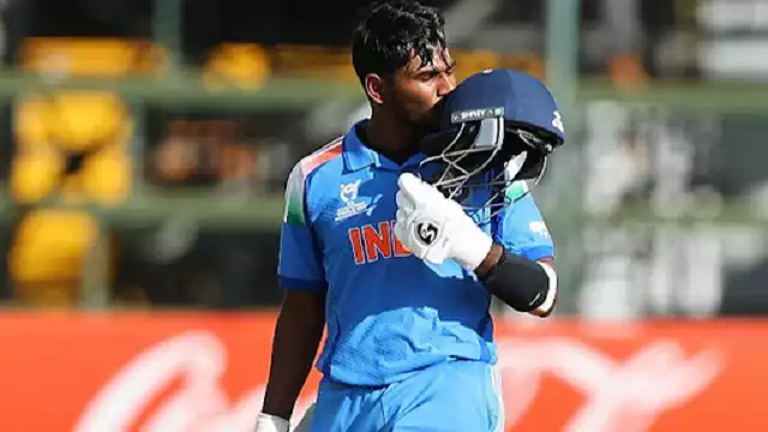
On a batting beauty at the Harare Sports Club, India’s assembly line of batting talent was out in full splendour in the Under-19 World Cup semifinal. There were two centurions in a statement innings from Afghanistan, but Uzairullah Niazai and Faisal Shinozada’s knocks – glorious as they were – were rendered footnotes by a superb century from Aaron George, who led India’s record chase of 311 with the kind of composure that belied his low scores from earlier in the tournament.
Afghanistan 310/4 in 50 overs (Faisal Shinozada 110, Uzairullah Niazai 101; Kanishk Chouhan 2-55, Deepesh Devendran 2-64) lost to India 311/3 in 41.1 overs (Aaron George 115, Vaibhav Sooryavanshi 68, Ayush Mhatre 62; Nooristani Omarzai 2-64) by 7 wickets.
Latest News
Pakistan PM Sharif on India boycott: ‘A very considered stance, and we should completely stand by Bangladesh’
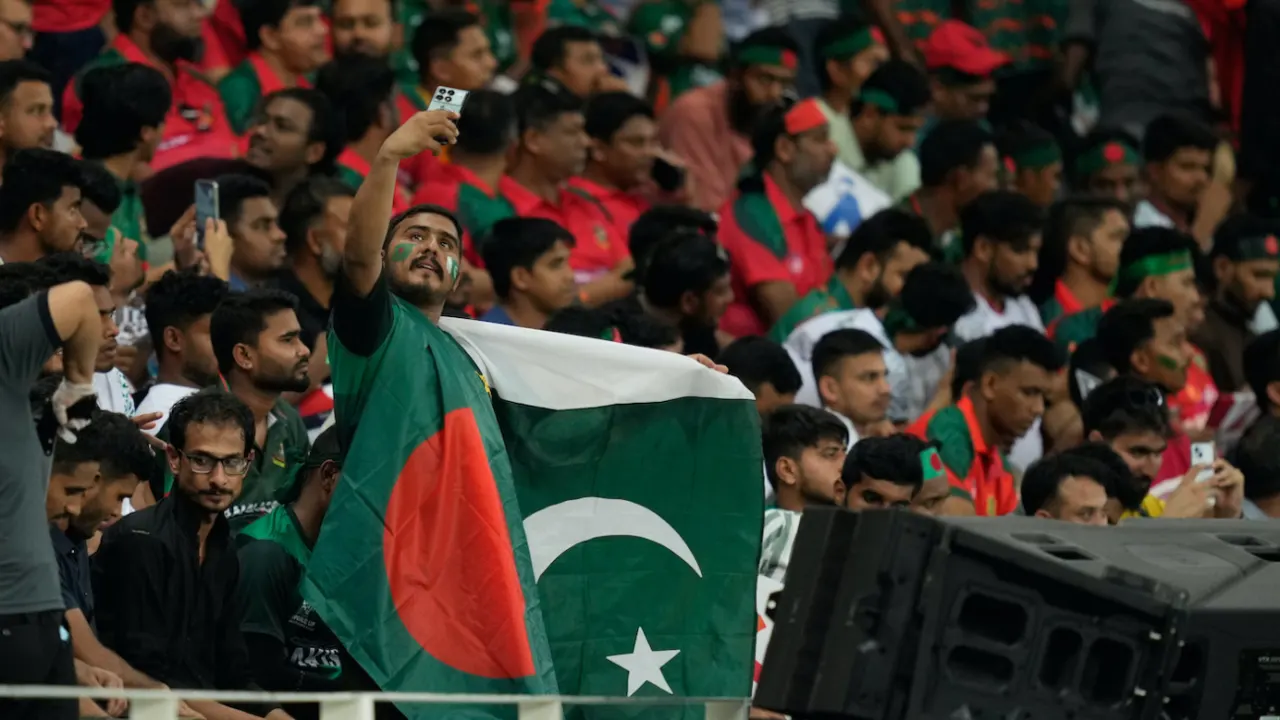
Shehbaz Sharif, the Pakistani Prime Minister, has said Pakistan’s decision to boycott the game against India at the men’s T20 World Cup 2026 was a show of solidarity with Bangladesh, after their removal from the tournament.. It is the first time any official from either the Pakistan state or the PCB has publicly touched upon the reasons for the boycott.
“We have taken a very clear stand on the T20 World Cup that we won’t play the match against India because there should be no politics on the sports field,” Sharif told members of his cabinet on Wednesday. “We have taken a very considered stance, and we should completely stand by Bangladesh, and I think this is a very appropriate decision.”
The Pakistan government put out a post on Sunday saying that while the team would participate in the T20 World Cup, it would not take the field in the February 15 group game against India. The post, which came after a week in which Pakistan’s participation in the tournament had become uncertain, did not give any reason for the decision.
The PCB has not spoken publicly on the matter, but the ICC issued a response a few hours after the X post, in which it said it hoped “that the PCB will consider the significant and long-term implications for cricket in its own country as this is likely to impact the global cricket ecosystem, which it is itself a member and beneficiary of.”
It is not known whether the PCB has officially notified the ICC, or whether there has been any contact between the two bodies. The ICC had said that it “expects the PCB to explore a mutually acceptable resolution, which protects the interests of all stakeholders.”
The Prime Minister’s comments confirm, however, that the boycott decision is linked to what the PCB chief Mohsin Naqvi – the interior minister in Sharif’s government – called the ICC’s double standards in excluding Bangladesh from the T20 World Cup.
Bangladesh were replaced in the world event after their government refused to let the team travel to India, where they were based for their games. The government, citing security concerns, wanted Bangladesh to play their games instead in Sri Lanka, the co-hosts for the event, and where Pakistan will play all their games.


Gunmen kill nearly 200 people in Nigeria’s Kwara and Katsina states

SLAF men’s Judo team crowned overall champs at 62nd National Judo Championship

Showers above 75 mm are likely at some places in the Uva province and in Batticaloa, Ampara, Hambantota and Nuwara-Eliya districts

Parliament: Govt. questioned on returned cheques, delayed payments for disaster victims

President urges shedding of petty differences to achieve an economically strong Sri Lanka

PM: No withdrawal of modules introduced for Grade 6 under proposed education reforms

‘Dates have the highest sugar content to fight Coronavirus’

Sunday Island 27 December – Headlines

#SundayIsland 17th December – Headlines

Sunday Island – 28th March

Sunday Island Headlines – 21 March

Sunday Island – 21st February – Headlines
-
 Opinion6 days ago
Sri Lanka, the Stars,and statesmen
-

 Business5 days ago
Hayleys Mobility ushering in a new era of premium sustainable mobility
-

 Business2 days ago
SLIM-Kantar People’s Awards 2026 to recognise Sri Lanka’s most trusted brands and personalities
-
 Business5 days ago
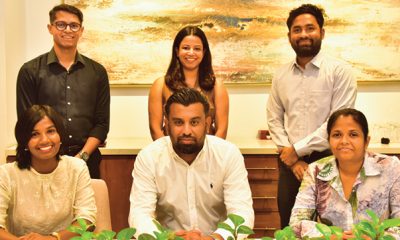
Advice Lab unveils new 13,000+ sqft office, marking major expansion in financial services BPO to Australia
-
 Business5 days ago
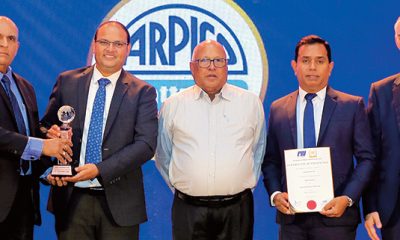
Arpico NextGen Mattress gains recognition for innovation
-
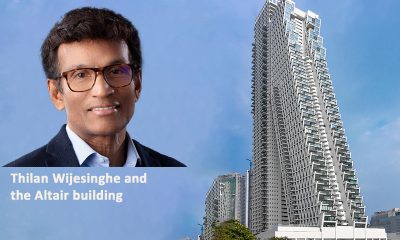
 Business4 days ago
Altair issues over 100+ title deeds post ownership change
-

 Business4 days ago
Sri Lanka opens first country pavilion at London exhibition
-

 Editorial5 days ago
Govt. provoking TUs