
News
No scientific evidence to prove bone fragments are relics of Arahant Anula – archaeologists


By Saman Indrajith
There is no scientific evidence to prove that the recently-excavated bone fragments from an archaeology site at Mihintale monastery complex are relics of Arhant Anula Theri, according to senior archaeologists.
An exposition of the bone fragments was held at the Anula Devi stupa precincts on 20 Dec., and the organisers of the event claimed that they were relics of the Arahant Anlua Theri, who is considered the first Lankan female to be ordained by Theri Sanghamitta during the times of King Devanampiyatissa (247 BC-207 BC). They told the media that they would hold similar expositions across the country in 2023.
Director General of Archaeology Department Prof Anura Manatunga, contacted for comment, said that there was no scientific evidence to assign the bone fragments to any historical figure. “With resources available to us, we may be able to get a sample of these bone fragments dated in a foreign lab. That dating technique could give us the time period but not the name of the person. Even in that case, the dating labs usually give 100 years of margin of error for a single sample,” Prof Manatunga said.
“We have no authority over religious leaders’ statements. We found an inscription bearing early-Brahmi scripts rendering the phrase ‘Anula thisa pavvata vehera’ during the excavations. It could be considered an inscription denoting the name of the site. Several days back, a group of bhikkhus informed us that they wanted to conduct a religious ceremony near the site where the ancient stupa had been excavated by our archaeologists and asked whether the findings of excavation could be displayed there. We granted their request and displayed the bone fragments. Bhikkhus worshipped them and called on people to pay homage because they were the relics of Theri Anula. We had no control over their beliefs and religious fervor.”
Archaeological Excavation Officer in charge of the site, AA Wijayarathna, said the bone fragment had been found in a clay reliquary among artefacts in the second phase of the site of ancient Anula Thisa stupa in the Mihintale complex. The site had been an earth mound determined to contain a stupa and the Archaeological Department commenced excavations on 26 Jan. 2022. The first phase ended in March but owing to the postponements caused by political upheavals and the resumption of the second phase was delayed till 26 Sept. “There is evidence of excavations carried out by unauthorised diggers, most probably treasure hunters from time to time,” he said, adding that scientific excavations had yielded an assortment of artefacts.
“Currently, the bone fragments are at the Excavation Data Analyzing Centre in the Anuradhapura branch of the Archaeology Department. It is better if we could send several samples for C-14 analysis abroad. The higher the number of samples zeroing in on a more accurate date is easy. “It is costly. In rupees the price for a single sample amounts to more than 500,000,” Wijayarathna said.
Scientific assertions would not be possible till the receipt of C-14 analysis report and other reports on typology of the artefacts. Once the ancient stupa was restored it would be conserved with the bone fragments being re-deposited there, he said.
Among the finds unearthed so far there were a reliquary of quartz crystal, clay reliquaries, metal artifacts including some items of jewelry, coins, a metal ringlet embedded in a piece of cloth and beads.
The area was declared a site of archaeological importance by the Archaeological Department in 1926. It is believed to be a part of a monastery complex in the Anuradhapura Period. Archaeologically verified and dated finds so far from the Anuladevi Cetiya site indicate that Queen Viharamahadevi built this temple in the Second Century BC. The Department of Archaeology has said: “It is believed that Queen Anula, who was ordained as the first Bhikkhuni in Sri Lanka resided together with her fellow bhikkhunis at this monastery. Artefacts such as the ruins of a dagoba, belonging to the early Anuradhapura Period, potsherds, beads, terracotta figurines and the remnants of building material had been discovered from this site.”

News
Karu argues against scrapping MPs’ pension as many less fortunate members entered Parliament after ’56
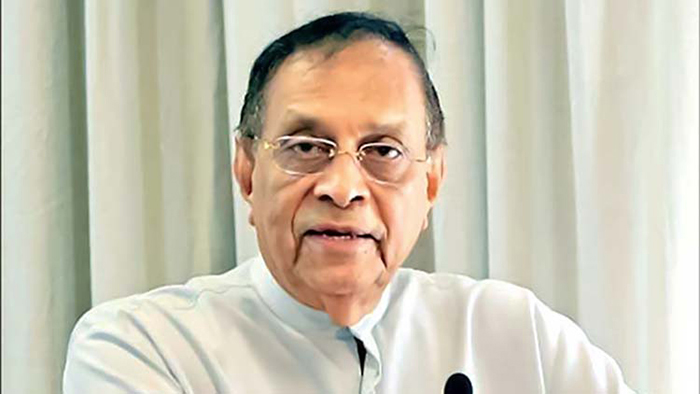
Former Speaker of Parliament Karu Jayasuriya has written to President Anura Kumara Dissanayake expressing concerns over the proposed abolition of MPs’ pensions.The letter was sent in his capacity as Patron of the Former Parliamentarians’ Caucus.
In his letter, Jayasuriya noted that at the time of Sri Lanka’s independence, political participation was largely limited to an educated, affluent land-owning elite. However, he said a significant social transformation took place after 1956, enabling ordinary citizens to enter politics.
He warned that under current conditions, removing parliamentary pensions would effectively confine politics to the wealthy, business interests, individuals engaged in illicit income-generating activities, and well-funded political parties. Such a move, he said, would discourage honest social workers and individuals of modest means from entering public life.
Jayasuriya also pointed out that while a small number of former MPs, including himself, use their pensions for social and charitable purposes, the majority rely on the pension as a primary source of income.
He urged the President to give due consideration to the matter and take appropriate action, particularly as the government prepares to draft a new constitution.The Bill seeking to abolish pensions for Members of Parliament was presented to Parliament on 07 January by Minister of Justice and National Integration Dr. Harshana Nanayakkara.
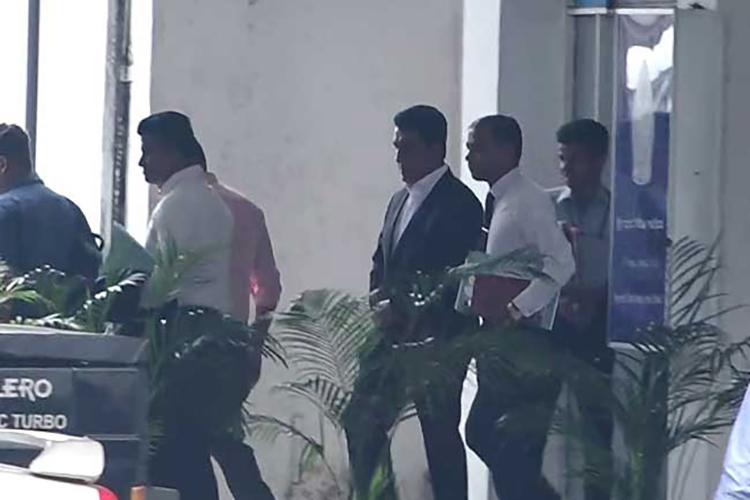
Five suspects, including former Minister Johnston Fernando and his two sons, who were arrested by the Financial Crimes Investigation Division (FCID), were further remanded until 30 January by the Wattala Magistrate’s Court yesterday.
The former Minister’s , sons Johan Fernando and Jerome Kenneth Fernando, and two others, were arrested in connection with the alleged misuse of a Sathosa vehicle during Fernando’s tenure as Minister.
Investigations are currently underway into the alleged misuse of state property, including a lorry belonging to Lanka Sathosa, which reportedly caused a significant financial loss to the state.
In connection with the same incident, Indika Ratnamalala, who served as the Transport Manager of Sathosa during
Fernando’s tenure as Minister of Co-operatives and Internal Trade, was arrested on 04 January.
After being produced before the Wattala Magistrate’s Court, he was ordered to be remanded in custody until 09 January.The former Sathosa Transport Manager was remanded on charges of falsifying documents.
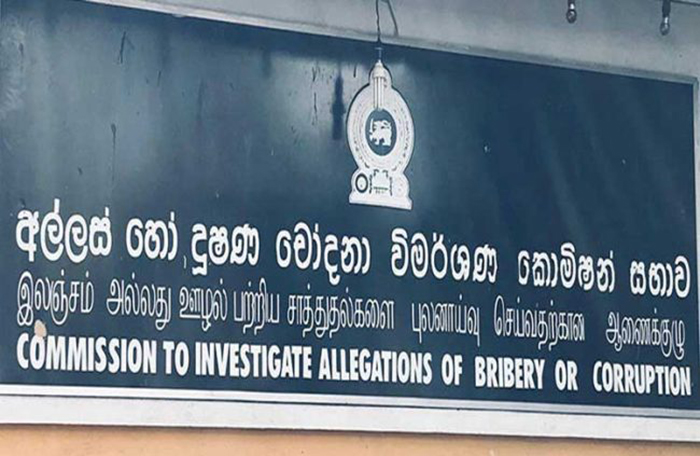
The Commission to Investigate Allegations of Bribery or Corruption (CIABOC) yesterday informed the Colombo Magistrate’s Court that indictments had been filed in the Colombo High Court against former Minister and NDF Badulla District MP Chamara Sampath Dassanayake over a corruption allegation.
The Bribery Commission notified the court when the case, in this regard, was taken up yesterday before Colombo Chief Magistrate Asanga S. Bodaragama.
At the hearing, the CIABOC notified the court that indictments had been presented before the Colombo High Court against the accused.
Accordingly, concluding the proceedings before the Magistrate’s Court, the Magistrate ordered MP Dassanayake to appear before the High Court once a notice was issued.

Tanzid Hasan’s ton, Binura Fernando’s four-for power Rajshahi Warriors to BPL title

U – 19 World Cup: Bangladesh ease past USA

U – 19 World Cup: Australia top Group A after bowling SL out for 58

Alleged drug kingpin and ex-Olympian Ryan Wedding arrested after years on the run

Showers above 50 mm are likely at some places in the Northern, North-central, and North-western provinces and in Trincomalee district

Karu argues against scrapping MPs’ pension as many less fortunate members entered Parliament after ’56

‘Dates have the highest sugar content to fight Coronavirus’

Sunday Island 27 December – Headlines

#SundayIsland 17th December – Headlines

Sunday Island – 28th March

Sunday Island Headlines – 21 March

Sunday Island – 21st February – Headlines
-

 Editorial6 days ago
Illusory rule of law
-
 Features6 days ago
Daydreams on a winter’s day
-
 Features6 days ago
Surprise move of both the Minister and myself from Agriculture to Education
-

 Features5 days ago
Extended mind thesis:A Buddhist perspective
-
 Features6 days ago
The Story of Furniture in Sri Lanka
-

 Opinion4 days ago
American rulers’ hatred for Venezuela and its leaders
-
 Features6 days ago
Writing a Sunday Column for the Island in the Sun
-
 Business2 days ago
CORALL Conservation Trust Fund – a historic first for SL