
Business
No safe place for women and girls in Darfur, MSF report finds


Report documents widespread and systematic sexual violence across roads, fields and displacement camps both in acute conflict zones and far from front lines
Women in Darfur, Sudan, are demanding protection, care and justice as sexual violence continues across the region, both in active conflict areas and far beyond frontlines, according to a new report released today by Médecins Sans Frontières / Doctors Without Borders (MSF).
The report, “There is something I want to tell you…”: Surviving the Sexual Violence Crisis in Darfur, provides the most comprehensive documented accounts of sexual violence in Sudan’s war, with survivors testimonies and data from MSF medical programmes highlighting clear patterns of widespread and systematic abuse.
Between January 2024 and November 2025, at least 3,396 survivors of sexual violence sought treatment in MSF-supported facilities across North and South Darfur, though MSF warns this represents only a fraction of the true scale, as many survivors cannot safely reach care. Women and girls accounted for 97% of survivors treated in MSF programmes.
“Sexual violence is a defining feature of this conflict — not confined to frontlines, but pervasive across communities,” said Ruth Kauffman, MSF, Emergency Health Manager. “This war is being fought on the backs and bodies of women and girls. Displacement, collapsing community support systems, lack of access to healthcare and deep-rooted gender inequalities are allowing these abuses to continue across Sudan.”
Survivor testimonies and MSF medical data show that RSF soldiers and allied militias are responsible for widespread and systematic sexual violence against women.
Following the RSF’s capture of El Fasher — the capital of North Darfur — on 26 October 2025, MSF treated more than 140 survivors fleeing the city to Tawila in November, 94% of whom were attacked by armed men with many reporting assaults along escape routes. The assaults were widespread, often carried out by multiple perpetrators in front of family, and deliberately targeted non-Arab communities, as a means of humiliation and terror, echoing previous RSF atrocities such as the dismantling of Zamzam camp.
In just one month, between December 2025 and January 2026, MSF identified a further 732 survivors in displacement camps around Tawila, where women reported attacks both during their journeys and within the camps. Overcrowded shelters, lack of basic security, and unsafe conditions — including distant water points, insecure bathing areas and limited latrines — further increased their vulnerability.
Survivors described attacks not only during fighting, but in everyday settings — on roads used to flee violence, in fields where families grow food, and in markets and displacement camps — showing how sexual violence extends far beyond the frontlines.
In South Darfur, hundreds of kilometres from active ground fighting, 34% of survivors were assaulted while farming or travelling to farmland, and 22% while collecting firewood, water or food, highlighting how violence occurs during everyday activities.
Children are also among the survivors: in South Darfur, one in five survivors was under 18, including 41 children younger than five.
MSF data also points to patterns of systematic abuse, with armed men responsible for most assaults — over 95% in North Darfur, while nearly 60% in South Darfur involved multiple perpetrators.
One survivor described the violence she experienced while fleeing her home:
“They took us to an open area. The first man raped me twice, the second once, the third four times. Apart from the rapes, they beat us with sticks and pointed guns at my head.”
For many, the threat of violence has become part of daily life:
“Every day when people go to the market, there are cases of rape. When we go to the farm, this happens,” said a 40-year-old woman in South Darfur.
Survivors also face significant barriers to care — including insecurity, stigma and limited protection services. Sexual violence is being used as a weapon of war and a systematic means of controlling civilians, in violation of international humanitarian law, MSF said.
Community leaders, midwives, activists and survivors in focus groups MSF organised called for an immediate end to sexual violence across Sudan, demanding protection, access to care and dignity — alongside justice and accountability.
MSF calls on all parties to the conflict — including the RSF and their supporters — to cease and prevent sexual violence and hold perpetrators accountable. MSF also calls on the United Nations, donors and humanitarian actors to urgently scale up health and protection services in Darfur and all of Sudan.

Business
Sri Lanka Climate Summit flags need to ‘mainstream climate action into country’s growth story’
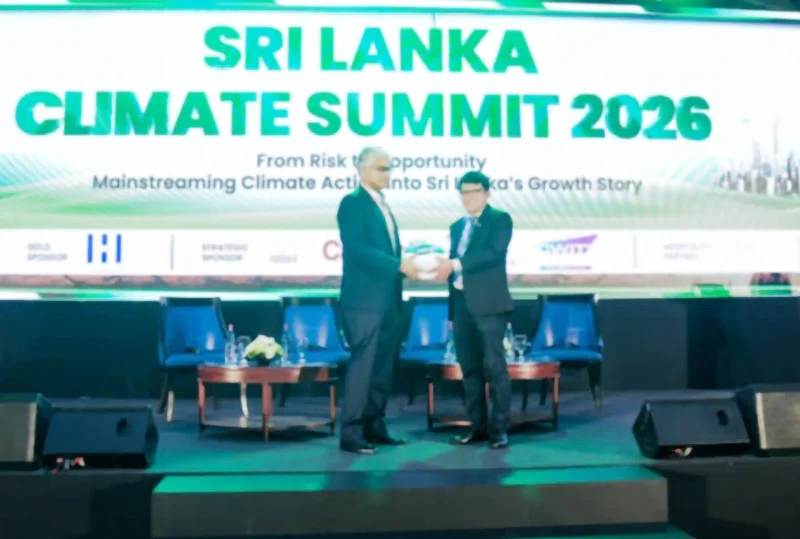
Sri Lanka has reached a critical juncture where climate action must evolve from policy discussions into tangible investments capable of driving economic growth, strengthening competitiveness and attracting international capital, speakers at the second Sri Lanka Climate Summit 2026 organised by the Ceylon Chamber of Commerce said.
Held under the theme “From Risk to Opportunity: Mainstreaming Climate Action into Sri Lanka’s Growth Story,” the summit at Taj Samudra yesterday brought together policymakers, multilateral agencies, financiers and private sector leaders to assess whether Sri Lanka is climate-ready for investment and how climate resilience can be transformed into an economic advantage.
Delivering the welcome address, Chairman of the Ceylon Chamber of Commerce, Krishan Balendra, said climate action could no longer be treated as a separate sustainability agenda.
“As Sri Lanka enters its next phase of economic growth and recovery, climate action must become part of our competitiveness agenda, our investment agenda and ultimately our national growth story, Balendra said.
He noted that since the inaugural Climate Summit in 2024, the Chamber had moved beyond advocacy to practical implementation through initiatives promoting Environmental, Social and Governance (ESG) practices, climate disclosures, green innovation and public-private collaboration.
The Chamber has also established a public-private working group jointly led by the Ministry of Environment and the Chamber to support implementation of Sri Lanka’s Nationally Determined Contributions (NDCs) and emerging carbon market frameworks.
Environment Minister Dr. Dhammika Patabendi, delivering the keynote address titled “Sri Lanka’s Climate State of the Nation 2026, said the government was positioning climate resilience as a cornerstone of economic transformation.
“We are working directly with the Chamber to transform global climate risks into Sri Lanka’s greatest competitive advantages, the minister said.
He highlighted landmark amendments to the National Environment Act aimed at modernising environmental governance while providing greater certainty to investors.
According to Patabendi, the reforms would shift environmental compliance from a reactive and punitive model to a proactive framework that provides businesses with greater operational clarity before projects commence.
The minister also stressed that environmental compliance is increasingly becoming a prerequisite for access to premium export markets.
“Enhanced environmental standards act as an economic shield for our exporters, validating the ‘Made in Sri Lanka’ brand as an ethically secure, low-carbon choice, he said.
Patabendi reaffirmed Sri Lanka’s comm
itment to achieving 70 percent renewable energy generation by 2030 and carbon neutrality by 2050, while highlighting significant opportunities in wind energy development, including an estimated 56 gigawatts of offshore wind potential.
Vimlendra Sharan, FAO Representative for Sri Lanka and the Maldives, described Sri Lanka as a country that is simultaneously “climate vulnerable and climate ambitious.”
“The real question is whether Sri Lanka is climate investment ready. That journey has only just begun, Sharan observed.
He argued that climate readiness required transforming vulnerabilities and ambitions into structured, financeable and scalable investments.
One of the country’s biggest challenges, according to Sharan, is the limited pipeline of bankable climate projects.
“The major gap is the lack of investment-ready projects. We also need stronger project preparation capacity, more data and better evidence to unlock larger volumes of climate finance, he said.
Speakers agreed that climate resilience is no longer merely an environmental issue but an economic imperative affecting trade, investment flows, supply chain access and long-term growth prospects.
By Ifham Nizam

A leading Australia-based sustainable energy solutions company, ‘365 Future Energy’, is now exploring possibilities to enter Sri Lanka to provide sustainable energy solutions to Sri Lanka at affordable prices.
‘365 Future Energy’ CEO, Isuru Yapa, together with internationally recognized energy technology entrepreneur Ludovico Finotto,visited Sri Lanka this week.
” If we could set up this plant here it would benefit Sri Lanka because it could store sustainable energy to stabilise the national grid, supply energy at an affordable operational cost and manage the energy supply system in a more stable manner, Ludovico Finotto, founder and CEO of ‘QiOn Technologies’ a globally recognized innovator in the energy, automotive and high-performance electronics sectors, said.
With over 18 years of international experience, Finotto has played a leading role in advanced developments related to electric mobility, energy storage, charging infrastructure, hydrogen technologies, marine electrification and smart energy systems in more than 24 countries.
Speaking to the Island Financial Review he said that the purpose of this strategic visit is to explore sustainable energy solutions, evaluate emerging opportunities within Sri Lanka’s energy sector and identify potential investment and technology partnerships that can contribute to the country’s future energy transformation.
‘365 Future Energy’ is focused on delivering innovative and environmentally responsible energy solutions, supporting the global transition toward renewable and sustainable power infrastructure. Through this visit, the company aims to better understand Sri Lanka’s growing energy demands and assess opportunities for collaboration in renewable energy technologies, energy storage systems, EV charging infrastructure and next-generation sustainable energy developments.
‘365 Future Energy’ believes Sri Lanka holds strong potential for future-focused sustainable infrastructure projects and clean energy investments. The company’s leadership team will engage with local stakeholders, businesses, and industry representatives during the visit to discuss opportunities for innovation, energy efficiency, and long-term sustainable growth, company sources said.
By Hiran H Senewiratne

Celebrating the spirit of Vesak, Serendib Flour Mills served the community through a Tea Bun Dansala and Plain Tea Dansala held near the Orugodawatta Bridge on 29 May 2026, distributing 12,500 buns and 12,500 cups of tea to devotees and members of the public.
The Dansala commenced with the blessings and presence of a venerable monk, reflecting the values of compassion, generosity and service that define Vesak. The initiative was carried out through the collective commitment of the Serendib Flour Mills team, who came together to serve the community and support those observing the sacred occasion.
Through this initiative, Serendib Flour Mills reinforced its belief that nourishment extends beyond food, living in the kindness shared, the relationships built and the communities uplifted. Guided by its purpose of “Nourishing the Nation,” the company remains committed to creating nourished futures through meaningful acts of service and care.

Rana and Mosaddek star as Bangladesh end 21-year wait with crushing win

Formulation of a Draft Economic Development Bill to expedite the process of Digital Transformation and Digital Economic Development
Cabinet approval for Sri Lanka Community and Health Survey – 2026/2027
A National Water Tariff Policy for all Water Supply and Sanitation Services
National Policy on Green Hydrogen in Sri Lanka
Cabinet nod to amend the Customs Ordinance

‘Dates have the highest sugar content to fight Coronavirus’

Sunday Island 27 December – Headlines

#SundayIsland 17th December – Headlines

Sunday Island – 28th March

Sunday Island Headlines – 21 March

Sunday Island – 21st February – Headlines
-

 Latest News6 days ago
Kusal Mendis, Pathum Nissanka, bowlers put Sri Lanka 1-0 up
-
 News6 days ago
New US tariffs proposed on 60 countries, including Sri Lanka
-

 Features5 days ago
Power crept into the Sangha and is now tearing it apart
-
 Features5 days ago
Kondachchi wind farm and battery storage project to boost energy security, says Power Ministry Secretary
-

 Features5 days ago
Saudi Arabia sets new benchmark in Hajj management as 1.7 million pilgrims complete sacred journey
-

 News3 days ago
Women’s T20 World Cup 2026 warm-up: Chamari Athapaththu’s 94 helps Sri Lanka beat Pakistan
-

 News4 days ago
Asst. Manager, security officer arrested over Rs 30 mn snatch at Horana PB branch
-

 Editorial2 days ago
Probe Sallay’s complaint