
Business
No one left behind: Airtel-NIMH Mental Health Helpline expands to 24/7 service


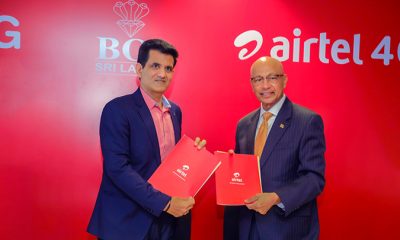
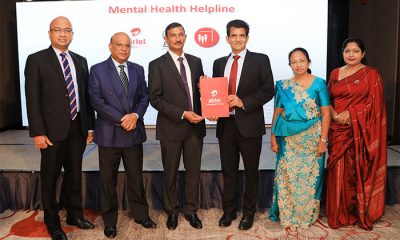
Building on the urgent national efforts to enhance access to professional mental healthcare services for all Sri Lankans, Airtel Lanka in partnership with the National Institute of Mental Health (NIMH) announced the expansion of its Whatsapp service into a 24/7 operation.
The expanded service is designed to ensure that anyone facing challenges with their mental health can reliably reach out for help free-of-charge, and be assured of a compassionate and helpful response, day or night.
Prior to this, the NIMH was reachable 24/7 only through the 1926 helpline, and the operating hours of both SMS and Whatsapp lines had been restricted between 8am – 4pm.
“At a time when record numbers of Sri Lankans are facing extreme uncertainty, and unprecedented levels of stress and anxiety, we believe that mobile technology can be better utilized to make sure that every Sri Lankan and especially youth have access to the support they need to more effectively manage their mental health. In this manner, we can ensure that no Sri Lankan is left behind,” Airtel Sri Lanka CEO/MD, Ashish Chandra stated.
He added that moving forward, Airtel would also be working to amplify awareness about the importance of mental health and available services for those facing challenges to young Sri Lankans across the country. In an effort to do so, Airtel sponsored art and trilingual essay competitions conducted by the NIMH. Leveraging existing communications channels and partnerships with educational institutions, these sessions were catered to students of all grades across schools island-wide, in honour of World Mental Health Day 2022 in October.
“Between the lockdowns, and economic hardships, we are seeing an increase in the number of Sri Lankans reaching out for help with a range of mental health issues through the 1926 service. Especially for our younger users, they are often much freer to talk to us through the Whatsapp service in the evenings. We are grateful to the Airtel team for helping us bring these essential services into a 24 hour format, and amplifying the reach of this life-saving service,” NIMH Senior Consultant Psychiatrist, Dr. Pushpa Ranasinghe said.
Since launching 2 years ago on World Mental Health Day 2020, the text-based 1926 service alone has helped to initiate over 1000 life-saving interventions, in addition to providing support, comfort and guidance to many individuals facing challenges with their mental health. Most recently, Airtel partnered NIMH to further expand the SMS service to also include a Whatsapp line.
The initiative is also aligned with Airtel’s global mission to connect and empower youth across the world. Currently Airtel operates in 17 countries across South Asia and Africa, with networks that serve over two billion people. Ranked among the top three mobile operators globally, in recent months Airtel has also engaged in novel partnerships with global tech giants like Google and Meta in order create opportunities for enhancing digital inclusion across the region.
If you or someone you know is facing a challenge with their mental health, simply call, or SMS 1926, or start a chat on Whatsapp by messaging 075 555 1926. Airtel users have access to all these services completely free of charge.








Business
LankaPay Technnovation Awards to spotlight inclusive FinTech as digital payments expand across Sri Lanka


Sri Lanka’s digital payments revolution is gathering unprecedented momentum, with more than 260 government institutions now integrated into the national digital payments ecosystem, marking a decisive shift toward financial transparency, efficiency and inclusion, officials said at a press briefing held at the Hilton Colombo Residences.
The announcement coincided with the launch of the eighth edition of the LankaPay Technnovation Awards 2026 by LankaPay, Sri Lanka’s national payment network, under the theme “Inclusive FinTech,” recognising financial institutions, fintech companies and government entities that have expanded access to secure and convenient digital financial services across the country.
Chief Executive Officer of LankaPay, Channa de Silva, said the rapid expansion of digital payment adoption reflects a structural transformation in Sri Lanka’s financial architecture.
“The growth we are witnessing in digital payments is not merely technological progress—it represents a fundamental shift in how financial services are delivered and accessed. Our national payment infrastructure is enabling real-time, secure and inclusive transactions that empower individuals, businesses and government institutions,” de Silva said.
He said LankaPay’s continued investment in interoperable and accessible payment infrastructure is helping bring more citizens into the formal financial system while strengthening economic governance.
“Our objective is to ensure digital payments are accessible to all Sri Lankans, from urban centres to the most remote communities. Inclusive digital finance strengthens economic participation and supports sustainable national development,” he said.
Officials said the onboarding of 260 government institutions within a year represents a remarkable leap from just eight institutions previously connected, underscoring the State’s accelerating digital transformation agenda.
“This expansion required extensive engagement across the country. Our teams worked directly with government departments, municipal councils and regional authorities to ensure successful integration into the digital payments ecosystem,”
LankaPay officials said, noting that institutions from regions including Kurunegala, Jaffna and Trincomalee had recently been onboarded.
Authorities said the digital integration of government services improves transparency, reduces administrative inefficiencies and enhances public convenience, while enabling better financial oversight and accountability.
The LankaPay Technnovation Awards, first introduced in 2017, have become Sri Lanka’s benchmark platform recognising excellence and innovation in payment technology, honouring institutions that have demonstrated leadership in advancing digital payments and financial inclusion.
The grand awards ceremony is scheduled to be held on March 24 at the Cinnamon Life under the patronage of Nandalal Weerasinghe, Governor of the Central Bank of Sri Lanka, as Chief Guest. Eranga Weerarathne, Deputy Minister of Digital Economy, and Hans Wijayasuriya, Chief Advisor to the President on Digital Economy, will attend as Guests of Honour.
Officials said the awards recognise outstanding achievements across multiple categories, including financial inclusivity, customer convenience, digital government payments and cross-border payment enablement, reflecting the breadth of innovation taking place within Sri Lanka’s financial services sector.
By Ifham Nizam

HNB Group delivered strong performance in 2025, with Group Profit After Tax (PAT) reaching Rs 49.8 Bn, reflecting the continued progress. The Bank’s PAT stood at Rs 45.4 Bn, supported by robust balance sheet expansion and sustained improvements in asset quality.
Commenting on the performance, Nihal Jayawardena, Chairman of HNB PLC, stated,”The year 2025 marked a decisive shift in Sri Lanka’s economic trajectory, supported by improving macroeconomic fundamentals, renewed private sector confidence, and continued progress in national reform efforts. HNB’s strong balance sheet expansion, disciplined risk management, and sustained investment in digital and operational capabilities position the Bank to play an essential role in supporting the country’s revival”.
“While the year concluded with the severe impact of Cyclone Ditwah, the resilience demonstrated by communities and institutions underscored the importance of a banking sector that remains agile, responsive, and deeply committed to national progress. We will continue to work closely with stakeholders to mobilise capital, rebuild affected livelihoods, and strengthen long‑term economic stability.”
Despite strong credit growth, net interest margins remained under pressure amid an accommodative monetary policy stance. Net Interest Income declined marginally by 0.6% year‑on‑year, reflecting the broad reduction in market interest rates, and the recognition of a portion of overdue interest from the restructuring of Sri Lanka Sovereign Bonds (SLSBs) in December 2024, which temporarily boosted interest income in the previous year. However, the decrease in net interest income was moderated by the increase in interest income from loans and advances, supported by the expansion in the loan book, and the growth in CASA deposits.
Non-fund-based income provided a strong counterbalance, with Net Fee and Commission Income increasing by 28.9% year-on-year on the back of higher card usage and a sharp increase in digital transactions. The significant increase in the demand for trade related services on the back of the reopening of vehicle imports and improving trade activity, saw trade finance emerge as one of the key contributors to non-fund income in the current year. Furthermore, Exchange income rose to Rs 6.3 Bn during the year, reversing the loss of Rs 2.9 Bn recorded in 2024.
Prudent risk management, disciplined underwriting and focused recovery efforts supported a significant improvement in asset quality during the year. The Stage 3 portfolio recorded a net reduction alongside an impairment reversal of Rs 9.2 Bn, following the recognition of Rs 2.2 Bn in post‑model adjustments made prudently for loan exposures with potential vulnerability arising from Cyclone Ditwah.
Business
HNB Assurance delivers industry leading 42% revenue (GWP) growth and 28% rise in profits (PAT)

HNB Assurance PLC reported an outstanding financial performance for the year ended 31st December 2025, delivering a 42% year-on-year growth in Life Insurance Gross Written Premium (GWP), this along with the growth rate in Renewals are the highest in the industry.
Life GWP reached Rs. 19.49 Bn compared to Rs. 13.71 Bn in 2024, reflecting strong New Business generation and Renewal Collection. Net Written Premium grew even faster at 43% to Rs. 18.44 Bn, highlighting the quality and sustainability of the Company’s topline expansion.
Commenting on the results, Chairman Stuart Chapman stated, “The year under review was marked by gradual macroeconomic stabilisation, improved investor sentiment and a more predictable policy environment. Although the economy continues to recover from prior volatility, we are beginning to see renewed financial confidence among individuals and businesses. Against this backdrop, HNB Assurance has delivered strong growth in both revenue and profits, while maintaining robust capital adequacy and prudent risk management. Our improvement in top line, profitability and balance sheet strength demonstrates the resilience of our business model and our ability to navigate changing economic conditions which are reflected in an ROE which increased to 18.5% from 16.9% a year earlier.”
Profit Before Tax increased by 28% to Rs. 3.03 Bn from Rs. 2.36 Bn in the previous year, while Profit After Tax (including Life Surplus Transfer) rose by 28% to Rs. 2.12 Bn compared to Rs. 1.66 Bn in 2024. Earnings Per Share improved by 28% to Rs. 14.15 from Rs. 11.04, reinforcing the Company’s ability to consistently translate business growth into enhanced shareholder value. In line with this strong performance, the Board of Directors has proposed a first and final dividend of Rs. 5.00 per share for 2025, representing a 28% increase over the Rs. 3.90 per share declared in the previous year.

Madushani, Sumedha among athletes to reach qualifying standards

Can resourceful New Zealand lock in semi-final spot against already-qualified England?

Fair weather will prevail over most parts of the island

CEB engineers raise alarm over power sector stability

CB identifies 24 pyramid scams in Sri Lanka

Church urges patience, warns against interference with Easter attacks probe

‘Dates have the highest sugar content to fight Coronavirus’

Sunday Island 27 December – Headlines

#SundayIsland 17th December – Headlines

Sunday Island – 28th March

Sunday Island Headlines – 21 March

Sunday Island – 21st February – Headlines
-

 Features6 days ago
Why does the state threaten Its people with yet another anti-terror law?
-
 Features6 days ago
Reconciliation, Mood of the Nation and the NPP Government
-

 Features6 days ago
Victor Melder turns 90: Railwayman and bibliophile extraordinary
-

 Features5 days ago
LOVEABLE BUT LETHAL: When four-legged stars remind us of a silent killer
-
 Features6 days ago
Victor, the Friend of the Foreign Press
-
 Business5 days ago
Seeing is believing – the silent scale behind SriLankan’s ground operation
-

 Business5 days ago
Bathiya & Santhush make a strategic bet on Colombo
-

 Features6 days ago
Barking up the wrong tree