
Latest News
Nitish Kumar Reddy’s dramatic 105* leads India’s rearguard

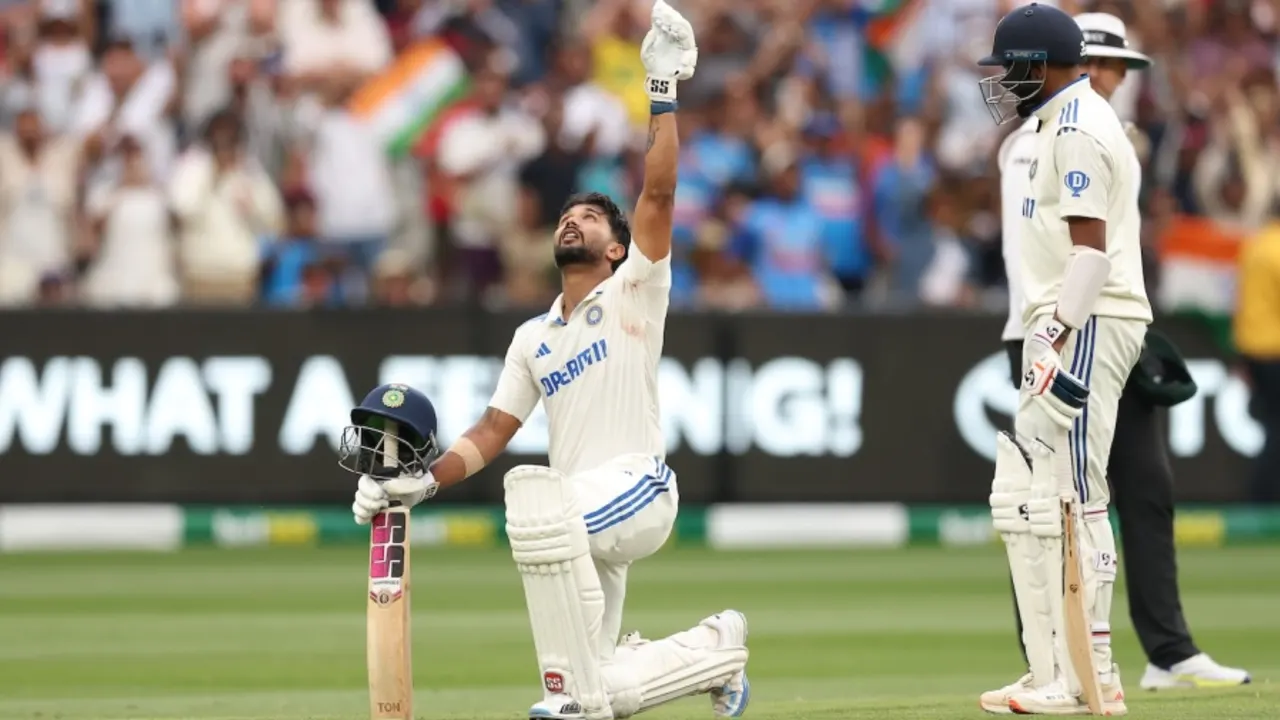
A defiant maiden Test century by Nitish Kumar Reddy brought up with No. 11 Mohammed Siraj for company, led an outstanding rearguard from India at the MCG to give them hope of at least avoiding defeat in the fourth Test although Australia were still set to take a significant first innings lead.
Reddy, who had shown his batting prowess at various stages through the series, arrived at the crease early on the third morning after a Rishabh Pant dismissal that prompted some strong reactions and was still there when bad light and rain brought an early close. He forged a stand of 127 in just under 48 overs with Washington Sundar to halt Australia in their tracks when they appeared likely to take a stranglehold on the game.
However, Reddy’s crowning moment came amid huge tension after Washington was dismissed. In what appeared to be a lack of communication, he and Jasprit Bumrah came back for a second run off the final ball of an over which exposed the No. 10 to Pat Cummins and he edged to slip as Reddy watched from the non-striker’s end on 99. But Siraj was able to negotiate three deliveries from Cummins to huge cheers from the Indian supporters.
Now, facing Scott Boland , Reddy defended two deliveries before unleashing a lofted straight drive down the ground to bring up a magnificent century, just the second of his first-class career. His father was in the crowd, among those on the edge of the seat as the landmark approached, and couldn’t contain his emotion.
When the players left the field for a second time – rain having earlier brought an early tea – Australia’s advantage had been whittled down to 116, far fewer than looked on the cards when they had India 221 for 7 before lunch. They will still hope for a lead in three figures but could now face a race against time to earn victory on a true pitch that hasn’t shown significant signs of deterioration.
The second evening had finished with Australia claiming 3 for 6 around the run out of Yashasvi Jaiswal, the ramifications of which were still being hotly debated when play resumed, with India 310 behind. Pant led the scoring early on the third morning, but fell in a manner that created many headlines when he attempted to scoop Boland over fine leg and got a leading edge to deep third. In a Test that had been dominated by Sam Konstas’ scoops, this was an example of when things go badly.
Ravindra Jadeja played a largely defensive innings before being defeated by a superb piece of bowling from Lyon who skidded one through to trap him lbw. It was just Lyon’s fourth wicket of the series but, having later made one bounce to remove Washington, he could yet have a key role to play. When Jadeja fell, India were still 253 runs adrift with the follow-on the first target as Washington joined Reddy, although there’s almost no chance Cummins would have enforced it.
Reddy had been positive when he arrived, quickly overtaking Jadeja’s score despite his partner having a 35-ball headstart. Shortly after Lyon had removed Jadeja, Reddy skipped down to the offspinner and sent him straight for six. His half century came up with a rasping back-foot drive against Mitchell Starc and, as it had previously in the series, his technique shone of someone who will be higher up the order as his career develops.
Washington, who played a vital role with the bat in the famous 2021 victory at the Gabba, was watchful throughout, collecting his first and only boundary from his 103rd ball when he sent Starc through point with an elegant drive. The selection of the extra allrounders over Shubman Gill had been the topic of much debate but they could have done little more with the bat justify it.
Washington did have one moment of fortune, in rather unusual circumstances, when he went to turn Starc through the leg side in the first over of the second new ball with it flying off the back of his bat towards second slip where Steven Smith, taken by surprise that it came in his direction, couldn’t holding on diving to his right.
There was later a moment of concern for Australia when Starc grabbed his back midway through an over. However, he appeared to come through unscathed and continued to bowl at good pace although ended the day wicketless from 25 overs as the workload of the quicks mounted ahead of the final Test in Sydney.
Mitchell Marsh was used for a spell either side of an extended tea break, but his 120kph medium pace was unconvincing although he did play a role in drying up the scoring early in the final session.
The eighth-wicket pair showed few signs of being separated until Lyon got one to bounce against Washington which took the shoulder of the bat to Smith at slip. At that point, Reddy was on 97 and the day’s most compelling few minutes was about to unfold.
Brief scores:
India 358 for 9 in 116 overs (Nitish Kumar Reddy 105*, Washington Sundar 50; Scott Boland 3-57, Pat Cummins 3-86, Nathan Lyon 2-88) trail Australia 474 by 116 runs
[Cricinfo]

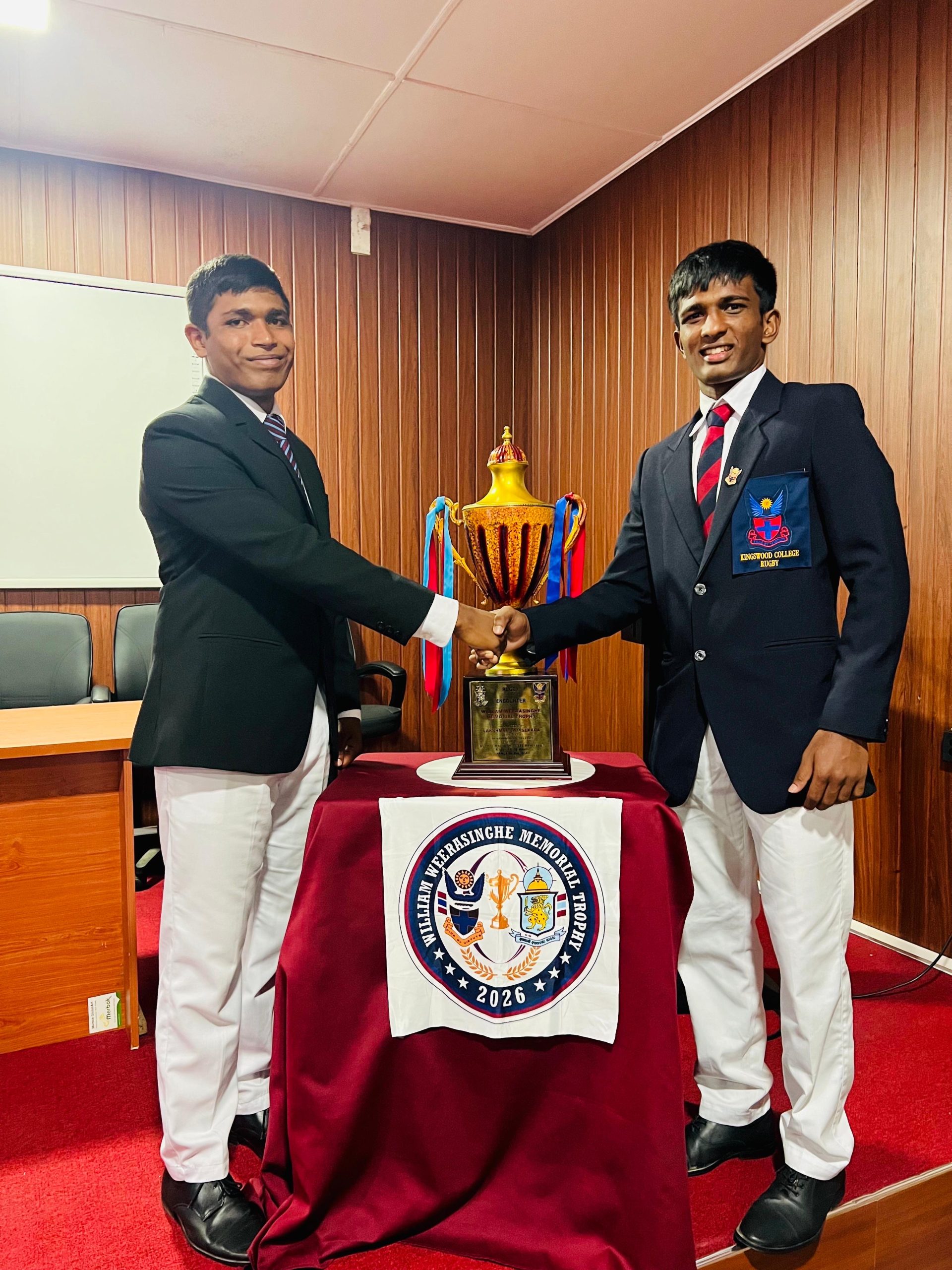
The annual rugby encounter between Dharmaraja College and Kingswood College, played for the William Weerasinghe Memorial Trophy, is set to take place tomorrow (July 11, 2026), at 4:00 PM at the Bogambara Stadium, Kandy.
The official unveiling of the trophy took place this week at the Dharmaraja College premises with the participation of the Principals of the two schools, teachers-in-charge of sports, coaches, the Rugby teams, and several distinguished guests, including Dharmaraja College Old Boys’ Association President Mahesh Wijetunga, Kingswood College Old Boys’ Association President Muditha Abeykoon,
by S K SAMARANAYAKE

It has been reported quoting family sources that veteran singer Mariazelle Goonetilleke has passed away this morning (10) at the age of 68
She had been receiving treatment at the Kalubowila Teaching Hospital.
The US and Iran again traded strikes in exchanges that continued into Thursday, as observers reported a “dramatic” drop in the number of ships travelling through the Strait of Hormuz.
The US says it hit 90 military targets, some near the Strait. Iran says 14 people have been killed in the past two days.
State media also reported that targets near the Bushehr nuclear power plant were hit, citing the deputy governor of the province. The US has not commented on the latest strikes.
Iran said it targeted US assets in Kuwait, Bahrain and Qatar in response. Later on Thursday, Tehran launched more strikes on sites in Kuwait, Jordan and Iraq, state-linked media reported.
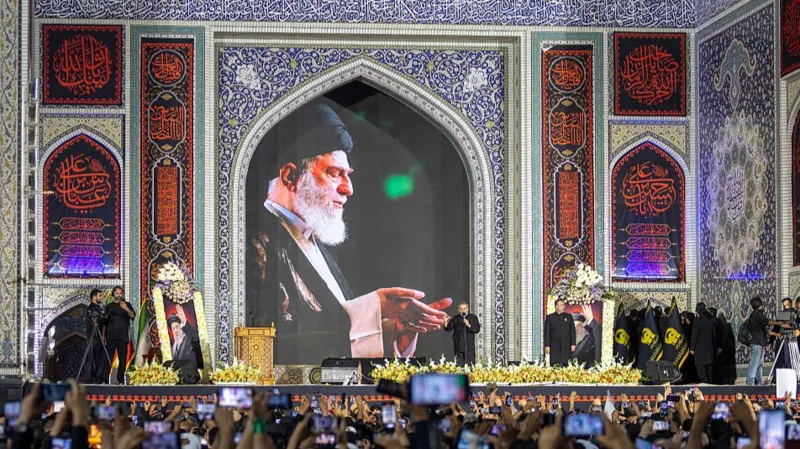
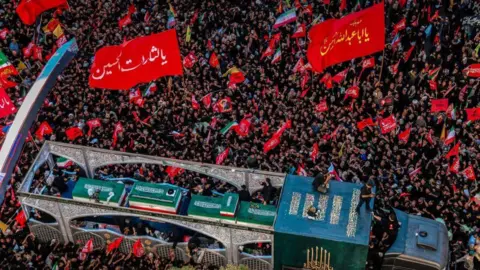
Separately, huge crowds gathered as Iran’s late supreme leader, Ayatollah Ali Khamenei, was buried after six days of funeral events.
Crowds massed on the streets of Mashhad in north-eastern Iran waving Iranian flags, while some were pictured holding signs carrying death threats directed at US President Donald Trump.
Khamenei was killed on 28 February during the first hours of US and Israeli strikes against Iran.

Iran’s foreign ministry denounced the latest US strikes as a “grave war crime”, describing the US administration as “evil and psychopathic”
Bridges and a railway route connecting Tehran to the city of Mashhad, where the late supreme leader’s funeral is being held, were also damaged, the foreign ministry said.
Iran’s health ministry said 14 people had been killed and 78 people injured across five provinces.
Gulf nations reported Iranian attacks following the US strikes, with explosions in Bahrain’s capital Manama, Kuwait intercepting missiles and drones, and Qatar issuing a security alert.
Later on Thursday, explosions were heard in Iran’s southern port of Konarak, with a local official telling Iran’s official news agency a navy site was attacked by an “enemy”.
However a US defence official told the BBC it had not carried out any strikes in Iran in recent hours.
The funeral of Iran’s late supreme leader Ali Khamenei is being held in the city of Mashhad [BBC]
Iran’s parliamentary speaker Mohammad Bagher Ghalibaf, who is also the country’s chief negotiator with the US, said on X that America “still hasn’t learned that bullying and breaking promises are no longer cost-free”.
“Let me put it plainly: if you strike, you’ll get hit,” he wrote, adding that the Strait of Hormuz will only open under Iranian arrangements – not “American threats”.
US Central Command (Centcom) said the most recent round of strikes was carried out to “further degrade Iran’s ability to attack commercial shipping and innocent civilian mariners” in the vital waterway.
In a statement, it said it had struck 90 Iranian military targets, which included air defense systems and military logistics infrastructure along Iran’s coastline.
“The latest strikes follow successful execution of offensive strikes in Iran the night before,” Centcom added.
Phil Belcher, marine director at Intertanko, an international organisation for independent tanker owners, said the number of ships travelling through the Strait via the southern route closer to Oman was now in “single figures” following the step up in hostilities.
Belcher added that the overall daily figure of about 30 ships was down from about 70 a week ago and well below the normal number of 130 ships that was seen before the Iran war began earlier this year.
He told BBC Radio 4’s Today programme that there had been an “exuberance of optimism” around shipping in the region following the signing of the SMemorandum Of Understanding between Iran and the US last month, but now the mood has changed.
“This cycle of violence, this cycle of up-and-down, positive-negative news, it’s having an enormous impact both on business and on the seafarers themselves,” he said.
On Wednesday night Iranian state TV reported eight explosions in Bandar Abbas, and said two missiles had hit the ports of both Sirik and Jask – also in southern Iran.
It added that two projectiles had hit the island of Abu Musa, which has been the subject of a longstanding ownership dispute between Iran and the United Arab Emirates.
The extent of damage from the US strikes is not yet known, but Iranian media have reported power cuts in Chabahar and a fire at an Islamic Revolutionary Guard Corps (IRGC) barracks in Bushehr. Images on social media showed damage to a marine control tower in Chabahar.
Earlier on Wednesday, Centcom wrote in a statement that it held Iran accountable for “recent unjustified aggression against commercial shipping and civilian crews freely navigating a vital international waterway.”
President Trump said late on Wednesday that Iran had “called a little while ago” and wanted to make a deal “so badly”.
Trump added: “I just don’t know if they’re worthy of making a deal – I don’t know that they’re going to honour the deal, that’s the problem.”
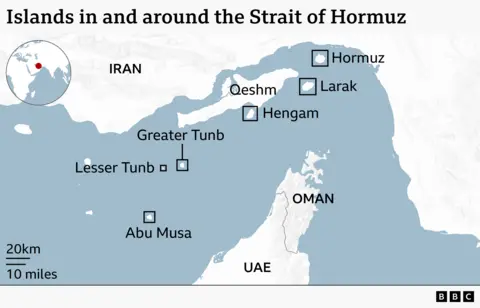
The current flare up has been the worst exchange of strikes between the US and Iran since the deal – known as a memorandum of understanding (MoU) – was signed on 17 June.
Trump said the ceasefire agreement signed last month with Iran was now “over”. He told reporters: “I don’t want to deal with them anymore, they’re scum. You know what scum is? They’re scum. They’re sick people.”
In response, Iran’s Foreign Minister Abbas Araghchi said in a post on X: “We do not answer vulgarity with vulgarity, but with action: fearlessly and with great valour.”
The deal between the US and Iran included 14 points, among them a 60-day period for a ceasefire during which negotiations should continue, the safe passage of vessels through the Strait of Hormuz and the US lifting sanctions on Iran.
The 60-day period for negotiations is not yet up, but Trump said he saw further talks as “a waste of time”.
[BBC]

Siyapatha Finance unveils newest branch in Bandarawela

Dialog recognised as Sri Lanka’s Most Loved Service and Telecommunications Brand for third consecutive year

The Council for Business with Britain appoints Ameena Ziauddin president at 26th Annual General Meeting

Digital shift in vehicle insurance verification in Sri Lanka powered by HUTCH Enterprise

Hayleys Aventura introduces Sri Lanka’s first automated rotary parking system

Vietjet’s July Double Day Sale offers Sri Lankan travellers USD90 flights to Vietnam

‘Dates have the highest sugar content to fight Coronavirus’

Sunday Island 27 December – Headlines

#SundayIsland 17th December – Headlines

Sunday Island – 28th March

Sunday Island Headlines – 21 March

Sunday Island – 21st February – Headlines
-

 News6 days ago
Singapore-based Buddhist monk marks nearly four decades of humanitarian service
-

 News7 days ago
Freedom 250: US Embassy celebrates America’s 250th Independence Day through magic of American cinema
-

 News24 hours ago
Herath warns prospective migrant workers not to get fleeced by racketeers
-

 News5 days ago
AI concerned over proposed SL military deployment in Haiti
-

 Midweek Review3 days ago
Unexpected focus on ‘pieces of tin’ worn by military men
-
 Latest News4 days ago
Nyamhuri and Ngarava stun Bangladesh by defending 141
-

 Features6 days ago
The NPP’s New Challenge: Balancing Easter Lawfare and Economic Welfare
-

 News2 days ago
Negombo Prison riot: Ensuring protection of prisoners fundamental responsibility of the state – UN